Bulgaria
Aleksandar Stamboliyski
Leader of the Bulgarian Agrarian National Union, Prime Minister of Bulgaria (1919–1923)
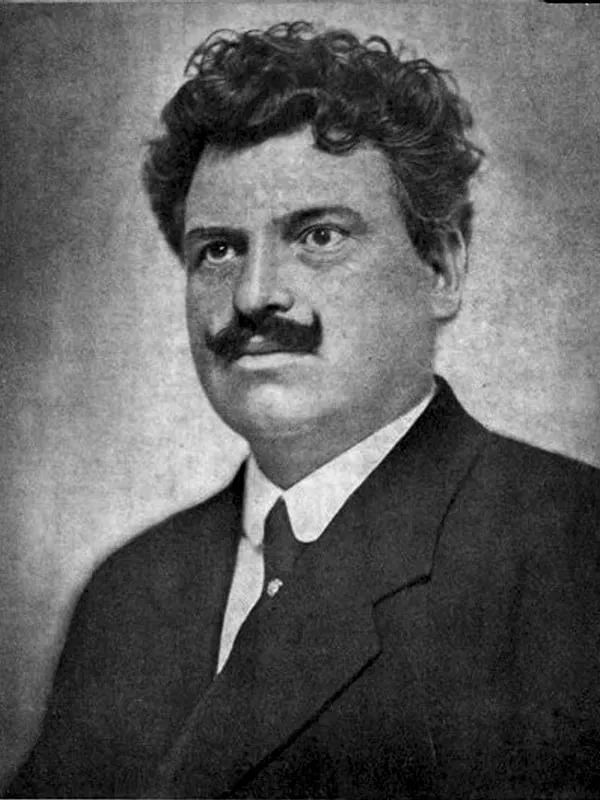
- Born:
- 13 March 1879, Slavovitsa near Pazardzhik (Eastern Rumelia)
- Died:
- 14 June 1923, Slavovitsa
- Author:
- Natalia
- Photo:
- BASA Спасимир, CC0, Wikimedia Commons

Aleksandar Stamboliyski was the most extraordinary politician of interwar Bulgaria: a peasant tribune who in 1915 warned the Tsar that war at Germany’s side would end in catastrophe, for which he was sentenced to prison for life, and who four years later, as prime minister, had to sign the Treaty of Neuilly, with which the victors settled accounts with Bulgaria for that very war. In just under four years in power he tried to build a peasant state, with land reform, compulsory labour service, the punishment of the politicians responsible for the defeats, and reconciliation with the neighbours in place of dreams of a Greater Bulgaria. That last policy earned him the hatred of officers, nationalists and Macedonian revolutionaries, who overthrew and murdered him in June 1923. His death ended the only serious attempt to lead Bulgaria out of the revisionism that, in 1941, brought it into alliance with Hitler.
A peasant’s son from Rumelia
He was born on 13 March 1879 (1 March in the Julian calendar, then in use in Bulgaria) in the village of Slavovitsa near Pazardzhik. At the time the area belonged to Eastern Rumelia, an autonomous province of the Ottoman Empire that Bulgaria did not annex until 1885. He came from a peasant family and stressed throughout his life that he was a peasant. He studied at the agricultural school in Sadovo and then at the wine-making school in Pleven. He worked briefly as a village teacher and then went to Germany to study. According to his Bulgarian biographers he attended lectures in Halle and Munich, but did not complete his studies because he fell ill with tuberculosis and had to return home.
In 1899 the Bulgarian Agrarian National Union was founded in Pleven, born of a protest against a tax paid in kind. Stamboliyski joined it at the beginning of the new century and quickly became its most important writer as editor of the party paper Zemedelsko zname (“The Agrarian Banner”). He developed a political theory of his own: society, in his view, was divided not into parties but into occupational estates, of which the peasantry was the largest and most important. He regarded political parties as cliques of urban lawyers and officials living off the labour of the countryside and off state posts. In 1908 he was elected to parliament, and a few years later he was already the Union’s de facto leader and its loudest orator. He was known for his vehemence and was an awkward opponent, attacking corruption, militarism and the personal power of Tsar Ferdinand I.
Against the war
Stamboliyski opposed the policy that drew Bulgaria into the Balkan Wars of 1912–1913, and in particular the attack on Serbia and Greece in June 1913, which ended in defeat and the loss of most of the gains. When the Great War broke out, he argued for neutrality, and if there had to be war, then on the side of the Entente rather than Germany. He spoke of the brotherhood of the South Slavs and said that Bulgarian and Serbian peasants had nothing to fight each other over.
In September 1915, when the government of Vasil Radoslavov had already concluded a secret alliance with the Central Powers, the opposition leaders were received by the Tsar. Stamboliyski told Ferdinand bluntly that the policy he was pursuing would ruin the country and might cost him his crown and his head. A few weeks later Bulgaria entered the war. Stamboliyski was arrested and charged with subversion, and a court sentenced him to life imprisonment. He spent three years in prison while the Bulgarian army occupied Macedonia and the country went increasingly hungry.
Radomir and the road to power
In September 1918 the Macedonian front collapsed, and fleeing soldiers began to march on Sofia. On 25 September the government of Aleksandar Malinov released Stamboliyski from prison in the hope that his authority would help calm the army. He went to the mutinous units together with another agrarian activist, Raiko Daskalov. Instead of calm came revolt: on 27 September at Radomir Daskalov proclaimed a republic, and Stamboliyski’s name appeared on its proclamation as president. According to most sources he had not given his consent and kept to the sidelines. Troops loyal to the Tsar, together with German soldiers, routed the rebels outside Sofia at the beginning of October. By then Bulgaria had already signed the armistice at Salonika, and on 3 October Ferdinand abdicated in favour of his son, Boris III. Stamboliyski stayed in hiding until an amnesty was declared.
The defeat discredited the old parties that had led the country into its wars, and the Agrarian Union, the only force that had opposed them from the start, gained enormous popularity. In January 1919 Stamboliyski joined the coalition government of Teodor Teodorov as Minister of Public Works, and in the summer he went with him to Paris as a member of the peace delegation. In the election of 17 August 1919 the agrarians won the most votes, ahead of the Communists. On 6 October Stamboliyski became head of a coalition government.
The signature at Neuilly
The new prime minister’s first task was to accept the peace the Great Powers had prepared at the Paris Peace Conference. Teodorov did not want to sign the treaty, and Stamboliyski concluded that refusal would bring only occupation and even worse terms. On 27 November 1919, in the town hall of Neuilly-sur-Seine, he signed, as Bulgaria’s sole representative, a treaty that took from the country Western Thrace and its access to the Aegean, four districts on the border with the Kingdom of Serbs, Croats and Slovenes, and Southern Dobruja, reduced the army to 20,000 volunteers and imposed reparations of 2.25 billion gold francs.
Unlike almost the entire Bulgarian political class, Stamboliyski did not regard the peace solely as an injustice. He believed that the Tsar and the old parties, not the neighbours, were to blame for the defeat, and that Bulgaria would gain more by fulfilling the treaty and rebuilding trust than by preparing for another war. For that reason he soon became, in the eyes of the nationalists, a symbol of humiliation.
The peasant government
At the turn of 1919 and 1920 the government broke a strike by railwaymen and transport workers, backed by the Communists, using the army, the police and peasant volunteers. In the election of 28 March 1920 the Agrarian Union won 110 of the 229 seats. The government made up the seats it lacked for a majority by annulling the election of a dozen or so deputies, mostly Communists, and from then on governed alone.
Its reforms were radical for their time. The Compulsory Labour Service Act, passed in May 1920, required young men to work for the state for a year and young women for six months, on projects including the building of roads, railways and schools, and land drainage. Bulgarians boasted that they were the first in the world to introduce such a service, and its supporters also saw it as a substitute for the conscription that the treaty had banned. Land reform limited the size of holdings and gave land to landless peasants and refugees, though in a country of smallholdings its reach was modest. The government introduced progressive taxation, expanded agricultural education, simplified spelling and curtailed the privileges of officials and lawyers. In November 1922 it held a referendum on bringing to trial the ministers responsible for the disasters of 1913 and 1915–1918. A majority of voters approved, and many former ministers went to prison.
Agrarian rule also had a dark side. Stamboliyski made no secret of his contempt for the town, the intelligentsia and parliament, and the Union’s strong-arm squads, the so-called Orange Guard – peasant units armed with clubs – broke up opposition rallies and intimidated opponents. In September 1922 peasant squads attacked a congress of the united opposition in Tarnovo, and its leaders were roughed up and humiliated. The prime minister spoke of transforming the system into a state of estates governed by the organised peasantry, and his opponents saw this as the road to dictatorship.
Reconciliation with the neighbours
In foreign policy Stamboliyski swam against the tide. In 1920 he toured the capitals of Europe, arguing that the new Bulgaria had nothing in common with Ferdinand’s policies, and in December of that year his country, together with Austria, became the first of the defeated states to be admitted to the League of Nations. He supported cooperation among the peasant parties of Central and Eastern Europe, the so-called Green International, and dreamed of a Balkan federation in which Bulgarians and Serbs would live in a common state. Most important to him was an understanding with the Kingdom of Serbs, Croats and Slovenes.
Macedonia stood in the way. The Internal Macedonian Revolutionary Organisation (IMRO), strengthened by an influx of thousands of refugees, mounted armed raids from Bulgarian territory into Yugoslav and Greek Macedonia, and in the Petrich district it created a state within the state. In December 1922 its fighters held Kyustendil for several days. Stamboliyski regarded IMRO as the greatest threat to the country. In March 1923, at Niš, he concluded an agreement with Belgrade in which he undertook to suppress the Macedonian bands on the border. For IMRO this was treason and a death sentence. Earlier still, in February 1923, there had been an attempt to kill him with a bomb at the National Theatre in Sofia.
Coup and death
In the election of 22 April 1923 the Agrarian Union won a decisive majority of seats, while the opposition, united in the Constitutional Bloc, suffered a crushing defeat. Victory at the ballot box, however, counted for nothing against a conspiracy. Ranged against the government were officers dismissed from the army that the treaty had reduced, organised in the Military League; the nationalist National Alliance, led by the economics professor Aleksandar Tsankov; and IMRO. Some historians also point to encouragement from Benito Mussolini’s Italy, which did not want Bulgaria to draw closer to Yugoslavia.
On the night of 8–9 June 1923 units of the Sofia garrison seized the capital, arrested the ministers and cut communications. Tsar Boris III, after several hours of hesitation, signed a decree appointing Tsankov’s government. Stamboliyski happened to be in his native Slavovitsa and tried to organise resistance. Peasants took up arms in several districts, but without leaders and without the support of the Communists, who regarded the coup as a quarrel between the urban and the rural bourgeoisie, they were quickly crushed. Stamboliyski was captured, and on 14 June 1923 IMRO fighters murdered him at Slavovitsa after hours of torture. According to accounts, they cut off the right hand with which he had signed the Niš agreement, and his head was sent to Sofia. The details of the crime are known mainly from later accounts, but its brutality is beyond doubt. In the months that followed many agrarian activists were killed, and Daskalov was shot in exile in Prague in August 1923.
Significance
The June coup opened a period of violence in Bulgaria. In September 1923 the Communists, this time on the Comintern’s orders, launched an uprising that was drowned in blood, and in 1925, after the bombing of St Nedelya Cathedral in Sofia, the government responded with another wave of terror. IMRO, strengthened after Stamboliyski’s murder, killed its opponents in Bulgaria and abroad for a whole decade, until in 1934 it was broken up by the officers who carried out another coup. From 1935 Tsar Boris III ruled personally.
The policy Stamboliyski tried to pursue found no successors. Every later government regarded the Treaty of Neuilly as an injustice to be put right at the first opportunity. The opportunity came with Germany’s successes: in 1940 Bulgaria regained Southern Dobruja, and in 1941 it joined the Tripartite Pact and, alongside the Wehrmacht, occupied Thrace and Macedonia. It lost these lands again in 1944, and the country fell into the Soviet sphere of influence.
The Bulgarian Communists, who had refused to help him in 1923, made him after 1944 the patron of the alliance of workers and peasants, and a town in Plovdiv Province was named after him. Historians judge him in different ways: to some he was the first Bulgarian politician who dared to abandon the dream of a Greater Bulgaria and to base the state on the majority that the peasants formed; to others he was a demagogue who despised parliament and the rights of the political minority, and whose strong-arm squads prepared the ground for the violence of which he himself became a victim. Both judgements rest on strong arguments. What is certain is that his death closed a path on which Bulgaria might have settled its relations with its neighbours by means other than war.