Equipment
Lockheed Hudson
An American airliner turned patrol aircraft that guarded Britain's sea lanes and was the first to strike the Japanese landing in Malaya.
- Role:
- patrol aircraft and bomber
- State:
- United States
- Maker:
- Lockheed
- First flight:
- 10 December 1938
- Built:
- 2,941
- Author:
- Łukasz
- Updated:
- 1 November 2026
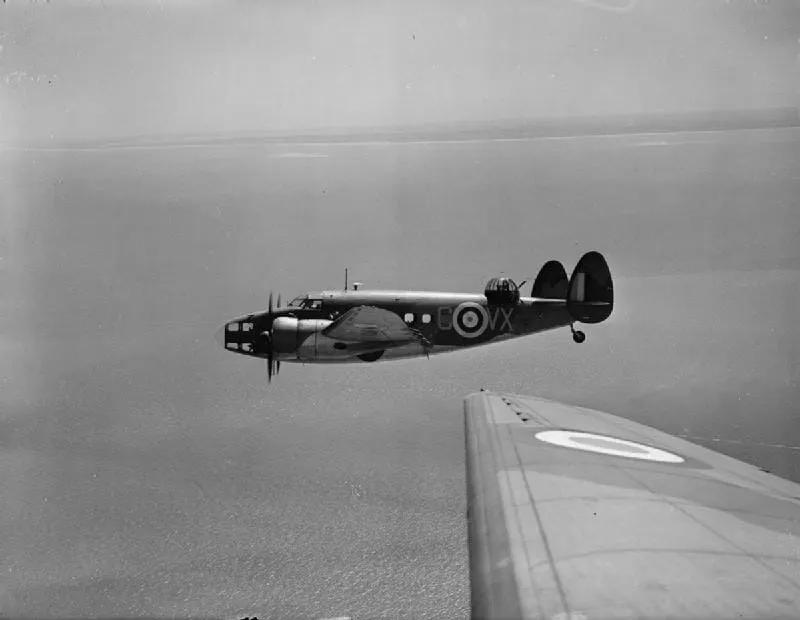
The Lockheed Hudson was one of the first American military aircraft that Britain bought in large numbers before the war, and one of the few that fought on all its fronts. It came from an airliner and lacked the performance of a true bomber, but it was fast, long-ranged and reliable. In 1939–1942 it patrolled the seas around Britain, searching for U-boats and German ships, and on the other side of the world Australian Hudsons were the first to attack the Japanese invasion and for many months were among the few bombers with which Australia could defend itself.
Buying before the war
In April 1938 a British purchasing mission arrived in the United States, led by Air Commodore Arthur Harris, later head of the bomber force. It was looking for an aircraft that would quickly replace the obsolete patrol machines of RAF Coastal Command. The Lockheed (PL) company of Burbank, California, offered a military version of its twin-engined Lockheed 14 Super Electra airliner, with a glazed navigator’s position in the nose, a bomb bay and a power-operated gun turret on the back. In June 1938 the British ordered 200 aircraft, at that time the largest contract in the firm’s history. The first Hudson took to the air on 10 December 1938.
Deliveries began in February 1939. The aircraft crossed the Atlantic as deck cargo on ships, and after the outbreak of war the American neutrality laws forced Lockheed into tricks: the aircraft landed just short of the Canadian border and were pulled across it by horses or tractors. No. 224 Squadron at Leuchars in Scotland received the first Hudsons in May 1939.
Over the North Sea (1939–1941)
From the first days of the war Hudsons patrolled the North Sea. On 8 October 1939 a No. 224 Squadron crew shot down a German Dornier Do 18 flying boat off Jutland. This was long thought to be the RAF’s first air victory of the war; it is now known that crews based in France scored earlier ones, but it remained the first victory by an aircraft flying from the British Isles. On 16 February 1940 Hudsons spotted the tanker Altmark, carrying British prisoners, off the Norwegian coast, which led to the boarding in Jøssingfjord. In spring they flew over Norway, and during the evacuation from Dunkirk they covered the beaches and shot down German dive bombers and fighters.
The Hudson’s most unusual success came on 27 August 1941 south of Iceland. An aircraft of No. 269 Squadron surprised the submarine U-570 as it surfaced and dropped depth charges close to the hull. The terrified crew, convinced that chlorine was escaping from the batteries, hung out a white sheet and surrendered to the aircraft. The boat was towed to Iceland, and the Royal Navy commissioned it as HMS Graph.
On the Atlantic and in America
Hudsons fought throughout the Battle of the Atlantic, from Britain, Iceland, Canada, Gibraltar and, from autumn 1943, also from the Azores. Coastal Command, always short of aircraft, was reluctant to lend them for raids on Germany, but in June 1942 it sent over a hundred Hudsons and Wellingtons on the thousand-bomber raid on Bremen. Hudsons from Gibraltar led fighters flown off carriers to Malta, and with No. 161 Special Duties Squadron they carried agents into occupied France.
In 1941 the Americans bought the aircraft too. US Navy Hudsons of squadron VP-82, flying from Newfoundland, sank U-656 on 1 March 1942, the first German submarine destroyed by Americans in this war, and U-503 two weeks later; U-85 was only the first sunk by a US Navy ship.
In the Pacific (1941–1943)
The Hudson won most fame in the colours of the Royal Australian Air Force, for which it was one of the main bombers and reconnaissance aircraft in the first years of the Pacific war. On 6 December 1941 the crew of an Australian Hudson flying from Kota Bharu spotted a Japanese convoy crossing the Gulf of Siam. Two days later, as the Japanese landed on the beach at Kota Bharu, Hudsons of No. 1 Squadron RAAF attacked the transports, badly damaging all three, though they lost two aircraft themselves. These were the first Allied air attacks of the Pacific war.
In the following months Australian Hudsons fought wherever the Japanese pushed south: at Rabaul, on Timor, over Darwin and over New Guinea. They were few, and against Zero fighters they stood little chance. In August 1942 two Australian Hudsons spotted a force of Japanese cruisers heading for Guadalcanal, but the report reached the American command hours late and in a garbled form, which contributed to the Allied defeat in the Battle of Savo Island. A fortnight or so later another Hudson was the first to report a landing force making for Milne Bay. In Burma Hudsons dropped supplies to Orde Wingate’s Chindits.
The balance
By 1943, 2,941 Hudsons had been built for Britain, Australia, New Zealand, Canada and the United States. From the end of 1941 the RAF replaced them on maritime patrol with larger aircraft: Fortresses, Liberators and Wellingtons, while the larger Ventura became the successor in Lockheed’s family. From 1944 Hudsons served mainly as transport, rescue and training aircraft, and in Australia they flew with airlines for many years after the war. It was a modest aircraft, but in the years when the Allies had nothing better, the Hudson had to be enough.
Sources
In the chronicle
(22)1941
1942
- 23 January 1942The Japanese take Rabaul
- 19 February 1942The bombing of Darwin
- 20 February 1942The Japanese on Bali and Timor
- 3 March 1942The attack on Broome
- 8 March 1942The Japanese at Lae and Salamaua
- 2 April 1942The Japanese on the north coast of New Guinea
- 14 April 1942The sinking of U-85
- 25 June 1942The thousand-bomber raid on Bremen
- 8 August 1942The Battle of Savo Island
- 26 August 1942The Battle of Milne Bay
- 9 September 1942Japanese incendiary bombs over Oregon