Turkey
Fevzi Çakmak
Chief of the General Staff (1918–1919, 1921–1944), Ottoman Minister of War (1920), head of the Grand National Assembly government (1921–1922), Marshal (from 1922)
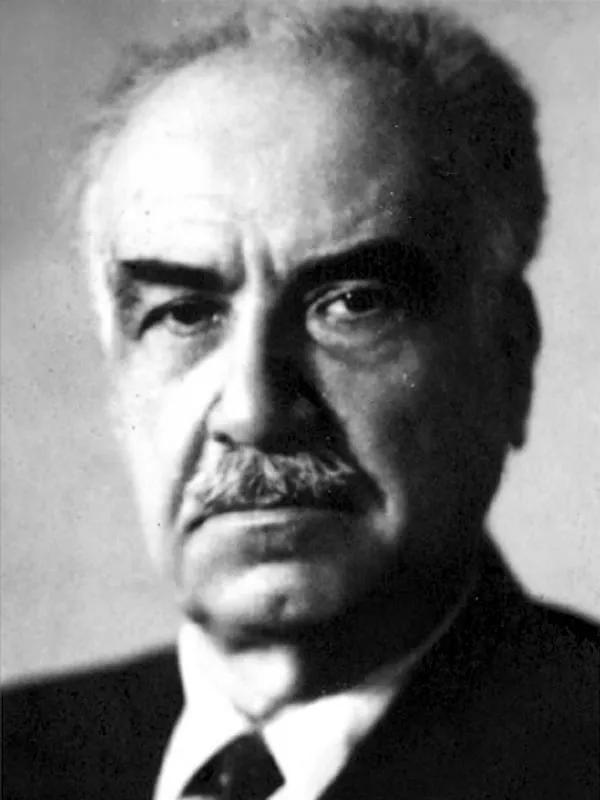
- Born:
- 12 January 1876, Istanbul (Ottoman Empire)
- Died:
- 10 April 1950, Istanbul
- Author:
- Łukasz
- Photo:
- TBMM, domena publiczna, Wikimedia Commons

Fevzi Çakmak was, alongside Mustafa Kemal and İsmet İnönü, the third of the commanders who won the Turkish War of Independence. A professional staff officer of the Ottoman army and a veteran of the Balkan Wars, Gallipoli, the Caucasus and Palestine, in 1920, as Minister of War in the Sultan’s government, he went over to the national movement in Ankara. There he was head of the government and Minister of Defence, and from August 1921 Chief of the General Staff, sharing in the direction of the victorious battles on the Sakarya and at Dumlupınar. Apart from Kemal, he was the only Turk ever to receive the rank of marshal. For more than two decades he headed the Republic’s General Staff: he built up its army, directed the bloody pacification of Dersim in 1937–1938 and was one of the architects of the cautious neutrality that allowed Turkey to come through the Second World War outside the main conflict.
A staff officer of the Empire
He was born on 12 January 1876 in the Cihangir district of Istanbul, the son of Ali Sırrı Efendi. He went through the whole course of Ottoman military education: schools in Salonika and Kuleli, the Military Academy, from which he graduated in 1896, and the Staff College, in 1898. As a young officer he had a taste of war in Thessaly in 1897, but his real school was the Balkans. He spent more than ten years in western Rumelia, in Kosovo and Albania, where the Ottoman army was fighting Albanian and Macedonian insurgents. There he learned Serbian, Bulgarian and Albanian; altogether he spoke several languages, including French and German. He was the hard-working, pious and reserved type of staff officer, keeping his distance from the politics that in the years of the Young Turk Revolution absorbed many of his colleagues, including Mustafa Kemal, five years his junior.
In the First Balkan War of 1912–1913 he was chief of operations of the Vardar Army, which was routed by the Serbs. His younger brother was killed in the Battle of Monastir in November 1912. After the defeat Fevzi withdrew with the remnants of the troops through Albania. The Empire lost almost all its European possessions, and for the generation of officers that produced the leaders of the Republic this catastrophe was a formative experience.
The Great War
At the end of 1913 Fevzi took command of V Corps. In the summer of 1915 he fought with it on the Gallipoli peninsula, where the British and their allies were trying to break through towards Istanbul; in August, during the Gallipoli campaign, the second of his brothers was killed at Conkbayırı (Chunuk Bair). There he grew close to Kemal, whose division and group of forces played a key role in the defence of the peninsula. In 1916 Fevzi commanded II Corps on the Caucasus front, in 1917 the Second Army at Diyarbakır, and in October 1917 he took over the Seventh Army in Palestine from Kemal, who had resigned after a dispute with the German army group commander Erich von Falkenhayn. He led it through heavy rearguard fighting as the British took Jerusalem; in the summer of 1918 Kemal took over the Seventh Army again. In July 1918 Fevzi was promoted to general (ferik).
After the Armistice of Mudros of 30 October 1918 the Empire came under Entente occupation. On 24 December 1918 Fevzi became Chief of the General Staff of the Ottoman army, remaining in the post until May 1919. According to Turkish biographers he helped at that time to hide weapons and smuggle them to Anatolia, where the resistance movement was taking shape. In May 1919 the Greeks, with the consent of the victorious powers, landed at Smyrna, and Kemal left for Samsun and placed himself at the head of the movement.
From Constantinople to Ankara
In early 1920 Fevzi twice served as Minister of War in the Sultan’s governments of Ali Rıza Pasha and Salih Pasha. On 16 March 1920 the British formally occupied the capital, arrested nationalist deputies and dispersed parliament. Fevzi left the city and on 27 April 1920 arrived in Ankara, where the Grand National Assembly of Turkey had convened a few days earlier. Kemal welcomed him at the station with honours. The defection of the Minister of War, a general with an impeccable reputation and known as a deeply religious man, was valuable proof for the national movement that it was not a rebellion of adventurers. On 3 May 1920 Fevzi became Minister of National Defence in the Assembly’s first government, and a court martial in Istanbul sentenced him to death in absentia, as it did Kemal and the other leaders of the movement.
On 24 January 1921 he became head of the Assembly’s government, keeping the defence portfolio. This was a time when Ankara was fighting on several fronts: against the Armenians in the east, the French in Cilicia, internal revolts and, above all, the Greek army, which in the winter and spring of 1921 was trying to push from the coast into the interior of Anatolia. The troops on the western front were commanded by İsmet, who twice repulsed the Greeks at İnönü; after the second of these battles, in the spring of 1921, Fevzi was promoted again in general’s rank.
Sakarya and the Great Offensive
In July 1921 the Greeks, spurred on in person by King Constantine I and commanded by General Anastasios Papoulas, defeated the Turks at Kütahya and Eskişehir. Kemal pulled the army back behind the Sakarya river, 250 kilometres from Eskişehir, and on 5 August 1921 the Assembly gave him full powers as Commander-in-Chief. At the beginning of August Fevzi handed over the defence ministry and became Chief of the General Staff (formally, of the General Staff of the Assembly government), while remaining head of the government. In the three-week Battle of the Sakarya, from 23 August to 13 September 1921, he directed operations at Kemal’s side from a command post behind the front line. The Greeks failed to break through the defences and withdrew to the Eskişehir–Afyon line. The Assembly conferred on Kemal the title of Gazi and the rank of marshal.
Over the following year Fevzi prepared the army for a counter-offensive, and in July 1922 he stepped down as head of the government. The Great Offensive began on 26 August 1922; Kemal, Fevzi and İsmet watched its opening from the hill of Kocatepe near Afyon. Within a few days the Greek front broke, and on 30 August, in the Battle of Dumlupınar, which the Turks call the Battle of the Commander-in-Chief, the main Greek forces were routed. The next day, 31 August 1922, the Assembly, on Kemal’s proposal, made Fevzi a marshal (müşir, later mareşal). No one apart from the two of them has held this rank in the history of the Republic. On 9 September the Turks entered Smyrna, and the Greco-Turkish War ended with the Armistice of Mudanya in October 1922.
Chief of Staff of the Republic
In 1923 the Turkish Republic was proclaimed. Kemal, who wanted to separate the army from politics, required generals who sat as deputies to choose between the uniform and their seat. On 31 October 1924 Fevzi gave up his seat as deputy for Kozan and remained in the army as Chief of the General Staff. In all he held this post for more than 22 years, longer than anyone else in Turkish history. The General Staff had a special position in the Republic: it was answerable directly to the Prime Minister rather than to the Minister of Defence, and the marshal was one of the most respected figures in the state. He was regarded as a conservative, wary of some of Kemal’s reforms, but loyal to him and uninvolved in any opposition.
Fevzi’s army was an instrument for building a centralised nation state, including against the Kurds. After the rebellion of Sheikh Said in 1925 he sat on the council that drew up a plan of “reforms” in the east, based on resettlement and military rule. In 1937–1938 the army crushed resistance in mountainous Dersim (today Tunceli), inhabited by Alevi Kurds and Zazas. The operation, which made use of aircraft, brought the deaths of thousands of people, many of them civilians, and the deportation of thousands more. In 2011 Prime Minister Recep Tayyip Erdoğan, citing state documents, called these events a massacre and gave a figure of 13,806 dead; other researchers give higher figures.
Kemal died in November 1938. Part of the elite saw Fevzi as a possible successor, but İsmet İnönü became President, and the marshal made no attempt to challenge him. While Kemal was still alive, in the summer of 1938, Turkish troops entered the Sanjak of Alexandretta under an agreement with France; the sanjak was turned into the Hatay State, which was annexed to Turkey in 1939. It was the Republic’s last territorial gain, the price France paid for Turkish goodwill in the face of the approaching war.
The Second World War and opposition
From 1939 to 1944 Fevzi led the army of a country that wanted at all costs to stay out of the war. In October 1939 Turkey signed a treaty of mutual assistance with Britain and France, but after the fall of France it confined itself to neutrality, and in June 1941, just before Germany attacked the USSR, it concluded a treaty of friendship with Germany. The marshal knew that his army was large but poorly armed, without a modern air force or armour, and he opposed entering the war, which the British demanded ever more insistently from 1943. In Turkey it was widely believed that the real threat came not only from Hitler but also from the USSR, which after the war did indeed demand bases on the Straits and the eastern provinces. On 12 January 1944, his 68th birthday, Fevzi retired, formally on reaching the age limit; some historians also link his departure to İnönü’s efforts to move closer to the Allies.
In retirement he became a figure of the opposition to the rule of İnönü’s Republican People’s Party. In 1946 he entered parliament as an independent on the list of the new Democrat Party of Celâl Bayar and Adnan Menderes, and the Democrats put him up against İnönü in the presidential election in parliament, in which he received 59 votes. He soon parted ways with them, and in 1948 became honorary chairman of the conservative Nation Party. He died on 10 April 1950 in Istanbul, a month before the election that ended the rule of Kemal’s party. His funeral in Istanbul turned into a huge demonstration, and state radio, which had broadcast light music that day, was accused of disrespect towards the dead man. In accordance with his family’s wishes he was buried in the cemetery at Eyüp.
Legacy
In Turkish memory Fevzi Çakmak is above all the victorious marshal of the War of Independence, the Republic’s foremost soldier after Atatürk; streets, schools and military units bear his name. To conservatives he was the symbol of the pious and honest soldier; to the Kurds of Dersim, one of the men responsible for the massacre of 1937–1938. For the history of the road to the Second World War, what matters is that the army he helped to lead, and then built up for two decades, enabled Turkey in 1919–1923 to force a revision of the peace imposed by the victors in the Treaty of Sèvres. Turkey was the only state defeated in the First World War to achieve this, and at the same time a state that afterwards sought no revenge through war. In the 1930s the republic of Kemal, İnönü and Çakmak sought not an alliance with Hitler or Mussolini but security, and in 1939 it stood aside while other losers of the Great War went to war in search of revenge.