Battle of Hel
- Dates:
- 1 September – 2 October 1939
- Front:
- Poland
- Location:
- The Hel Peninsula from Władysławowo (Wielka Wieś) to the tip with the town and naval port of Hel, together with the waters of the Gulf of Gdańsk and the Bay of PuckOn the battle map →
- Sides:
- PolandJózef Unrug, Stefan Frankowski, Włodzimierz Steyer, Zbigniew PrzybyszewskiNazi GermanyLeonhard Kaupisch, Conrad Albrecht, Hubert Schmundt
- Result:
- German victory. On 1 October 1939 Rear Admiral Unrug decided to capitulate; on 2 October the Germans occupied the tip of the peninsula and the defenders went into captivity.
- Author:
- Łukasz
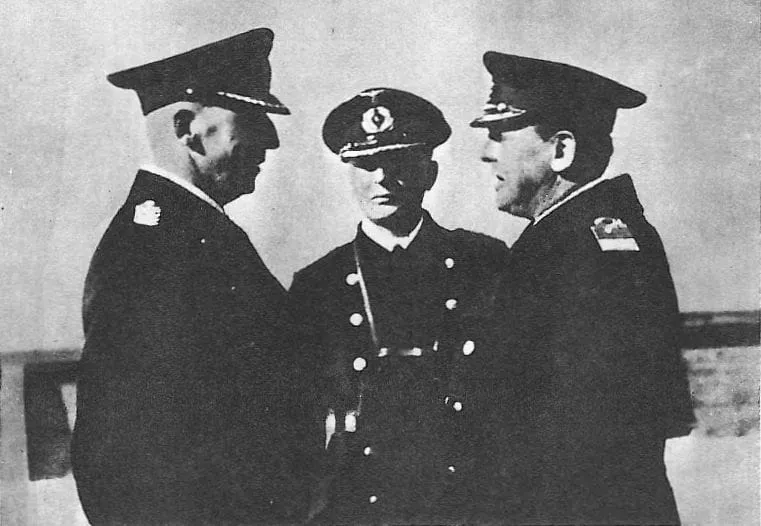
The defence of Hel was the longest battle on the Polish coast in 1939 and one of the last organised centres of resistance in the September Campaign. On the narrow, sandy Hel Peninsula, in a fortified area with a naval port and the most powerful Polish coastal battery, some 3,000 soldiers and sailors held out for 32 days. From the first day of the war the tip of the peninsula was bombed from the air, and on the third day the last large Polish warships in the Baltic went to the bottom there. From mid-September Hel was cut off from the mainland, and after the fall of Gdynia and the Oksywie Heights it stood alone. Rather than storm the peninsula, the Germans shelled it from the sea with the old battleships Schleswig-Holstein and Schlesien, and the gunners of the battery at the tip answered with accurate fire. The narrow neck at the base of the peninsula could be held with small forces, but there was nowhere relief could come from. When Warsaw and Modlin had fallen, food and ammunition were running out and morale was beginning to crumble, the commander of the Fleet, Rear Admiral Józef Unrug, decided on 1 October to capitulate. On 2 October the Germans entered the tip of the peninsula. Only Independent Operational Group Polesie fought on longer.
Name and dates
In Polish literature the battle is called the defence of Hel, sometimes the battle for Hel or the defence of the Hel Fortified Area. German accounts speak of the fighting for Hel or of the siege of the peninsula (Hela being the German name of the town). Most studies, like the inscription on the Tomb of the Unknown Soldier, give the dates as 1 September to 2 October 1939. The first air raid on Hel took place on the afternoon of 1 September, at around 1.30 p.m. Land fighting at the base of the peninsula did not begin until 9 and 10 September, which is why some authors date the defence from those days.
The end of the battle is dated differently in the sources. Unrug took the decision to capitulate before noon on 1 October, and both sides ceased fire the same day. The act of capitulation was signed in Sopot late in the afternoon or in the evening of 1 October. Some sources, including the Institute of National Remembrance, give the date as 2 October, because the formalities dragged on through the night of 1–2 October. On the morning of 2 October German troops entered the tip of the peninsula, and that day may be regarded as the end of the battle.
Background
Poland’s gateway to the sea
Under the Treaty of Versailles Poland received a short stretch of coast, about 140 kilometres long, with no large port, since Gdańsk became a Free City. On 10 February 1920, at Puck, General Józef Haller performed the symbolic wedding of Poland to the sea. In the 1920s Gdynia was built, and along the spit that closes off the Bay of Puck from the open sea a railway line was laid to Hel, together with a winding road screened by woodland from observation from the air. The tip of the peninsula, thrust far out into the Gulf of Gdańsk, commanded the approaches to Gdynia and Gdańsk. Polish naval planners, like the Germans before them, regarded it as a natural fortress. The peninsula is a few kilometres across at its widest and about 150–200 metres at its narrowest. Whoever held the neck at its base could defend the end of the spit with small forces.
From the turn of the 1920s and 1930s a naval port was built at Hel, with a basin, quays, an underground power station and shelters for ammunition, mines and torpedoes. A decree of President Ignacy Mościcki of 21 August 1936 created the Hel Fortified Area. At the tip stood Battery No. 31, with four modern Swedish 152.4 mm Bofors guns, named after the founder of Polish coastal artillery, Lieutenant Commander Heliodor Laskowski (PL), who had died in 1936. It was the most powerful coastal battery in Poland. It was supplemented by two batteries of two 105 mm field guns each, known as the “Danish” and the “Greek” batteries, three anti-landing batteries with 75 mm guns, and the 2nd Naval Anti-Aircraft Artillery Battalion with six 75 mm guns and eight 40 mm Bofors guns. From 1937 the Fortified Area was commanded by Captain Włodzimierz Steyer, a former officer of the Russian navy and a well-known writer of sea stories.
The crisis of 1939
When in the spring of 1939 Adolf Hitler ordered preparations for an attack on Poland under Case White and renounced the Polish–German declaration of non-aggression, the Polish command began feverishly to fortify the peninsula. In May a battalion of the Border Protection Corps was brought there from Polesie and Volhynia; under Major Jan Wiśniewski it arrived at Hel station on 15 May. In front of Jastarnia a defensive position was built with four reinforced-concrete bunkers, and field fortifications were added in the summer. The Polish Operational Plan West assumed that the coast would be cut off in the first days of the war and would have to defend itself on its own. The navy was to disrupt the Reich’s communications with East Prussia and to defend Gdynia and, above all, Hel as the main base of the fleet.
In the ultimatum of 30 August, a sixteen-point proposal that was never formally delivered to Poland, Berlin demanded among other things the demilitarisation of Hel. By then this was mere window-dressing. Rear Admiral Józef Unrug, commander of the Fleet since 1925, took up the post of Commander of Coastal Defence on the order to mobilise, answering directly to the Commander-in-Chief, Marshal Edward Rydz-Śmigły. Unrug had been born in Brandenburg as Joseph von Unruh; during the Great War he had commanded German submarines, and in 1919 he joined the Polish navy. At the end of August he moved his headquarters from Gdynia to Hel (accounts give either 21 or 31 August), judging that the peninsula was better suited to a long defence than the makeshift positions around Gdynia.
Coastal Defence was divided into the Land Coastal Defence under Colonel Stanisław Dąbek, which was to defend Gdynia and the Oksywie Heights, and the Naval Coastal Defence under Captain Stefan Frankowski of the naval staff. The latter comprised the surface ships, the coastal artillery and the whole of Captain Steyer’s Hel Fortified Area. Directly subordinate to Unrug were the submarines, which under the Worek Plan were to take up sectors around the peninsula and defend it against the expected landing, and the Naval Air Squadron at Puck. The three most modern destroyers had sailed for Britain on 30 August under the Peking Plan, as provided for in the arrangements accompanying the Anglo-Polish alliance.
Forces
At the outbreak of war there were some 2,800–3,000 men on the peninsula. The main infantry force was the KOP battalion “Hel” (formally the 4th Battalion of the KOP 7th Infantry Regiment), brought up with reservists to 28 officers and about 1,170 other ranks and reinforced during the fighting to more than 1,800 men. To these were added a coastal artillery battalion, about a thousand anti-aircraft gunners, a platoon of the Border Guard (PL), the staff of the naval port and headquarters staff. As the fighting went on they were joined by the crews of sunken ships, airmen from Puck and soldiers who had made their way from the mainland. In the end, according to various sources, from about 2,800 to 3,600 men went into captivity.
On the German side the coast was the responsibility of Corps Kaupisch under General Leonhard Kaupisch, made up mainly of Grenzschutz (German frontier guard) units and reserve formations, later reinforced by, among others, part of the 207th Infantry Division. Together with the Danzig brigade Eberhardt, the Germans fielded some 29,000 men against the whole Polish coast. Kriegsmarine operations in the Baltic were directed by Naval Group Command East under Generaladmiral Conrad Albrecht. His chief of staff, Rear Admiral Hubert Schmundt, was also commander of naval forces in the Gulf of Gdańsk, and it was he who accepted the capitulation of Hel. In the Baltic the Germans had two old battleships, a dozen or more destroyers and torpedo boats, several dozen minesweepers and submarines, and over the coast some 120 aircraft, including Junkers Ju 87 dive-bombers and naval seaplanes. The Kriegsmarine’s great superiority was an indirect result of the expansion of the fleet that Admiral Erich Raeder had been carrying out since 1935, although the great ships of his Plan Z were still being built.
The course of the fighting
The first days: the end of the surface fleet
On 1 September, a few hours after the Schleswig-Holstein’s salvo at Westerplatte, the Luftwaffe bombed the naval air base at Puck, killing the squadron commander, Commander (pilot) Edward Szystowski. At around 1.30 p.m. came the first raid on Hel and the battery at the tip, and in the evening another on the ships in the port. That evening a group of ships that was to lay a minefield from Hel towards Sopot was attacked on the way by dive-bombers, and the operation was abandoned. The minelayer ORP Gryf and the destroyer ORP Wicher remained in Hel harbour as floating batteries.
On the morning of 3 September the German destroyers Leberecht Maass and Wolfgang Zenker approached Hel. In the only engagement between surface warships in the September Campaign, the Polish ships and the battery at the tip hit the Leberecht Maass, killing four sailors, and forced the enemy to withdraw. That same day, however, dive-bombers sank Wicher and Gryf in the harbour, and badly damaged the minesweeper ORP Mewa and the gunboat ORP Generał Haller, which sank in a further raid on 6 September. The second gunboat, ORP Komendant Piłsudski, was also abandoned. In three days the Polish surface fleet in the Baltic had ceased to count. Most of the surviving sailors went ashore, and guns removed from the ships were emplaced in positions on land. Three 120 mm guns were taken from the wreck of Gryf and formed into Battery No. 34.
The submarines, deployed on the positions of the Worek Plan close to the peninsula, were hunted by German ships and aircraft from the first hours. They sank no ship with a torpedo, but they did lay several minefields. On 3 September ORP Wilk laid mines between Hel and the mouth of the Vistula, on 7 September ORP Ryś north of the spit, and ORP Żbik north of Jastarnia. In mid-month, with their scope for action exhausted, the submarines left: Wilk broke through to Britain, Ryś, Żbik and Sęp were interned in Sweden, and Orzeł, after escaping internment in Tallinn, reached Britain in October.
On 8 September German seaplanes destroyed the last Polish seaplanes moored off the spit, and their crews and ground staff joined the land defence. On 12–14 September the last three serviceable minesweepers, ORP Jaskółka, Czajka and Rybitwa, shelled German troops at Rewa and Mechelinki, and during the night of 12–13 September they laid 60 mines in the Gulf of Gdańsk. On 14 September German dive-bombers sank Jaskółka and Czapla, the survey ship Pomorzanin and a tug in the harbour at Jastarnia. The remaining minesweepers moved to Hel and took no further part in the fighting.
The peninsula cut off
On land the Pomorze Army was routed in the first days of the war in the Tuchola Forest, and the coast was cut off from the rest of the country. Units of the Land Coastal Defence fell back on Gdynia and the Oksywie Heights. On 8 September the Germans reached the Bay of Puck and took Puck. On 9 September came the first skirmish at the base of the peninsula, at Swarzewo. The next day the Germans, supported by fire from minesweepers, attacked Wielka Wieś, today’s Władysławowo. The attack was beaten off, but fearing a landing in their rear the defenders abandoned the village and withdrew along the spit. An attempt to retake it on the morning of 11 September failed. Over the next few days the Germans closed the ring, and from roughly 12–14 September Hel was cut off from the mainland.
The front came to a halt in the area of Chałupy. The Germans were in no hurry to attack: the narrow neck, mined and under fire from the Polish artillery, was hard to take, and for the Wehrmacht command Gdynia and Oksywie mattered more. On 14 September the Germans took Gdynia, and on 19 September, after Colonel Dąbek had taken his own life, the last defenders of the Oksywie Heights capitulated. From that day Hel was the last Polish centre of resistance on the Baltic. Several hundred more soldiers made their way from Oksywie to the peninsula.
The defenders made use of the stores in the Hel depots. From torpedo warheads, no longer needed now that there were no ships, the sappers built three mine barriers across the spit: one kilometre beyond Chałupy, three kilometres further on, and in front of Kuźnica. The first was completed on 20 September. The hope was that an explosion would breach the narrow strip of land and turn the end of the peninsula into an island.
The duel with the battleships
With the land attack stalled, the Germans tried to break the defence from the sea and the air. After the capitulation of Westerplatte on 7 September, the training battleship Schleswig-Holstein shelled Polish positions near Gdynia and on Hel until 13 September. From 18 to 23 September the peninsula was bombed more heavily, and from around 20–21 September the sister ship Schlesien joined the bombardment. The main target was the battery at the tip under Lieutenant Commander Zbigniew Przybyszewski, the only one that could engage ships at long range.
The fiercest duel took place on 25 September. Both battleships came up to Hel and shelled the tip of the peninsula and the town. The battery returned fire and, according to Polish reports, scored hits. German sources confirm light damage to the Schleswig-Holstein; some Polish authors write of two hits on the Schlesien. The ships withdrew. The battleships’ fire damaged one of the battery’s guns, and Przybyszewski was wounded. He handed over command to Lieutenant Commander Bohdan Mańkowski. Under his command the battery again engaged the battleships on 27 September, and again they withdrew. On 28 September Przybyszewski returned from hospital to his post. The battery remained in action until the end of the defence. Its accuracy surprised the Germans: after entering Hel they spent a long time looking for heavy guns, refusing to believe that they had been hit by four 152 mm pieces.
Aircraft circled over the peninsula throughout. The anti-aircraft defence was costly for the Germans, although the number of aircraft shot down is disputed. Polish reports spoke of several dozen aircraft (figures as high as 46–53 appear in the literature), other studies give a dozen or so or a few dozen, and German losses confirmed in the documents are much smaller. The raids destroyed buildings in the port and the town, but they did not break the defence.
The last days
By the end of September the defenders’ situation had become hopeless. News reached Hel by radio of the capitulation of Warsaw on 28 September and of Modlin on 29 September, of the entry of the Red Army and of the partition of the country. Food was running out, ammunition was short, and the men, cut off from their families, were losing faith in the point of fighting. On 29 and 30 September there were two attempted mutinies among the soldiers, which their commanders put down. Some of the defenders tried to escape to Sweden. On 30 September the last Polish seaplane, an RWD-17W carrying two officers, crashed into the sea a dozen or so kilometres from the shore (the airmen survived). The Border Guard patrol boat Batory got away, but during the night of 1–2 October German blockade vessels intercepted two fishing cutters carrying 52 sailors.
On 30 September, after an artillery preparation, the Germans attacked from Wielka Wieś. Among the units taking part was the 3rd Battalion of the 374th Infantry Regiment of the 207th Infantry Division, supported by artillery and fire from minesweepers. The Poles withdrew from Chałupy and set off the barrier beyond the village. The charge proved too weak: the explosion destroyed the railway track and left deep craters, but it did not breach the spit. The fighting moved to the position in front of Kuźnica, behind which lay the fortified village of Jastarnia. The Germans were also preparing a seaborne landing on the peninsula under the cover of naval gunfire, which, according to surviving documents, was to begin on 1 October. Older literature questioned this intention; more recent research has confirmed it. The landing never took place.
On the morning of 1 October Rear Admiral Unrug called a council of war. With no hope whatever of relief, supplies exhausted and discipline collapsing, he decided to end the fight. The Poles ceased fire at around 11 a.m., the Germans in the afternoon. That same day a Polish delegation – Captain Marian Majewski, chief of staff of Fleet Command, and Captain Antoni Kasztelan – drove to the Grand Hotel in Sopot. The act of capitulation was accepted by Rear Admiral Schmundt. In the evening, at Hel, the soldiers were paid three months’ wages in advance, court and personnel files were burned, and all night long weapons and equipment were destroyed, buried or sunk. The battery crews destroyed their guns, including those taken from Gryf.
On the morning of 2 October German troops entered the tip of the peninsula. Captain Steyer and Captain Frankowski met Rear Admiral Schmundt at Hel. To the soldiers going into captivity Steyer said: “Be prepared for a long captivity. But remember that Poland is a great thing! The time will come when you will return here.” The Germans took over, among other things, three minesweepers, a gunboat and several dozen guns. On 1 October the German minesweeper M 85 sank on a mine laid by ORP Żbik, with the loss of 24 sailors.
Losses
Compared with other battles of the campaign, the losses on both sides were small. The figures most often given for the Polish side are about 50 killed and about 150 wounded, although some studies speak of about 100 or even 200 killed, probably because they count losses on the ships and victims of the air raids differently. From about 2,800 to 3,600 soldiers and sailors went into captivity. German losses on land are estimated at several dozen killed and wounded. To these must be added losses at sea and in the air: the dead on the Leberecht Maass, the 24 sailors of the minesweeper M 85, and the crews of aircraft shot down, whose number remains disputed. At or off Hel the Polish navy lost all the surface ships that had remained in the Baltic.
Significance
The defence of Hel could not influence the outcome of the campaign. Hel did not tie down any large German forces, and the Wehrmacht left it until last, when the rest of Poland had already been conquered. What the battle did show was how much even a small, isolated garrison could achieve in a well-chosen position. The Polish fortress, expected in the plans to hold out for two weeks, held out for 32 days – longer than Westerplatte, Gdynia and Oksywie. The battery at the tip beat off the old battleships, and the lonely peninsula held on for two weeks after the fall of the rest of the coast and for several days after the capitulation of the capital. For Poles, Hel became, alongside Westerplatte and Oksywie, one of the three symbols of the defence of the coast. On the Tomb of the Unknown Soldier in Warsaw it was commemorated after the war by the inscription “Hel 20 IX – 1 X 1939”, and after 1990 by the inscription “Westerplatte – Oksywie – Hel 1 IX – 2 X 1939”.
The battle was also the last act of the pre-war Polish navy. The ships that had remained in the Baltic in 1939 were lost or interned. Those that had sailed to Britain stayed in the fight: the destroyers of the Peking Plan, followed by the submarines Orzeł and Wilk. The Polish Navy fought on alongside the Royal Navy until 1945.
The fates of the commanders show how long a shadow the battle cast. Rear Admiral Unrug spent the whole war in Oflags, among them Colditz and Murnau. He refused to go over to the German side and spoke to the Germans only through an interpreter, although his German was better than his Polish. After the war he remained in exile and died in France in 1973. His remains were brought back to Gdynia only in 2018, once the condition laid down in his will had been met: the rehabilitation of the officers murdered in communist Poland. Captain Frankowski died in captivity in 1940. Captain Steyer returned to Poland after the war and in 1947–1950 was commander of the Navy before being removed from his post. Lieutenant Commander Przybyszewski, the hero of the duel with the battleships, was arrested in 1950 in the so-called Commanders’ Plot (PL), tortured, and in December 1952 shot in Mokotów prison. In 1956 he was declared innocent.
During the occupation the Germans expanded the defences of Hel, building a battery of 406 mm guns on the spit. In 1945 the peninsula again became a last centre of resistance, this time a German one. The Wehrmacht soldiers crowded onto Hel surrendered to the Red Army only after Germany’s capitulation, around 14 May 1945.
Places·Hel