United Kingdom
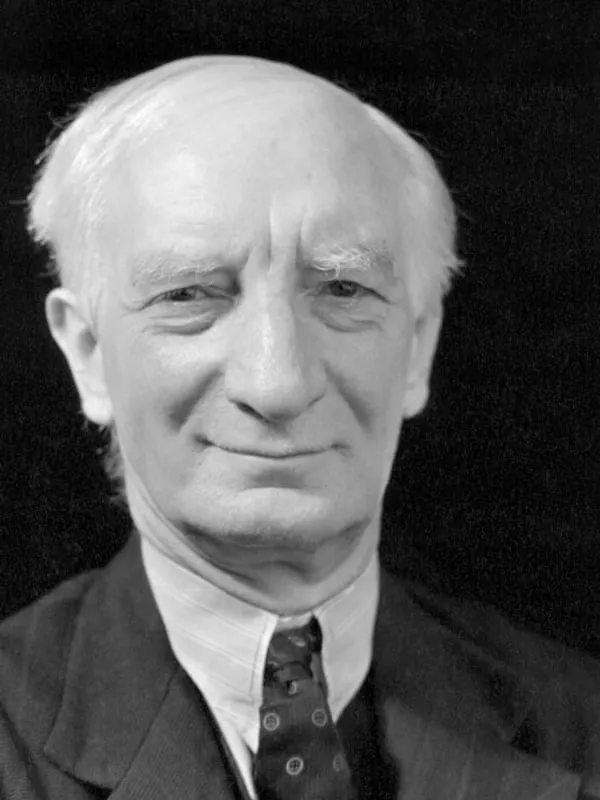
William Beveridge
Director of the London School of Economics (1919–1937), Master of University College, Oxford (1937–1945), author of the report on social insurance (1942), Liberal MP (1944–1945)
- Born:
- 5 March 1879, Rangpur (British India)
- Died:
- 16 March 1963, Oxford (England)
- Author:
- Natalia
- Photo:
- Howard Coster, domena publiczna, Wikimedia Commons

William Henry Beveridge was an economist, civil servant and reformer who devoted his whole life to a single problem: how to protect ordinary people from the poverty that came with unemployment, sickness and old age. As a young official he worked with Winston Churchill to create Britain’s first labour exchanges and unemployment insurance; for eighteen years he ran the London School of Economics; and in 1933 he helped rescue scholars driven out of Nazi Germany. He went down in history, however, above all as the author of the 1942 report Social Insurance and Allied Services. This official document, published in the middle of the war, became a bestseller and the programme on which the British welfare state was built after 1945.
Childhood in India and Oxford
He was born on 5 March 1879 in Rangpur in Bengal (now in Bangladesh), the eldest son of Henry Beveridge, a judge in the Indian Civil Service and a historian of the Mughals, and of Annette Akroyd, an orientalist and campaigner for women’s education who had come to India to found a school for Hindu girls. His father was a positivist and an admirer of Auguste Comte, and the belief that the scientific study of society could solve its problems stayed with the son all his life. He later described himself as an agnostic.
He was sent to England as a child. He was educated at Charterhouse, one of the leading public schools, and then at Balliol College, Oxford, where he took first-class honours in mathematics and classics. He went on to read law, but soon tired of the prospect of a career at the bar.
Toynbee Hall and the problem of unemployment
In 1903 he went to live at Toynbee Hall, a settlement in London’s East End where university graduates worked among the poor. There he first came face to face with daily life in the working-class districts and with unemployment, which he came to regard as the main cause of poverty. He wrote on social questions for the Conservative Morning Post and campaigned for old-age pensions, free school meals and a national network of labour exchanges. He grew close to Sidney and Beatrice Webb, the leading figures of Fabian socialism. In 1909 he published Unemployment: A Problem of Industry, in which he argued that unemployment was caused not by individual idleness but by fluctuations in trade and the poor organisation of the labour market.
At Churchill’s side
In 1908 Beatrice Webb introduced him to Churchill, the young President of the Board of Trade in H. H. Asquith’s Liberal government. Churchill took Beveridge on at his department. Beveridge drafted the Labour Exchanges Act of 1909 and became director of the new network, whose first offices opened in February 1910. He also helped to shape Part II of the National Insurance Act of 1911, steered through Parliament by the Chancellor of the Exchequer, David Lloyd George: Britain’s first compulsory unemployment insurance, which initially covered a handful of trades especially exposed to swings in the economy, such as building and shipbuilding. For the next three decades he was regarded as the country’s leading authority in the field.
The First World War
The war moved him into questions of supply and manpower. From 1915 he worked at the Ministry of Munitions, dealing with employment in the armaments industry, and from 1916 at the new Ministry of Food, which introduced price controls and food rationing. In 1919 he became its Permanent Secretary – the department’s most senior civil servant – and was knighted. The experience of those years, planning a war economy and directing supplies through the state, confirmed his conviction that the state could organise economic life effectively.
The London School of Economics
In 1919 he left the civil service and, at the instigation of the Fabians, took over as director of the London School of Economics. He ran it for eighteen years, until 1937. The School grew enormously in this period, gaining new buildings, chairs and funds, largely from American foundations, and in 1926–1928 Beveridge was also Vice-Chancellor of the University of London. He was guided by a vision of social science grounded in facts and statistics, which led to disputes with more theoretically minded economists such as Lionel Robbins and to conflicts with some of the staff, above all the political scientist Harold Laski. He himself directed large-scale research into the history of prices and wages in England from the twelfth century onwards, and in 1934–1944 he chaired the statutory committee overseeing the unemployment insurance fund.
In the spring of 1933, while in Vienna, he learnt of the mass dismissals of Jewish and politically inconvenient professors from German universities after Hitler came to power. On his return to London he led the initiative that gave rise to the Academic Assistance Council, an organisation that found posts and grants for exiled scholars. Among those who helped to found it was the physicist Leó Szilárd, who at that very time was working out the idea of the chain reaction. By the outbreak of war the organisation had helped several thousand scientists; many of them – physicists, chemists and doctors – later made important contributions to the British and American war effort.
In 1937 Beveridge moved to Oxford, where he became Master, that is head, of University College. He expected quieter years of scholarship, but the outbreak of war soon cut them short.
The Second World War and the report
In 1940 the Minister of Labour, Ernest Bevin, offered him the post of head of the welfare department in his ministry. Beveridge declined, hoping for a role in the central planning of manpower, and in the end, as a temporary civil servant, he carried out a survey of manpower resources for the ministry. In 1941 he chaired a committee that examined the use of skilled workers in the armed forces; among the outcomes of its recommendations was the creation of the Royal Electrical and Mechanical Engineers (REME). Bevin and his officials, however, found Beveridge conceited and difficult to work with, so when an interdepartmental committee on social insurance was set up in June 1941 they were glad to put him forward as its chairman. Beveridge accepted the post reluctantly, seeing it as a sideline.
He soon made it his life’s work. In the spring of 1942 he also drew up a plan for the rationing of coal, gas and electricity for the government, which provoked a revolt among Conservative MPs and ended with the state taking control of the coal mines, but his main task was the committee’s report. Because it went far beyond a technical review, he signed it alone, with the ministry officials acting only as advisers. The Beveridge Report, published on 1 December 1942, proposed a single universal system of insurance with flat-rate contributions and benefits and no means test, resting on three assumptions: family allowances, a comprehensive health service and the maintenance of full employment. It called for an attack on the “five giants”: Want, Disease, Ignorance, Squalor and Idleness. It appeared three weeks after Churchill, following El Alamein, had spoken of “the end of the beginning”, and it met enormous public expectations. Hundreds of thousands of copies were sold, and its author became one of the best-known men in the country.
The publicity, which Beveridge himself fuelled with interviews and speeches, irritated the government. Churchill did not want to take on financial commitments before the end of the war, and Whitehall felt that the author had overstepped the role of a civil servant. He was kept out of the work of putting the plan into effect. In 1942 he married Janet (Jessy) Mair, née Philip, the widow of his cousin, who had for years been his closest collaborator at the LSE and had helped him with the report. In 1944, now without any official remit, he published a second great report, Full Employment in a Free Society, in which he argued that it was the state, not individual employers, that had to ensure an adequate level of demand and employment. He defined full employment as a state in which no more than about 3 per cent of people were out of work.
MP and peer
He came to politics late. In 1944 he joined the Liberal Party and in October won a by-election at Berwick-upon-Tweed, a seat left vacant by the death of its member, killed in Normandy. In the House of Commons he belonged to the radical wing of the Liberals, which wanted to leave the wartime electoral truce and adopt a bolder programme. In the general election of July 1945 he lost his seat to a Conservative after only nine months in Parliament. The election was won by Clement Attlee’s Labour Party, which had made the implementation of the Beveridge plan one of the pillars of its programme. Between 1945 and 1948 Labour passed acts on family allowances, national insurance, the national health service and national assistance, and on 5 July 1948 the National Health Service came into being. In many details, however, they departed from Beveridge’s intentions, and they kept him himself at arm’s length from the work.
In 1946 he was created Baron Beveridge, of Tuggal, and took his seat in the House of Lords, where he became one of the leaders of the Liberals. He chaired the corporations building the new towns of Newton Aycliffe and Peterlee in the north of England, wrote a third report, Voluntary Action (1948), on the role of voluntary associations and mutual aid alongside the state, and chaired a committee on the future of the BBC (1949–1951). In 1953 he published his memoirs, Power and Influence. He watched with bitterness as his ideas were altered in practice: insurance benefits were not enough to live on, and more and more people had to rely on means-tested assistance, which he had wanted to avoid. He also disliked the term “welfare state”, preferring to speak of the “social service state”. He died in Oxford on 16 March 1963, aged 84, and was buried in the churchyard at Thockrington in Northumberland.
Shadows
Like many reformers of his era, Beveridge was a member of the Eugenics Society. In 1909 he wrote that men permanently unfit for work should be maintained by the state, but at the price of losing their civil rights, including the right to have children. His biographer José Harris stresses, however, that in the inter-war years his contribution to the eugenics debate was mainly “environmental” in character: he saw better housing, preventive medicine and nutrition as the way to improve the nation’s health. Historians find no eugenic content in the 1942 report itself, although Beveridge did seek the Society’s support for family allowances.
Significance
Beveridge was neither a front-rank politician nor a great economic theorist, yet few twentieth-century Britons had so lasting an influence on the lives of ordinary people. His report, published at the moment when, after years of defeat, Britain was beginning to believe in victory, gave the war an added meaning: the country was fighting not only for survival but also for a fairer Britain after the war, in which the poverty of the 1930s would not return. The Beveridge plan became the foundation of the post-war consensus that united Labour and the Conservatives for three decades, and his “five giants” still appear in British debates on social policy today. Traces of his ideas can be found in the social security systems of many countries that built their own versions of the welfare state after 1945.
Sources
Often appears with
People who appear in the same events.