- Category:
- Military operations
- Front:
- Far East
- Date:
- 7 July 1937
- Author:
- Natalia
- Tags:
- Japan, China, Second Sino-Japanese War, Fumimaro Konoe
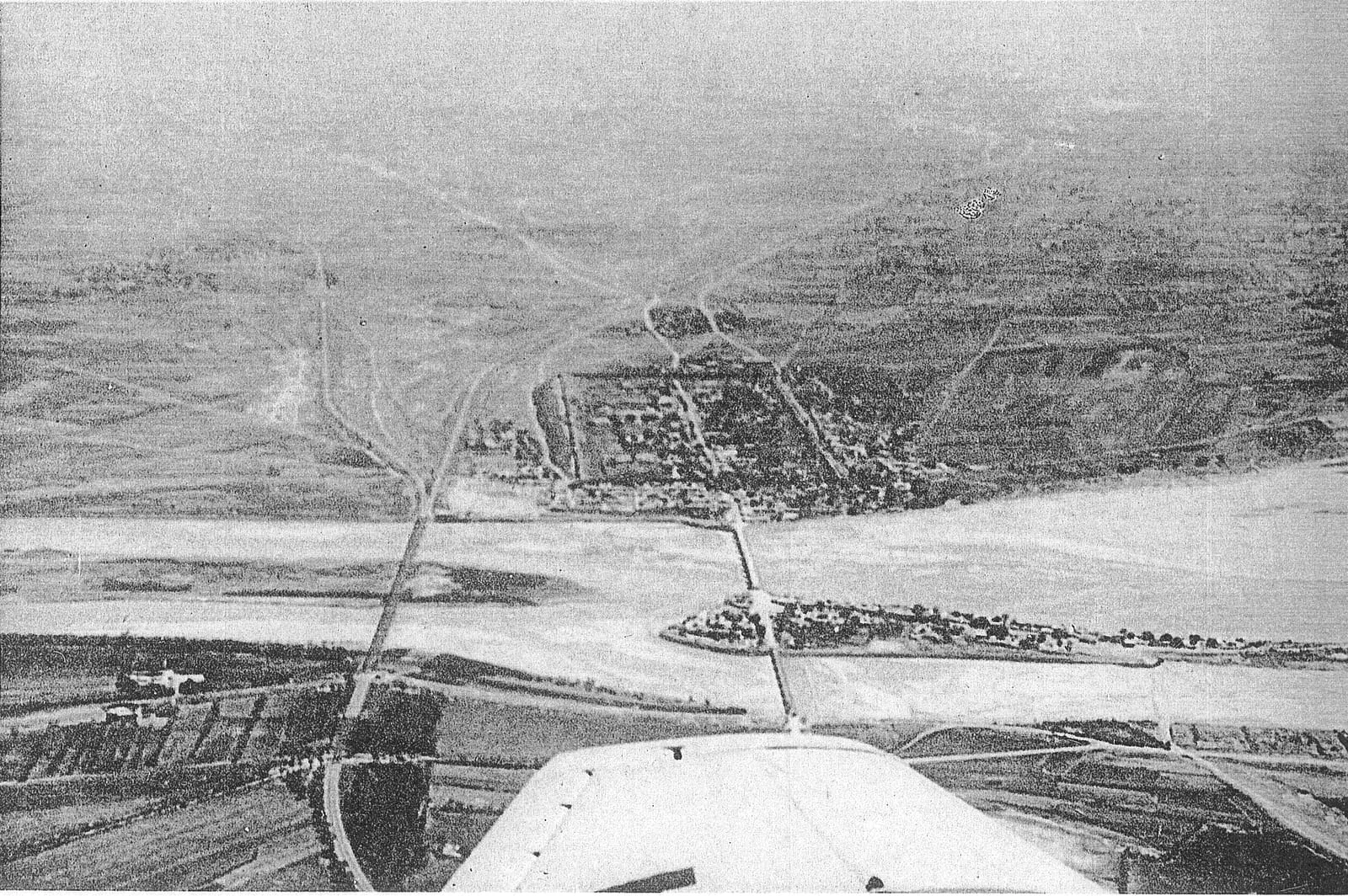
On the evening of 7 July 1937 a Japanese infantry company was on exercise on empty, scrub-covered ground beside the Yongding River, about fifteen kilometres south-west of Beijing. A few hundred metres away stood the stone Marco Polo Bridge, Lugouqiao in Chinese, and beside it the walled town of Wanping with its Chinese garrison. At about 10.40 p.m. a few shots were fired from the direction of the embankment by the river, followed shortly by more. At roll call one soldier was found to be missing. No one imagined that this night would open a war that would last eight years, claim millions of lives and in December 1941 become part of a world war.
In China the clash is called the “7 July incident”, in Japan the “Lugou Bridge incident”. Most historians regard it as the beginning of the Second Sino-Japanese War, and some also as the beginning of the Second World War in Asia.
Japanese troops outside Beijing
The Japanese soldiers were stationed near Beijing legally, but in numbers that no one had foreseen in 1901. The protocol that ended the Boxer Rebellion allowed the powers to keep troops in the Legation Quarter in Beijing and at a dozen or so points along the railway to the sea, and a supplementary agreement of 1902 permitted them to hold exercises without notifying the Chinese. In April 1936, however, the government of Kōki Hirota decided to enlarge the Japanese China Garrison Army several times over, from fewer than two thousand to more than five thousand men, and some sources give as many as 7,000–15,000 for the summer of 1937. A battalion of that army’s 1st Infantry Regiment was stationed at Fengtai, a railway junction south-west of Beijing, although Fengtai was not among the places listed in the protocol. Even the Japanese Army Ministry admitted in an internal opinion that there was no legal basis for this. The Chinese believed that the Japanese intended to cut Beijing off from the rest of the country.
Since seizing Manchuria in 1931 Japan had been pushing Nanjing’s authority out of northern China step by step. The Tanggu Truce of 1933 created a demilitarised zone between the Great Wall and Beijing, agreements of 1935 removed government troops from the provinces of Hebei and Chahar, and in the Tanggu zone the Japanese installed the puppet East Hebei government. Beijing – officially called Beiping (Peiping) since 1928, when the capital was moved to Nanjing – was governed by General Song Zheyuan, commander of the 29th Army and chairman of the Hebei–Chahar Political Council. He was a semi-independent warlord, manoeuvring between the Japanese and Chiang Kai-shek. His soldiers, poorly armed, often with nothing more than rifles and dadao swords, were nonetheless hostile to the Japanese, and after the Xi’an incident of December 1936 the mood throughout China had turned against further concessions. In 1936 there had already been two clashes near Fengtai, after which a Chinese unit had been forced to withdraw.
In Tokyo, on 4 June 1937, a government was formed by Prince Fumimaro Konoe, a popular aristocrat on whom every faction looked with hope. Within the army there was a dispute. The chief of the Operations Section of the General Staff, Major General Kanji Ishiwara, the architect of the conquest of Manchuria, now believed that Japan must avoid war with China and prepare for a confrontation with the USSR. Many officers thought the opposite: that one powerful blow would force the Chinese into submission.
The night of 7–8 July
The exercise was being conducted by the 8th Company of the 3rd Battalion, commanded by Captain Setsurō Shimizu. According to Japanese accounts, at about 10.40 p.m. several live rounds were fired from the embankment by the Yongding, where the Chinese posts stood. Shimizu halted the exercise and had his men called together by bugle, at which point a dozen or so more shots rang out. At roll call Private Kikujirō Shimura was missing. The captain sent mounted messengers to Fengtai with a report to the battalion commander, Major Kiyonao Ichiki.
Shimura returned to the company after about twenty minutes. He himself claimed that he had gone off to relieve himself and lost his way in the dark; the Danish historian Peter Harmsen cites a version according to which he had visited a brothel. Many accounts state that Captain Shimizu, for unknown reasons, delayed reporting his return by four hours. According to Japanese sources, the news that the soldier had been found was indeed not passed on to the battalion commander at once. Ichiki learned of it only after two in the morning, when he met Shimizu at Wulidian, and the Chinese side heard of it later still. The delay of roughly four hours is therefore not an invention. Its cause has never been explained, but by then the soldier had long ceased to be the point at issue.
At about midnight Ichiki telephoned the regimental commander, Colonel Renya Mutaguchi, who in the absence of his superiors was responsible for the Japanese units in the Beijing area. Mutaguchi ordered him to occupy the hill opposite Wanping, which the Japanese called Ichimonjiyama, and in the morning to open talks with the commander of the Chinese battalion in the town, Major Jin Zhenzhong. Meanwhile the Japanese special service agency in Beijing demanded that the Chinese authorities allow Japanese soldiers to enter Wanping to search for the missing man. The Chinese refused. Song’s deputy, General Qin Dechun, replied that the Japanese had been exercising on Chinese soil without notice and that China was not responsible for their soldier. The two sides agreed to send a joint commission to the scene, which included the magistrate of Wanping, Wang Lengzhai.
Ichiki, although he already knew that the soldier had been found, decided that firmness had to be shown, because the Chinese would take conciliation for fear. At 3.20 a.m. his battalion occupied the hill. After 4 a.m. shots were again fired from the direction of the Longwang temple on the embankment. Mutaguchi, asked by telephone, authorised opening fire. Ichiki himself later recalled being surprised that the colonel simply told him to shoot. At about 5.30 a.m. on 8 July, while the commission was still in Wanping, the Japanese attacked the Chinese positions on the embankment and at the railway bridge. The defence was directed by the commander of the 219th Regiment, Colonel Ji Xingwen. Japanese artillery shelled the town. The fighting went on intermittently all day. According to Japanese figures, 11 Japanese soldiers were killed and 36 wounded in the clashes of 8 and 9 July. Chinese losses were higher, but the exact figures are not known.
Who fired first
Who fired the first shots is still not known for certain. In Chinese historiography the prevailing view for a long time was that the Japanese had fabricated the incident, just as they had fabricated the explosion on the railway near Mukden in 1931. In Japan the opposite thesis circulated from the time of the war: that the shots were a provocation by the Chinese Communists, who wanted to drag the Kuomintang into war with Japan. The historian Ikuhiko Hata, author of the standard Japanese monograph on the incident, noted, however, that evidence for this version, including a supposed Communist manual attributing the action to the men of Liu Shaoqi, had never been produced.
A more cautious assessment prevails today. Japanese researchers such as Hata and Keiichi Eguchi consider it most likely that the first shots were fired by accident by a Chinese soldier on the embankment, alarmed by the night exercise and the sound of blank ammunition from a Japanese machine gun. The commander of the Chinese battalion admitted in 1986 that he had men on the embankment with orders to open fire if the Japanese came within a hundred metres. Nothing, on the other hand, suggests that either government planned the clash. Many Western historians stress that, unlike Mukden, this was a minor incident that got out of control. More important than the question of the first shot is why, this time, unlike after many earlier clashes, the tension did not subside.
From incident to war
In the first days it seemed that the affair would end as usual. On 8 July the General Staff in Tokyo ordered that the conflict should not be extended, and on the morning of 9 July the two sides agreed to separate their forces. The Chinese withdrew most of their soldiers from Wanping across the river. At 8 p.m. on 11 July representatives of the 29th Army signed a local agreement with the head of the Japanese special service agency in Beijing, Colonel Takurō Matsui: they expressed regret, promised to punish those responsible, to hand the protection of Wanping over to the Chinese police and to deal with anti-Japanese organisations, including the Communists.
That same day, however, decisions were taken in Tokyo. In the morning a conference of five ministers approved a proposal by the Army Minister, Hajime Sugiyama, to send reinforcements from Manchuria and Korea to northern China as a “show of force” and to prepare three divisions in Japan. At 2 p.m. the government approved this, in the afternoon Konoe obtained the consent of Emperor Hirohito, and at 6.24 p.m. the government issued a statement on the dispatch of troops, calling the clash the “North China Incident”. In the evening Konoe invited representatives of the press, the parties and big business to his residence and asked for their support. From then on the leading newspapers wrote in the language of the hard line. Konoe had not devised this policy, but he adopted it: he assumed that a firm stance would quickly break the Chinese and settle the matter on Japanese terms. When in the second half of July he still tried to conduct secret talks with Nanjing, the military police detained his envoy in the port of Kobe.
Chiang Kai-shek also decided not to give way. He sent government divisions north, thereby breaking the 1935 agreement that barred them from Hebei, and on 17 July, in a speech in the Lushan mountains, he declared that if war broke out, every Chinese, young or old, from north or south, would have to fight, and that China would not accept any settlement that infringed its sovereignty. Earlier, on 15 July, the Communists had given him a declaration of their readiness to cooperate, which hastened the Second United Front. Song Zheyuan tried for a long time to placate the Japanese – on 18 July he even apologised in person to the new commander of the Japanese China Garrison Army, General Kiyoshi Katsuki – but by then it was too late to stop the war. By the end of July tens of thousands of Japanese soldiers had arrived in the Beijing and Tianjin area from Manchuria and Korea.
On 25 July there was a firefight at Langfang station between Beijing and Tianjin, and on 26 July Chinese soldiers fired on a Japanese unit entering Beijing through the Guang’anmen Gate. The Japanese issued an ultimatum, and on 27 July Tokyo finally agreed to send divisions from the home islands. On the morning of 28 July the Japanese offensive against Beijing and Tianjin began. That evening Song Zheyuan left the city. The war that no one had declared went on.
Did the Second World War begin here?
Some scholars regard the Marco Polo Bridge incident as the beginning of the Second World War. The dispute is real and concerns what exactly that war was. In Europe, and especially in Poland, the starting point is 1 September 1939. In China, for decades, 7 July 1937 was regarded as the beginning of the war with Japan, and since 2017 Chinese textbooks have spoken of a “Fourteen-Year War of Resistance”, counted from the Mukden incident of 1931. Some Western historians, especially those specialising in Asia, such as the British historian Rana Mitter, argue that the Second World War began precisely in China in 1937, and that the war in Europe and the war in the Pacific joined it later.
The arguments for 1937 are strong: from July of that year one of the Axis powers was waging a full-scale war against a large state, and that war determined that Japan, seeking raw materials and wanting to cut China off from aid, moved south in 1940 and 1941 towards the European colonies and collided with the United States. The argument against is that until 1941 the conflict remained regional: neither Japan nor China declared war on the other, and Tokyo throughout called it an “incident” – from September 1937 the “China Incident”. China formally declared war on Japan, Germany and Italy only on 9 December 1941, after the attack on Pearl Harbor. Both dates therefore have their justification, and the choice depends on whether one looks at the war from Europe or from Asia.
Significance
The Marco Polo Bridge closed the period in which Japan took province after province from China while the world and the government in Nanjing accepted it for the sake of peace. After Manchuria, Rehe and the Tanggu zone, China this time took up the fight, and the Japanese military, who had counted on another quick local campaign, stumbled into a war they did not know how to end. By the end of July Beijing and Tianjin had fallen; in August the fighting moved to Shanghai, and in December the Japanese captured Nanjing and carried out a massacre there.
By 1945 the war in China had claimed, according to various estimates, from well over ten million to more than twenty million Chinese lives and had tied down most of the Japanese army. It drew Japan closer to Germany, with which it had concluded the Anti-Comintern Pact a few months earlier, and estranged it from the United States and Britain, which supported China ever more openly. When in 1941 Washington demanded the withdrawal of Japanese troops from China and Tokyo refused, the road led straight to Pearl Harbor. All of this began with a few shots in the dark by the Yongding River and with the decisions of men who believed that there could be no stepping back.
Sources
Related events
(04)The same battle, people or subject.
- 13 August 1937 · Far EastThe Battle of Shanghai beginsOn 13 August 1937 fighting broke out in Shanghai between the Chinese army and Japanese naval infantry. The war spread from northern China to its heart.
- 1 December 1937 · Far EastThe Battle of Nanjing beginsOn 1 December 1937 Imperial GHQ in Tokyo ordered the capture of Nanjing, China's capital, defended by General Tang Shengzhi with troops bled white at Shanghai.
- 13 December 1937 · Far EastThe Nanjing massacreOn 13 December 1937 the Japanese took Nanjing, China's capital. For weeks they murdered prisoners and civilians, raped women, looted and burned the city.
- 6 March 1938 · Far EastThe Japanese reach the Yellow RiverIn early March 1938 Japanese troops from North China reached the middle Yellow River in Shanxi and Henan. For years the river became a front line.