Japan
Kanji Ishiwara
Head of the Kwantung Army’s operations section (1928–1932), head of the Operations Division of the General Staff (1937), Lieutenant General (1939)
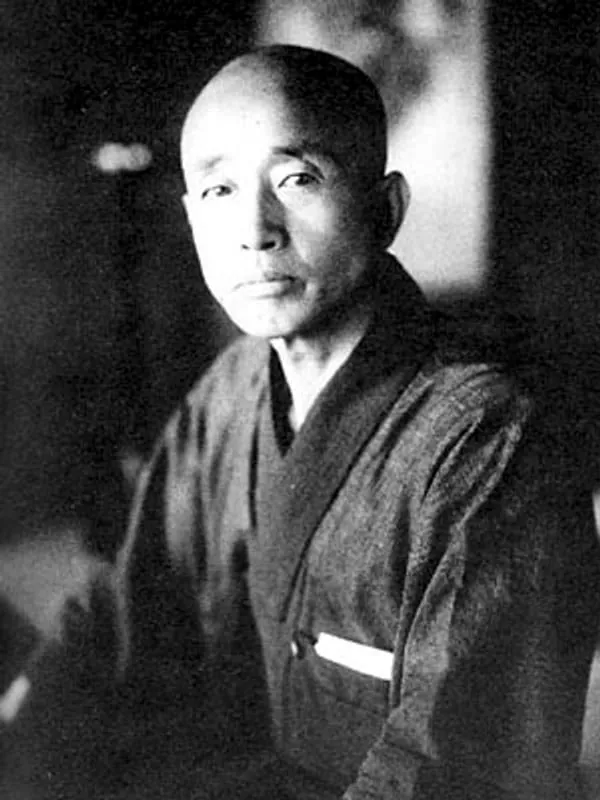
- Born:
- 18 January 1889, Tsuruoka, Yamagata Prefecture (Japan)
- Died:
- 15 August 1949, Takase (now Yuza), Yamagata Prefecture (Japan)
- Author:
- Natalia
- Photo:
- autor nieznany, domena publiczna, Wikimedia Commons

Kanji Ishiwara was the most original and at the same time one of the most dangerous minds in the Japanese army of the interwar period. As a staff officer of the Kwantung Army he planned, together with Seishirō Itagaki, the Mukden Incident of 18 September 1931 and the conquest of Manchuria, which was carried out without orders and against the wishes of the government in Tokyo. This success made him a hero to young officers and a model for those who in the following years extended Japanese rule in China on their own initiative. Paradoxically, when full-scale war with China broke out in July 1937, Ishiwara, by then head of the Operations Division of the General Staff, was its most important opponent within the army. He lost, fell out with Hideki Tōjō and in 1941 had to leave the army. After the war he escaped trial. To some he was a visionary; to others an arsonist who started a fire and then could not put it out.
A son of Shōnai samurai
He was born on 18 January 1889 in Tsuruoka in Yamagata Prefecture, into a family of former samurai of the Shōnai domain. His father was a policeman. In the civil war of 1868–1869 the Shōnai domain had fought on the side of the shogunate, and men from north-eastern Japan were long kept away from the highest posts, which in the army were held above all by officers from the former Chōshū domain. This sense of being an outsider stayed with Ishiwara all his life.
At the age of 13 he entered the military preparatory school in Sendai, then attended the cadet school in Tokyo and the Military Academy, from which he graduated in 1909. He was able but unruly, defied his superiors and neglected drill. He served in the 65th Infantry Regiment, with which he was stationed in 1910–1912 in Korea, recently annexed by Japan. From 1915 to 1918 he studied at the Army Staff College and graduated second in his year. In 1920 he served in central China, at Hankou, and the following year he became an instructor at the Army Staff College.
Nichiren and the “final war”
In 1920 Ishiwara joined the Kokuchūkai, Chigaku Tanaka’s nationalist Buddhist organisation, which combined the teachings of the medieval monk Nichiren with the cult of the emperor and a belief in Japan’s world mission. Faith in the coming of a great, final transformation of the world became the foundation of his political thought.
From 1922 to 1925 he lived in Germany, in Berlin and Munich, where he studied the history of war and hired several former German General Staff officers as tutors. He was particularly influenced by the work of the historian Hans Delbrück, who distinguished between wars decided by a single battle and wars of attrition. On his return Ishiwara lectured on the history of European warfare at the Army Staff College and developed a theory of his own. He believed that the development of military technology was leading towards a “final war”, in which aircraft capable of flying around the world and weapons that could destroy whole cities would decide mastery of the globe. It would be fought by two powers: the United States as leader of the West and Japan as leader of Asia. To prepare for it, Japan had to secure the raw materials and industry of the continent, above all of Manchuria, and the war was, as in Napoleon’s day, to “feed itself” on the resources of occupied lands.
In the Kwantung Army
In October 1928, a few months after Colonel Daisaku Kōmoto had organised the assassination of Zhang Zuolin, Lieutenant Colonel Ishiwara arrived at Kwantung Army headquarters in Port Arthur as head of its operations section. By then he already belonged to the informal associations of younger officers out of which grew the Isseki-kai, a group that sought to reform the army and to settle the Manchurian question by force. In July 1929, during a staff tour of northern Manchuria, he presented officers with a plan for “solving the problem of Manchuria and Mongolia” by occupying them, with the proviso that Japan must be ready for war with America.
With Itagaki, who in May 1929 became senior staff officer, he formed a well-matched partnership: Ishiwara was the thinker and planner, while Itagaki had authority and knew how to win people over. In May 1931 Ishiwara wrote a memorandum stating that the army should “create an opportunity by stratagem” and drag the state along with it. On 31 May he, Itagaki and two intelligence officers agreed on an operation against the railway near Mukden.
Mukden 1931
On the evening of 18 September 1931, when Itagaki’s men blew up the track near Mukden, Ishiwara was in Port Arthur with the army commander, General Shigeru Honjō. It was he who persuaded the hesitant general, instead of confining himself to local action, to crush the Chinese forces throughout the railway zone, and who prepared the orders that Honjō signed during the night – the start of the Japanese invasion of Manchuria. In the following months he directed the operations that gave Japan the whole of Manchuria during the Japanese invasion of Manchuria. On 8 October 1931 he was personally flying over Jinzhou when Japanese aircraft, without the army commander’s consent, bombed the city in which Zhang Xueliang’s administration had taken refuge. When in November the General Staff ordered a withdrawal from Qiqihar, Ishiwara urged Honjō either to disobey the order or to resign.
At first he wanted Japan to annex Manchuria. As early as September 1931, however, he agreed to the creation of a formally independent state, proclaimed in March 1932. Ishiwara proclaimed that Manchukuo was to be a land of “harmony of the five races” (Japanese, Chinese, Manchus, Mongols and Koreans), in which the Japanese too should take local citizenship. On his initiative the Concordia Association (Kyōwakai) was founded in 1932, intended to be the new state’s sole political party. In reality Manchukuo was governed from the outset by Japanese military men and officials.
Ishiwara expected to be punished for insubordination. Instead he became a hero. In 1932 he was promoted to colonel and went to Geneva as a member of the Japanese delegation when the League of Nations was considering the Manchurian question, which ended in 1933 with Japan’s withdrawal from the League. In 1933 he took command of the 4th Infantry Regiment in Sendai.
On the General Staff
In August 1935 Ishiwara became head of the operations section of the General Staff in Tokyo, and thus one of the army’s most important planners. He believed that Japan’s main enemy for the time being was the USSR and that a war with China would be a mistake. He wanted to create, within a few years, a powerful state-controlled armaments industry in Japan and Manchukuo. On his initiative economic plans were drawn up out of which grew, in 1937, the five-year plan for the industrial development of Manchukuo.
When on 26 February 1936 young officers staged a putsch in Tokyo (the February 26 Incident) and murdered several politicians, Ishiwara, although many of the rebels regarded him as ideologically close to them, came out in favour of crushing the rebellion and, as a staff officer of the martial-law headquarters, coordinated the action against it. Japanese sources differ on how quickly and how firmly he took this stand. Emperor Hirohito later recalled that he could not understand what kind of man Ishiwara was: the instigator of the Manchurian Incident, and yet in those days he had acted rightly.
In 1936 Ishiwara tried in vain to stop the Kwantung Army from setting up a puppet administration under Prince Demchugdongrub in Inner Mongolia, which led to the Suiyuan campaign. One of the staff officers there, Akira Mutō, reportedly retorted that they were only doing what he had done in Manchuria. In January 1937 Ishiwara helped to block the formation of a government by the moderate General Kazushige Ugaki, whom the army did not want, by ensuring that no general would agree to serve in it as Army Minister.
Against the war with China
In March 1937 Ishiwara, by then a major general, became head of the Operations Division of the General Staff. When fighting broke out at the Marco Polo Bridge on the night of 7–8 July 1937, he argued for a local settlement and opposed sending divisions from Japan to China. He warned that a war with China would turn into a quagmire that would swallow up the forces needed against the USSR. According to accounts from his circle, he even proposed that Prime Minister Fumimaro Konoe fly to Nanjing for talks with Chiang Kai-shek. Most officers of the General Staff and the War Ministry, however, favoured a hard line, and Ishiwara himself, under pressure, several times agreed to the dispatch of reinforcements. When in September, during the Battle of Shanghai, the decision was taken to send large forces there, against his opposition, Ishiwara left the General Staff on 27 September 1937 and became deputy chief of staff of the Kwantung Army.
Conflict with Tōjō and departure from the army
In Manchuria he discovered that Manchukuo was not the land of harmony between nations he had dreamed of, but a colony. He quickly fell into bitter conflict with the Kwantung Army’s chief of staff, General Hideki Tōjō, whom he publicly ridiculed as a bureaucrat without vision. In 1938, without waiting for a decision on his posting, he left for Japan on the pretext of illness. Even so he was not punished. He commanded the Maizuru fortress, in 1939 was promoted to lieutenant general and took over the 16th Division in Kyoto. When Tōjō became Army Minister in 1940, Ishiwara’s fate was sealed. In March 1941 he was transferred to the reserve.
Ishiwara lectured briefly at Ritsumeikan University in Kyoto, but had to give it up under pressure from the military police (Kenpeitai). He returned to his native region and devoted himself to writing and to the East Asia League (Tōa Renmei), a movement that advocated political independence combined with common defence and a common economy for Japan, Manchukuo and China. He regarded war with the United States as madness (“who starts a war because he wants oil?”). According to participants, in 1944 he supported a plot to assassinate Prime Minister Tōjō prepared by his followers. The conspiracy was discovered, but Ishiwara emerged from it unpunished.
After the war
After Japan’s surrender Ishiwara, seriously ill, was not among those indicted before the Tokyo tribunal. The reasons are not entirely clear: his illness, his well-known conflict with Tōjō and his opposition to the Pacific War are all cited. In May 1947 he testified as a witness at a special session in Sakata, where he defended the view that the Manchurian Incident had been self-defence, and mocked that if one was going to delve into history, then Commodore Perry, who had forced Japan to open up to the world and taught it imperialism, ought to be put on trial. He spent his last years in a farming community at Takase. He now preached that a Japan without an army, relying on the peace article of the new constitution, could help the world avoid the final war. He died on 15 August 1949, the fourth anniversary of the surrender, at the age of 60.
Significance
Ishiwara was one of the men who contributed most to Japan’s road to war, even though he did not want the war that destroyed it. At Mukden he showed that a handful of officers could, through provocation and disobedience, change the policy of the state, and that the army and the government would accept the fait accompli. Japanese officers in northern China from 1933 up to the Marco Polo Bridge Incident in 1937 acted exactly according to this pattern, and it was this pattern, not Ishiwara’s warnings, that proved lasting. His vision of a “final war” with America, decided by long-range aircraft and weapons that destroy cities, proved terrifyingly accurate in 1945 – but it was Japan that was its victim. Historians such as Mark Peattie, the author of his most important biography, see in him a man who understood Japan’s weakness better than anyone, and yet himself began the confrontation that destroyed it.
Sources
Commanded in battles
(01)Mentioned in battles
(01)Often appears with
People who appear in the same events.