Poland
Irena Sendler
Head of the children's section of the Council to Aid Jews "Żegota" (1943–1945)
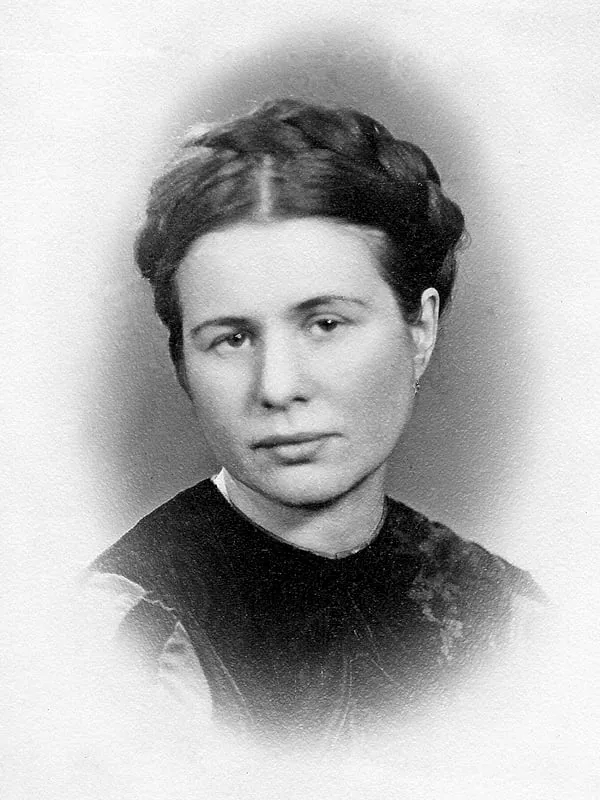
- Born:
- 15 February 1910, Warsaw (Congress Poland, Russian Empire)
- Died:
- 12 May 2008, Warsaw (Poland)
- Author:
- Natalia
- Photo:
- autor nieznany, domena publiczna, Wikimedia Commons

Irena Sendler was an employee of Warsaw’s municipal social welfare service who helped Jews throughout the occupation, first in the Warsaw Ghetto, then on the “Aryan side”. With a group of trusted colleagues from the city administration she led children out of the ghetto and obtained false birth certificates for them and places in Polish families, convents and children’s homes. From autumn 1943 she headed the children’s section of the Council to Aid Jews “Żegota”. Arrested and tortured by the Gestapo, she betrayed no one. For decades her story was known to few; fame came only with a play written around 2000 by American high-school girls. The number of children she saved herself is disputed to this day.
Otwock, university, social work
She was born on 15 February 1910 in Warsaw as Irena Stanisława Krzyżanowska, the only daughter of the physician Stanisław Krzyżanowski and Janina née Grzybowska. Her father was a member of the Polish Socialist Party and took part in the revolution of 1905. When she was small the family moved to Otwock (PL), where her father treated mainly poor Jews and peasants, and later ran a tuberculosis sanatorium. In 1917 he died of typhus, caught from his patients. Irena, who as a child played with Jewish children and learned some Yiddish from them, then grew up with her mother in Tarczyn and in Piotrków Trybunalski (PL). At secondary school she was active in scouting and met her first husband, Mieczysław Sendler, whom she married in 1931.
From 1927 she studied in Warsaw, first law, then Polish philology at the University of Warsaw. She belonged to the left-wing Union of Polish Democratic Youth. When in 1937 the rector introduced the ghetto benches (PL), she sat with Jewish students in class, which brought on her attacks by students linked to the ONR and suspension of her student rights. In 1932 she took a job in the section of aid to mother and child of the Civic Social Aid Committee at the Free Polish University, headed by Helena Radlińska (PL). After it was dissolved in 1935 she moved, with most of its staff, to the Department of Social Welfare and Public Health of the Warsaw City Administration. That is where the outbreak of war found her.
Help in the ghetto
Her husband, a reserve officer, was taken prisoner in September 1939 and spent the rest of the war in the Woldenberg oflag. Sendler went on working as a social worker in municipal centres in Wola, and later in Grochów. In October 1939 the Germans forbade the city administration to help the Jewish population and ordered Jewish employees dismissed. A group of welfare officials then formed around Sendler, at first five people, later ten, mostly women, who went on helping their former clients despite the ban, among other ways through falsified welfare interviews. Sendler was also a member of the underground PPS.
After the ghetto was closed in November 1940 she obtained for herself and her colleague Irena Schultz (PL) passes as employees of the sanitary unit that was supposed to fight infectious diseases in the ghetto. The pass let her enter it freely until January 1943. She brought food, clothing, money and medicine, including an illegally produced vaccine against typhus. In the ghetto she wore an armband with the Star of David, so as not to attract attention and to show solidarity with its inhabitants.
In time, rescuing children became ever more important. The group used municipal rules for this: homeless children were sent to care institutions on the basis of referrals, and Jewish children were given false case histories and the biographies of Polish orphans. The referrals were signed by the head of the child welfare section, the writer Jan Dobraczyński (PL). Many children were taken in by religious congregations, especially the Franciscan Sisters of the Family of Mary, headed by Mother Matylda Getter (PL), and the Servant Sisters in Turkowice. Children were led out of the ghetto through the courts building on Leszno Street, through the “Muranów” tram depot, through the cellars of houses on the ghetto boundary and through the sewers; infants were sedated and carried out in boxes in an ambulance. Many children got over the wall on their own.
The operation intensified in summer 1942, when the Germans began the Great Deportation to Treblinka. By her own account Sendler witnessed the march of Janusz Korczak and his children to the Umschlagplatz, the deportation of the Orphans’ Home, which she remembered as one of the hardest experiences of the war. As a student before the war she had done a placement in one of the Orphans’ Home’s institutions.
In Żegota
In November 1942 Sendler made contact with the newly forming Council to Aid Jews and brought her group into it. In this way the activity, until then semi-private, gained money and the backing of the structures of the Polish Underground State. Sendler looked after several flats in which Jews were hiding. Sources differ on when she took charge of the children’s section: according to dzieje.pl as early as December 1942, according to her biographers de facto in September and formally in October 1943, after the resignation of Aleksandra Dargielowa. She headed it until the end of the occupation. In the underground she used the pseudonym “Jolanta”.
The section placed Jewish children, separated from their parents or orphaned, with families, in convents, in institutions of the Central Welfare Council (PL) and in municipal children’s homes, supplied them with birth certificates and paid regular allowances for their keep. Sendler kept a coded card index of the children: their real names and new identities, so that after the war they could be returned to their families.
Arrest
Early in the morning of 21 October 1943 (according to some sources a few days earlier) the Gestapo arrested her in her flat on Ludwiki Street in Wola. Her name had been given away by the arrested owner of a laundry that served as a contact point. During the search the Germans did not find the card index. Sendler was held in Pawiak and interrogated at the Gestapo headquarters on Szucha Avenue (PL), where she was tortured; the injuries she suffered troubled her for the rest of her life. She betrayed no one. Żegota bought her freedom with a large bribe: according to her biographers, on 13 November 1943 one of the Gestapo men led her out of the Szucha building and let her go.
Until the end of the occupation she lived under the false name Klara Dąbrowska and went on working for Żegota. The Germans were not the only threat to her. In spring 1944 the counter-intelligence of the National Armed Forces (PL) put her on one of the so-called proscription lists of people suspected of communism. Historians disagree whether these were merely information reports or lists of people marked for liquidation; the historian Ludwik Widerszal (PL), who appeared on a similar list, was murdered in June 1944. Sendler recalled that a hit squad came for her twice.
Shortly before the Warsaw Uprising she buried the card index, written on tissue paper and hidden in two bottles, in the garden of the courier Jadwiga Piotrowska (PL) on Lekarska Street. During the uprising she was a nurse at a first-aid post in Mokotów. When in September the Germans expelled the district’s population, bribed escorts sent the wounded to Okęcie, where Sendler helped set up a hospital.
How many children she saved
The most often quoted figure, 2,500 children, comes from post-war accounts and refers to the whole activity of Żegota and of the people and institutions working with it, not to Sendler personally. According to these accounts about 1,300 children were placed with Polish families, about 500 each in convents and in Central Welfare Council institutions, about 200 in the municipal emergency care centre, and about a hundred teenagers went to the partisans. Not all of them survived the war. Roughly three quarters of the card index survived.
Historians treat this figure with caution. The United States Holocaust Memorial Museum (USHMM) writes that Sendler helped lead several hundred children out of the ghetto and hide them. Anna Bikont, author of the biography “Sendlerowa. W ukryciu” (“Sendler: In Hiding”, 2017), questions the figure, which, as was stressed when her book was presented, no historian had verified before, and shows that Sendler’s official biography was shaped for years to suit the legend. Rescuing the children was the work of many people: officials, couriers, nuns and the families who took the children under their roofs. Sendler herself never gave a number of the children she saved; she used to say there were too few.
After the war
In 1945 the card index was dug up, copied and handed over to Adolf Berman, Żegota’s former secretary, who then headed the Central Committee of Polish Jews (PL). It made it possible to find some of the children and reunite them with surviving relatives.
Sendler went on working in social welfare: as deputy head and then head of a department of the Warsaw administration she organised children’s homes and old people’s homes. In 1948, after the merger of the PPS with the PPR, she found herself in the Polish United Workers’ Party (PL); after the events of March 1968 she ceased to be active in it. She was interrogated by the Security Office, among other things for employing former Home Army soldiers. She later worked in medical education and at the Ministry of Health, and retired in 1967.
In 1947 she divorced Mieczysław Sendler and married Stefan Zgrzembski (born Adam Celnikier), an acquaintance from her student days, with whom she had three children; their son Andrzej died eleven days after birth. After Zgrzembski’s death she married Sendler again.
In 1965 the Yad Vashem institute recognised her as Righteous Among the Nations. The authorities of the Polish People’s Republic long refused her a passport; she planted her tree in the Avenue of the Righteous only in 1983. In 1991 she received honorary citizenship of Israel.
Memory
Wide fame came to her only with the play “Life in a Jar”, written in 1999 by secondary-school girls from Uniontown, Kansas, and later staged many times in the United States and in Poland. In 2003 she received the Order of the White Eagle, and in 2007 the Order of the Smile (PL). In the same year the Senate paid tribute to her and to Żegota, and she was nominated for the Nobel Peace Prize.
She died on 12 May 2008 in Warsaw at the age of 98 and was buried in Powązki Cemetery (PL). The Sejm declared 2018 the Year of Irena Sendler. An avenue in front of the POLIN Museum of the History of Polish Jews bears her name, and in 2009 the National Bank of Poland commemorated her on a coin together with Zofia Kossak and Matylda Getter. Her story has become one of the best-known accounts of Poles rescuing Jews, and at the same time an example of how a legend simplifies the collective, perilous effort of many people.
Sources
Often appears with
People who appear in the same events.