Poland
Maciej Rataj
Marshal of the Sejm (1922–1928), People's Party leader, member of the Main Political Council of the SZP–ZWZ (1939–1940)
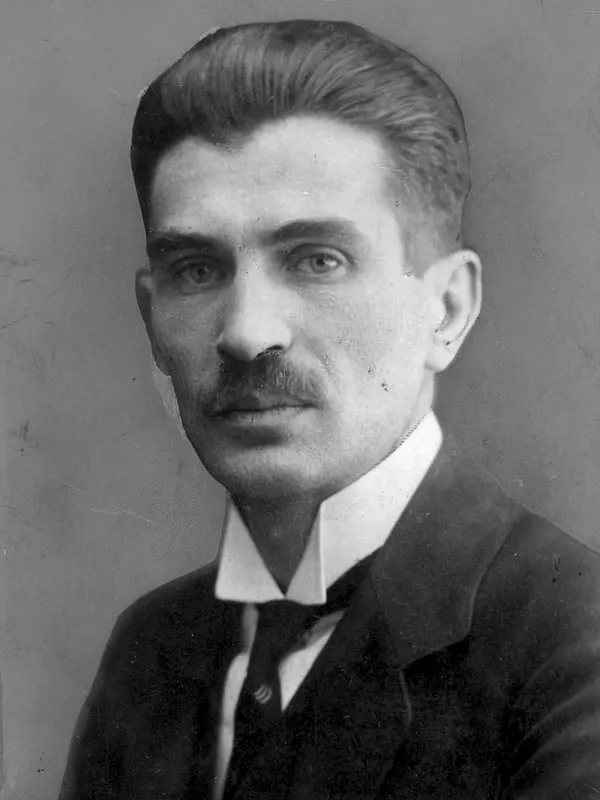
- Born:
- 19 February 1884, Chłopy (Galicia, Austria-Hungary)
- Died:
- 21 June 1940, Palmiry (General Government)
- Author:
- Łukasz
- Photo:
- autor nieznany, domena publiczna, Wikimedia Commons

Maciej Rataj was one of the most respected politicians of the Second Polish Republic. The son of a peasant from near Lwów, a Latin teacher and an activist of the peasant movement, he presided over the Sejm from 1922 to 1928 and twice – after the assassination of President Narutowicz and during the May Coup – stood in for the head of state. After 1926 he went into opposition to the Sanation regime. In September 1939 he did not leave Warsaw, and after the capitulation he was one of the founders of the political underground. Arrested by the Gestapo in March 1940, he was killed on 21 June that year in the Palmiry massacre.
From a Galician village to the Sejm
He was born on 19 February 1884 in the village of Chłopy in the district of Rudki, not far from Lwów, into the poor farming family of Wojciech and Józefa. His father, though he worked only a small plot of land, sent his son to school. After the village schools in Chłopy and Komarno, Rataj attended the Fourth Gymnasium in Lwów, where he supported himself by private tutoring and a scholarship, and in June 1904 he passed his school-leaving examination with distinction. Already as a pupil he wrote for the peasant paper “Przyjaciel Ludu”. He studied classical philology at the University of Lwów (PL) and at the same time did educational work among the peasants in the Society of the People’s School. From 1908 he taught Latin at a gymnasium in Lwów.
From his student days he belonged to the Polish People’s Party. After the split in the peasant movement in 1913 he sided with Wincenty Witos, and in 1914 he joined PSL “Piast” (PL). In 1918 he moved to Zamość, where he taught at the gymnasium, founded the “Gazeta Zamojska” and in October spoke at a large independence rally. As the dominant party in the area was PSL “Wyzwolenie”, he briefly joined it. In January 1919 he was elected on its list to the Legislative Sejm (PL).
Marshal of the Sejm
In the Legislative Sejm he was deputy chairman of the constitutional committee and, as the chairman was often absent, in practice directed its work. He is regarded as one of the authors of the March Constitution of 1921. During the Polish-Soviet War he joined the Council of State Defence, and from 24 July 1920 to September 1921 he was Minister of Religious Denominations and Public Enlightenment in the Witos government. In the course of the term he returned to “Piast”.
On 1 December 1922, at the second sitting of the newly elected Sejm, he became its Marshal. Two weeks later, on 16 December, the first President of the Republic, Gabriel Narutowicz, was shot dead in the Zachęta gallery in Warsaw. Under the constitution, the duties of head of state passed to the Marshal of the Sejm. Rataj accepted the resignation of Julian Nowak’s government and the same day appointed General Władysław Sikorski prime minister, who brought the tense situation in the country under control. He also decided that the National Assembly would meet in Warsaw. On 20 December he handed power to the new president, Stanisław Wojciechowski.
He stood in for the president a second time during the May Coup. Respected by both supporters and opponents of Józef Piłsudski, he mediated between the sides fighting in Warsaw. On 14 May 1926 Wojciechowski surrendered his office into his hands, and Rataj, in line with Piłsudski’s wishes, entrusted Kazimierz Bartel with forming a government. He exercised the powers of head of state until 4 June, when Ignacy Mościcki, elected by the National Assembly, took office. He remained Marshal of the Sejm until the end of the term, in March 1928. He was succeeded by Ignacy Daszyński.
In opposition
Over time Rataj judged the rule of Piłsudski’s camp ever more critically. In 1929 he told a “Piast” congress that Poland had been living “without law” for three and a half years and that the constitution and the statutes had been “broken”. He called for a struggle against Sanation, but by parliamentary means. He was among those who prepared the alliance of the centre and left parties, the Centrolew. After Witos and other opposition leaders were arrested in September 1930 and later tried in the Brest trial, he took over the leadership of “Piast”. In the November 1930 elections he lost his seat.
He conducted the talks that led in March 1931 to the union of three peasant parties in the People’s Party (Stronnictwo Ludowe). He joined its Supreme Executive Committee and until the outbreak of war edited the party organ, “Zielony Sztandar (PL)”. In 1934 he took Witos’s seat in the Sejm after Witos, sentenced in the Brest trial, had gone to Czechoslovakia. In Witos’s absence he led the People’s Party for several years as acting chairman; biographies give different dates, the IPN speaking of 1935–1939. In 1937 he opposed the organisation of a great peasant strike and withdrew from the leadership for a time.
September 1939 and the underground
After the outbreak of war Rataj did not leave Warsaw. Biographies list him among the initiators of the Workers’ Brigade for the Defence of Warsaw (PL) – a volunteer formation created from 6 September mainly by PPS activists – and stress his cooperation with the socialist Mieczysław Niedziałkowski. After the capitulation of the city he was active in the underground from the first weeks. He was deputy civil commissioner at the command of the Service for Poland’s Victory and, with Niedziałkowski and Leon Nowodworski of the National Party, co-founded the Main Political Council (PL), the political backing of the underground army, which brought together representatives of the main parties. He favoured a single, non-partisan military organisation, and at the same time built the clandestine structures of the peasant movement from which the People’s Party “Roch” (PL) grew.
At the end of November 1939 the Gestapo arrested him at his flat at 14 Hoża Street. He was held in the prison on Daniłowiczowska Street. After about three months, in February 1940, he was released for lack of evidence of anti-German activity. He settled in Otwock. He refused an offer to be smuggled through Hungary to France, stressing that “the struggle for the nation’s existence is being fought here at home”. He returned to the underground, and in March 1940 he took charge of the Central Leadership of the Peasant Movement, to which the structures of SL “Roch” and the “Wici” Rural Youth Union were subordinated.
Arrest and death at Palmiry
On 30 March 1940 the Gestapo arrested him again – according to historians, just before a meeting with the commander of the ZWZ in the General Government, Colonel Stefan Rowecki. This came during a wave of arrests aimed at the Polish elites in the occupied country, which grew into the AB-Aktion. Rataj was held in Pawiak prison. The details of his time in prison remain unknown.
On 21 June 1940, on the second day of the largest of the Palmiry executions, the Germans shot him in the forest outside Warsaw together with hundreds of other Pawiak prisoners. Niedziałkowski and the Olympic champion Janusz Kusociński were killed there the same day. In the course of two days, 20 and 21 June, 358 people were killed at Palmiry. Rataj was 56.
His body was identified during the exhumation carried out by the Polish Red Cross after the war. Found with the remains were letters sent to him from home in prison, the walking stick he never parted with and a wallet with his papers. In 1946 he was buried with ceremony in the Palmiry cemetery (PL). His daughter Anna, his son-in-law and his grandson were killed in the Warsaw Uprising.
Remembrance
After the war the communist authorities posthumously awarded him the Order of the Cross of Grunwald, 1st Class, and in 1954 the President of Poland in exile the Cross of the Independence of Underground Poland with Swords. In 2018, on the centenary of regained independence, he received the Order of the White Eagle posthumously. His “Pamiętniki 1918–1927” (Memoirs 1918–1927), published in 1965 and again in 2020, are among the most important sources for the history of parliamentary government in the Second Republic. Many schools bear Rataj’s name, and the Polish People’s Party named its political institute after him.