Poland
Mieczysław Niedziałkowski
A leader of the Polish Socialist Party, editor-in-chief of "Robotnik" (1927–1939), civil commissioner of the Service for Poland's Victory (1939)
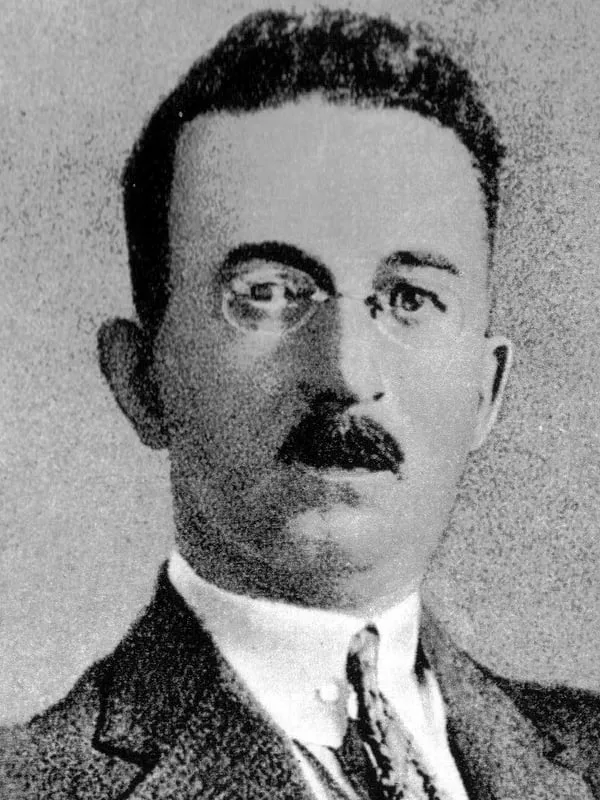
- Born:
- 19 September 1893, Wilno (Russian Empire)
- Died:
- 21 June 1940, Palmiry (General Government)
- Author:
- Łukasz
- Photo:
- autor nieznany, domena publiczna, Wikimedia Commons

Mieczysław Niedziałkowski was one of the most important figures of the Polish left between the wars. A theorist and ideologue of the Polish Socialist Party, a member of the Sejm for sixteen years and from 1927 editor-in-chief of “Robotnik (PL)”, he defended parliamentary democracy against the Sanation regime. In September 1939 he was among the organisers of the civil defence of besieged Warsaw. Jan Nowak-Jeziorański called him, alongside the city’s mayor Stefan Starzyński, one of the “spiritual leaders of the September defence of Warsaw”. After the capitulation he helped to create the political underground. Arrested by the Gestapo in December 1939, he was killed on 21 June 1940 in the Palmiry massacre.
Youth in Wilno
He was born on 19 September 1893 in Wilno into an intelligentsia family with landowning roots. His father Konrad had belonged in his youth to the socialist party “Proletariat”, later devoted himself to local government and was deputy mayor and then mayor of Wilno. Two of his uncles were killed in the January Uprising. Mieczysław attended the Russian classical gymnasium in Wilno. As a pupil he founded the Union of Progressive Independence Youth. In 1912 he began studying law at the university in St Petersburg, where he led the Polish progressive youth, but after the outbreak of the First World War he broke off his studies.
He went to Warsaw and in 1914 joined the PPS. He worked in social organisations, and from 1916 he headed the party’s Warsaw district committee and sat on its Central Workers’ Committee. He co-edited the legal paper “Jedność Robotnicza” and the theoretical “Przedświt”. In the spring of 1917 the German authorities briefly held him in Pawiak prison.
MP and ideologue
In November 1918 he became head of the Sejm department of the Ministry of the Interior, and in January 1919 director of the constitutional office of the prime minister. He was one of the co-authors of the democratic electoral law for the Legislative Sejm, based on the “five-adjective” franchise, and of the draft constitution prepared by the government of Jędrzej Moraczewski (PL). In January 1919, aged 25, he became one of the youngest members of the Legislative Sejm. He remained an MP until 1935 – with a short break in 1931, when the Supreme Court annulled the election in his Płock constituency and he won the seat again in October. In the Sejm he dealt above all with constitutional and foreign affairs, and from 1929 he chaired the socialist parliamentary group.
From the unification congress of 1919 until September 1939 he sat on the Supreme Council and the Central Executive Committee of the PPS, and he was also its general secretary. He represented the party abroad – at the founding congress of the Labour and Socialist International in Hamburg in 1923 and at assemblies of the League of Nations. He was a critic of Bolshevism and an opponent of the Communist Party of Poland. He wrote a great deal, including “Teoria i praktyka socjalizmu wobec nowych zagadnień” (The theory and practice of socialism in the face of new problems, 1926) and “Demokracja parlamentarna w Polsce” (Parliamentary democracy in Poland, 1930). He was regarded as one of the party’s chief theorists. He was no tribune: the parliamentary reporter Bernard Singer recalled that he gave no “brilliant speeches” and did not interrupt others with barbs, but when someone had to speak for the PPS in the constitutional debate, “he spoke like a professor, quoting scholars in French, German, English”. He was, Singer wrote, “the ornament and the treasure of the party”.
After the death of Feliks Perl (PL), the Supreme Council of the PPS entrusted him on 30 May 1927 with running “Robotnik”, the party’s central organ. He edited it – without pay, according to dzieje.pl – until the capitulation of Warsaw in September 1939.
Against Sanation
After the May Coup the PPS soon went into opposition to Józef Piłsudski, and Niedziałkowski became one of the founders of the Centrolew, the alliance of the left and centre parties. He wrote the resolutions adopted on 29 June 1930 in Kraków at the Congress for the Defence of the Law and the Freedom of the People, which announced a struggle to remove Piłsudski’s dictatorship. When in September 1930 the opposition leaders were arrested and imprisoned in the Brest fortress, he was not among them – according to one account Piłsudski personally struck him off the list.
In the 1930s he defended parliamentary democracy and sought a common front of workers and peasants against fascism. He wrote the party programme adopted at the PPS congress in Radom in February 1937, the so-called Radom programme (PL). In November 1937 and April 1939, in PPS delegations to President Ignacy Mościcki, he presented a plan to form a government of national defence.
The defence of Warsaw
In September 1939 Niedziałkowski devoted himself to the defence of the capital. “Robotnik” kept appearing under his direction until the last days of the siege. He ran the Workers’ Social Aid Committee, which together with the paper’s editorial office recruited volunteers for the Workers’ Brigade for the Defence of Warsaw (PL); he worked with the peasant leader Maciej Rataj, advised General Walerian Czuma and General Juliusz Rómmel and worked alongside Starzyński. From 20 September he was one of the three PPS representatives on the Citizens’ Committee attached to the commander of Army “Warsaw”. When at the end of September the fate of the city was being decided, Niedziałkowski and Zygmunt Zaremba spoke in favour of capitulation. For his part in the defence he received the Cross of Valour.
In the underground
After the capitulation he took part in creating the clandestine PPS, which took the name PPS – Freedom, Equality, Independence (PL). From October 1939 he sat on the political council of the Service for Poland’s Victory and was civil commissioner to its commander, General Michał Karaszewicz-Tokarzewski. Together with Rataj and Leon Nowodworski he co-founded the Main Political Council (PL), the political backing of the underground army. He also headed the SZP Press Information Bureau, which published “Wiadomości Polskie”. At the same time he worked openly in the Citizens’ Committee and the Capital Social Self-Help Committee.
Conspiratorial caution, however, could not be squared with his fame. As Nowak-Jeziorański wrote, “thousands of people knew him by sight, and it was not hard to guess what awaited him”. The Gestapo arrested him in December 1939; dzieje.pl gives the date as 22 December, while pl.wikipedia and most accounts of Palmiry give 23 December. Interrogated at the Gestapo headquarters on Szucha Avenue, according to dzieje.pl he was sentenced to death by a German summary court on 18 February 1940.
Death at Palmiry
He was killed a few months later, during the AB-Aktion, which targeted the Polish elites in the General Government. On 21 June 1940 the Germans brought Niedziałkowski from Pawiak to the forest near Palmiry and shot him together with other prisoners. Maciej Rataj and Janusz Kusociński were killed there the same day. In the course of two days, 20 and 21 June, the Germans murdered 358 people at Palmiry. Niedziałkowski was 46.
His remains were found during the post-war exhumation. In May 1946 a ceremonial funeral was held at Palmiry, attended by several thousand people. Representatives of the political parties spoke over the coffin, and the authorities posthumously awarded him the Order of the Cross of Grunwald, 1st Class. In 1954 the President of Poland in exile, August Zaleski, posthumously awarded him the Cross of the Independence of Underground Poland with Swords. He lies in the Palmiry cemetery (PL). Streets in dozens of Polish towns bear his name.
Sources
Often appears with
People who appear in the same events.