Poland
Wojciech Korfanty
Member of the Reichstag (1903–1912, 1918), commissioner of the Supreme People’s Council (1918–1919), Polish plebiscite commissioner in Upper Silesia (1920–1921), Deputy Prime Minister (1923)
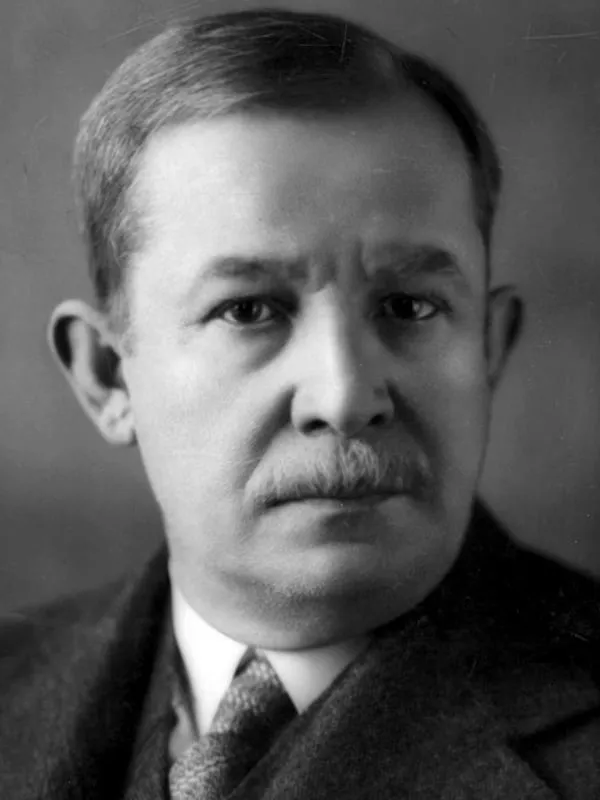
- Born:
- 20 April 1873, Sadzawki near Siemianowice (Upper Silesia, Prussia)
- Died:
- 17 August 1939, Warsaw
- Author:
- Łukasz
- Photo:
- autor nieznany, domena publiczna, Wikimedia Commons

Wojciech Korfanty was the most important leader of the Polish national movement in Upper Silesia and one of the ablest Polish politicians in Imperial Germany. A miner’s son, in 1903 he became the first in Upper Silesia to win a seat in the Reichstag on an openly Polish platform. On 25 October 1918, from the rostrum of the German parliament, he demanded for Poland the lands of the Prussian partition, and a few weeks later, as a member of the Commissariat of the Supreme People’s Council in Poznań, he took on the political leadership of the Greater Poland Uprising. His greatest achievement was the struggle for Upper Silesia in 1919–1921, which ended with the most industrialised part of the region joining Poland. To the Germans he became the symbol of Polish claims and of Silesia being “torn” from the Reich; to Piłsudski and the Sanation camp he was one of their most dangerous opponents. He died two weeks before the outbreak of the Second World War, shortly after his release from a Polish prison.
Early life
He was born on 20 April 1873 in Sadzawki, a mining settlement that is now part of Siemianowice Śląskie, as Adalbert Korfanty. His father, Józef, was a miner at the Fanny colliery; at home the family spoke Polish and cherished their Catholic faith. At the gimnazium in Katowice Korfanty and his friends set up a secret circle that spread Polish culture and literature. In August 1895 he was expelled from the final year for remarks against Bismarck, and he passed his school-leaving examination as an external candidate thanks to the intercession of Józef Kościelski, a Reichstag deputy from Greater Poland. He studied at the technical university in Charlottenburg, then philosophy and economics in Wrocław (Breslau), where he attended lectures by Werner Sombart among others, and in Berlin, where he completed his studies in 1901.
Deputy for Polish Silesia
While still a student he became involved with National Democracy and the secret National League, in which he worked with Roman Dmowski. From the turn of 1901 and 1902 he edited the daily Górnoślązak (PL) (“The Upper Silesian”). For articles in the Poznań paper Praca, in which he called on Upper Silesians to embrace national consciousness, he spent several months in prison at Wronki. He argued that Polish Catholics in Silesia should no longer vote for the German Centre Party, which defended them as Catholics but not as Poles.
In 1903 Korfanty won a Reichstag seat in the Katowice–Zabrze constituency, and soon afterwards a seat in the Prussian Landtag as well. He joined the Polish Circle, the Polish parliamentary group, breaking with the tradition under which Silesian deputies sat with the Centre. He was famous for speeches in which he defended the Silesian worker against exploitation and Germanisation. Printed in Polish newspapers, they circulated through the mines and ironworks. In the same year, when the German Prince-Bishop of Wrocław, Cardinal Georg von Kopp, forbade anyone to marry him in Silesia, he married Elżbieta Szprotówna in Kraków.
The years that followed brought a crisis. In 1908 Korfanty broke with the National Democrats, seeking closer ties with the clergy and a position of his own. Accusations accumulated around his press businesses, and his opponents exploited them mercilessly. In 1912 he did not stand for the Reichstag and moved to Berlin, where he ran a press agency dealing with Eastern Europe. In the spring of 1914 the German authorities noted with satisfaction that his influence among the Poles had all but vanished.
The war and 1918
For most of the First World War Korfanty remained on the margins of Polish political life. He kept his seat in the Landtag but returned to active politics only when Germany began to totter. On 6 June 1918 he won a Reichstag by-election in the Gliwice–Toszek–Lubliniec constituency with about 63 per cent of the vote, almost twice as much as the Centre candidate. The result surprised both sides and showed that war-weary Upper Silesians were beginning to vote against the Reich.
In the autumn of 1918 Germany asked President Woodrow Wilson for an armistice on the basis of his Fourteen Points. The thirteenth promised an independent Poland including the territories “inhabited by indisputably Polish populations” and with access to the sea. On 25 October Korfanty, invoking Wilson, demanded in the Reichstag that the Polish districts of Upper and Middle Silesia, the Province of Posen, West Prussia and East Prussia be joined to Poland. “We do not want a single inch of German land,” he said, but he demanded “one Poland, made up of the lands of the three partitions”. The speech provoked outrage in the chamber and entered the canon of the Polish parliamentary tradition. A few days later revolution broke out in Germany.
In Poznań: the Supreme People’s Council and the uprising
Korfanty arrived in Poznań on 11 November, the day of the Armistice of Compiègne, and joined the three-man Commissariat of the Polish organisation that had just come into the open and a few days later took the name of the Supreme People’s Council. On 17 November, with other activists from the Prussian partition, he held talks in Warsaw with Józef Piłsudski on forming a government. As a National Democrat and an opponent of the left, he demanded a national cabinet and opposed a socialist premiership. The talks ended in failure, and the biographers of both men date from them the lasting mutual antipathy that weighed on Polish politics for two decades.
At the Polish Provincial Diet (PL), which sat in Poznań from 3 to 5 December, Korfanty was one of the leading figures. The six-member Commissariat of the Supreme People’s Council elected afterwards entrusted him with military and foreign affairs. The Council wanted to gain the lands of the Prussian partition peacefully, while waiting for the peace conference, and Korfanty was against premature armed action. On 25 December, at the head of a delegation of the Council, he welcomed Ignacy Jan Paderewski in Gdańsk and accompanied him on his journey to Poznań.
On 27 December the uprising broke out in Poznań. The Commissariat had not planned it, but had to accept the accomplished fact. It was Korfanty who offered the post of provisional commander-in-chief to Captain Stanisław Taczak, who happened to be in the city, and who then lobbied in Warsaw for an experienced general to be sent. In mid-January 1919 command was taken over by Józef Dowbor-Muśnicki. As commissioner for military affairs, Korfanty later claimed credit for organising the Greater Poland Army, which drove the Germans out of most of the province and then fought in the east.
The battle for Upper Silesia
The Treaty of Versailles did not settle the fate of Upper Silesia: a plebiscite was to decide it. Korfanty was a deputy to the Legislative Sejm, and in 1920 he became the Polish plebiscite commissioner. From his headquarters in the Hotel Lomnitz in Bytom he directed a campaign in which neither side was scrupulous about its methods, from propaganda to intimidation. According to legend, a Polish voter was to receive “Korfanty’s cow” for his vote. In August 1920 Korfanty gave the order for the Second Silesian Uprising (PL), which forced the dissolution of the German security police and the creation of a mixed plebiscite police. In the plebiscite of 20 March 1921, in which emigrants born in Silesia and brought in from the depths of Germany also voted, the majority chose Germany, but in the industrial districts the supporters of Poland had the upper hand.
When it became clear that the Allies intended to award Poland only a small, agricultural part of the plebiscite area, Korfanty proclaimed the Third Silesian Uprising (PL) on the night of 2–3 May 1921 and took command of it as dictator. The insurgents seized most of the industrial district. After bloody fighting with the German Selbstschutz, including the battle for St Anne’s Mountain, Korfanty, to the fury of some of the officers, halted any further offensive and agreed to the withdrawal of the insurgents behind the demarcation line. In October 1921 the Council of the League of Nations divided the region: Poland received less than a third of the territory, but most of the mines and ironworks. In June 1922 Polish troops marched into Katowice.
For the Germans the partition of Upper Silesia was, alongside Gdańsk and the “Corridor”, the most painful wound of the Versailles order, and Korfanty was its embodiment. Throughout the interwar years German propaganda portrayed him as an agitator and the leader of “insurgent gangs”.
In independent Poland
Korfanty joined the Christian Democrats and sat as a deputy in the Sejm and in the Silesian Sejm. In July 1922 the Sejm nominated him for prime minister, but in the face of opposition from Piłsudski, then Chief of State, and the threat of a general strike by the Polish Socialist Party (PPS), the nomination was withdrawn. In the autumn of 1923 he was Deputy Prime Minister in the government of Wincenty Witos. He bought the Warsaw daily Rzeczpospolita from Paderewski and published Polonia in Katowice.
After the May Coup of 1926 he went into resolute opposition to the Sanation regime. In Silesia his chief adversary was the voivode (provincial governor) Michał Grażyński. In September 1930, after the dissolution of the Silesian Sejm, Korfanty was arrested and, together with the leaders of the Centrolew (Centre-Left) alliance, held in the Brest fortress, where he was mistreated. He was excluded from the Brest trial itself, and after his release he returned to politics, sat in the Senate and led the Christian Democrats. In 1935, warned that he faced internment in the camp at Bereza Kartuska, he left for Czechoslovakia. From exile he co-founded the Morges Front in 1936 with Paderewski and General Władysław Sikorski, and in 1937 he became chairman of the new Labour Party (Stronnictwo Pracy). He could not return even for the funeral of his son Witold in 1938, because the government refused him a safe conduct.
The last year
The dismemberment of Czechoslovakia forced him to leave for France. When at the end of April 1939 Hitler repudiated the Polish–German non-aggression pact, Korfanty decided that in the face of the German threat his place was at home, and returned to Poland. Almost immediately he was arrested and held in Pawiak prison. Despite public protests he spent nearly three months in prison, and his health deteriorated rapidly. Released on 20 July, he was taken to hospital, where he died after an operation on 17 August 1939. Among his supporters there circulated the theory that he had been poisoned in prison, which has never been either confirmed or disproved. In its announcement of his death German radio called him a “German-eater” and the leader of “Polish gangs”, to whom Germany owed the severing of Silesia from the Reich. His funeral in Katowice drew huge crowds – according to contemporary accounts as many as a quarter of a million people. Two weeks later German troops entered Silesia, and Korfanty’s family left the country.
Significance
In Poland Korfanty is regarded as one of the fathers of independence and as the man without whom Upper Silesia would not have come within Poland’s borders. His speech of 25 October 1918 belongs to the canon of the Polish parliamentary tradition, and his part in leading the Polish movement in Poznań at the turn of 1918 and 1919 helped to decide the western border of the reborn state. That same border became one of the main targets of German revisionism, which led to war in 1939.
Judgements of him are mixed. He was an outstanding politician, but hot-tempered and ruthless in a fight. For most of the First World War he played no significant role, and he returned when Germany’s defeat was becoming apparent: his supporters see in this a sense of timing, his critics opportunism. The quarrel with Piłsudski that began in November 1918 ended in prison and exile. For decades German historiography portrayed him as a nationalist and agitator, Polish historiography as a national hero. In 1997 he was posthumously awarded the Order of the White Eagle.