Poland
Ignacy Jan Paderewski
Representative of the Polish National Committee in the US (1917–1918), Prime Minister and Foreign Minister (1919), Chairman of the National Council of the Republic of Poland (1939–1941)
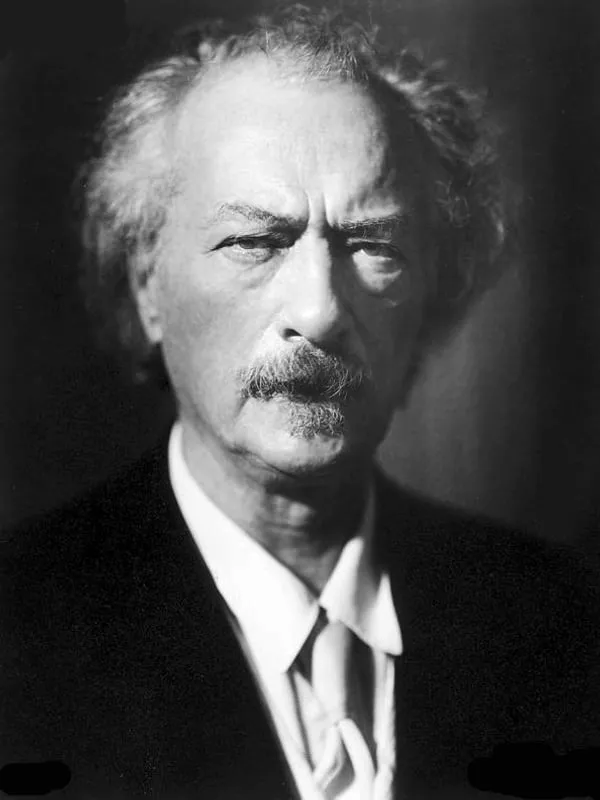
- Born:
- 6 November 1860, Kuryłówka, Podolia (Russian Empire)
- Died:
- 29 June 1941, New York
- Author:
- Natalia
- Photo:
- autor nieznany, domena publiczna, Wikimedia Commons

In 1914 Ignacy Jan Paderewski was the most famous Pole in the world, but he was not a politician. He was known as the pianist who filled the largest concert halls of Europe and America. The First World War turned him into a diplomat. He used his fame and his access to the most important people in Washington to persuade President Woodrow Wilson that the United States should support an independent Poland. In December 1918 he came home as a man trusted by the Allies, and his stay in Poznań became the spark for the Greater Poland Uprising. In 1919, as prime minister, he briefly reconciled the feuding political camps and signed the Treaty of Versailles, which fixed Poland’s western border – a border that Germany went on contesting right up to 1939. At the end of his life, during the Second World War, he became head of the Polish parliament in exile.
Childhood and education
He was born in Kuryłówka (PL) in Podolia, then part of the Russian Empire. The most recent biographies give the date as 6 November 1860 (25 October by the Julian calendar). Older works gave 18 November, and some sources the year 1859. His mother, Poliksena née Nowicka, died a few months after his birth. His father, Jan, a manager of landed estates, spent a year in prison in Kiev for taking part in the January Uprising. The boy was taught privately by a veteran of the November Uprising, who instructed him in history, Polish literature and French; his musical talent showed itself very early.
From 1872 to 1878 Paderewski studied at the Music Institute in Warsaw, and after graduating he became a teacher there. In 1880 he married Antonina Korsakówna, who died a few days after giving birth to their son Alfred. The son, sickly from childhood, died in 1901. Widowed, Paderewski went to Berlin for further study and then, with the help of Helena Modrzejewska, to Vienna to study with Teodor Leszetycki, the most famous piano teacher of the day.
A great career
His Vienna debut in 1887 and his Paris debut in 1888 opened the way to a career such as no Polish musician had enjoyed since Chopin. He gave concerts in London, including for Queen Victoria, but it was in the United States that he became a true legend. His tour of 1891–1892 brought him a popularity in America that few artists have ever known, and a fortune that later allowed him to live on his own money throughout his political career. In 1896 he bought the Riond-Bosson villa near Morges on Lake Geneva, which became his main home, and a year later a manor at Kąśna Dolna near Tarnów. In 1899 he married Helena Górska, née Rosen, with whom he remained until her death in 1934. He also composed: his Minuet in G major was played all over the world, and his opera Manru, staged in Dresden in 1901, reached the Metropolitan Opera in New York a year later.
Even before the war Paderewski showed that fame could serve politics. He funded the Grunwald Monument in Kraków, unveiled in July 1910 on the five-hundredth anniversary of the battle before a crowd that had come from all three partitions. On that occasion he spoke of a nation that had survived bondage. He belonged to no party, and thanks to his wealth, fame and connections across Europe he was an outsider in Polish politics, acceptable to different camps.
The First World War
The outbreak of war found him in Switzerland. He first devoted himself to relief for the population of the Polish lands, across which the fronts were rolling. In 1915, together with Henryk Sienkiewicz, he founded in Vevey the General Committee for the Relief of War Victims in Poland (PL), and he helped to set up similar committees in Paris and London. In April 1915 he sailed for the United States. Over the following years he toured the country, speaking about Poland before every concert, raising money and uniting Polish America, which until then had been divided into warring organisations.
His political contacts proved the most important. At the end of 1915 Paderewski met Colonel Edward House, Wilson’s closest adviser, and won his trust, and he then met the President himself. Wilson, who was seeking re-election, could not ignore several million Polish Americans, and Paderewski was able to speak on their behalf. In January 1917, at House’s request, he prepared a memorandum on the Polish question for the President. A few days later, in an address to the Senate, Wilson called for “a united, independent, and autonomous Poland”. When the United States entered the war, Paderewski campaigned for the recruitment of Polish-American volunteers into the Polish Army in France. In the summer of 1917 he became the American representative of the Polish National Committee, headed by Roman Dmowski.
On 8 January 1918 Wilson announced his Fourteen Points. The thirteenth called for an independent Polish state including the territories “inhabited by indisputably Polish populations”, with free and secure access to the sea. Historians debate to what extent this was Paderewski’s personal success and to what extent the result of the memoranda of the Committee as a whole, but no one denies that among Poles his influence on the President was the greatest.
December 1918: Gdańsk and Poznań
After the Armistice of Compiègne, Paderewski sailed for Europe. At the end of November he held talks in London with the Foreign Secretary, Arthur Balfour. The British wanted a strong government in Poland with which the Entente could work, and they distrusted both the socialist cabinet of Jędrzej Moraczewski and Józef Piłsudski, until recently an ally of the Central Powers. Paderewski was to reconcile Warsaw with the Paris Committee. He insisted, however, that the road to Warsaw should lead through Gdańsk (Danzig), which was formally still German.
The British cruiser HMS Concord brought him on 25 December to Gdańsk, where a delegation of the Poznań-based Supreme People’s Council, led by Wojciech Korfanty, was waiting for him. He was accompanied by his wife and by the semi-official British military mission of Colonel Harry Wade. The German authorities wanted no political demonstration in Poznań and tried to send the train straight to Warsaw, but Paderewski and Wade refused. On the evening of 26 December Poznań welcomed him with torch-bearing crowds, and from a window of the Bazar Hotel (PL) he addressed those gathered, calling for unity.
The next day Paderewski, pleading a cold, did not appear in public. He knew that he was in a German state and that any incident involving him could harm the Polish cause at the peace conference. In the afternoon a German procession that included soldiers tore down Polish and Allied flags in the city, and shots were fired near the Bazar that began the Greater Poland Uprising. Bullets also struck the windows of his suite. Paderewski did not call for fighting, but in Polish memory his arrival is forever linked with the outbreak of the only fully victorious uprising in Polish history. On 1 January 1919 he reached Warsaw.
Prime minister and Versailles
Talks with Piłsudski were difficult, and on the night of 4–5 January a group of conspirators from the National Democratic camp tried to overthrow Moraczewski’s government. The coup failed, but it showed how dangerous the split was. Piłsudski concluded that a government headed by Paderewski would win Poland the Allies’ recognition. On 16 January 1919 Paderewski became Prime Minister and Foreign Minister. The Polish National Committee recognised the new cabinet, and a few days later the United States recognised the Polish government. Together with Dmowski he represented Poland at the Paris Peace Conference, where his personal acquaintance with Wilson, House and Prime Minister David Lloyd George proved invaluable.
On 28 June 1919 the two men signed the Treaty of Versailles. Poland received almost all of Greater Poland and most of Pomerania, with access to the sea, but not Gdańsk, which became a Free City under the protection of the League of Nations, while the fate of Upper Silesia, Warmia and Masuria was to be decided by plebiscites. Paderewski also had to sign the so-called Little Treaty of Versailles on the protection of minorities, which was regarded at home as humiliating. As prime minister he had little support in the Sejm and was criticised from both right and left, and at the end of 1919 he resigned. In 1920, at the most critical moment of the Polish–Soviet War, he was still Poland’s representative at the League of Nations, but in 1921 he withdrew from politics.
The interwar years
He returned to the concert platform, where he continued to enjoy enormous success. His American tours of the 1920s again earned him large sums, and in 1932 some 16,000 people came to his charity concert at Madison Square Garden in New York. He lived mainly at Riond-Bosson. He grew ever further apart from Piłsudski, especially after the May Coup of 1926. After the Marshal’s death in 1935, his villa became a centre of opposition to the Sanation regime: in 1936 it gave its name to the Morges Front, an alliance of General Władysław Sikorski, Paderewski, Korfanty and centre-right politicians who demanded the democratisation of political life. The Front won no influence over the government at home, but it brought together the men who took over the leadership in exile after September 1939.
The Second World War
In May 1939, before a concert in New York, Paderewski suffered a heart attack. After the September defeat, Sikorski’s government-in-exile set up the National Council in December 1939 as a substitute parliament, and Paderewski became its chairman. Because of his age and illness he did not attend its sessions in person. His name nonetheless symbolised the continuity of the state and the unity of the émigrés. In the autumn of 1940, after the fall of France, he travelled through Spain and Portugal to the United States, to campaign there one last time for aid to Poland and support for its cause.
He died in New York on 29 June 1941, a week after the German attack on the Soviet Union. On the orders of President Franklin Delano Roosevelt he was buried temporarily at Arlington National Cemetery, on the understanding that he would be laid to rest in Poland once the country was free. In 1992 his remains were brought to St John’s Archcathedral in Warsaw. His heart is kept at the National Shrine of Our Lady of Częstochowa in Doylestown, Pennsylvania.
Significance
Paderewski was an extraordinary figure in diplomacy. He had neither a party, nor an army, nor an office behind him, and yet in the United States he achieved more for the Polish cause than anyone else. His fame opened doors that were closed to other politicians, and his personal charm won over men such as House. At the turn of 1918 and 1919 he played a key role as mediator: thanks to him Poland appeared at the peace conference with a single government recognised by the Allies.
As prime minister he was, in the view of many historians, an ineffective politician, a stranger to Polish party quarrels who bore their brutality badly. The Treaty of Versailles that he signed gave Poland its western border, but it also created problems that Germany for twenty years presented as a wrong: Gdańsk, the “Corridor” and the German minority in Greater Poland and Pomerania. It was on these slogans that Hitler built his demands on Poland in 1939. In Polish memory Paderewski remains a patriot who gave his fame and fortune to the national cause, and one of the fathers of independence alongside Piłsudski, Dmowski, Ignacy Daszyński, Wojciech Korfanty and Wincenty Witos.
Sources
Mentioned in battles
(01)Often appears with
People who appear in the same events.