1942: The Red Army’s winter offensive
Fighting on the Kerch Peninsula (1941–1942)
- Dates:
- 26 December 1941 – 19 May 1942
- Front:
- Eastern Front
- Location:
- Eastern Crimea: the Kerch Peninsula from Kerch and the Kerch Strait to the Ak-Monai (Parpach) isthmus between the Sea of Azov and the Black Sea, with Feodosia and Sudak on the south coastOn the battle map →
- Sides:
- Nazi GermanyErich von MansteinSoviet UnionDmitry Kozlov, Lev Mekhlis
- Result:
- Victory for Germany and Romania. The Soviet landing of December 1941 regained the Kerch Peninsula and halted the assault on Sevastopol, but the Crimean Front's offensives of February–April 1942 failed. In May the 11th Army destroyed three Soviet armies and recovered the peninsula.
- Author:
- Natalia
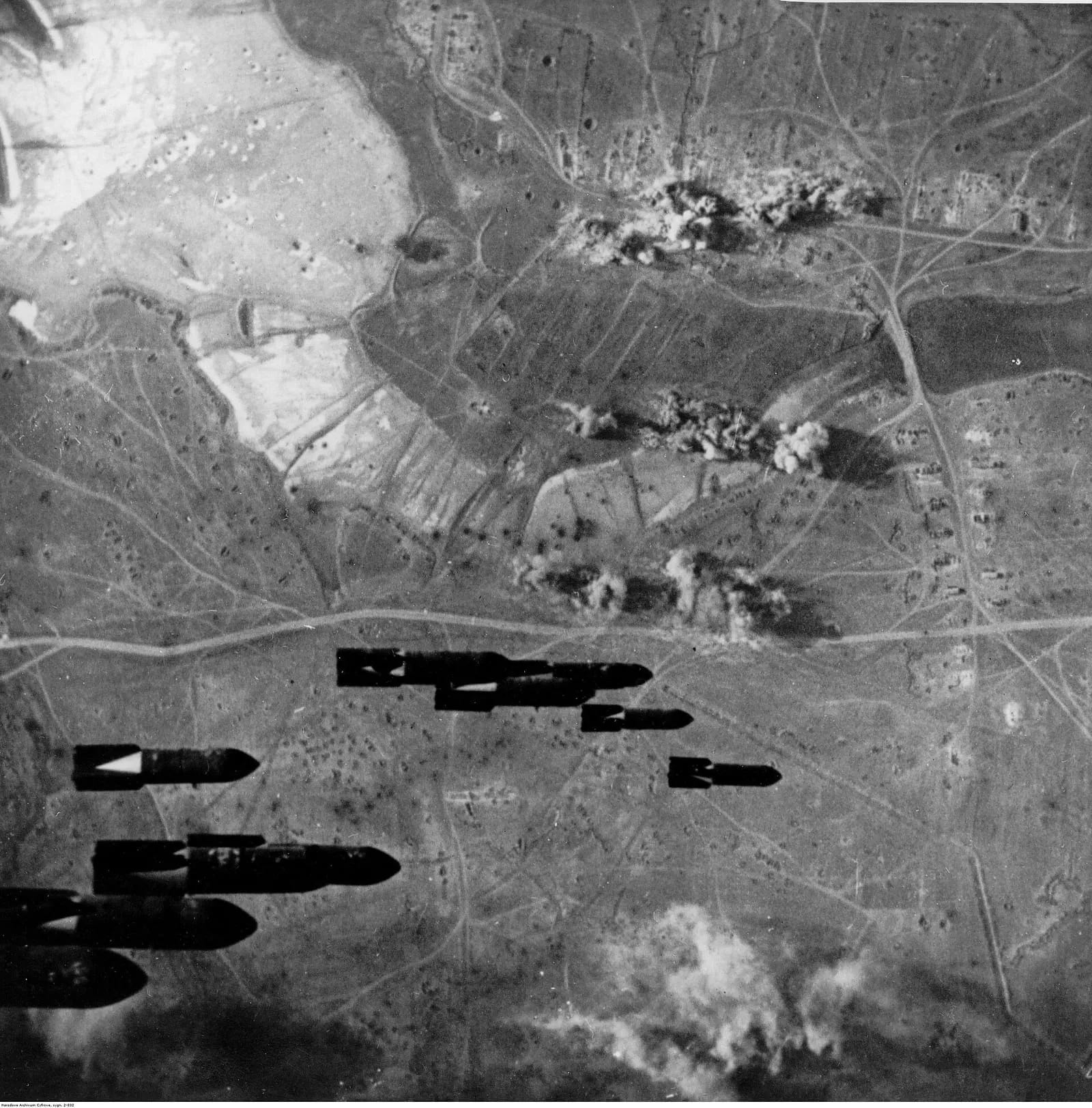
The fighting on the Kerch Peninsula, the easternmost part of the Crimea, lasted almost five months and was among the most one-sided clashes of the Eastern Front. It began with a daring Soviet landing which, in the last days of 1941, retook Kerch and Feodosia, forced Erich von Manstein to break off his assault on Sevastopol and for a few days brought the German 11th Army to the brink of disaster. It ended in one of the Red Army’s heaviest defeats of 1942: in May Manstein, with fewer men, tanks and guns than his opponent, smashed the Crimean Front in less than two weeks and drove its remnants into the sea.
Between these two episodes a long and bloody positional war was fought on the narrow Ak-Monai isthmus, where from February to April Soviet troops tried four times to break through the German defences and relieve Sevastopol. Every one of these attacks foundered in the mud and under the fire of the German artillery. The story of the struggle for the peninsula later became, in the USSR, an example of how the Stavka’s obstinacy, incompetent command and the interference of a political commissar could squander an enormous numerical superiority.
Name and dates
Soviet and Russian literature divides this fighting into several separate operations: the Kerch–Feodosia landing operation (PL) (26 December 1941 – 2 January 1942), the offensive operations of the Caucasian, and later the Crimean, Front in January–April 1942, and the Kerch defensive operation (8–19 May 1942). The Germans called their May offensive Operation Trappenjagd (“Bustard Hunt”, after the bird that lives on the Crimean steppe). Western historians, among them Robert Forczyk, treat the whole as a single battle for the Kerch Peninsula.
The fighting may be taken to span the period from the first landings near Kerch on the morning of 26 December 1941 to 19 May 1942, when the Crimean Front ceased to exist and the Stavka formally disbanded it. According to Russian studies, the last pockets of resistance at the eastern tip of the peninsula – in the Kerch metallurgical works, at Yenikale and in the village of Opasnoye – fell by 20 May, and the evacuation across the Kerch Strait continued until the same day. Outside these limits lies the defence of the Adzhimushkay quarries, which lasted until the autumn of 1942 and formed the epilogue to the fighting on the peninsula. Sources give different dates for the capture of Kerch: German and some Western sources give 15 May, some Soviet ones 16 May.
Background
In the autumn of 1941 Manstein’s 11th Army, advancing on the southern flank of Army Group South, broke through the Soviet defences on the isthmuses leading into the Crimea and within a few weeks occupied almost the whole peninsula. On 16 November the Germans entered Kerch, and the remnants of the Soviet 51st Army crossed the Kerch Strait to the Taman Peninsula. Only Sevastopol, the main base of the Black Sea Fleet, remained in Soviet hands; its siege had begun at the turn of October and November. The first attempt to take the city on the march failed, and on 17 December Manstein began a second, prepared assault, into which he threw almost all his forces.
In the eastern Crimea he left only Lieutenant General Hans von Sponeck’s XLII Army Corps – in practice the single 46th Infantry Division, strung out along a long coastline and supported by two Romanian brigades. Meanwhile, after the counter-offensive at Moscow and the recapture of Rostov in the November fighting, Joseph Stalin was convinced that the Wehrmacht was close to collapse. On 7 or 8 December (sources give both dates) the Stavka ordered the commander of the Transcaucasian Front, Lieutenant General Dmitry Kozlov, to prepare a landing on the Kerch Peninsula. It was to retake the eastern Crimea, relieve Sevastopol and, in the longer term, recover the whole peninsula. The plan was drawn up by the front’s chief of staff, Major General Fyodor Tolbukhin.
The Kerch Peninsula is flat and almost treeless. It is separated from the rest of the Crimea by the Ak-Monai isthmus, also called the Parpach, some 17–20 kilometres wide, between the Arabat Bay of the Sea of Azov in the north and the Black Sea coast near Feodosia in the south. Whoever held this isthmus could defend it with small forces against a much stronger enemy, and whoever wanted to break through it had to attack head-on across open steppe. This geography determined the entire course of the fighting.
The Kerch and Feodosia landings
On the evening of 25 December the embarkation of the landing troops began on the Taman Peninsula, and during the night of 25/26 December 1941, in a gale and severe frost, flotillas of cutters, barges and steamers carried the first units of the 51st Army across the strait. The landings north and south of Kerch, made without landing craft and without communications, went badly. Within a few days the German 46th Division had wiped out most of the beachheads and, by its own count, taken some 1,700 prisoners. Only the beachheads in Bulganak Bay and at Kamysh-Burun held out.
The second blow was decisive. On the morning of 29 December ships of Vice Admiral Filipp Oktyabrsky’s Black Sea Fleet sailed into the harbour of Feodosia and landed the leading units of the 44th Army. The town was defended by a few hundred sappers and gunners; by late morning it was in Soviet hands. Sponeck, fearing that he would be cut off, withdrew the 46th Division from the Kerch Peninsula against Manstein’s orders. In a blizzard the division covered some 120 kilometres in two days and escaped encirclement, but abandoned much of its heavy equipment. Sponeck was relieved of his command and later sentenced by a court martial.
By 2 January 1942, when the Soviet command declared the operation complete, the whole Kerch Peninsula was in the hands of the Red Army. The assault on Sevastopol petered out on 31 December, because Manstein had to transfer the 170th Infantry Division and other units eastwards. Russian statistical data put the cost of the landing operation to the Soviet forces at 41,935 men, including 32,453 killed, drowned, frozen to death and missing.
Manstein later admitted in his memoirs that in the first days of January the fate of his whole army hung by a thread. Had the troops from Feodosia moved quickly north-westwards towards Dzhankoy and the railway to Simferopol, the 11th Army would have lost its only supply artery. That did not happen. Kozlov’s units, exhausted by the crossing, had neither transport nor communications, and the command, which had stayed behind in Tbilisi, consolidated the beachhead instead of pushing forward. In several days the 44th Army advanced a mere dozen or so kilometres from Feodosia, and the 51st Army moved westwards from Kerch so slowly that it reached the isthmus only after a week.
The loss of Feodosia
The Germans reacted much faster. Manstein pulled the headquarters of General Maximilian Fretter-Pico’s XXX Corps with three divisions out of the Sevastopol front and brought up Romanian reinforcements and air support. Kozlov, whose Transcaucasian Front had meanwhile been renamed the Caucasian Front, did not believe the enemy capable of attacking and did not order his armies to dig in.
At dawn on 15 January German bombers and Ju 87 dive-bombers struck the positions of the 44th Army in the hills west of Feodosia. Bombs hit the army headquarters, and its commander, Major General Aleksei Pervushin, was seriously wounded. The German infantry, supported by assault guns, took the defenders by surprise and by the afternoon had captured the ridge above the town. On 16 January, as a diversion, a Soviet regiment landed in the German rear near Sudak; Manstein rightly judged this to be a distraction and sent only small forces against the landing, which by the end of January had largely destroyed it. Some of its men joined the partisans in the mountains.
On 17 January the German 132nd Infantry Division attacked Feodosia itself. Soviet soldiers fought back in the burning streets, but under incessant air attack the evacuation by sea failed, and the 236th Rifle Division was destroyed. By 18 January the town was in German hands once more. By 20 January both German corps had reached the Ak-Monai isthmus, and the front settled on its narrowest stretch. According to German figures, XXX Corps took some 10,000 prisoners and 177 guns in these days, while losing fewer than a thousand men itself. The victory at Feodosia did not, however, give the Germans Kerch: Manstein had neither the tanks nor enough aircraft to go further, and his army still had to hold the ring around Sevastopol.
The Crimean Front and Mekhlis
On 20 January Army Commissar 1st Rank Lev Mekhlis – Deputy People’s Commissar of Defence, head of the Main Political Directorate of the Red Army and one of Stalin’s closest associates – flew to Kerch as the representative of the Stavka. In his very first telegram he reported that the front commander knew neither the positions of his troops nor their strength, and he accused Kozlov of confusion and indecision. At his request, on 28 January the troops on the Kerch Peninsula were formed into a separate Crimean Front under Kozlov’s command, with the 44th, the 51st and the newly transferred 47th Army. The Separate Coastal Army in Sevastopol and the Black Sea Fleet were also placed under the front’s operational control. Its task was to break through the isthmus, strike deep into the Crimea and relieve Sevastopol.
From then on the front was in practice run by two men. Kozlov, a well-trained staff officer but without experience of commanding large formations, gave way to Mekhlis, who knew nothing of operational art but ruthlessly enforced Moscow’s orders, replaced commanders and sniffed out defeatism everywhere. The writer Konstantin Simonov, who was with the Crimean Front in February, recalled years later that the watchword there was “everyone forward”: the troops were crowded together just behind the front line, nobody dug trenches or prepared rear positions, and Mekhlis, “personally fanatically brave, militarily of little competence”, had brought the weak commander under his thumb and was running everything himself.
Over the winter Kozlov built up his forces. When the strait froze, sappers marked out a road across the ice, over which, according to Russian figures, more than 96,000 soldiers, almost 24,000 horses and over 6,500 vehicles crossed to the peninsula. The rest went by sea, through the ports of Kerch and Kamysh-Burun, which were bombed incessantly. From February the Luftwaffe, reinforced by units of General Alexander Löhr’s Luftflotte 4 and by torpedo bombers, waged a campaign against Soviet shipping in the Black Sea, sinking transports and tankers on their way to Kerch and in the Caucasian ports. The front’s supplies were inadequate throughout: there was a shortage of ammunition, of fuel and even of firewood.
The attacks on the Ak-Monai isthmus
Stalin and Mekhlis wanted to attack as early as mid-February, but the offensive began only on 27 February. On the isthmus the Crimean Front had nine rifle divisions – at least 85,000 men according to Russian studies, about 94,000 according to Forczyk – as well as almost 1,200 guns and mortars and 194 tanks, including heavy KV-1s. Facing them stood the German 46th and 132nd Infantry Divisions and the Romanian 18th Infantry Division, deployed in a system of fortified villages with all-round defence: Tulumchak, Korpech and Koi-Asan (today Frontove). The main blow was delivered on the northern flank by Lieutenant General Vladimir Lvov (PL)’s 51st Army. A thaw turned the steppe into a sea of mud. The light shells of the Soviet artillery made no impression on the German strongpoints, the heavy tanks bogged down, and ammunition had to be carried forward on men’s backs.
Even so, in the north the Soviet infantry routed the Romanian 18th Division and broke in several kilometres deep, and on 28 February it took the settlement of Kiet, threatening to outflank the whole German defence. German reserves, and then the arriving 170th Infantry Division, sealed the breach. The key to the defence was Koi-Asan, at the junction of two German corps. On 2 March Kozlov threw two rifle divisions and three tank brigades against it; according to figures cited by Forczyk, the Russians admitted to losing 93 tanks that day. On 3 March the attack was called off. The gain was a salient in the front line in the north, around Kiet, which was hard to defend. Mekhlis put the blame on Tolbukhin, who lost his post as the front’s chief of staff.
Stalin ordered the offensive to be resumed after ten days. On 13 March the 51st Army struck at Koi-Asan again, this time with its tanks distributed among the rifle divisions – at Mekhlis’s request, according to Forczyk – instead of concentrated into an armoured fist. The Germans had had time to lay thousands of anti-tank mines around the village and to bring up StuG III assault guns. The attack, renewed over several days, once again brought only small gains and enormous losses: according to figures cited by Forczyk, 157 Soviet tanks were destroyed between 13 and 20 March, and the 56th Tank Brigade alone lost 88 vehicles. In the northern sector the Crimean Front captured the fortified village of Korpech in the second half of March (on 16 March according to Russian sources, on 24 March according to Forczyk).
Manstein wanted to wrest the initiative from the enemy in the north. On the morning of 20 March, in fog, the 22nd Panzer Division, newly arrived in the Crimea and armed mainly with light Czechoslovak LT vz. 38 tanks, counter-attacked. The blow ran straight into Soviet tank brigades and anti-tank guns that were preparing to attack. It was broken off after three hours; according to German figures the division had 32 of its 142 tanks destroyed or damaged. Manstein later admitted that he had thrown an inexperienced division, not yet fully deployed, into battle too early, but defended the decision on the grounds that it had disrupted the Soviet preparations. On 26 March another, smaller attack on Koi-Asan collapsed under the fire of German anti-tank guns, and repeated attacks up to 29 March achieved nothing. According to Russian figures, the 51st Army alone lost more than 39,000 men between 10 and 31 March, including almost 10,000 killed and nearly 5,000 missing.
The Crimean Front made its last attempt on 9 April. Mekhlis demanded massed tank attacks on the unbroken German lines, but these were now also faced by the German 28th Light Division with new light anti-tank guns that were easy to conceal. After three days of heavy losses Kozlov called off the attack, and by mid-April his troops were back in their starting positions. In four offensives the Crimean Front had advanced a few kilometres without getting anywhere near Sevastopol. According to the Russian statistical study edited by Grigoriy Krivosheev, its losses between 14 January and 12 April amounted to 110,339 men, more than 43,000 of them irrecoverable; other estimates, Russian and Western, speak of more than 220,000. The 11th Army’s losses over the same period were many times smaller.
Before the storm
After the April defeat the front was disastrously deployed. Two-thirds of its forces were concentrated in the north, in the salient around Kiet, where the 51st and 47th Armies stood, arranged for attack rather than defence. In the south, from Koi-Asan to the Black Sea, the weakened 44th Army of Lieutenant General Stepan Chernyak held the line in a single echelon, with its second echelon only a few kilometres behind the front. No proper positions had been prepared in the rear. An anti-tank ditch ran across the whole isthmus, but there was no defence in depth. On 21 April the Crimean Front was placed under the new North Caucasus Direction High Command of Marshal Semyon Budyonny. Until the beginning of May the Stavka had the front preparing yet another offensive, and only on 6 May did it order it to go over to the defensive.
On the other side, Adolf Hitler, in his Directive No. 41 (PL) of 5 April setting out the objectives of the summer offensive in the south, ordered that the Kerch Peninsula be cleared and Sevastopol taken first. Manstein, promoted to Colonel General at the beginning of 1942, had for the offensive, according to Russian figures, some 150,000 German and Romanian troops and about 180 tanks and armoured vehicles – less than half the strength of his opponent, who according to the same figures had almost 300,000 men, more than 4,600 guns and mortars, over 200 serviceable tanks and some 400 aircraft. Manstein’s only superiority was in the air. Colonel General Wolfram von Richthofen’s VIII Air Corps, the best German close-support formation, was sent to the Crimea, where by various estimates it had concentrated between 600 and 800 aircraft by the beginning of May.
Operation Trappenjagd
Manstein’s plan exploited the shape of the front. Instead of attacking the strongly held salient in the north, he decided to break through in the south, along the Black Sea coast, where the enemy least expected an attack and the ground was marshy. After the breakthrough, Fretter-Pico’s XXX Corps, with four infantry divisions and the 22nd Panzer Division, was to wheel north, pin the 51st and 47th Armies against the Sea of Azov and encircle them, while an improvised motorised brigade under Colonel von Groddeck, made up of German and Romanian units, was to race eastwards towards Kerch and cut the lines of retreat. In the northern sector XLII Corps, with a single German division, and the Romanian VII Corps were merely to tie the enemy down.
According to Russian studies, the German air force struck the Soviet headquarters, which had not moved for a long time, as early as 7 May. The ground offensive began at 4.15 a.m. on 8 May after a short but violent artillery preparation. An assault detachment of the 132nd Infantry Division sailed along the coast in boats and landed in the rear of the Soviet 63rd Mountain Rifle Division, causing panic. By noon the 44th Army’s second line had been broken on a front of several kilometres. Dive-bombers and Henschel Hs 129 ground-attack aircraft broke up Soviet tank counter-attacks before they could reach the German infantry. On 9 May sappers bridged the anti-tank ditch and Manstein committed the 22nd Panzer Division. That day the commander of the 51st Army, General Lvov, was killed in an air raid (according to some sources he had been mortally wounded as early as 8 May), and his deputy was seriously wounded.
For two days the Crimean Front command failed to grasp the scale of the breakthrough. Kozlov issued orders for counter-attacks which, with communications broken, either never reached the troops or ended under the bombs. During the night of 9/10 May, after speaking to Kozlov, Stalin agreed to a withdrawal to the ancient Turkish Wall, a fortified line running across the peninsula in front of Kerch. The order reached the 51st and 47th Armies too late. On 10 May the 22nd Panzer Division, having wheeled north, reached the Sea of Azov and closed a pocket round the main body of the 51st Army; Groddeck’s brigade meanwhile seized the airfields near Marfovka, destroying dozens of aircraft on the ground. On 11 May Soviet resistance in the pocket collapsed. The columns retreating eastwards across the bare steppe became the target of unceasing air attacks; German bombers dropped containers with thousands of small SD-2 fragmentation bombs on them.
On 12 May most of Richthofen’s aircraft had to fly north, where the Red Army had begun its offensive at Kharkiv, but the battle had already been decided. That day German bombers turned Kerch into a sea of flames. On 13 May the Germans broke through the defences on the Turkish Wall, and during the night of 13/14 May Budyonny, and a few hours later Stalin, authorised an evacuation across the strait. On 15 May the Germans entered Kerch. The remnants of the Soviet forces still held out in several pockets of resistance at the eastern tip of the peninsula, covering the crossing to the Taman Peninsula under artillery fire and bombing. The evacuation went on until 20 May. According to Soviet figures some 140,000 men were carried across the strait; some Western historians regard this figure as greatly inflated. The Crimean Front was disbanded on 19 May and its remnants were handed over to Budyonny’s new North Caucasian Front.
Adzhimushkay
Not everyone managed to escape. Several thousand soldiers from the units covering the evacuation – according to Russian studies some 10,000–13,000 people in all, including civilians from Kerch – took refuge in the underground workings of the Adzhimushkay quarries on the outskirts of the town. In the Great Quarries the defence was directed by Colonel Pavel Yagunov. Cut off from water, food and ammunition, the defenders came up to the surface at night for months on end to fetch water from guarded wells and to attack German posts. The Germans surrounded the workings with barbed wire, blew in the entrances and roofs, and pumped smoke into the tunnels; survivors’ accounts also speak of gas, but whether chemical warfare agents were used remains disputed. The last defenders were killed or captured at the end of October 1942. Few of them survived.
Losses
As with most battles on the Eastern Front, the losses of both sides in the fighting for the Kerch Peninsula are disputed, but the disproportion is beyond doubt. According to Krivosheev’s Russian statistical study, in the Kerch defensive operation alone (8–19 May) the Crimean Front lost 176,566 men, 162,282 of them irrecoverably – killed, missing and captured – as well as more than 4,600 guns and mortars, 196 tanks and 417 aircraft. The Germans reported taking some 170,000 prisoners, 258 tanks and 1,133 guns; some historians point out that civilians were also counted among the prisoners. Together with the landing operation (almost 42,000 men) and the winter and spring offensives, the Red Army lost on the peninsula over five months, according to various estimates, from some 330,000 to more than half a million soldiers.
German and Romanian losses were many times smaller. In Operation Trappenjagd, according to German archival data cited by Forczyk, XXX and XLII Corps lost 7,588 men, including 1,703 killed and missing; the Russian historian Aleksei Isaev, counting from divisional reports, gives some 9,600. Over the whole period from January to April the 11th Army, which was fighting at Sevastopol at the same time, lost around 24,000 men according to Forczyk.
Significance
Kerch was one of the most one-sided battles of the Eastern Front and at the same time a foretaste of the summer of 1942. Manstein showed that the Wehrmacht, which had lost the initiative at Moscow in the winter, was still capable of lightning encirclement operations, and that close cooperation between infantry, assault guns, sappers and massed air power could destroy an enemy twice as numerous within a few days. After his victory he was given a free hand against Sevastopol: the third assault on the fortress began as early as 2 June and ended with its fall at the beginning of July, and Manstein himself received his field marshal’s baton. In September 1942 the conquered peninsula served the Germans as the base for their crossing of the Kerch Strait to the Kuban during the summer offensive towards the Caucasus (Case Blue).
For the USSR the defeat meant the loss of the whole Crimea, the doom of Sevastopol and the exposure of the Caucasus. Stavka Directive No. 155452 of 4 June 1942 charged the front’s command with a “failure to understand the nature of modern warfare” and with “bureaucratic, paper methods of command”. Mekhlis lost his posts as Deputy People’s Commissar of Defence and head of the Main Political Directorate and was reduced to the rank of Corps Commissar; Kozlov was reduced to major general, and the commanders of the 44th and 47th Armies to colonel. A story also circulated – passed on by Simonov, among others, as hearsay – that Stalin greeted Mekhlis with the words “Damn you!”. The directive itself said nothing about the responsibility of the Stavka, which until the last days had ordered the front to attack instead of preparing it for defence.
Half a year of fighting for the Kerch Peninsula consumed hundreds of thousands of Soviet soldiers. Its only lasting fruit was the December landing, which saved Sevastopol from falling in 1941 and prolonged its defence by half a year. Many historians see in this fighting a typical picture of the first year of the war in the East: ambitious plans divorced from what the troops could do, frontal attacks repeated despite defeats, and commanders’ fear of political supervision. The Kerch disaster, coming just before the defeat at Kharkiv, weakened the southern wing of the Red Army at the very moment when the Germans were preparing their main summer offensive against it.