Spain
Emilio Mola
Director-General of Security (1930–1931), organiser of the July 1936 coup, commander of the Army of the North (1936–1937)
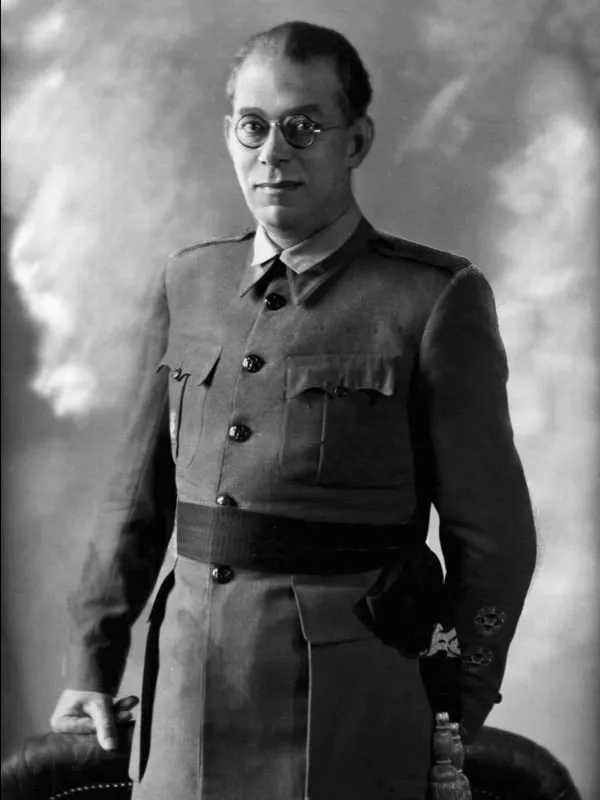
- Born:
- 9 July 1887, Placetas (Cuba)
- Died:
- 3 June 1937, Alcocero, province of Burgos (Spain)
- Author:
- Natalia
- Photo:
- Jalón Ángel, CC0, Wikimedia Commons

Emilio Mola Vidal was the chief organiser of the military conspiracy that in July 1936 was meant to overthrow the Popular Front government and instead started the Spanish Civil War. In the secret correspondence he went by the name of “the Director”; he drew up the plan for the garrisons’ rising and from the first day proclaimed that opponents had to be destroyed without mercy. When the coup failed in Madrid and Barcelona, he commanded the rebel forces in northern Spain, and in the spring of 1937 he led the offensive against the Basque Country, during which German and Italian aircraft destroyed Durango and Guernica. He was killed in an air crash in June 1937. His death removed General Francisco Franco’s last rival in the Nationalist camp.
A Cuban in the Army of Africa
He was born on 9 July 1887 at Placetas in Cuba, which was then still a Spanish colony. His father, Emilio Mola López, was a captain of the Civil Guard; his mother, Ramona Vidal, came from a Cuban family with Catalan roots, and one of her relatives was a leader of the Cuban rising against Spain. After the loss of Cuba in 1898 the family moved to Spain. In 1904 Mola entered the infantry academy in Toledo, from which he graduated in 1907 as a second lieutenant.
Like most ambitious officers of his generation, he made his career in Morocco. From 1909 he fought around Melilla, and in 1911 he transferred to the Regulares, units of Moroccans under Spanish officers. In 1912 he was badly wounded in the thigh and was promoted to captain for bravery. In the following years he was promoted for war service to major, lieutenant colonel and colonel, commanded the Regulares of Ceuta and Melilla, and in 1925 took part with his regiment in the Alhucemas landing, which ended the Rif War. In 1927, at the age of forty, he became a brigadier general, and in 1928 commander of the Larache district in the protectorate. He belonged to the “Africanistas”, officers who had learned in the colonial wars to despise politicians and to believe that the army embodied the nation.
The monarchy’s police chief
In February 1930, after the fall of Miguel Primo de Rivera’s dictatorship, the government of General Dámaso Berenguer appointed him Director-General of Security, that is, head of the police for the whole country. Mola reorganised the police and hunted down republican and left-wing conspirators. The left blamed him for bloody clashes with students in Madrid in March 1931. In this period his obsession with Freemasonry and communism took firm hold; he saw them as instruments of an international conspiracy, which in his memoirs he also attributed to the Jews. He was linked to the anti-communist International Entente based in Geneva, which supplied him with material on the activities of the Comintern.
After the proclamation of the Republic in April 1931 Mola lost his post, was charged with abuses in suppressing the opposition and spent several months in prison and then under house arrest; the Supreme Court eventually acquitted him. After General José Sanjurjo’s failed coup in August 1932, Manuel Azaña’s government placed him on the reserve list, although he had probably not taken part in the plot. Deprived of part of his pay, he earned extra money making toys and writing. In those years he published three volumes of memoirs of his police work and a book attacking Azaña’s military reforms, in which he called the Republic an anti-Spanish regime. In May 1934 he benefited from an amnesty and returned to service. In August 1935, when José María Gil-Robles was Minister of War, he was given the command at Melilla, and at the end of the year he took charge of all the troops in Morocco.
“The Director”
After the Popular Front’s victory in February 1936 the government removed suspect generals from influential posts. Mola became military governor of Pamplona and commander of an infantry brigade. Navarre was meant to be a place of exile, but it became the centre of the conspiracy. From April Mola directed the preparations on behalf of Sanjurjo, who was living in Portugal. He sent secret instructions to the conspirators in the garrisons. The first, dated 25 May 1936, announced that the action must be “extremely violent” and that the leaders of the left-wing parties, unions and organisations that did not join the movement were to be punished in exemplary fashion in order to crush resistance. The plan provided for the garrisons to rise, take control of their provinces and send columns from the north marching on Madrid, with the transfer of the Army of Africa from Morocco under Franco’s command held in reserve.
Mola envisaged a military dictatorship within the framework of the Republic, without the return of the king. For this reason his negotiations with the Carlists – traditionalist monarchists who had thousands of armed volunteers in Navarre – broke down several times; agreement was reached only after the murder of the monarchist José Calvo Sotelo on 13 July. As late as 16 July Mola assured his superior, General Domènec Batet, that he would not let himself be drawn into any “adventure”. Three days later he launched the rising in Navarre, and Batet was arrested by the conspirators in Burgos; he was shot in 1937.
The war
On 19 July 1936 Mola declared martial law in Navarre. He rejected a compromise proposal made to him by telephone by the Prime Minister, Diego Martínez Barrio, replying that it was too late. The rising succeeded in Old Castile, Navarre, Aragon and Galicia, but failed in Madrid. Mola’s columns, which were to enter the capital, were halted in the passes of the Sierra de Guadarrama. On 20 July Sanjurjo was killed, and four days later Mola joined the National Defence Junta in Burgos, which took over power in the rebel zone. He took command of the Army of the North.
From the outset Mola proclaimed that the war had to be won by terror. He told the mayors of Navarre that it was necessary to “sow terror” and to eliminate without scruple everyone who thought differently. In the provinces under his authority, including Navarre, where there was almost no fighting, thousands of people were shot. His troops took Irún and San Sebastián in September 1936, cutting the Basque Country off from the French border. In the autumn, as the columns were approaching Madrid, he said in a radio broadcast, according to a widespread version, that four columns were marching on the capital and a fifth, hidden in the city, would strike from within. This gave birth to the term “fifth column”, although some authors attribute it to General José Enrique Varela. In Madrid these words served as a pretext for mass executions of political prisoners.
In September 1936 Mola supported the choice of Franco as Generalissimo. He believed that a single command was essential, and Franco had the greatest authority and controlled the Army of Africa as well as the contacts with Germany and Italy. He soon discovered that Franco had no intention of sharing power.
The offensive in the Basque Country
After the failure of the attacks on Madrid, Franco turned his main forces north. On 31 March 1937 Mola launched an offensive against Biscay and threatened that, unless the Basques surrendered immediately, he would “raze Biscay to the ground”. That same day Italian aircraft bombed the small town of Durango, killing, according to various counts, from about 250 to more than 300 people. In this offensive, supported by the German Condor Legion under Hugo Sperrle and by the Italian air force, the bombing of towns behind the front became a tool for breaking resistance. On 26 April airmen of the Legion and of the Italian Aviazione Legionaria destroyed Guernica. Historians still debate what part Mola and his staff played in this, and what the Legion’s chief of staff, Wolfram von Richthofen, decided on his own. What is certain is that the raid fitted Mola’s earlier threats.
Death
On 3 June 1937 the Airspeed Envoy in which Mola was flying from Vitoria to Valladolid – the Republicans had launched an offensive at La Granja – crashed in fog and rain on a hill near the village of Alcocero in the province of Burgos. Everyone on board was killed. Because Mola’s death removed the only general who could rival Franco, rumours of sabotage soon appeared, but no evidence has been found to support them. Bilbao fell two weeks later, on 19 June. The village was renamed Alcocero de Mola, and the Franco regime honoured the general with street names and monuments. His remains were placed in the Monument to the Fallen in Pamplona; in 2016 the city authorities removed them.
Significance
Mola was one of the chief instigators of the Spanish Civil War. It was he who planned the rising that split the country, and from the outset he built into it the systematic terror against opponents that became one of the hallmarks of the war. His offensive in the Basque Country was the first campaign in Europe in which the air forces of two fascist powers deliberately destroyed small towns, and the image of ruined Guernica shocked the world two years before the outbreak of the Second World War. He did not live to see the Nationalist victory, and his death made it easier for Franco to build a one-man dictatorship. In 2008 Judge Baltasar Garzón placed him on a list of persons responsible for crimes against humanity, and then closed the proceedings against him on account of his death.
Sources
Commanded in battles
(01)Often appears with
People who appear in the same events.