Russia
Georgy Lvov
Chairman of the All-Russian Zemstvo Union and of Zemgor (1914–1917), Prime Minister of the Russian Provisional Government (March–July 1917)
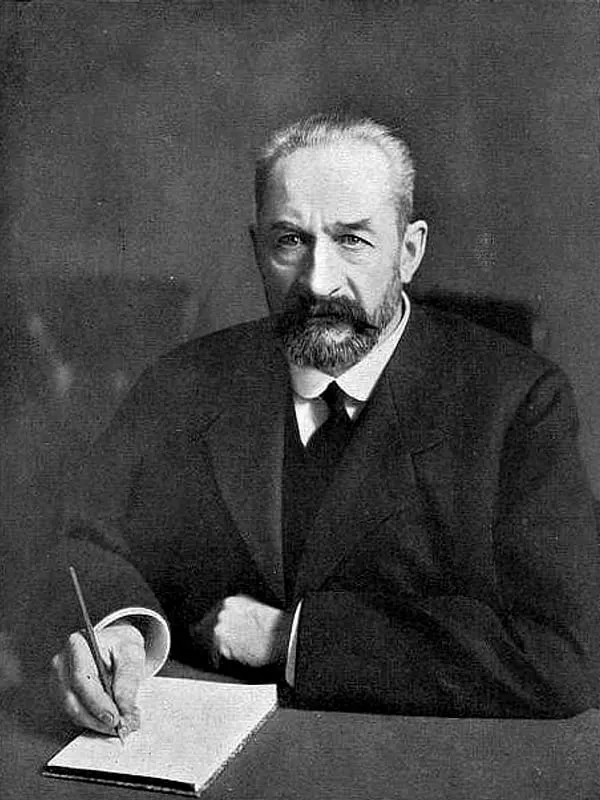
- Born:
- 2 November 1861, Dresden (Saxony)
- Died:
- 7 March 1925, Boulogne-Billancourt (France)
- Author:
- Natalia
- Photo:
- Wood, Alan, domena publiczna, Wikimedia Commons

Prince Georgy Yevgenyevich Lvov was the most respected figure in Russian local self-government. For a quarter of a century he worked in the zemstvos; he organised relief for the wounded of the war with Japan and for the starving, and during the Great War he led the unions of zemstvos and towns, which set up hospitals, evacuated the wounded and supplied the army wherever the bureaucracy failed. As a result, although he never sought power, his name stood at the head of almost every list for a future “government of confidence”. After the February Revolution he became the first Prime Minister of the Provisional Government. He governed for less than four months, believing that a free people would itself establish order. In July 1917, convinced that he could not halt the disintegration of the state, he handed power to Alexander Kerensky. His government stands as a symbol of the hopes and the helplessness of Russian liberalism, which lost to the Bolsheviks within a matter of months.
Youth and the zemstvo
He was born on 2 November 1861 (21 October by the Julian calendar) in Dresden, where his parents were staying abroad. The Lvovs were an old princely family descended from the Rurikids, but impoverished. He spent his childhood on the Popovka estate in Tula province, not far from Yasnaya Polyana, and knew the family of Leo Tolstoy. When the family fell into debt, the Lvov brothers did not sell the estate; instead, working alongside the peasants, they turned it into a profitable fruit farm. Lvov recalled that this experience had cut him off from “high society” and made him a democrat. In 1885 he graduated in law from Moscow University and then worked in offices dealing with peasant affairs. In 1893 he resigned in protest against the use of troops against peasants.
He devoted his whole life to the zemstvo, the rural self-government that since the 1860s had run schools, hospitals and roads in the countryside. From 1900 to 1906 he chaired the executive board of the Tula provincial zemstvo. He married Countess Yulia Bobrinskaya, who died in 1903. They had no children.
The war with Japan and the Duma
During the Russo-Japanese War Lvov went to Manchuria at the head of a medical detachment raised by more than a dozen zemstvos. The detachment numbered several hundred doctors, orderlies and nurses and worked behind the lines at a time when the army medical service could not keep up with the care of the wounded. His work for the wounded made him famous throughout the country, and his experience in Manchuria convinced him that society could achieve more than officialdom.
In 1905 Lvov belonged to the liberal zemstvo movement that was demanding a constitution, and in 1906 he sat in the First Duma for the Kadets, although he never felt at home in party politics. After the Duma was dissolved he organised relief for the starving and for settlers in Siberia and the Far East, and in 1909 he travelled to the United States and Canada to study settlement. In 1913 the Moscow City Duma elected him mayor, but the Minister of the Interior refused to confirm the election.
The Zemstvo Union and Zemgor
A few days after the outbreak of the Great War, in August 1914, a congress of zemstvo representatives in Moscow set up the All-Russian Zemstvo Union for the Relief of Sick and Wounded Soldiers, with Lvov as its chief commissioner. A similar Union of Towns was formed alongside it. The unions began with hospitals, hospital trains and feeding stations, but soon took on far more: they ordered uniforms and boots for the army, dug trenches, fought epidemics and helped millions of refugees and soldiers’ families. The money came mainly from the state, whose own apparatus could not cope. According to Orlando Figes, by 1916 the union had thousands of institutions, hundreds of thousands of employees and a budget of some two billion roubles. In the summer of 1915 the two unions formed a joint committee, known as Zemgor, also chaired by Lvov.
One minister remarked in the autumn of 1915 that the prince was becoming the head of a kind of separate government: he supplied the army, fed the hungry and healed the sick, and at the front he was all anyone talked about. The bureaucracy saw the unions as the opposition’s Trojan horse and obstructed their work. The defeats of 1915 changed Lvov’s views. When the Tsar prorogued the Duma and took personal command of the army, Lvov told a congress of the union that society no longer wished to remain in the passive role of the governed. He headed a delegation of public organisations that was to ask the Tsar for a government enjoying the nation’s confidence, but Nicholas II refused to receive it. According to the account of Alexander Khatisov, mayor of Tiflis, at the end of 1916 Grand Duke Nikolai Nikolaevich was sounded out through him on whether he would take the throne once his nephew had been removed. The Grand Duke declined.
Prime Minister
When the Petrograd garrison mutinied on 12 March 1917, Lvov’s candidacy for Prime Minister had long been agreed in the circles of the liberal opposition. That very evening the Tsar’s brother, Grand Duke Michael Alexandrovich, telegraphed Nicholas II asking him to appoint a government headed by Lvov. Summoned from Moscow, the prince arrived in the capital on 14 March. The next day Pavel Milyukov announced in the Tauride Palace the composition of the Provisional Government, with Lvov as Prime Minister and Minister of the Interior. A few hours later, at Pskov, the abdicating Tsar signed a decree appointing him Chairman of the Council of Ministers, timed earlier than the act of abdication. The new government thus had two sources of legitimacy: the revolution and the last will of the monarch.
Within a few weeks Lvov’s government turned Russia into one of the freest states in the world. It proclaimed a political amnesty and freedom of speech, of the press and of assembly, and abolished the death penalty and all restrictions based on estate, religion and nationality. It announced elections to a Constituent Assembly by universal suffrage, women included. On 30 March it issued an appeal to the Poles recognising their right to an independent state, bound to Russia by a free military alliance. As Minister of the Interior, Lvov removed the provincial governors and handed their duties to the chairmen of the zemstvo boards as government commissars. In practice, power in the provinces passed to haphazard committees. Kerensky recalled that when telegrams poured in from the provinces reporting the collapse of the administration, Lvov reassured his ministers: there was no administration, but the people remained, and they must be trusted.
That trust became his weakness. Lvov had no grasp of party politics, avoided conflict and always looked for compromise. Vladimir Nabokov, head of the government’s chancellery, called him “the embodiment of passivity”. From the outset the government had to share power with the Petrograd Soviet, which controlled the garrison, the railways and the telegraph. The dispute over war aims erupted in May, when Milyukov’s note assuring the Allies that Russia would fight on to victory provoked demonstrations by soldiers. Lvov concluded that the government could not survive without the socialists. After the departure of Milyukov and the War Minister, Alexander Guchkov, he formed in May the first coalition government, with Socialist Revolutionaries and Mensheviks taking part.
The coalition staked everything on an offensive, which began in early July and collapsed within days. In mid-July the Kadets left the government in protest against concessions to the Ukrainian Central Rada, and armed demonstrations broke out in Petrograd in which the Bolsheviks tried to seize power. When the socialist ministers demanded swift steps on the land question, Lvov resigned on 20 July. He accused them of prejudging matters that belonged to the Constituent Assembly. The real reason went deeper. He told his friend and biographer Tikhon Polner that the only way to save the country now was to disperse the Soviet and shoot people. “I cannot do that. But Kerensky can.” He withdrew to the monastery of Optina Pustyn.
Prisoner and émigré
After the Bolshevik seizure of power in November 1917, Lvov left for Siberia and settled in Tyumen. At the turn of February and March 1918 Red Guards arrested him and took him to prison in Yekaterinburg. After three months he was released pending trial. He fled at once – a few weeks before Nicholas II’s family was murdered in the same city – and made his way to Omsk, which was held by the Czechoslovaks. The anti-Bolshevik Siberian government sent him to the United States to seek aid for the Whites. In the autumn of 1918 he was received by President Woodrow Wilson, but the war in Europe was just ending and nothing came of it. From the end of 1918 Lvov chaired the Russian Political Conference in Paris, which tried to represent anti-Bolshevik Russia at the peace conference. The Great Powers did not admit it to the proceedings.
When the Whites lost the Civil War, Lvov withdrew from politics. He lived modestly in Boulogne-Billancourt near Paris, worked in émigré relief organisations, handed over the Zemgor funds remaining abroad for the relief of Russian refugees, and wrote his memoirs. The émigré right saw him as one of those to blame for the revolution, the émigré left as a weak man. He died of a heart attack on the night of 6–7 March 1925.
Assessment
Lvov is regarded as a symbol of both the hopes and the helplessness of Russian liberalism in 1917. Milyukov considered his appointment a mistake. The British politician Samuel Hoare wrote that he would have been better suited to chairing the London County Council than to heading a government in the midst of a revolution. Many historians stress that his faith in the wisdom of the people and his reluctance to use force meant that the Provisional Government defended itself neither against anarchy in the countryside nor against the Bolsheviks. Orlando Figes points out, however, that contemporaries from the Mensheviks to Maxim Gorky valued him as a gifted organiser, and that the Zemstvo Union was one of Russia’s few successes in the war.
His place on the road to 1939 is clear. It was Lvov’s government that abolished autocracy in Russia and, as the first Russian government to do so, recognised the Poles’ right to independence. Yet it was also under his government that the administration, the police and discipline in the army fell apart, and the Bolsheviks stepped into the resulting vacuum. Lvov himself said that he had never thought of becoming a minister: “They made me one. Did I want it?”
Sources
Often appears with
People who appear in the same events.