France
Jean Moulin
Prefect of the Aveyron (1937–1939) and Eure-et-Loir (1939–1940) departments, de Gaulle's delegate in France (1942–1943), chairman of the National Council of the Resistance (1943)
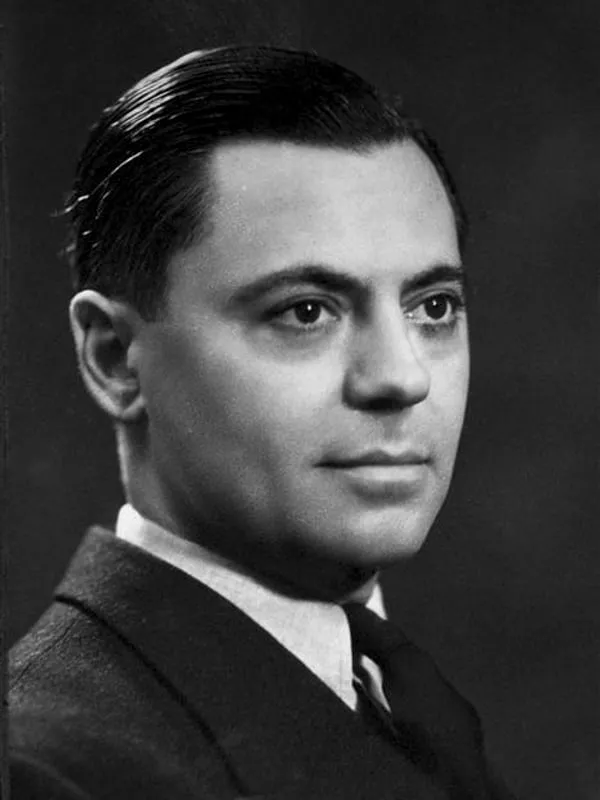
- Born:
- 20 June 1899, Béziers
- Died:
- 8 July 1943, Metz (according to the death certificate)
- Author:
- Łukasz
- Photo:
- Studio Harcourt, domena publiczna, Wikimedia Commons

Jean Moulin was a civil servant who became the symbol of the French Resistance. Before the war he was one of the ablest prefects of the Third Republic, a man associated with the left and the Popular Front. In June 1940, as prefect in Chartres, he chose to attempt suicide rather than sign a mendacious document put in front of him by the Germans. A year later he made his way to London and became General Charles de Gaulle’s envoy in occupied France. Within eighteen months, under the code names “Rex” and “Max”, he built something that had not existed before: a joint leadership of the scattered underground movements, trade unions and parties, subordinate to de Gaulle. He died in the summer of 1943 after his arrest by the Gestapo, a few weeks after the first meeting of the National Council of the Resistance that he had created.
Youth and the First World War
Jean Pierre Moulin was born on 20 June 1899 in Béziers in Languedoc. His father, Antoine-Émile Moulin, was a teacher, a Radical activist, a republican and a Freemason, the grandson of a man who had resisted Louis Napoleon’s coup d’état of 1851. The family came from the Provençal village of Saint-Andiol, to which Jean returned throughout his life. He attended the lycée in Béziers without particular distinction, but began drawing at an early age. In 1917 he started reading law at Montpellier and, thanks to his father, obtained a post as attaché in the office of the prefect of the Hérault department.
In April 1918 he was called up with the class of 1919, the last that France mobilised during the First World War. He served in the engineers and at the beginning of September was sent to the Vosges. Before his regiment saw action, the armistice of 11 November was concluded. Moulin helped to bury the dead and saw the ruined villages, which he recalled in letters home. Discharged from the army in November 1919, he returned to the prefecture and in 1921 completed his law degree.
A career in the administration and the Popular Front
Moulin rose quickly in the administration. In 1925 he became the youngest sub-prefect in France, at Albertville in Savoie, and then worked at Châteaulin in Brittany, at Thonon-les-Bains and as secretary-general of the Somme prefecture in Amiens. In 1926 he married a young singer, Marguerite Cerruti, but the marriage broke up after two years. Alongside his official career he led a second life as an artist. Under the pseudonym “Romanin”, taken from a place in the Alpilles, he published drawings and caricatures in the satirical magazine Le Rire, illustrated the poetry of Tristan Corbière, was a friend of the poet Max Jacob and collected paintings.
His subsequent path was decided by his acquaintance with Pierre Cot, a Radical Party politician. Moulin headed Cot’s private office at the Air Ministry in 1933 and again in 1936, in Léon Blum’s Popular Front government. During the Spanish Civil War he took part in the covert transfer of aircraft to Republican Spain and helped to recruit pilots, contrary to the official policy of non-intervention. In January 1937, at the age of 37, he became prefect of the Aveyron department in Rodez, the youngest prefect in France. The right regarded him as a man of the left, and that reputation would later count against him in the eyes of Vichy.
Chartres, June 1940
In January 1939 Moulin took over the prefecture of the Eure-et-Loir department, based in Chartres. After the outbreak of war he asked several times to be released so that he could join the army, but the Minister of the Interior ordered him to remain at his post. During the Battle of France columns of refugees streamed through Chartres and the town was bombed. While officials fled, Moulin stayed put, and on 17 June 1940 he received the arriving Germans.
That same day German officers demanded that he sign a statement that women and children whose bodies had been found near the village of La Taye had been murdered by Senegalese tirailleurs of the French army who had been defending the area. In fact the victims had been killed in German bombing. Moulin refused. Beaten and locked up for the night, and fearing that he would not withstand further pressure, he cut his throat with a piece of glass. Found by a guard, he survived, but for the rest of his life he bore a scar, which he hid under a scarf. He described the events of those days in a diary published after the war under the title Premier combat (“First Battle”).
After the creation of the Vichy state, Moulin, as a prefect associated with the left, was suspect in the eyes of the new authorities. On 2 November 1940 the Minister of the Interior, Marcel Peyrouton, dismissed him from his post. In mid-November Moulin left Chartres and moved to the unoccupied zone, to the family home in Saint-Andiol.
The road to London
Determined to fight, he obtained false papers in the name of Joseph Jean Mercier and in 1941 travelled around southern France, establishing contact with the first organisers of clandestine resistance, among them Captain Henri Frenay, founder of the movement that soon took the name Combat. He gathered information on their numbers, needs and disputes, and on 9 September 1941 left Marseille by train for Barcelona and from there for Lisbon. After several weeks of effort the British brought him over to England. In October 1941 in London he met de Gaulle, who back in June 1940 had called on the French to continue the fight.
The meeting was a breakthrough for both men. Moulin was the first senior official of the pre-war Republic to come to de Gaulle with a reliable picture of the underground at home. De Gaulle saw in him a man who could bring the Resistance under his authority; Moulin saw in de Gaulle a leader who would give it political meaning. The general made him his delegate for the unoccupied zone, charged with persuading the movements to recognise London’s authority, separating their political activity from their military activity and creating a joint armed organisation. Moulin underwent parachute and weapons training, and on the night of 1–2 January 1942 he jumped over Provence with two associates.
“Rex” and the unification of the Resistance
For the next eighteen months Moulin, known in the underground as “Rex” and later as “Max”, ran the delegation’s work from Lyon. He distributed money from London, organised radio communications, a network of supply drops and landing grounds, and a press service, and in the summer of 1942 he set up a committee of experts to draw up plans for reforms after the liberation. As a cover, in February 1943 he opened the “Romanin” art gallery in Nice. The hardest part was the disputes with the leaders of the movements, above all with Frenay, who did not want to give up control of his organisation or to subordinate its armed units to de Gaulle. On 27 November 1942, after the German occupation of southern France, a Coordinating Committee for the southern zone was formed, and in January 1943 the three main southern movements – Combat, Libération-Sud and Franc-Tireur – merged into the United Movements of the Resistance. Their armed units formed the Secret Army under the command of General Charles Delestraint.
In mid-February 1943 Moulin flew to London with Delestraint. De Gaulle awarded him the Cross of the Liberation and appointed him a member of the French National Committee and his sole representative for the whole of metropolitan France. He also entrusted him with the hardest task of all: creating a council in which representatives of the trade unions and political parties, including the Communists, would sit alongside the resistance movements. Moulin returned to France in the second half of March 1943. He had to overcome the opposition of the movements’ leaders, who distrusted the pre-war parties, and of Pierre Brossolette, who was organising the coordination of the movements alone in the northern zone. He knew he was being hunted: in the spring of 1943 he wrote to de Gaulle that he was wanted by both Vichy and the Gestapo, which knew his identity and his activities.
On 8 May 1943 Moulin sent telegrams to London reporting that the Council of the Resistance had been constituted and recognised de Gaulle as its leader. The communiqué based on them, which on 15 May announced the Council’s creation to the world, settled de Gaulle’s ascendancy in his rivalry with General Henri Giraud in Algiers. On 27 May 1943 Moulin chaired its first meeting in Paris, in a flat at 48 rue du Four. Around the table sat representatives of eight movements, two trade union confederations and six parties, from the Communists to the conservative right. The Council demanded the formation of a provisional government under de Gaulle, with Giraud as commander of the army. Three days later de Gaulle flew to Algiers.
Caluire and death
Moulin enjoyed his success for only a few weeks. On 9 June 1943 the Gestapo arrested General Delestraint in Paris, and the Secret Army lost its commander. For 21 June Moulin called a meeting of several Resistance leaders at the house of Dr Frédéric Dugoujon in Caluire-et-Cuire near Lyon to appoint a temporary successor to the general. René Hardy of the Combat movement, who had been detained and released by the Germans a few days earlier, turned up at the meeting uninvited. Soon the house was surrounded by the men of the head of the Gestapo in Lyon, Klaus Barbie. Everyone was arrested except Hardy, who managed to escape. After the war Hardy was twice tried for treason, in 1947 and 1950, and twice acquitted. The circumstances of the trap at Caluire remain a matter of dispute among historians to this day.
Moulin was taken to Montluc prison in Lyon. Once the Germans had established his identity, he was interrogated and tortured daily by Barbie. He was then taken to Paris, to the headquarters of the German Security Police on the avenue Foch, and later to the villa of its head, Karl Bömelburg, in Neuilly. According to fellow prisoners he was by then close to death. He betrayed no one. He died while being transported to Germany; the death certificate gives the date as 8 July 1943 and the place as the railway station at Metz, but the exact circumstances and place of his death are uncertain. His body was cremated, and an urn with ashes believed to be his remains was placed in Père-Lachaise cemetery.
Memory and significance
Moulin’s silence saved the National Council of the Resistance. It went deeper underground, elected the Christian Democrat Georges Bidault as its chairman and in March 1944 adopted a programme of reforms from which, after the liberation, grew among other things universal social insurance and nationalisations. The Resistance it had united became in 1944 the backbone of the French Forces of the Interior, which supported the Allies during the invasion and liberation of France. As a result de Gaulle was able to take power in the country as head of a provisional government recognised by the Allies, rather than as the protégé of foreign armies.
On 19 December 1964, in the twentieth anniversary year of the liberation, the ashes believed to be Moulin’s remains were transferred to the Panthéon in Paris. The speech by André Malraux, delivered in the presence of President de Gaulle, made Moulin the symbol of the whole Resistance. In 1987 Klaus Barbie, extradited to France by Bolivia, was sentenced in Lyon to life imprisonment for crimes against humanity. Since the publication of the multi-volume biography by Daniel Cordier, his former secretary, historians have argued about Moulin’s political views and his relations with the Communists, but not about his role: it was he who turned scattered groups of conspirators into a single Resistance movement, with de Gaulle as its leader.
Sources
Often appears with
People who appear in the same events.