Soviet Union
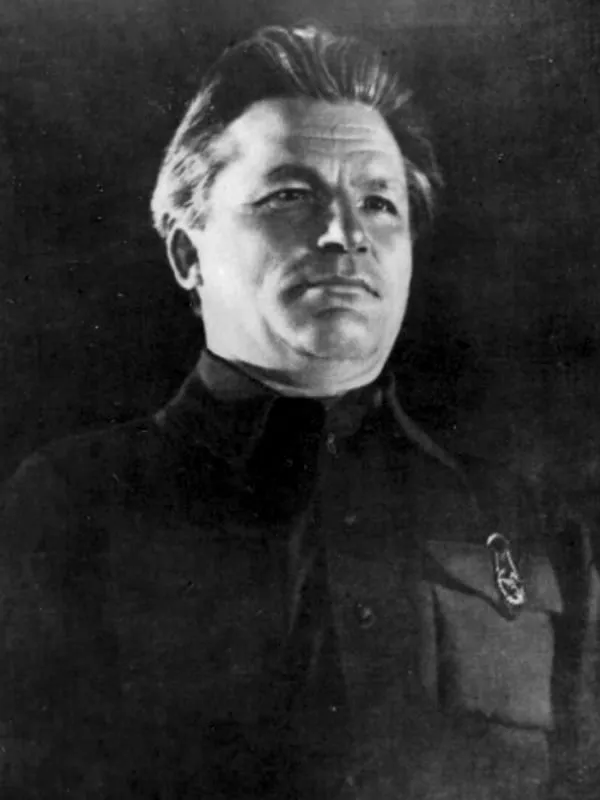
Sergei Kirov
First Secretary of the Central Committee of the Communist Party of Azerbaijan (1921–1926), First Secretary of the Leningrad party organisation (1926–1934), member of the Politburo (1930–1934)
- Born:
- 27 March 1886, Urzhum, Vyatka Governorate (Russian Empire)
- Died:
- 1 December 1934, Leningrad
- Author:
- Natalia
- Photo:
- autor nieznany, domena publiczna, Wikimedia Commons

Sergei Mironovich Kirov, born Kostrikov, was one of the men on whom Joseph Stalin based his power. For nine years he ran the party in Leningrad, the second city of the Soviet Union, where he had been sent to break the power base of Grigory Zinoviev. He was a member of the Politburo, an effective speaker and a leader liked by many Leningraders, and at the same time a ruthless executor of collectivisation and terror. He went down in history, however, above all because of his death. On 1 December 1934 he was shot at the Smolny by Leonid Nikolaev, and Stalin used the crime as a pretext for settling accounts with the former opposition, which in 1937–1938 grew into the Great Terror. After Kirov’s death a legend arose that he had been Stalin’s rival and an alternative to his rule. Most modern historians reject it.
Childhood and youth
He was born Sergei Kostrikov on 27 March 1886 (15 March in the Julian calendar) in Urzhum in Vyatka Governorate. His father abandoned the family, and his mother died of tuberculosis when the boy was a few years old. His sisters were brought up by their grandmother, while Sergei was placed in the town orphanage. He was a gifted pupil. In 1901, thanks to a scholarship from local benefactors, he went to Kazan, where he completed a secondary school of mechanics and technology.
In 1904 he moved to Tomsk in Siberia, worked as a draughtsman for the town council and attended preparatory courses for the technological institute. That same year he joined the Russian Social Democratic Labour Party. During the revolution of 1905 he organised demonstrations and strikes, among other places at the Taiga railway junction, and was arrested several times. In 1906 he was caught in an illegal party printing works and sentenced to a year and four months’ fortress confinement.
Vladikavkaz and the revolution
After his release he was active in Irkutsk, and in 1909 he went to Vladikavkaz in the North Caucasus. There he worked as a journalist on the liberal newspaper Terek, wrote theatre reviews and articles, and went climbing in the mountains, reaching the summits of Kazbek and Elbrus. There, too, he met Maria Markus, with whom he lived for the rest of his life, although they never formalised the relationship. In 1912 he first signed an article with the pseudonym “S. Kirov”, from the name Kir, the Russian form of Cyrus.
Official Soviet biographies portrayed him as a steadfast Leninist. More recent research shows that in the years before 1917 his views were more moderate, and that after the February Revolution he supported the Provisional Government and worked with the Mensheviks. In November 1917 he was a delegate to the Second All-Russian Congress of Soviets in Petrograd, and only after the October seizure of power did he come down firmly on the side of the Bolsheviks. In 1929 his opponents in Leningrad tried to bring him down by pointing to his work for the “bourgeois” press. Stalin protected him.
The Civil War
During the Civil War Kirov was a commissar in the North Caucasus and on the lower Volga. From February 1919 he headed the revolutionary committee in Astrakhan, a strategic port at the mouth of the Volga. In March 1919 the Bolsheviks bloodily suppressed protests there by workers and mutinous Red Army men. According to various sources, between several hundred and several thousand people were shot. Kirov then became a member of the Revolutionary Military Council of the 11th Army, with which he entered Baku in April 1920, bringing Azerbaijan’s independence to an end.
In the summer of 1920 he became the representative of Soviet Russia in Tbilisi, the capital of independent Georgia, with which Moscow had just concluded a peace treaty. The diplomatic mission, however, served to prepare a coup. In February 1921 the Red Army invaded Georgia, which became a Soviet republic.
Baku and Leningrad
From 1921 to 1926 Kirov was First Secretary of the Communist Party of Azerbaijan. He oversaw the reconstruction of the Baku oilfields and was a loyal supporter of Stalin in the struggle for Lenin’s succession. In 1923 he joined the Central Committee.
At the Fourteenth Party Congress in December 1925 Stalin defeated the “New Opposition” of Zinoviev and Lev Kamenev, whose stronghold was the powerful Leningrad organisation. At the beginning of 1926 Kirov went to Leningrad to take over the city. He spoke at hundreds of factory meetings and within a few months had wrested control of the party from the Zinovievites. He became First Secretary of the Leningrad party committee and a candidate member of the Politburo, and in July 1930 a full member.
In Leningrad he carried out the collectivisation of agriculture and the deportation of “kulaks” from north-western Russia, expanded industry, including the arms industry, and sat on the troika that passed death sentences in cases of “counter-revolution”. In the summer of 1933 he sailed with Stalin and Voroshilov along the new White Sea–Baltic Canal, built by Gulag prisoners, thousands of whom died. He was sociable and direct, liked addressing rallies, loved the theatre and ballet, and built up a large library. Years later Molotov recalled that he had been a poor organiser but a good mass agitator and a favourite of Stalin’s.
The Congress of Victors
At the Seventeenth Party Congress, held from 26 January to 10 February 1934, Kirov delivered a speech entitled “Comrade Stalin’s speech is the programme of our party”, in which he extolled Stalin and ridiculed his defeated opponents Bukharin, Rykov and Tomsky. He became a Secretary of the Central Committee and a member of the Orgburo. Stalin wanted to move him to Moscow, but Kirov made excuses.
According to a story that appeared only after Stalin’s death and was popularised by Nikita Khrushchev, at this congress some delegates wanted to make Kirov General Secretary in place of Stalin, and in the secret ballot Stalin received far more votes against him than Kirov did, a fact that was supposedly covered up. Researchers who have worked in the archives opened after 1991, such as Oleg Khlevniuk and Alla Kirilina, have found no confirmation of this version and no evidence that Kirov differed with Stalin on important matters. In the summer of 1934 he spent his holiday with Stalin in Sochi, and in September he went to Kazakhstan on Stalin’s instructions to supervise grain procurement.
Death
On the afternoon of 1 December 1934 Kirov arrived at the Smolny, the seat of the Leningrad party authorities. In the third-floor corridor, by his office, Leonid Nikolaev was waiting for him – an unemployed former official who had earlier been expelled from the party. He shot Kirov in the back of the head with a revolver, killing him on the spot. Kirov’s bodyguard was several dozen paces behind at the time, and the next day he was killed in a suspicious accident involving an NKVD lorry.
The murder of Kirov marked the beginning of a great wave of repression. That same day a decree was issued on a summary procedure in terrorism cases, and Stalin, who personally interrogated the assassin, ordered that the culprits be sought among the Zinovievites. Nikolaev and thirteen other defendants were shot on 29 December; Zinoviev and Kamenev were sentenced to prison in January 1935, and to death in the first Moscow show trial in 1936. Thousands of “former people” were deported from Leningrad.
Who, if anyone, stood behind the assassin remains unknown to this day. Khrushchev, Robert Conquest and Amy Knight believed that Stalin ordered the crime or at least allowed it to happen. Successive Soviet commissions, the last in 1989–1990, found no evidence of this, and many modern historians, drawing on Nikolaev’s diary, consider it most likely that he acted alone, for personal motives.
Memory
Kirov was buried with great honours in the Kremlin Wall on 6 December 1934, in the presence of the entire party leadership headed by Stalin. His name was given to hundreds of places and institutions: the former Vyatka; the Mariinsky Theatre in Leningrad; the former Putilov Works, which as the Kirov Plant produced tanks during the war; Ganja in Azerbaijan; the Ukrainian city of Yelisavetgrad, which had previously borne Zinoviev’s name and is today called Kropyvnytskyi; and cruisers of the Soviet navy. After 1991 many of these names were changed.
Significance
Kirov was a typical representative of the generation that Stalin raised to power: an activist hardened in the underground and the Civil War, convinced that violence was a legitimate tool for building socialism. The myth of the “good Kirov”, the supposedly milder alternative to Stalin, took shape only after his death and during the Thaw.
On the road to the Second World War his death proved more important than his life. The murder at the Smolny gave Stalin the pretext, the legal powers and the apparatus to deal with all his real and imagined enemies. By 1938 most of the former party leaders and a large part of the Red Army’s high command had been killed. The state that in 1939 concluded a pact with Hitler and attacked Poland was by then entirely subordinated to one man.
Sources
Often appears with
People who appear in the same events.