Russia
Lev Kamenev
Chairman of the VTsIK (November 1917), chairman of the Moscow Soviet (1918–1926), member of the Politburo (1919–1925), deputy premier of the RSFSR and the USSR (1922–1926)
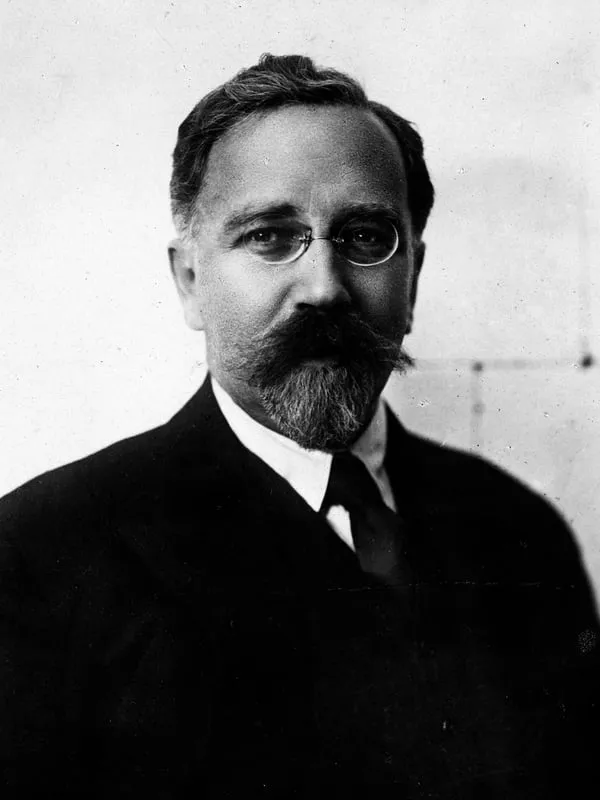
- Born:
- 18 July 1883, Moscow (Russian Empire)
- Died:
- 25 August 1936, Moscow (USSR)
- Author:
- Natalia
- Photo:
- autor nieznany, domena publiczna, Wikimedia Commons

Lev Borisovich Kamenev, born Rosenfeld, was one of the oldest and closest associates of Vladimir Lenin and for several years one of the most powerful men in Soviet Russia. He was regarded as the most moderate of the Bolshevik leaders: in 1917 he opposed the armed seizure of power, and immediately afterwards he called for a government made up of all the socialist parties. Even so, he headed the Moscow Soviet, deputised for the ailing Lenin at meetings of the government and the Politburo, and after Lenin’s death formed, with Grigory Zinoviev and Joseph Stalin, the “triumvirate” (troika) that pushed Leon Trotsky out of power. In doing so he helped Stalin win the position that Stalin later used against Kamenev himself. In August 1936 Kamenev was one of the chief defendants in the first great show trial in Moscow and was shot. His death opened the Great Purge, which on the eve of the Second World War destroyed the party’s old elite and the high command of the Red Army.
Youth and the road to Lenin
He was born on 18 July 1883 (6 July in the Julian calendar) in Moscow. His father, a baptised Jew, was an engine driver on the Moscow–Kursk railway and later, after studying in St Petersburg, an engineer. His mother, a Russian, had completed the higher courses for women. The family moved to Wilno (Vilnius) and then to Tbilisi, then called Tiflis, where Lev finished secondary school and came into contact with illegal Marxist circles. In 1901 he began studying law at Moscow University and joined the Russian Social Democratic Labour Party. In March 1902 he was arrested for taking part in a student demonstration and sent back to Tiflis under police surveillance.
In the autumn of that year he went to Paris, where he met Lenin and the group around the newspaper Iskra. There he also met Olga Bronstein, Trotsky’s younger sister, who became his wife. After the party split in 1903 he sided with the Bolsheviks. He worked as a professional revolutionary in Tiflis, Moscow and St Petersburg, organised railway strikes in Transcaucasia and was arrested several times. In Tiflis he met a young Georgian Bolshevik, Joseph Dzhugashvili, the future Stalin. During the 1905 Revolution he was active in St Petersburg, and in 1907 he joined the party’s Central Committee.
After another arrest he went abroad in 1908. Together with Zinoviev he became one of Lenin’s two closest aides in emigration: he edited the paper Proletary, lectured at the party school at Longjumeau near Paris and helped Lenin in his disputes with other factions. He also wrote about literature, which later, when he was pushed out of politics, became his second profession.
War and exile
In January 1914 Lenin sent him to St Petersburg to run the Bolshevik Pravda and to direct the Bolshevik deputies in the State Duma. After the outbreak of war, in November 1914, he was arrested together with the Bolshevik deputies at a secret party meeting. At his trial in early 1915 he distanced himself from Lenin’s slogan calling for the defeat of one’s own government in the war, something many Bolsheviks held against him for years. He was sentenced to exile in Siberia. He lived in the Turukhansk region and then in Achinsk, where Stalin also arrived at the end of 1916.
After the February Revolution, according to many accounts, Kamenev in Achinsk associated himself with a telegram of greetings to Grand Duke Michael Alexandrovich, who had declined the crown. He later denied it, and his opponents reminded him of it at every opportunity.
1917: against the uprising
On 25 March 1917 Kamenev returned to Petrograd together with Stalin. The two took over the running of Pravda and gave it a moderate line: conditional support for the Provisional Government as long as it pursued the policies of the revolution, and an emphasis on peace rather than the slogan of abandoning the front at once. Kamenev wrote that since the German army still obeyed its emperor, Russian soldiers could not simply go home. When Lenin returned from exile in April and announced his April Theses, Kamenev criticised them publicly but submitted. At the party’s April Conference he was again elected to the Central Committee. After the July Days, when the government ordered the arrest of the Bolshevik leaders, he gave himself up to the authorities and spent several weeks in prison.
In the autumn, when the Bolsheviks had won majorities in the soviets and Lenin was pressing for an uprising, Kamenev and Zinoviev considered it a gamble. On 23 October (10 October Old Style) they were the only members of the Central Committee to vote against the resolution on armed insurrection. In a letter to party organisations they argued that the Bolsheviks had the majority of the workers behind them but not the country, that they could win a strong position in the Constituent Assembly, and that a premature move would expose them to a blow from a united counter-revolution. On 31 October (18 October Old Style) Kamenev repeated this in an interview with the newspaper Novaya Zhizn. Lenin regarded this as a betrayal of party secrets and demanded that both be expelled from the party. The Central Committee confined itself to accepting Kamenev’s resignation from its ranks and forbidding further public statements.
Yet when the Bolsheviks seized power in the October Revolution on 7 November, Kamenev chaired the proceedings of the Second Congress of Soviets, and at its close he became head of the new All-Russian Central Executive Committee (VTsIK), which formally made him the first head of the Soviet state. He held the post for less than two weeks. When the railwaymen’s union threatened a general strike unless the Bolsheviks shared power with other socialists, Kamenev conducted the negotiations and argued for a government of all the socialist parties. Lenin and Trotsky broke off the talks. On 17 November (4 November Old Style) Kamenev, Zinoviev and several of their supporters resigned from the Central Committee, and Kamenev gave up the chairmanship of the VTsIK. He was replaced by Yakov Sverdlov. Lenin called them both “deserters”, and in his political testament he mentioned their “October episode”.
In the leadership of the state
Kamenev soon returned to favour. He was a member of the first Soviet delegation to the armistice talks at Brest-Litovsk. In January 1918 he was sent to London and Paris, but neither government recognised his mission, and after a few days the British ordered him to leave. On his way back, in March, he was detained in the Åland Islands by the Finns, who were then fighting a civil war against their own Reds. He regained his freedom in August in exchange for Finns held in Petrograd.
In the autumn of 1918 he became chairman of the Moscow Soviet and ran it until 1926. Moscow was by then the capital, so he was in effect the master of the city that housed the government and the party. In March 1919 he became a member of the first Politburo, the small circle that really ruled the country. In August 1920, during the Polish–Soviet War, he led the Soviet delegation in London, where he negotiated with David Lloyd George’s government on trade and on the terms of peace with Poland. In September he had to leave Britain, accused among other things of secretly funding the left-wing daily Daily Herald. In Moscow he was regarded as a cautious and pragmatic leader. As chairman of the Soviet he criticised the sweeping powers of the Cheka and several times interceded on behalf of arrested scholars and writers.
According to some sources, it was Kamenev who in April 1922 proposed that Stalin should take the newly created post of General Secretary of the party. In September of that year he became Lenin’s deputy in the government – the Council of People’s Commissars – and in the Council of Labour and Defence. As successive strokes put Lenin out of action, it was Kamenev who chaired meetings of the Politburo and the government. He also ran the Lenin Institute, which published the leader’s works.
The “triumvirate” and defeat
As early as 1922 Kamenev, Zinoviev and Stalin formed an informal alliance against Trotsky, the most popular party leader after Lenin. The “triumvirate” controlled the selection of delegates to conferences and congresses, and in January 1924, just before Lenin’s death, it condemned “Trotskyism”. At the congress in May 1924 Kamenev and Zinoviev helped Stalin keep the post of General Secretary, even though Lenin in his Testament had advised removing him. After Lenin’s death Kamenev chaired the Council of Labour and Defence. In the autumn of 1924 Trotsky, in his essay “The Lessons of October”, recalled that Kamenev and Zinoviev had opposed the uprising. The response was a campaign that in January 1925 cost Trotsky the War Commissariat.
At that point, however, the “triumvirate” fell apart. Stalin drew closer to Nikolai Bukharin and the head of government, Alexei Rykov, while Kamenev and Zinoviev, supported by Lenin’s widow, Nadezhda Krupskaya, formed the so-called New Opposition. At the Fourteenth Congress in December 1925 Kamenev said openly that Stalin could not be the one to unite the party leadership and that the opposition was against “creating a leader”. The hall drowned him out with cheers for Stalin. Kamenev was demoted to candidate member of the Politburo; in January 1926 he lost his posts as deputy premier and became Commissar for Trade, and in the spring he also gave up the Moscow Soviet.
In 1926 Kamenev and Zinoviev joined forces with their recent enemy Trotsky in the United Opposition. They lost. In the autumn of 1926 Kamenev was dropped from the Politburo, and at the end of the year, to get him out of Moscow, he was appointed Soviet envoy to Italy. In October 1927 he was removed from the Central Committee, and in December the Fifteenth Congress expelled him from the party. Unlike Trotsky, Kamenev and Zinoviev capitulated almost at once, acknowledged their “errors” and were readmitted in 1928. In the summer of that year Bukharin, who was himself coming into conflict with Stalin, visited Kamenev and warned him about Stalin. A record of the conversation leaked and served Stalin as a weapon to destroy Bukharin.
Humiliation, trial and death
For the following years Kamenev held minor economic posts, among them on the committee for foreign concessions. In October 1932 he was again expelled from the party and exiled to Minusinsk for failing to report that he had read the opposition platform of Martemyan Ryutin, which called for Stalin’s removal. After a further self-criticism he was readmitted to the party in December 1933. Under the patronage of Maxim Gorky he ran the Academia publishing house and the Institute of Literature, and wrote biographies of Herzen and Chernyshevsky. At the Seventeenth Congress in January 1934 he made a speech full of praise for Stalin and called the man he had been in his years of opposition a “political corpse”.
On 1 December 1934 Sergei Kirov was shot dead in Leningrad. Stalin used the murder to settle accounts with his former opponents. Kamenev was arrested in mid-December, and in January 1935, in the trial of the so-called Moscow Centre, he was sentenced to five years’ imprisonment for “moral complicity” in Kirov’s death. A few months later, in the so-called Kremlin affair, in which his brother was also charged, he received ten years. On that occasion he did not plead guilty.
In August 1936, after months of interrogation, Kamenev, Zinoviev and fourteen other defendants, mostly Old Bolsheviks, appeared before the Military Collegium of the Supreme Court in the first of the great Moscow trials. They were accused of forming a “Trotskyite–Zinovievite centre” which, on Trotsky’s instructions, had murdered Kirov and was preparing attempts on the lives of Stalin and other leaders. Some of the defendants were also alleged to have acted in collusion with the Gestapo. The prosecutor, Andrey Vyshinsky, demanded that the “mad dogs” be shot. The broken defendants confessed to everything. On 24 August the court sentenced them all to death, and on 25 August 1936 Kamenev was shot in Moscow.
The repression struck his entire family. Both sons of his first marriage were shot between 1937 and 1939, the younger at the age of seventeen. His first wife, Olga, was killed in September 1941 in the mass execution of political prisoners in the Medvedev Forest near Oryol, as the German front approached. His second wife, Tatiana Glebova, was also shot. Only his youngest son, Vladimir Glebov, survived, having passed through the labour camps. In 1988 the Supreme Court of the USSR rehabilitated Kamenev and his co-defendants.
Significance
Kamenev was the voice of caution in the Bolshevik leadership: in 1917 he preferred an agreement with the other socialists to a one-party dictatorship, and as master of Moscow he criticised the arbitrary conduct of the Cheka. But he lacked toughness and skill at intrigue. Contemporaries wrote that Zinoviev had built himself a power base of his own in Leningrad, whereas Kamenev had none in Moscow. In 1922–1925 he himself helped Stalin to power, counting on using him against Trotsky, and afterwards he proved unable to stand up to him.
For the road to the Second World War, the end of his life matters most. The trial of August 1936 was the first of the three great Moscow trials and the model for those that followed. It was followed by the trial of Pyatakov and Radek in 1937, the trial of Bukharin and Rykov in 1938 and, above all, the Great Purge, in which hundreds of thousands of people perished, among them a large part of the Red Army’s officer corps. The charges of conspiring with Germany and Japan brought against the former leaders of the revolution prepared the ground for a state in which no decision of Stalin’s met with opposition any longer. Three years after Kamenev’s death Stalin concluded his pact with Hitler, and in 1941 the Red Army, weakened by the purges, paid a terrible price for it.
Sources
Often appears with
People who appear in the same events.