Poland
Cyryl Ratajski
Mayor of Poznań (1922–1934) and Government Delegate for Poland (1940–1942)
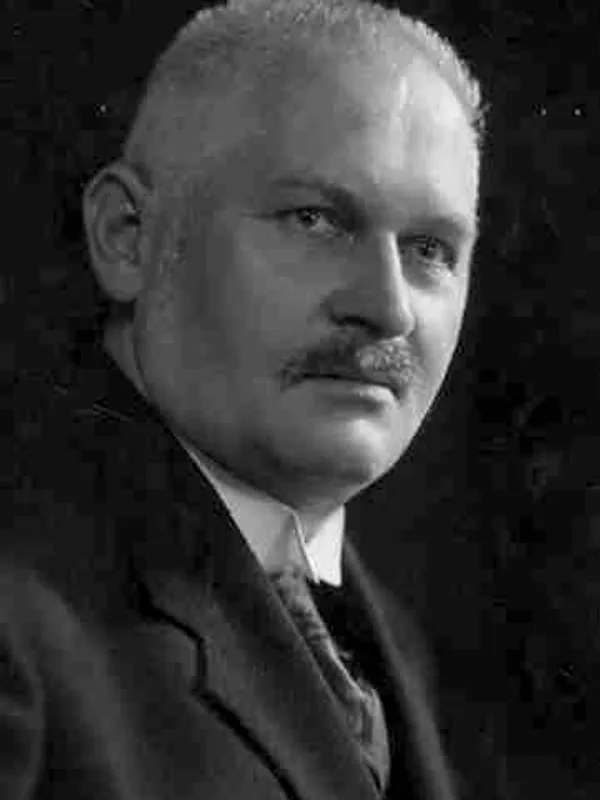
- Born:
- 3 March 1875, Zalesie Wielkie (Province of Posen, German Empire)
- Died:
- 19 October 1942, Warsaw (General Government)
- Author:
- Natalia
- Photo:
- autor nieznany, domena publiczna, Wikimedia Commons

Cyryl Ratajski was a lawyer and city manager from Greater Poland who, late in life, became one of the founders of the Polish Underground State. For twelve years, with a short break to run the Ministry of the Interior, he was mayor of Poznań and turned a former German garrison town into a modern city, which in 1929 hosted the General National Exhibition. Pushed aside by the Sanation regime, in September 1939 he took over the town hall again for a few days so as to hand the city to the Germans without humiliation. Deported to the General Government, in December 1940, aged 65, he became the first permanent Government Delegate for Poland and began building the clandestine administration that lasted until the end of the war. He died in occupied Warsaw in October 1942 and was buried under an assumed name.
From Greater Poland to Racibórz
He was born on 3 March 1875 in Zalesie Wielkie in southern Greater Poland, into the peasant family of Wojciech and Teofila (née Filipowska); his father kept an inn. He attended a Prussian elementary school taught in German, and in 1896 passed his school-leaving examinations at the St Mary Magdalene Gymnasium in Poznań, where he belonged to the secret Tomasz Zan Society. He studied law in Berlin and was active there in the Polish “Sokół” gymnastic society. After his legal training, in 1906 he opened a law office in Racibórz in Upper Silesia. Linked with the National Democracy movement, he worked with Wojciech Korfanty and was one of the founders and, in 1910, the first chairman of the Polish Tourist Society “Beskid”, set up as a counterweight to the German Beskidenverein.
In 1908 he married Stanisława May, the daughter of a Poznań fertiliser manufacturer; they had two sons. When the Prussian authorities refused to recognise the name Ziemowit given to their first-born, Ratajski won a lawsuit over it. In 1911 he moved to Poznań, where he ran his father-in-law’s firm and helped found the Society for Local Studies and a circle of friends of the city.
Mayor of Poznań
During the Greater Poland Uprising he was the liaison between the Commissariat of the Supreme People’s Council and the Polish National Committee in Paris, and from July 1919 deputy commissioner of the Council. On 26 April 1922 the city council elected him mayor of Poznań (PL). From 25 November 1924 to June 1925 he was Minister of the Interior in the second government of Władysław Grabski, after which he returned to the town hall.
His mayoralty was a time of rapid growth. Poznań built a power station, the Bolesław Chrobry Bridge, new tram lines, a botanical garden and Poland’s first waste incinerator; Dębiec, Golęcin, Rataje, Sołacz, Starołęka and other districts were incorporated into the city. Ratajski chaired the main council of the 1929 General National Exhibition (PL), for which Poland’s first trolleybus line was opened. He was accused of having bought plots along its route beforehand, but his reputation was above all that of a hard-working, punctual and honest administrator; Piotr Zaremba, the first Polish mayor of Szczecin, later called him his teacher.
After the May Coup, relations with the Sanation regime deteriorated. In 1928 the deputy voivode tried to evict Ratajski from his flat, which caused such outrage in the city that the official was recalled. In 1934 the nationalist list won the city council elections and the council re-elected Ratajski as mayor, but the voivode refused to confirm the election and the city was given a commissarial mayor. The council made Ratajski an honorary citizen of Poznań. The Depression brought the family firm to the brink of bankruptcy; Ratajski mortgaged his property and part of his pension. From 1936 he was active in the opposition Front Morges, and in 1937 he joined the Christian democratic Labour Party and headed its organisation in Poznań Voivodeship. In 1939 he signed a protest against the arrest of Korfanty.
September 1939 and deportation
When Germany invaded Poland, the voivodeship authorities evacuated Poznań on 5 September, which the inhabitants saw as flight. Ratajski, then 64, took over as mayor again, and two days later also assumed the duties of voivode. He ran Poznań until the Germans arrived; on 12 September the occupiers took over the administration, and on 14 September Ratajski was replaced by a German commissioner. He refused to hand over the keys to the city in a ceremony on the town hall steps, and the Germans dropped the idea.
For several days he was held as a hostage in Fort VII, the first concentration camp on Polish soil. Greater Poland was annexed to the Reich as the Wartheland, and its Polish inhabitants were deported en masse. In May 1940 Ratajski, after several days in the transit camp at Główna, was sent by transport to the General Government; shortly after he left, the Gestapo turned up at his house in Puszczykowo. He spent a few months with relatives in the provinces, and in the autumn of 1940 moved to Warsaw.
Government Delegate
The government in exile was then looking for a man to head the civilian branch of the underground. Resolutions of General Kazimierz Sosnkowski’s Committee of Ministers for Home Affairs of April 1940 had separated it from the military Union of Armed Struggle, and the first attempt – a collective Joint Delegation with the participation of the parties – had broken up in September. On 3 December 1940, on the proposal of Prime Minister Władysław Sikorski, Ratajski was appointed Chief Government Delegate for the General Government, and later for the whole country. He took up office on 14 December. He lived as Celestyn Radwański, a supposedly retired professor employed in the municipal audit office; in the underground he used the pseudonyms “Wartski”, “Górski”, “Wrzos” and “Profesor”.
Not everyone liked the appointment. Ratajski had authority and an unblemished reputation, but he represented the smallest of the four parties of the Political Consultative Committee (PL). The PPS-WRN and the People’s Party protested and proposed the agrarian politician Jan Piekałkiewicz (PL) as Delegate; in 1941 the socialists’ representative Kazimierz Pużak left the committee in protest.
Ratajski built the Delegation as a clandestine counterpart of the pre-war administration, with departments corresponding to ministries, district delegations in the field and its own police. It was to maintain the continuity of the state, document the occupiers’ crimes and train the cadres who would take over power on behalf of the legal government after liberation. From 1941 the Department of Labour and Social Welfare was headed by Jan Stanisław Jankowski, later himself Delegate. In the spring of 1941 – or, according to the IPN biography, in April 1942 – Ratajski made Stefan Korboński his plenipotentiary for civil resistance; Korboński headed the Directorate of Civil Resistance (PL), which called for a boycott of the occupier and denounced collaboration.
The main axis of dispute was the relationship with the military. Ratajski held that military authority should be subordinate to civilian authority, and he created Delegation departments alongside structures that the ZWZ, and later the Home Army, already had. Disputes over competences with the commander, Stefan Rowecki, accompanied his entire term of office. In the summer of 1942 Ratajski chose Jan Karski for a mission to London as the envoy of the main underground parties.
Illness and death
The Delegate suffered from heart disease and jaundice, and the disputes with the military and the parties wore him out. He resigned, and Sikorski accepted the resignation on 5 August 1942; Piekałkiewicz succeeded him. He spent the last year of his life in the flat of Marian and Anna Reiter at 7 Filtrowa Street in Warsaw. He died there on 19 October 1942. Rowecki came to pay his respects, although they had been political opponents.
He was buried at Powązki under the name Celestyn Radwański. In December 1962 his ashes were brought to Poznań, and in August 1963 they were laid in the Cemetery of Distinguished Greater Poland Citizens on St Adalbert’s Hill. In 1954 the President of Poland in exile, August Zaleski, posthumously awarded him the Cross of Independence of Underground Poland with Swords, and in 1995 – in a free Poland – he was posthumously awarded the Order of the White Eagle. In 2002 a monument to him was unveiled in Poznań, and on the 150th anniversary of his birth, in 2025, the Sejm honoured him with a special resolution.
Significance
Ratajski was not a hero of armed struggle but an organiser. With the experience of a local government leader and minister, he laid the foundations of an office that set the Polish underground apart from most resistance movements in occupied Europe: not just an army, but a clandestine state with an administration, a treasury, courts and social welfare, subordinate to a government recognised by the Allies. His insistence on the supremacy of civilian over military authority hampered cooperation with Rowecki, but it established the principle on which the Underground State rested. His two successors, Piekałkiewicz and Jankowski, died in prison – one German, the other Soviet.
Sources
Often appears with
People who appear in the same events.