Poland
Jan Stanisław Jankowski
Government Delegate for Poland (1943–1945), deputy prime minister and chairman of the Council of Ministers in Poland (1944–1945)
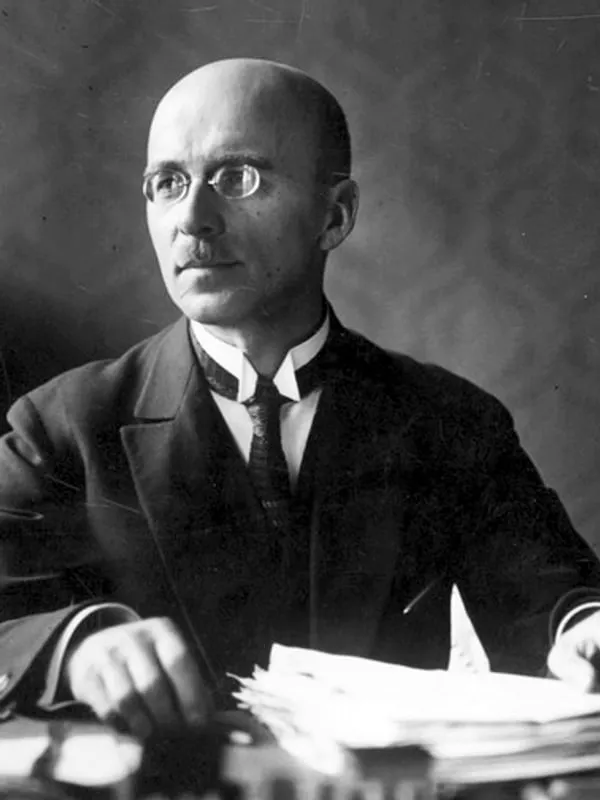
- Born:
- 6 May 1882, Krasowo Wielkie (Congress Poland, Russian Empire)
- Died:
- 13 March 1953, Vladimir on the Klyazma (USSR)
- Author:
- Łukasz
- Photo:
- autor nieznany, domena publiczna, Wikimedia Commons

Jan Stanisław Jankowski, “Soból”, was the longest-serving Government Delegate for Poland and the last to head the entire civilian arm of the Polish Underground State at the height of its development. A chemical engineer and agronomist, in his youth an activist of the national workers’ movement, a soldier of the First Cadre Company and twice Minister of Labour in the Second Polish Republic, during the war, already past sixty, he headed the clandestine administration, and in 1944 he became deputy prime minister of the Polish government. It was he who gave consent for the start of the Warsaw Uprising. In March 1945 the NKVD arrested him by deceit, and a court in Moscow sentenced him to eight years in prison. He died in a Soviet prison a few weeks before the end of his sentence.
From “Zet” to the Kadrówka
He was born on 6 May 1882 in Krasowo Wielkie in the Wysokie Mazowieckie county, into the landowning family of Józef and Julia (Julianna) née Olędzka. In 1900 he completed secondary school in Piotrków Trybunalski (PL) and began studies at the University of Warsaw, from which he moved to chemistry at the Polytechnic Institute. As a student he joined the secret Union of Polish Youth “Zet” and the National Democratic camp. He worked among the workers: he co-founded the Jan Kiliński Union, and in 1906 the National Workers’ Union (PL). After the school strike of 1905 he studied in Prague, where in 1908 he obtained a diploma as a chemical engineer, and in 1909–1912 he studied agriculture at the Jagiellonian University.
In 1908 he was one of the initiators of the so-called fronde, the NZR’s break from the National Democrats, which brought the organisation closer to the independence camp. Threatened with arrest in the Russian partition, he moved to Kraków. As a representative of the NZR he sat on the Provisional Commission of the Confederated Independence Parties (PL) and co-organised the Polish Military Union. In August 1914 he went to war with Józef Piłsudski’s First Cadre Company, and afterwards served in the 1st Uhlan Regiment of the Polish Legions. In 1915–1917 he represented the NZR in the Central National Committee in Warsaw.
Minister and deputy
In independent Poland he worked in the Ministry of Agriculture and State Property and in the Main Land Office, where he dealt with land parcelling and settlement. He was a co-founder of the National Workers’ Party (PL), formed in 1920, and until 1923 chaired its Main Executive Committee. On 10 March 1921 he became Minister of Labour and Social Welfare in Wincenty Witos’s first government (PL). When the Third Silesian Uprising broke out, he argued for the most far-reaching support for the insurgents, and after a dispute with the rest of the cabinet he submitted his resignation, accepted on 11 May 1921. In 1925 he returned to the ministry as undersecretary of state, and in April 1926 he took over its leadership; his tenure was ended by the May Coup.
As a politician of the NPR, a party in opposition to the Sanacja, he was a Warsaw councillor and, in 1928–1935, a member of the Sejm. In the party he fell out with the group of Karol Popiel and left it in 1935; in 1937 he joined the new Labour Party, which brought together Christian Democrats, part of the NPR activists and people from the opposition Front Morges. Professionally he was associated with social insurance: he worked in the Warsaw Sickness Fund, and from 1935 in the Social Insurance Institution. He lived at 52 Raszyńska Street in Ochota.
In the Delegatura
After September 1939 Jankowski was at first active in social welfare institutions. In 1941 he took over the Department of Labour and Social Welfare of the Government Delegation for Poland, the clandestine civil administration that Cyryl Ratajski had been building since December 1940. The department was highly active: it distributed relief and benefits, supported the families of victims of terror and people of science and culture, and its expenditure made up nearly 30 per cent of the Delegation’s budget. At the end of 1942 Jankowski became one of the deputies of the Delegate Jan Piekałkiewicz (PL).
On 19 February 1943 the Gestapo arrested Piekałkiewicz in Warsaw; in June he was murdered. Jankowski in fact took over his duties from the day of the arrest, and formally, according to the most frequently given date, on 21 April 1943. The Delegation then had over a dozen departments corresponding to ministries, a network of district delegations from Poznań to Wilno and Lwów, and a clandestine police and courts. During his tenure the Council to Aid Jews “Żegota”, operating under the Delegation since December 1942, expanded its assistance to Jews in hiding, and the Political Consultative Committee of the parties was transformed in 1943 into the National Political Representation, and on 9 January 1944, by decree of the Delegate, into the Council of National Unity, the underground parliament.
Jankowski was a firm opponent of an agreement with the communist Polish Workers’ Party, which at the turn of 1943 and 1944 set up its own rival State National Council. A decree of the President of Poland of 26 April 1944 on the provisional organisation of authorities in the country raised the rank of the Delegate to deputy prime minister of the government in exile. According to the Warsaw Rising Museum he took the head of the Council of Ministers in Poland (PL), in which his deputies – Stanisław Jasiukowicz (PL), Adam Bień (PL) and Antoni Pajdak (PL) – received the rank of ministers, on 3 May 1944; the decision was announced on 20 July. Other studies date the constitution of the Council to 26 July 1944. It was meant to show the Allies that the legal government was ready to assume power in the liberated country.
The Uprising
When in the summer of 1944 the Red Army approached the Vistula, on 25–26 July the government in London authorised Jankowski to proclaim an uprising at a moment of his choosing. A few days before the fighting broke out he told Jan Nowak-Jeziorański that the underground had no choice: fighting in the city would break out regardless of the will of the command, the young people who had been trained and armed for years would not watch passively, and if the Home Army did not give the signal, “the communists will beat us to it”. On 31 July 1944, when the commander of the Warsaw District of the Home Army reported Soviet tanks on the approaches to Praga, the Commander-in-Chief, Gen. Tadeusz Bór-Komorowski, summoned the Delegate; after hearing those present, Jankowski gave his consent, and at about 6 p.m. the order was issued to begin the fight the next day at 5 p.m. (the outbreak of the Warsaw Uprising).
For the two months of the Uprising the Delegation operated in the fighting city as an open Polish authority. According to the biography of the Warsaw Rising Museum, Jankowski’s route led from Wola through the Old Town and the sewers to Śródmieście. At the end of September he took part in the conferences at which, with no help from outside, it was decided to begin talks on capitulation. Around 10 October he left Warsaw together with the civilian population. On false papers he passed through the transit camp Dulag 121 in Pruszków, from which he was released because of his age, and in the vicinity of the capital he went on directing the Delegation as deputy prime minister. In 1944 he received the Silver Cross of the Virtuti Militari.
Pruszków and Moscow
The defeat of the Uprising almost put an end to the work of the Delegation’s departments, and in January 1945 the Red Army occupied the whole of central Poland. After the Yalta Conference the Council of National Unity decided to accept its decisions, counting on a share in the future “government of national unity”. In March 1945 Jankowski and the Commander-in-Chief of the Home Army, Gen. Leopold Okulicki, received from “Col. Pimenov” an invitation to talks with “Gen. Ivanov” – in reality Gen. Ivan Serov of the NKVD. Okulicki sensed a trap, but at Jankowski’s express wish agreed to go with him. On 27 March 1945 Jankowski, Okulicki, the chairman of the Council of National Unity Kazimierz Pużak and the interpreter Józef Stemler-Dąbski arrived at a villa in Pruszków and were detained; the next day the other invited persons were detained (the IPN gives 28 March as the date of Jankowski’s arrest). All were flown to Moscow, to the Lubyanka prison. The duties of Delegate in Poland were taken over by Stefan Korboński.
At the Trial of the Sixteen, held on 18–21 June 1945 before the Military Collegium of the Supreme Court of the USSR, Jankowski, together with Okulicki, Jasiukowicz and Bień, was accused of directing the underground in the rear of the Red Army in Poland, in Lithuania and in the “western regions” of Belarus and Ukraine, that is, on lands of the Second Polish Republic seized by the USSR. He accepted political responsibility for the Delegation’s activity. The presiding judge, Gen. Vasily Ulrikh, asked him whether he could have supposed that the USSR would not regard the creation of a Polish administration on “your territory” as a hostile act – a question that captured the meaning of the whole trial. On 21 June Jankowski was sentenced to eight years in prison, the second-highest sentence after the ten years given to Okulicki. At the same time in Moscow the composition of the Provisional Government of National Unity was being agreed.
Death in Vladimir
He served his sentence in the prison in Vladimir on the Klyazma. He died there on 13 March 1953, about two weeks before the end of his sentence, in circumstances that have never been explained; some Polish historians believe he was murdered. The popular historian Dariusz Baliszewski questioned this date, citing an unverified note on the back of a photograph dated 28 March 1953. The Soviet Red Cross, in a certificate of 11 June 1956, stated only that Jankowski had died while serving his sentence. He was buried in a mass grave in the prison cemetery; the exact burial place has not been found. On the same day, in the same prison, the Estonian general Johan Laidoner died.
Remembrance
In the Polish People’s Republic his fate, like the whole Moscow trial, was passed over in silence; in the Soviet war film “Soldiers of Freedom” of 1977 the character of Jankowski was played by Jerzy Kaliszewski. In October 1989 the Prosecutor General of the Polish People’s Republic asked the USSR prosecutor’s office to initiate rehabilitation proceedings, and on 19 April 1990 the Plenum of the Supreme Court of the USSR found that there were no elements of a crime in the activity of those sentenced in the Trial of the Sixteen. In 1995 Jankowski was posthumously awarded the Order of the White Eagle. He has symbolic graves at the Old Powązki Cemetery and at the Powązki Military Cemetery, and a plaque commemorates the house on Raszyńska Street. The IPN investigation into the Moscow trial was discontinued in 2009, when the Russian military prosecutor’s office refused legal assistance.
Jankowski’s fate closes the history of the Government Delegation. The underground state, which throughout the occupation maintained administration, courts and social welfare in the name of the legal government, was to take over power at the moment of liberation. Its last full-fledged Delegate ended as a prisoner of an ally, and none of the Western powers effectively spoke up in his defence.
Sources
- ipn.gov.pl · 214965,Smierc Jana Stanislawa Jankowskiego Delegata Rzadu RP na Kraj
- 1944.pl · jan jankowski,12954
- dzieje.pl · 60 lat temu w sowieckim wiezieniu zmarl jan stanislaw jankowski
- Jan Stanisław Jankowski · Wikipedia (pl)
- Delegat Rządu na Kraj · Wikipedia (pl)
- Krajowa Rada Ministrów · Wikipedia (pl)
- Delegatura Rządu na Kraj · Wikipedia (pl)
- dzieje.pl · 80 lat temu prof jan piekalkiewicz zostal delegatem rzadu na kraj
Mentioned in battles
(02)Often appears with
People who appear in the same events.