Poland
Jan Karski
Courier and emissary of the Polish Underground State (1940–1943), envoy of the Polish government in the United States (1943–1944)
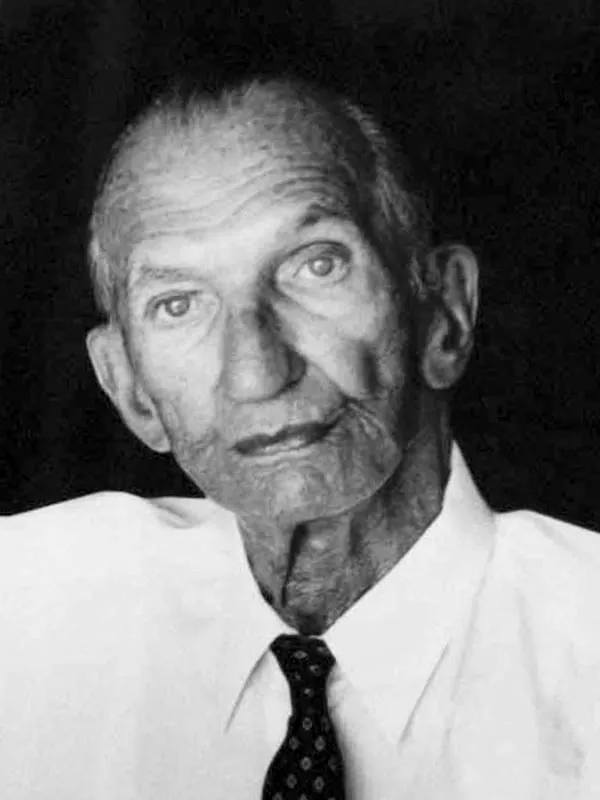
- Born:
- 24 June 1914, Łódź (Congress Poland, Russian Empire)
- Died:
- 13 July 2000, Washington (United States)
- Author:
- Natalia
- Photo:
- Lilly_M, CC BY-SA 3.0, Wikimedia Commons

Jan Karski, born Jan Romuald Kozielewski, in the underground “Witold”, was a courier of the Polish Underground State. In autumn 1942, after two visits to the Warsaw Ghetto and to the transit camp in Izbica, he brought to the West an eyewitness account of the murder of the Jews. He presented it to the Polish government, to the British Foreign Secretary and, in July 1943, to the President of the United States. The Allied leaders listened to him, but took no steps to rescue anyone. After the war he stayed silent for more than thirty years, teaching international relations in Washington. Only his testimony in the film “Shoah” (PL) made him one of the best-known figures of the Polish underground.
Łódź, Lwów, the ministry
He was born in Łódź, the youngest of eight children of Stefan Kozielewski and Walentyna née Burawska, in a Catholic family. Some sources give the date 24 April 1914, which is thought to have resulted from an error in the parish registers; Polish biographers give 24 June. His eldest brother Marian Kozielewski (PL) was before the war the police commander in Warsaw, and during the occupation headed the State Security Corps (PL), the clandestine police of the Government Delegation.
Jan finished gymnasium in Łódź, and in 1935 graduated in law and diplomatic studies at Jan Kazimierz University (PL) in Lwów. He did his military service at the reserve artillery cadet school in Volodymyr-Volynskyi, which he finished top of his class. He worked in the consular service, and in January 1939 he began work in the headquarters of the Ministry of Foreign Affairs, which promised a diplomatic career.
September 1939 and captivity
In August 1939 he was mobilised into the 5th Horse Artillery Battalion in Oświęcim. His barracks were bombed as early as 1 September, and the unit withdrew eastwards. On 24 September, after the Soviet aggression, he was taken prisoner by the Soviets near Krasnobród. He was sent to an NKVD camp (Polish biographers indicate Kozelshchyna near Poltava; formerly Kozelsk was given). He took off his officer’s uniform and passed himself off as a private, which put him among the prisoners handed over to the Germans in the Soviet-German exchange. In this way he avoided the fate of the thousands of officers murdered in spring 1940 at Katyn and other places of execution. In the last months of 1939 he escaped from a German transport of prisoners and reached Warsaw, where he joined the underground.
Courier
From the beginning of 1940, sworn in by his brother Marian, Karski carried reports from Poland to the government of Gen. Władysław Sikorski in France. In February 1940 in Angers he wrote down from memory an extensive report on the situation in the country. He returned to Poland with the government’s instructions, and in June 1940 set out on another journey. In Slovakia the Gestapo detained him. Tortured in the prison in Prešov, he slashed his wrists. He was taken to a hospital in Nowy Sącz, from which on 28 July 1940 he was freed by an operation of the PPS and the ZWZ, in whose preparation Józef Cyrankiewicz, among others, took part. Several participants in the operation later paid for it with their lives.
After recovering Karski worked in the Bureau of Information and Propaganda (PL) of the High Command of the ZWZ-AK and was active in the Catholic Front for the Rebirth of Poland (PL). He was twice awarded the Cross of the Virtuti Militari.
The mission of 1942–1943
In summer 1942 the Government Delegate for Poland, Cyryl Ratajski, designated him for a mission to London as the envoy of all the main parties of the underground. Before his departure the leaders of the Jewish underground, among them Leon Feiner of the Bund, persuaded him to convey also their call for help and to see everything with his own eyes. Twice they took him into the Warsaw Ghetto, and disguised as a guard he entered the transit ghetto in Izbica, from which Jews were taken to the extermination camps. For years he himself thought that he had been in Bełżec.
In autumn 1942 he travelled through the Reich, Belgium, France and Spain to Gibraltar, and from there flew to Britain. He handed over a microfilm with documents, hidden in a key, in Paris to the underground, which sent him on to London. On the basis of his account and the underground’s materials, the minister Edward Raczyński sent a note to the governments of the United Nations on 10 December 1942, and a week later the Allies issued a declaration condemning the extermination of the Jews. Karski spoke with President Władysław Raczkiewicz, with Szmul Zygielbojm and Ignacy Schwarzbart, with British politicians, writers and journalists, and in February 1943 – according to some studies – with Anthony Eden.
In summer 1943 he went to the United States. There he spoke with the Secretary of State Cordell Hull, with the head of intelligence William Donovan, with Jewish leaders and with the Supreme Court justice Felix Frankfurter, who told him that he was unable to believe his account. On 28 July 1943 he was received at the White House by President Franklin Delano Roosevelt. The meeting lasted over an hour, but brought no commitments on rescuing the Jews.
The Secret State
After returning to London in September 1943 Karski asked to be assigned to the army, but the government did not agree. In February 1944 he was sent to the United States on a propaganda mission. He gave lectures, wrote articles and appeared on the radio, and on the government’s instructions wrote the book “Story of a Secret State” (“Tajne państwo” (PL)). Published in Boston in November 1944, it became a bestseller and sold about 400,000 copies. According to Karski’s own account, he later gave about 250 more lectures in various states, answering questions about the Warsaw Uprising, the Trial of the Sixteen and the communist government in Lublin.
Professor at Georgetown
When in 1945 the United States and Britain withdrew recognition from the government in London, and the communists took power in Poland, Karski did not return home. He chose an academic career. In 1949 he began work at Georgetown University (PL) in Washington, in 1952 he took his doctorate there, and in 1954 he received American citizenship. For about forty years he taught international relations and the theory of communism at its School of Foreign Service; his students included the future President Bill Clinton. In 1985 he published the monograph “The Great Powers and Poland, 1919–1945”. In 1965 he married the dancer Pola Nirenska (PL). They had no children. Nirenska took her own life in 1992.
For decades he did not speak publicly about his mission. He broke his silence in 1978, when the French director Claude Lanzmann recorded a many-hour interview with him. About forty minutes of that conversation went into the film “Shoah” of 1985. Karski was later critical of how the film presented his testimony. In 1981, at the invitation of Elie Wiesel, he spoke in Washington at an international conference of liberators of the camps. In interviews in the 1990s he repeated that nobody had done enough.
Recognition
In 1982 Yad Vashem recognised him as Righteous Among the Nations, although he had not hidden anyone himself; in this way his testimony was honoured. In 1994 he received honorary citizenship of Israel, and on 8 May 1995 the Order of the White Eagle. He was also an honorary citizen of Łódź and a holder of honorary doctorates from several Polish universities. In 1998 his candidacy for the Nobel Peace Prize was put forward.
He died on 13 July 2000 in Washington and was buried beside his wife at Mount Olivet Cemetery. On 29 May 2012 President Barack Obama posthumously awarded him the Presidential Medal of Freedom, the highest civilian decoration of the United States. In 2016 he was posthumously promoted to the rank of brigadier general.
Karski did not save anyone personally and had no power to do so. His mission showed, however, that information about the Holocaust reached the highest leaders of the coalition while millions of European Jews were still alive. The historian Andrzej Żbikowski wrote that in this way Karski saved the good name of Polish Christians and of Europeans in general.
Sources
- Jan Karski · Wikipedia (pl)
- encyclopedia.ushmm.org · jan karski
- artsandculture.google.com · QR UaCtP
- dzieje.pl · 70 lat temu jan karski poinformowal zachod o holokauscie
- rp.pl · art12527881 zachod mi nie wierzyl
- jewishvirtuallibrary.org · jan karski
- jankarski.net · jan karski life
- dzieje.pl
- Jan Karski · Wikipedia (en)
Often appears with
People who appear in the same events.