Hungary
István Friedrich
State Secretary in the Ministry of War (1918–1919), Prime Minister of Hungary (August–November 1919), Minister of Defence (1919–1920), member of parliament (1920–1939)
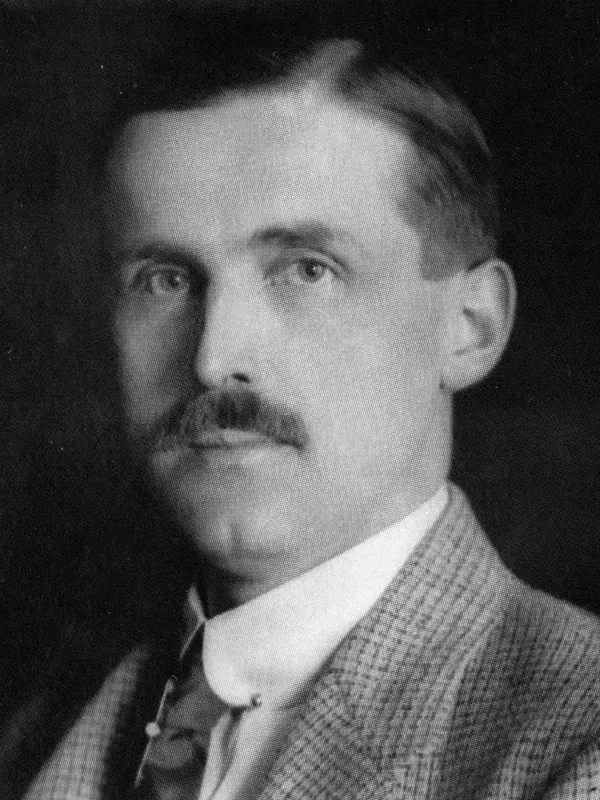
- Born:
- 1 July 1883, Malacka (today Malacky, Slovakia)
- Died:
- 25 November 1951, Vác
- Author:
- Natalia
- Photo:
- autor nieznany, domena publiczna, Wikimedia Commons

István Friedrich was one of the most surprising figures of Hungary’s upheaval of 1918–1919. An engineer and factory owner who in his youth had played football for Hungary, and before the war a friend and follower of Count Mihály Károlyi, in October 1918 he was one of the leaders of the street protests that carried Károlyi to power. Less than a year later he headed the right-wing coup that on 6 August 1919 overthrew the Social Democratic government of Gyula Peidl, and for three and a half months he was Prime Minister of a country occupied by the Romanians, unrecognised by the victorious powers and increasingly dependent on the army of Admiral Miklós Horthy. His government closed the period of revolution in Hungary and opened the way to the Horthy regime. For the next twenty years he was an opposition deputy, a legitimist and a critic of the government, and in 1951, a forgotten old man, he died in a communist prison.
Engineer, footballer and industrialist
He was born on 1 July 1883 in Malacka, a small town at the western edge of the Kingdom of Hungary, today Malacky in Slovakia. He came from a Catholic family of German origin. His father, János Friedrich, was a pharmacist. He took his school-leaving examination in Pozsony, today’s Bratislava. He studied engineering at the Technical University in Budapest, graduating in 1905, and at Charlottenburg near Berlin, and then law in Budapest and Berlin. Until 1908 he worked as an engineer at the AEG works in Berlin.
As a student he played football for the Budapest Technical University team. On 9 October 1904 he played on the right wing for Hungary against Austria in Vienna, a match lost 4–5. He is the only Hungarian Prime Minister ever to have played for the national team. He later became a respected football referee.
In 1908 he returned to Hungary and married Margit Asbóth, daughter of Emil Asbóth, director of the great Ganz-Danubius concern. In Mátyásföld, just outside Budapest, he set up a machine-repair workshop and then an ironworks and crane factory, which he ran until 1920.
With Károlyi
In 1912 he joined Károlyi’s opposition Independence Party and belonged to its left-liberal wing. He also became a Freemason. In 1914 he accompanied Károlyi on a journey to the United States, and on the way back, after war had broken out, he was briefly interned by the French. According to some sources he escaped via Spain and Italy. During the war he served as a lieutenant of artillery, in practice as a liaison officer in the volunteer motor corps. Károlyi remembered him as a youthful, idealistic and enthusiastic supporter of peace.
In October 1918 Friedrich was one of the leaders of the demonstrations that demanded that Archduke Joseph August, the King’s plenipotentiary, entrust the government to Károlyi. On 28 October he was wounded in the clash on the Chain Bridge with which the Aster Revolution began. After the revolution’s victory Károlyi appointed him State Secretary in the Ministry of War. Friedrich soon parted ways with his patron, however. He opposed the pacifist policy of the minister Béla Linder, who had ordered the soldiers to lay down their arms; he wanted to build a strong army under former officers, and he drew ever closer to the right. Károlyi later called him an “uncontrollable demagogue”. In January 1919, when Károlyi’s party split, Friedrich left with most of its deputies, and in February he lost his post.
In his memoirs Károlyi accused him of something far worse. He regarded him as the instigator of the murder of Count István Tisza, shot by soldiers on 31 October 1918. In 1921 Friedrich was questioned at the trial of Tisza’s killers, but the charge against him did not stand and his involvement in the crime was never proved.
The coup
After the proclamation of the Hungarian Soviet Republic on 21 March 1919, Friedrich remained in Budapest. In April the communists arrested him as one of the organisers of the counter-revolution. According to the American historian Eva S. Balogh he was even sentenced to death, but the sentence was commuted thanks to the intercession of People’s Commissar Zsigmond Kunfi, and with the help of workers from his factory Friedrich escaped and stayed in hiding until the end of the dictatorship.
When the Hungarian Soviet Republic fell on 1 August, Friedrich first tried to reach an agreement with Prime Minister Peidl and the Entente’s representatives on a coalition government in which the socialists would take a back seat. When this failed, he joined a conspiracy of the right-wing “White House” association led by the dentist András Csilléry. Its members – civil servants, professors and officers – were mostly far-right and antisemitic. According to Balogh, Friedrich joined them in order to gain control of the plot. On 4 August he led the delegation that persuaded Archduke Joseph August, a Habsburg popular among Hungarians, to come to Budapest that very night and lend the coup his authority.
On 6 August the conspirators, with the passive acquiescence of the Romanian army, which had entered Budapest a few days earlier, arrested the Minister of the Interior and forced the Peidl government to resign. Friedrich himself played only a small part in the operation, but it was he who took power. On 7 August the Archduke proclaimed himself regent and appointed him Prime Minister. In the new government’s first document, issued on 8 August, Friedrich signed himself Prime Minister of the “Hungarian Republic”, without the word “People’s”, and that day is regarded as the end of the Hungarian People’s Republic.
Prime Minister
Friedrich’s government abolished what remained of the communist decrees and restored private property and the old administration. Its position, however, was very weak. Most of the country, up to the Tisza and including Budapest, was occupied by the Romanians, who requisitioned everything that could be carried away. The powers refused to recognise a government appointed by a Habsburg, and Hungary’s neighbours saw the Archduke’s regency as a prelude to the restoration of the dynasty. Friedrich tried to broaden the government. On 15 August he announced a coalition cabinet including the peasant Smallholders, the liberals and seats reserved for the Social Democrats, but the latter refused to take part. On 23 August, under pressure from the Supreme Council of the Peace Conference, the Archduke stepped down.
Friedrich, convinced that the Social Democrats had contributed to the regent’s fall, turned to the right. At the end of August he formed a new government based on the Christian parties and the party of the great landowners. He founded his own Christian National Party, and in October took part in creating the larger Christian National Union Party. Under his government a wave of violence began against Jews, who were blamed for communism. According to Balogh, Friedrich tried to curb the lynchings, without success. Real power in the country lay with Horthy’s National Army, whose officers pursued their own policy and their own White Terror. Friedrich was unable to bring Horthy under his control.
In November, under the supervision of the British diplomat George Clerk, the parties agreed to form a coalition government that the Allies could recognise. Before leaving office Friedrich’s government issued an electoral decree that gave the vote, by secret ballot, to the great majority of men and women aged 24 and over. Under it, in January 1920, the most democratic elections of interwar Hungary were held. On 24 November 1919 Friedrich stepped down. In the government of Károly Huszár he was Minister of Defence until March 1920, a post of little real weight, since the army obeyed only Horthy.
In opposition
From 1920 to 1939 Friedrich sat in parliament, elected in Budapest constituencies. In the spring of 1920 he left the governing party and founded his own group, which in 1922 merged with that of Count Gyula Andrássy. He was a legitimist, a supporter of the return to the throne of King Charles IV, who had reigned in Austria as Emperor Charles I. When Charles made his second attempt to regain the throne in the autumn of 1921, Friedrich was briefly detained. At the same time, according to a Hungarian biographical dictionary, he took part in the fighting of Hungarian irregulars in western Hungary, which had been awarded to Austria. In the early 1920s he also founded a far-right organisation, the “Scythian Camp”.
In time he became one of the sharper critics of the government of Prime Minister István Bethlen. He wrote opposition articles for Pesti Napló and pamphlets against the “sins of the system”. From 1922 he was also president of the Hungarian Football Federation. He resigned after the Hungarian team’s poor showing at the 1924 Olympic Games in Paris. In 1939 he failed to win re-election to parliament and disappeared from politics. He played no part in the Second World War. His wife died in February 1945 in besieged Budapest.
Death in prison
The communists who took power in Hungary after 1945 under Mátyás Rákosi had not forgotten the man who in 1919 had overthrown the last government of the left. In July 1951 Friedrich was arrested in connection with the show trial of Archbishop József Grősz. In August a Budapest court, on a fabricated charge of leading a conspiracy against the democratic order, sentenced him to fifteen years in prison, and in September the Supreme Court upheld the sentence. According to most accounts and more recent studies he died on 25 November 1951 in prison in Vác. An older Hungarian biographical dictionary gives 1958 as the year of his death, without a place, and some sources mention speculation that he did not die until then. After the fall of communism the sentence was declared null and void.
Assessment
Friedrich was a transitional politician. His coup ended the brief history of Hungary’s two republics of 1918–1919, but it did not give him lasting power. To the revolutionaries of 1918 he was a traitor who had gone over to the camp of reaction. Eva S. Balogh sees him rather as a man who wanted to return to the first weeks of the Aster Revolution, when power lay with the moderate middle classes and the socialists were merely their auxiliaries; but in August 1919 there was no longer room for such a compromise. The mood of a society frightened by communism, occupation and the loss of territory was pushing the country far to the right, and Horthy’s army had become the real power.
For Hungary’s road to the Second World War, what followed him is what matters. The regime to which he opened the way combined, for a quarter of a century, conservative government with anti-communism, antisemitism and the drive to revise the Treaty of Trianon, and in the end led Hungary into alliance with Adolf Hitler’s Germany. Friedrich himself, a legitimist and an opposition figure, was not one of the architects of that policy, but his short-lived government was the first link in the chain that produced it.
Sources
Often appears with
People who appear in the same events.