Estonia
Jüri Uluots
Prime Minister of Estonia (1939–1940), Prime Minister in the duties of the President (1940–1945)
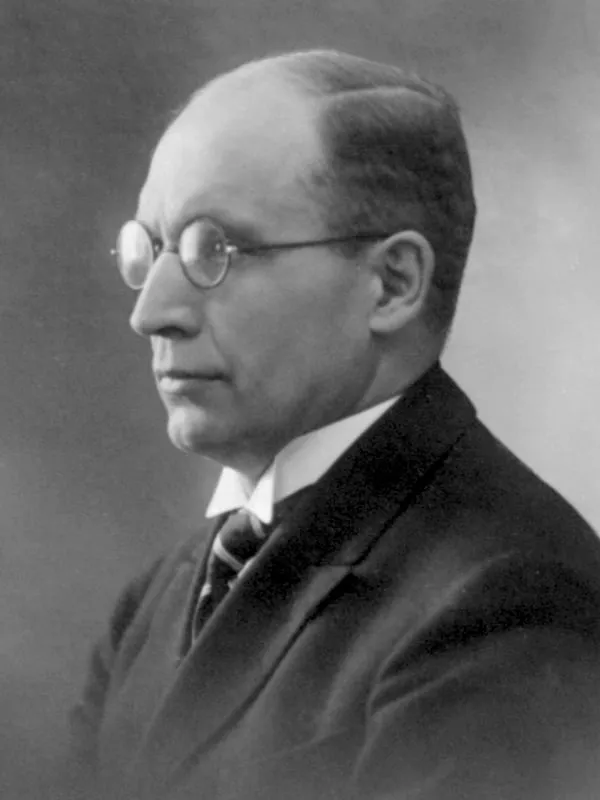
- Born:
- 13 January 1890, Kirbla (Governorate of Estonia, Russian Empire)
- Died:
- 9 January 1945, Stockholm
- Author:
- Natalia
- Photo:
- Heinrich Riedel, domena publiczna, Wikimedia Commons

Jüri Uluots was a distinguished Estonian jurist, the founder of the study of Estonian legal history and one of the authors of the 1938 constitution. In the autumn of 1939, under pressure from the USSR, he became prime minister, and as the last head of government of independent Estonia before the Soviet occupation he had to accept the Soviet ultimatum of June 1940. Under the Estonian constitution he was acting president from 21 June 1940, and he regarded himself as such until his death, although neither the USSR nor the Third Reich recognised it. Throughout the war he tried to preserve the continuity of the state: in 1941 he asked the Germans to restore an Estonian government; in February 1944 he backed mobilisation, hoping that Estonian soldiers would defend the country against the return of the Red Army; and in September 1944 he appointed the government of Otto Tief. He died in exile in Sweden, but thanks to his decisions the Estonian state in exile survived until 1992.
Childhood and studies
He was born on 13 January 1890 on the Jaanse farm in the village of Uluste in the parish of Kirbla in western Estonia, then in the Governorate of Estonia of the Russian Empire, into a peasant family. He attended the parish and church schools, then the town school and the gymnasium in Pärnu. In 1910 he began studying law at the University of St Petersburg. He graduated in 1915 and stayed on at the university with a scholarship, specialising in Roman law and civil law. In 1913 he was among the founders of the Estonian student corporation Rotalia.
In 1918–1919, during the fight for independence, he was a justice of the peace and an examining magistrate in Haapsalu. In 1919 he was elected to the Constituent Assembly, and in 1919–1920 he edited the daily Kaja.
Professor at Tartu
In 1920 the law faculty of the University of Tartu began work with only three Estonian lecturers, and Uluots was one of them. He taught Roman law, from 1925 as associate professor and from 1927 as full professor. In 1924–1931 he was dean of the faculty, and in 1931–1934 vice-rector for student affairs. He became dean again during the German occupation, in 1942–1944.
Uluots changed the way the history of law in his country was written. His principle was that the legal history of Estonia was above all the legal history of the Estonian people, and not merely that of the German lords who had ruled the country for centuries. He published a History of Estonian Law (1930), as well as, in German, an outline history of Estonian agriculture (1935) and a study of the treaties between the Estonians and foreigners in the 13th century (1938). He took part in the work on the Estonian civil code and defended the Estonian land reform before the League of Nations. In 1938 he was among the first members of the Estonian Academy of Sciences. In 1926 he married Anette Tobber, with whom he had a daughter and a son.
Politician
Alongside his academic career Uluots was active in politics. He belonged to the agrarian Farmers’ Assemblies (Põllumeeste Kogud) and sat on its list in several sessions of the Riigikogu, the State Assembly, in the 1920s and early 1930s. In 1922–1924 he was also deputy prosecutor in the civil department of the Supreme Court.
After Konstantin Päts’s coup of 1934, in the period known as the “Era of Silence”, Uluots became one of his closest associates. In 1936 he entered the National Assembly that drafted the new basic law, chaired its first chamber and was one of the principal authors of the 1938 constitution. From 1937 to 1940 he led the Fatherland League, the only political organisation permitted at the time, and in 1937–1938 he was editor-in-chief of the largest Estonian daily, Postimees. In April 1938 he became chairman of the Riigivolikogu, the lower chamber of the new parliament. That same year he received the Order of the White Star, first class.
Prime minister in the shadow of the pact
The Molotov–Ribbentrop Pact of August 1939 assigned Estonia to the Soviet sphere of influence. After Molotov’s demands, Uluots joined the delegation that went to Moscow on 27 September and signed the mutual assistance pact that opened Estonia to Soviet bases. The government of Kaarel Eenpalu soon resigned, and on 12 October 1939 Uluots became prime minister.
His government tried to save independence by scrupulously observing the pact. From 18 October the Red Army moved into the bases; in the autumn most of the Baltic Germans left the country; and during the Winter War Estonia had to put up with Soviet air raids on Finland launched from its territory. In the spring of 1940 Moscow began to accuse the Baltic states of conspiring against the USSR. On 16 June Estonia received an ultimatum demanding a new government and the admission of more troops. Seeing no chance of defence, Uluots’s government accepted it and resigned. After the coup of 21 June Johannes Vares became prime minister of a puppet government, and in August the USSR annexed Estonia.
President without a state
The 1938 constitution, which Uluots had co-written, provided that when the president was unable to exercise his office, his duties passed to the prime minister. Päts, cut off from power and forced to sign Vares’s appointment, was no longer acting freely, and in July 1940 he was deported into the interior of Russia. Estonian lawyers and diplomats in the West therefore held that from 21 June 1940 the head of state was Uluots, as the last prime minister appointed in accordance with the constitution. Uluots himself went into hiding during the first Soviet occupation and was the only member of his government to escape arrest.
In the summer of 1941, when the Germans entered Estonia and the Forest Brothers were driving Soviet units out of the south of the country in the Summer War, Uluots came out of hiding. On 29 July he met the German military authorities in Tartu, thanked them for the liberation and asked for permission to form a government of independent Estonia with its own army. The Germans refused. They offered him the leadership of a self-administration under German supervision, but he declined. The Estonian Self-Administration was headed by Hjalmar Mäe. Uluots returned to the university, where he was again dean of law in 1942–1944, and kept in touch with the underground. On 6 January 1943 a meeting at the Estonian legation in Stockholm confirmed that, to preserve the legal continuity of the republic, Uluots should continue to discharge his duties.
For two and a half years of German occupation he opposed the conscription of Estonians into German formations. He believed that Estonia should save its strength for the moment of Germany’s defeat and not shed blood for a Reich that denied it statehood.
1944
He changed his mind at the beginning of 1944, when the Red Army broke the siege of Leningrad and on 2 February reached the Narva, on the Estonian border. On 1 February Mäe’s self-administration announced the mobilisation of men born in 1904–1923. On 7 February Uluots called on the radio for men to report to the recruiting stations. He said that answering the mobilisation was unavoidable and the only way to hope for a better future for Estonia, and that Estonian troops on Estonian soil had a wider significance than he was able to say. By various estimates, between 32,000 and 38,000 men reported. Many of them went on to fight in the Battle of Narva. Uluots hoped that when Germany collapsed the country would have an armed force of its own, but his appeal also meant that tens of thousands of Estonians fought in German uniform, and many of them were killed or later ended up in Soviet labour camps.
At the same time the underground National Committee of the Estonian Republic was formed by the pre-war parties that had opposed Päts. At first the committee questioned Uluots’s constitutional authority, but each side needed the other. On 20 April 1944 Uluots secretly convened in Tallinn the electoral college provided for in the constitution, which confirmed that he had been acting president since 21 June 1940. He soon appointed Alfred Maurer and Otto Tief as deputy prime ministers.
In September 1944 the Germans were leaving mainland Estonia. Uluots was by then gravely ill with stomach cancer. On 18 September he entrusted Tief with the duties of prime minister and appointed an eleven-member government that was to proclaim the restoration of the state in the interval between the Germans’ departure and the Red Army’s arrival. On 20 September, as the Estonian flag was raised on the tower of Toompea Castle, Uluots left the country and made his way to Sweden. On 22 September the Red Army took Tallinn, and most members of Tief’s government fell into the hands of the NKVD.
Exile and death
In Sweden Uluots, together with those members of the government who had managed to escape, continued to act as head of state in exile. It did not last long. He died in Stockholm on 9 January 1945, four days before his 55th birthday. August Rei, the pre-war social democratic head of state, was recognised as his successor in exile.
Significance
Uluots failed to save independence in 1940, in 1941 and in 1944. As prime minister he accepted the Soviet ultimatum; as head of state he had no real power in the country; and his appeal for mobilisation sent tens of thousands of Estonians to the front under German command. His decisions have therefore been judged in different ways: to some he was a man who, in a hopeless position, chose the lesser evil; to others he was proof that a small nation squeezed between two totalitarian powers could only choose which occupier to resist.
What proved most lasting was what he did as a lawyer. His recognition as acting president, the electoral college of 1944 and the appointment of Tief’s government provided the basis for the legal continuity of the Republic of Estonia. The government-in-exile existed until 1992, when the last prime minister in the duties of the president, Heinrich Mark, handed over his credentials to the newly elected president, Lennart Meri. As a result, in 1991 the restored Estonia was able to regard itself as the continuation of the state of 1918 rather than a new entity born of the Estonian SSR, and throughout the Cold War Western states treated its incorporation into the USSR as an occupation.
In May 2008 the remains of Uluots and his family were brought back from Sweden to Estonia, and on 31 August 2008 they were buried in the cemetery of his native Kirbla. In Estonian memory he has remained the scholar who created the legal history of his nation and the politician who, in the worst of years, strove to ensure that the state survived, at least on paper.
Sources
Mentioned in battles
(02)Often appears with
People who appear in the same events.