United States
Owen D. Young
Chairman of General Electric (1922–1939, 1942–1945), founder and chairman of RCA (1919–1929), chairman of the committee of experts on reparations (1929)
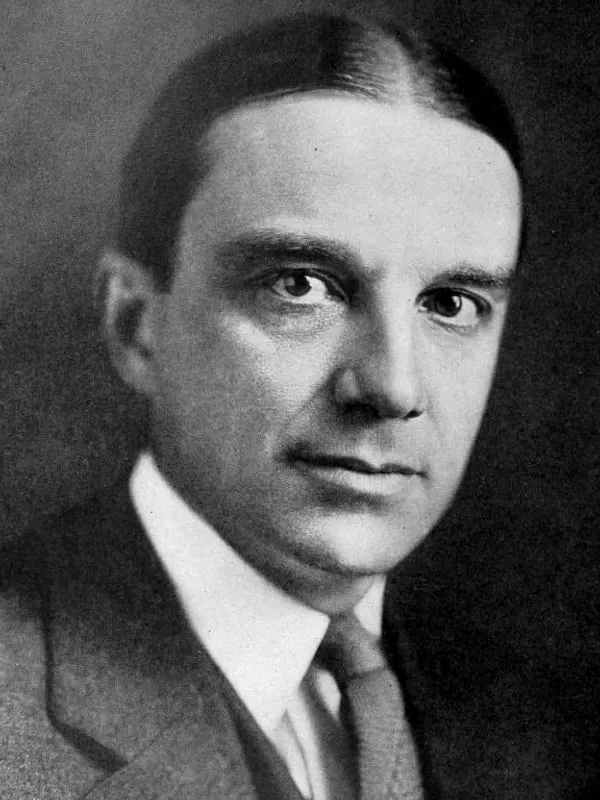
- Born:
- 27 October 1874, Van Hornesville (New York)
- Died:
- 11 July 1962, St. Augustine (Florida)
- Author:
- Łukasz
- Photo:
- Underwood & Underwood, domena publiczna, Wikimedia Commons

Owen D. Young was the son of farmers from upstate New York who became a lawyer and then one of the most powerful men in American industry: for seventeen years he was chairman of the board of General Electric, and he founded the Radio Corporation of America, around which American radio grew up. For the history of Europe his second role matters more. In the 1920s he was one of the American “ambassadors without portfolio” whom the government in Washington sent to help resolve the dispute over German reparations without becoming officially involved in it. In 1924 he helped to create the Dawes Plan, and in 1929 he chaired the committee that drew up the Young Plan. In Germany his name became the rallying cry of a campaign in which Adolf Hitler stepped onto the national stage for the first time.
From the farm to Boston
He was born on 27 October 1874 on a farm in Van Hornesville, Herkimer County, New York, the only surviving child of Jacob Smith Young and Ida Brandow. His ancestors had come to America in the 18th century from the Palatinate on the Rhine. Although his parents needed him on the farm, they sent him to high school in East Springfield and then mortgaged the farm so that he could study at St. Lawrence University in Canton. He graduated in 1894, and completed the three-year law course at Boston University in two years, graduating with honours in 1896.
In Boston he began work at the law firm of Charles H. Tyler, and ten years later became a partner. He specialised in disputes between large companies, especially utilities. In 1898 he married Josephine Sheldon Edmonds, with whom he had five children.
General Electric and RCA
Around 1911 Young, representing the firm of Stone & Webster, won a case against General Electric. The company’s president, Charles A. Coffin, remembered his opponent, and when GE’s chief counsel died in 1912 he offered Young the post. Young moved to Schenectady, GE’s headquarters, and quickly rose into the company’s inner leadership.
In 1919, at the instigation of the US Navy, he took on the matter that made him famous. GE intended to sell the British Marconi company powerful radio transmitters designed by Ernst Alexanderson, at the time the best equipment for transatlantic communication. Naval officers, citing the support of President Woodrow Wilson, argued to Young that the world’s radio communications must not come under British control. Young arranged the buyout of Marconi’s American subsidiary, and in October 1919 founded a new company, the Radio Corporation of America. He was its chairman until the turn of 1929 and 1930. RCA, run by the energetic David Sarnoff, became the largest radio company in the world, and in 1926 founded the first national radio network, NBC.
In 1922 Young became chairman of the board of General Electric, with Gerard Swope as president. For the next seventeen years the two ran the company as a harmonious partnership. GE became a giant in household appliances, from refrigerators to washing machines, and one of the driving forces behind the electrification of American cities, farms and factories. Young was regarded as a businessman of a new kind: he spoke of big business’s responsibility towards its employees and society. In 1928 he joined the board of the Rockefeller Foundation.
The Dawes Plan
Young’s involvement in public affairs began after the war with an industrial conference called by President Wilson. In 1923 the occupation of the Ruhr by France and Belgium and hyperinflation in Germany brought Europe to the brink of disaster. When the Reparation Commission set up a committee of experts to draw up a new payment plan, the United States delegated two men to it: the general and banker Charles Gates Dawes, who became its chairman, and Young.
Dawes was the face of the committee, while Young, together with the British economist Josiah Stamp, was its brains. It was they who worked out the figures and formulas that made it possible to reconcile French demands with Germany’s capacity to pay. One of the key elements of the plan was “transfer protection”: money collected in Germany was converted into foreign currencies only when this did not threaten the exchange rate of the mark. After the plan was adopted at the London conference in August 1924, Young served for the first few weeks as acting Agent General for Reparation Payments, until Seymour Parker Gilbert took over in October.
The Young Plan
In 1928 it became clear that the Dawes Plan had to be replaced by a final settlement. On 9 February 1929 a new committee of experts met in Paris and elected Young as its chairman. The talks very nearly broke down. The German delegate, Reichsbank President Hjalmar Schacht, offered far less than the creditors wanted and made political demands, including the return of the colonies and a change in the border with Poland. Young conducted the talks patiently and in the end put forward a compromise that everyone accepted. The report was signed on 7 June 1929.
The Young Plan fixed 59 annual instalments, payable until 1988, ended foreign supervision of German finances and created the Bank for International Settlements in Basel, which took over the handling of payments. The governments adopted the plan at The Hague, and in return the Allies agreed to withdraw their last troops from the Rhineland by 30 June 1930. In Washington Young was received coolly, because the plan linked the size of reparations to the war debts owed by Britain and France to America, a link the US government refused to acknowledge. Young defended himself by saying that he had acted as an independent expert. President Herbert Hoover nevertheless congratulated him on his efforts, and Time magazine named him its Man of the Year for 1929.
Young himself had doubts about what he had signed. During the talks he warned that no practical man would assess any country’s capacity to pay more than fifteen years ahead. He was right. Even before the plan came into force, the Wall Street Crash set off the Great Depression, and in Germany Alfred Hugenberg’s nationalists, together with Hitler, organised a referendum against “Young slavery”. They lost the plebiscite, but the slogan lived on, and in September 1930 the Nazis won more than six million votes. In June 1931 payments were suspended by the Hoover Moratorium, and in 1932 the Lausanne Conference effectively abolished reparations.
The 1930s and the war
Young was a Democrat, and from 1930 his friends promoted him as a presidential candidate. He did not campaign himself, and in 1932, when he was spoken of as a compromise candidate at the Democratic convention, the nomination went to Franklin Delano Roosevelt. His wife died in 1935, and in 1937 he married Louise Powis Clark, a widow and fashion designer. In 1939 he retired and took up dairy farming on the family farm in Van Hornesville, where as early as 1930 he had endowed a modern school for the surrounding villages.
During the Second World War, when General Electric’s leadership went to work in the wartime administration, Young and Swope returned to the company. Young was again chairman of the board in 1942–1945, while GE was producing turbines, engines, radar and other equipment for the army and navy on an enormous scale. After the war he turned to education. The Governor of New York, Thomas Dewey, put him in charge of a commission whose 1948 report led to the creation of the state university system, the State University of New York. He died on 11 July 1962 in St. Augustine, Florida, where he and his second wife spent their winters. He was buried in Van Hornesville.
Significance
Young belonged to the generation of American industrialists and bankers who, after the Senate rejected the Treaty of Versailles, took the place of American diplomacy in Europe. They believed that political problems could be solved by economic means: reasonable instalments, independent banks and credit. The Dawes Plan, which he co-authored, gave Europe five peaceful years. The Young Plan was meant to settle the affairs of the Great War once and for all, but it came into force just as the system on which it rested was collapsing. In Germany his name became a byword for oppression, and the campaign against the “Young Plan” helped the Nazis to win the respect and the money of the right. The bank in Basel, created under his plan, outlived both reparations and the war, and still operates today.
Sources
Often appears with
People who appear in the same events.