United Kingdom
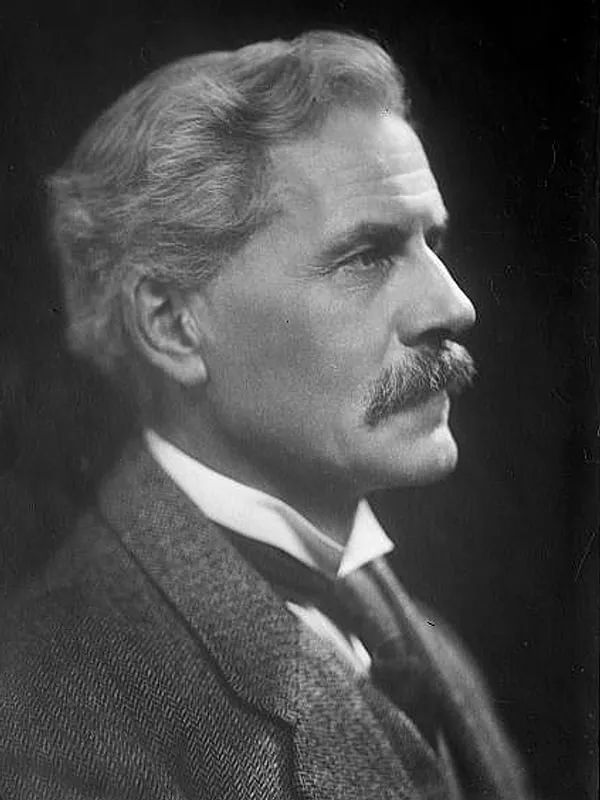
Ramsay MacDonald
Chairman of the Parliamentary Labour Party (1911–1914), Leader of the Labour Party (1922–1931), Prime Minister of the United Kingdom (1924, 1929–1935), Lord President of the Council (1935–1937)
- Born:
- 12 October 1866, Lossiemouth (Scotland)
- Died:
- 9 November 1937, Atlantic Ocean, aboard the Reina del Pacifico
- Author:
- Łukasz
- Photo:
- autor nieznany, domena publiczna, Wikimedia Commons

James Ramsay MacDonald, the illegitimate son of a Scottish farm labourer, was one of the founders of the British Labour Party and the first prime minister in history from its ranks. During the First World War he opposed Britain’s participation in the war and for several years was regarded as a traitor, yet it was precisely this stance that later made him a symbol of peace and international cooperation. As prime minister in 1924 he recognised the Soviet Union and secured the adoption of the Dawes Plan, which calmed the dispute over German reparations for several years. During the Great Depression he split his own party by forming a National Government with the Conservatives in 1931. Until 1935 he led the government in the years when Japan seized Manchuria and Hitler came to power and began to rearm Germany. To some he was a visionary who tried to found peace on disarmament and the League of Nations; to others, a politician who left Britain unprepared for war.
From Lossiemouth to London
He was born on 12 October 1866 in the fishing town of Lossiemouth in north-east Scotland. His mother, Anne Ramsay, was a servant; his father, John MacDonald, a farm labourer. They never married, and the boy was brought up by his mother and grandmother. He attended parish schools, worked on a farm at the age of 15 and then became a pupil teacher. In 1885 he went to Bristol, where he came into contact with socialists, and the following year to London. There he lived in poverty, worked as a clerk and studied in the evenings. He became secretary to the Radical Liberal Thomas Lough, then a journalist, and for a time belonged to the socialist Fabian Society.
In 1894 he joined the Independent Labour Party, founded a year earlier by James Keir Hardie. In 1896 he married Margaret Gladstone, the daughter of a well-known scientist, who was no relation of the prime minister of that name. His well-to-do wife gave him financial independence, and the marriage was a very happy one. They had six children. The best known of them, Malcolm MacDonald, was Colonial Secretary in 1938–1940 and in 1939 signed the White Paper restricting Jewish immigration to Palestine.
Builder of the Labour Party
In February 1900 the trade unions and socialist organisations set up the Labour Representation Committee, whose purpose was to get working men into Parliament. MacDonald became its secretary. He was an excellent organiser and a skilful negotiator. In 1903 he concluded a secret pact with the Liberal Herbert Gladstone, under which the Liberals did not field candidates against the Committee’s candidates in several dozen constituencies. At the 1906 election 29 of its candidates entered the House of Commons, MacDonald among them, elected for Leicester. The Committee then took the name of the Labour Party. In 1911 MacDonald became chairman of its parliamentary party, in effect the party’s leader. That same year his wife died. He never got over it and never remarried.
He wrote a great deal and was regarded as the party’s chief theorist. He was no Marxist. He saw socialism as a gradual evolution of society rather than the fruit of class struggle, and he wanted Labour to replace the Liberals as the main force of the left in Parliament, not to overthrow them by revolution.
Against the war
On 3 August 1914, when the Foreign Secretary, Edward Grey, set out to the House of Commons the reasons why Britain could not remain neutral, MacDonald replied that the country ought to have stayed neutral. In his view the cause of the war was a balance-of-power policy built on secret alliances. When most Labour MPs supported the war credits, he resigned as chairman of the parliamentary party. Together with a group of Liberals he founded the Union of Democratic Control, which demanded open diplomacy, parliamentary control of foreign policy and a just peace without annexations.
For several years he was one of the most hated men in the country. The right-wing press called him a traitor, and in September 1915 the weekly John Bull published his birth certificate, revealing that he was illegitimate and had been registered as James McDonald Ramsay. In 1916 the golf club in his native Lossiemouth expelled him from membership. At the election of December 1918, won by David Lloyd George’s coalition, he lost his seat. He called the Treaty of Versailles an act of folly unknown in history.
The first Labour government
In November 1922 MacDonald returned to the House of Commons as member for the Welsh constituency of Aberavon and was elected leader of the Labour Party, which had then become the main opposition party. His former anti-war stance now lent him authority. In December 1923 Stanley Baldwin’s Conservatives lost their majority. On 22 January 1924, with the tacit support of the Liberals, MacDonald became the first Labour prime minister. He also took the post of Foreign Secretary himself.
A minority government could carry out no radical reforms, but MacDonald wanted to show that Labour could govern responsibly. He achieved most in foreign policy. On 1 February 1924 he granted de jure recognition to the Soviet Union, and in August his government signed a general treaty and a commercial treaty with the USSR. He believed that the conflict with France over German reparations and the occupation of the Ruhr were leading Europe to disaster. At the London conference in July and August 1924, with the help of American bankers, he persuaded the French prime minister, Édouard Herriot, to accept the Dawes Plan and to withdraw troops from the Ruhr. For the first time since the war Germany negotiated with the victors as an equal. In September MacDonald addressed the Assembly of the League of Nations in Geneva in person and, together with Herriot, launched the Geneva Protocol for the peaceful settlement of disputes, which combined arbitration, collective security and disarmament. He also halted construction of the great naval base at Singapore, believing it would harm the cause of disarmament.
The government fell after nine months. The guarantee of a loan to the USSR and the dropping of the prosecution of the communist editor John Campbell allowed the opposition to accuse Labour of being soft on communism. On 8 October the House of Commons passed a Liberal motion that MacDonald treated as a vote of no confidence. Four days before the election of 29 October, the Daily Mail published the forged “Zinoviev letter”, purportedly an instruction from the head of the Comintern, Grigory Zinoviev, to British communists. MacDonald said he felt like a man sewn into a sack and thrown into the sea. The Conservatives won the election, and Baldwin’s new government abandoned the treaties with the USSR and rejected the Geneva Protocol. Its place was taken in 1925 by the Locarno Treaties.
The second government and the Depression
At the election of May 1929 Labour won the most seats for the first time, though again without a majority, and on 5 June MacDonald became prime minister for the second time. Arthur Henderson became Foreign Secretary and in the autumn restored the relations with the USSR that had been broken off in 1927. In October 1929 MacDonald became the first serving British prime minister to visit the United States, and he agreed with President Herbert Hoover on the principle of parity between the two fleets. On that basis the London Naval Treaty was concluded in April 1930, which also limited cruisers, destroyers and submarines.
A few months after he took office came the Wall Street Crash. Unemployment in Britain rose to over 2.5 million by the end of 1930. The Chancellor of the Exchequer, Philip Snowden, clung to financial orthodoxy, and the proposals for public works put forward by the minister Oswald Mosley were rejected. In the summer of 1931 the banking crisis in Central Europe, set off by the collapse of the Vienna Creditanstalt, led to a flight of capital from London. The bankers demanded a balanced budget and cuts in unemployment benefit. Some ministers, led by Henderson, refused.
On 24 August 1931 MacDonald resigned, but at the request of King George V he immediately formed a National Government with the Conservatives and Liberals. The Labour Party expelled him, together with Snowden and a few others. The National Government was unable to hold the pound and in September abandoned the gold standard. At the election of October 1931 its candidates won over 550 seats, Labour only 52. From then on MacDonald was a traitor in Labour eyes. Clement Attlee called his decision the greatest betrayal in the political history of the country.
Prime Minister of the National Government
In the National Government MacDonald was a prime minister with little support behind him. The Conservatives formed the majority, and real power passed increasingly to Baldwin and the Chancellor of the Exchequer, Neville Chamberlain. MacDonald himself dealt mainly with foreign policy, and its chief aim for him was disarmament. At the Lausanne conference of 1932, which he chaired, the powers effectively wrote off the German reparations fixed a few years earlier in the Young Plan.
The world, however, was changing faster than MacDonald could respond. In September 1931 Japan staged the Mukden incident and occupied Manchuria. The British government wanted neither sanctions nor war in the Far East and confined itself to supporting a League of Nations commission. In February 1932 the World Disarmament Conference opened in Geneva. Germany demanded equality of armaments, France demanded security. On 30 January 1933 Adolf Hitler became Chancellor of Germany. In March 1933 MacDonald presented a plan in Geneva that provided, among other things, for French and German armies of equal size, and went to Rome, where Benito Mussolini proposed to him a Four-Power Pact of Britain, France, Italy and Germany. The idea was received with indignation in Poland and Czechoslovakia, because it heralded a revision of frontiers over the heads of the smaller states. The pact was signed in July 1933 but never came into force. In October 1933 Hitler withdrew Germany from the Disarmament Conference and from the League of Nations.
In March 1935 the government published a White Paper on defence, signed by MacDonald, which acknowledged that because of German rearmament Britain had to increase its military spending. Hitler treated this as a pretext and within two weeks announced the existence of a military air force and the reintroduction of universal conscription. In April 1935 MacDonald went to the Stresa conference, where Britain, France and Italy condemned Germany’s breaches of the treaties. The so-called Stresa Front fell apart within a few months, when Mussolini invaded Ethiopia and Britain itself concluded the Anglo-German Naval Agreement with Germany on 18 June 1935, negotiations for which had begun while MacDonald was still in office.
Last years
MacDonald’s health was deteriorating rapidly. His memory was failing, and his speeches grew ever more vague and hard to follow. On 7 June 1935 he handed the premiership to Baldwin and took the honorific post of Lord President of the Council. At the election of November 1935 he lost the mining constituency of Seaham to his former party comrade Emanuel Shinwell, but in January 1936 he returned to the House of Commons for the Scottish Universities. In May 1937, when Neville Chamberlain became prime minister, he left the government. His doctors advised a sea voyage. On 9 November 1937 he died of heart failure aboard the liner Reina del Pacifico while sailing to South America with his daughter Sheila. After a service in Westminster Abbey his ashes were laid beside his wife’s in his native part of Scotland.
Significance
MacDonald was one of the makers of modern British politics. He built the Labour Party from a small group of trade unionists and socialists into a party capable of governing, and as prime minister he showed that the left could hold power within a parliamentary monarchy. In foreign policy he believed in talks, arbitration, the League of Nations and disarmament. In the 1920s this brought successes: the recognition of the USSR, the Dawes Plan, rapprochement with Stresemann’s Germany and the naval agreement with America. In the 1930s the same methods failed against states that had no intention of disarming. Japan in Manchuria, Hitler’s Germany and Mussolini’s Italy exploited British reluctance to rearm, and Britain began to rearm seriously only in the mid-1930s, too late to catch up with Germany in the air.
After the defeat of 1940, the journalists who looked for those to blame for the country’s unpreparedness for war in the book Guilty Men placed MacDonald alongside Baldwin and Chamberlain. For half a century the Labour Party remembered him as the traitor of 1931. Only in 1977 did a substantial biography by the historian and politician David Marquand restore him to his place as one of the most important leaders of the British left, and as a politician who in difficult years tried to keep the peace by means in which most of his compatriots then believed.
Sources
Often appears with
People who appear in the same events.