Slovakia
Vojtech Tuka
Leader of the Rodobrana (1923–1927), Deputy Prime Minister (1939) and Prime Minister of the Slovak Republic (1939–1944), Foreign Minister (1940–1944)
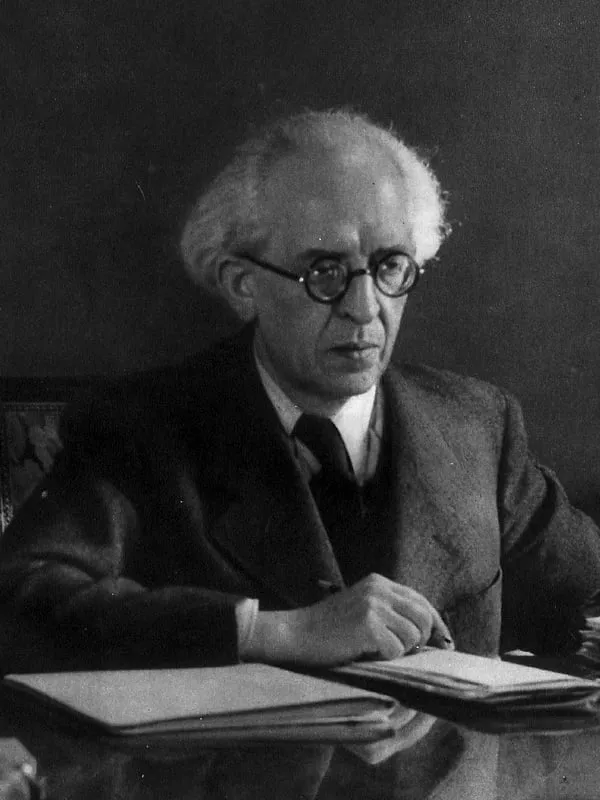
- Born:
- 4 July 1880, Hegybánya, today Štiavnické Bane (Kingdom of Hungary, Austria-Hungary)
- Died:
- 20 August 1946, Bratislava (Czechoslovakia)
- Author:
- Natalia
- Photo:
- autor nieznany, domena publiczna, Wikimedia Commons

Vojtech Tuka was a law professor who lectured in Hungarian under the Hungarian monarchy and became, in Czechoslovakia, the most radical opponent of that state’s existence. In the 1920s he created the paramilitary squads of the Slovak People’s Party; in 1929 he was convicted of high treason and of spying for Hungary; and ten years later he lobbied Hitler to break up the Czechoslovak state. As Prime Minister of the Slovak Republic from October 1939, he was the leading advocate in Bratislava of unconditional collaboration with the Third Reich and of “Slovak National Socialism”. It was he who signed Slovakia’s accession to the Tripartite Pact in November 1940, he who declared war on one country after another, and he who in 1942 agreed with the Germans to send Slovakia’s Jews to the extermination camps. Slovak historians call him the spiritual father of Slovak fascism. After the war he was sentenced to death and executed.
A Hungarian professor
He was born on 4 July 1880 in the mining settlement of Hegybánya (today Štiavnické Bane) near Banská Štiavnica, the son of a teacher, Anton Tuka. Like many educated Slovaks of the era, he grew up in Hungarian culture: in Hungarian publications he signed himself Béla Tuka, and according to accounts from the 1920s he spoke Slovak poorly and with a marked accent. He studied law in Budapest and then in Berlin and Paris. In 1901, aged 21, he obtained his doctorate and quickly made an academic career. From 1907 he was a professor at the law academy in Pécs, and in 1914 he took the chair of constitutional and international law at the newly founded Hungarian Elisabeth University in Pressburg, that is, Bratislava. He was said to be one of the youngest professors in the kingdom. He was also active in the National Christian Social Party, a Catholic and openly antisemitic grouping, and from 1910 sat on the leadership of its Slovak section.
In the autumn of 1918 the monarchy fell apart and Bratislava found itself in the new state of the Czechs and Slovaks. The Elisabeth University was closed in 1919. Tuka declined an offer to move with it to Hungary and applied to work at the new Comenius University, stressing in his application that he supported Slovak autonomy. The faculty turned him down on the grounds that he had no record of work in the Slovak language. From then on, his biographers write, he hated the Czechoslovak state. The authorities in Prague regarded him with suspicion: in 1920–1921 he was twice interned on charges of anti-state activity and released for lack of evidence.
People’s Party man and the Rodobrana
In the early 1920s Tuka joined the Slovak People’s Party of Father Andrej Hlinka, which demanded autonomy for Slovakia. He soon became one of the leader’s closest advisers and editor-in-chief of the party daily Slovák, in which he campaigned against communism, liberalism and Czech secularism. In 1923 he founded the Rodobrana, the party’s paramilitary guard, modelled on the Italian fascist squads. Plans to seize power in Slovakia were hatched in its circles. The government of Antonín Švehla dissolved the Rodobrana in 1927. In 1925–1929 Tuka sat in parliament in Prague while maintaining secret contacts with Budapest. According to the later indictment, in 1923–1924 he set up an office in Vienna through which he passed secrets concerning the republic’s defence to foreign military men.
On 1 January 1928, the tenth anniversary of the founding of Czechoslovakia, he published an article in Slovák entitled “In the Tenth Year of the Martin Declaration”. In it he claimed that the Martin Declaration of 30 October 1918, by which representatives of the Slovaks had joined the new state, contained a secret clause limiting the union to ten years. Once that term expired, a legal vacuum – “vacuum iuris” – would supposedly arise in Slovakia, in which officials and soldiers would no longer be bound by their oath. It was in effect a call to break away from Czechoslovakia. Parliament stripped him of his immunity, and in January 1929 Tuka was arrested. In a celebrated trial in which Alexander Mach (who was acquitted) was tried alongside him, he was sentenced on 5 October 1929 to fifteen years’ imprisonment for high treason and espionage for Hungary. Tuka denied his guilt to the end and portrayed himself as a martyr for Slovak autonomy. Slovak historians today regard the espionage charges as largely confirmed by Hungarian documents, although some, such as Ivan Kamenec, did not rule out a different interpretation of them. After the verdict the People’s Party, whose representative in the government at the time was Jozef Tiso, left the coalition.
Prisoner and return
Tuka spent eight years in prison. Hlinka’s party proclaimed him a martyr but in practice left him to his own devices. In 1937 he was amnestied on condition that he have no contact with his former associates, and for several months he lived under police supervision in Plzeň. He returned to Slovakia when, after the Munich Agreement, Czechoslovakia was weakening by the day and the People’s Party proclaimed Slovak autonomy in October 1938. After Hlinka’s death in August 1938 he was regarded, alongside Tiso and Karol Sidor, as a contender for the party leadership, but the conservative, clerical wing of the party backed Tiso. The prime minister of the autonomous government did not even allow Tuka to stand in the December elections to the Slovak diet.
Tuka therefore sought support in Berlin. By the autumn of 1938 he was already the loudest advocate of full independence; in January 1939 he founded the Slovak–German Society; and on 12 February 1939, together with Franz Karmasin, leader of the local Germans, he was received by Adolf Hitler. Holding no office and no mandate, he told Hitler that he was placing the fate of the Slovak nation in his hands. When on 9 and 10 March 1939 the government in Prague removed Tiso and sent troops into Slovakia, Tuka was among the radicals interned. A few days later Hitler summoned Tiso to Berlin and forced him to declare independence. On 14 March 1939 the Slovak State came into being, with Tuka as its Deputy Prime Minister. He signed the Treaty of Protection, which placed Slovakia under the “protection” of the Reich.
Prime Minister
On 26 October 1939 the diet elected Tiso president, and the following day Tuka became Prime Minister. For the next five years the two men vied for power. Tiso wanted an authoritarian, Catholic corporate state resting on the party, the Church and the army. Tuka and his ally Mach, commander of the Hlinka Guard, sought to remake Slovakia on the National Socialist model and to bind it unconditionally to the Reich. First, however, the Prime Minister came into conflict with the Foreign and Interior Minister, Ferdinand Ďurčanský, who was trying to preserve at least some freedom of action for Slovakia.
Hitler settled the dispute. On 28 July 1940 in Salzburg, in the presence of Joachim von Ribbentrop, he forced Tiso to dismiss Ďurčanský. Tuka took over the Foreign Ministry, and Mach the interior and, once again, the Guard. Manfred von Killinger became the Reich’s envoy in Bratislava, and German advisers were sent to Slovak government offices, among them the SS officer Dieter Wisliceny as adviser on Jewish affairs. Tuka declared Slovakia a National Socialist state and in August presented fourteen points of “Slovak National Socialism” in which he made no secret of his antisemitism. On 3 September 1940 the diet passed a constitutional act empowering the government to take any steps to remove Jews from economic and social life.
On 24 November 1940 Tuka travelled to Berlin and signed Slovakia’s accession to the Tripartite Pact. He was received by Ribbentrop and, at the Reich Chancellery, by Hitler as well. According to the German record of his conversation with Ribbentrop, he praised the German advisers, asked for German officers for the army and enquired how to deal with communists and Catholic organisations, to which Ribbentrop advised “ruthlessness”. The journey was meant to strengthen the Prime Minister’s hand against the President. At the end of 1940 Tuka, Mach and Killinger were preparing to remove Tiso, whom they wanted to “promote” to bishop. The plan came to light, the army sided with the President, and Berlin, which valued calm in a dependent state more than ideological purity, did not back the plotters. Killinger was transferred to Bucharest, and his successor, Hanns Ludin, tried to reconcile the two factions.
War and deportations
After the German invasion of the Soviet Union in June 1941, Slovakia joined the war. Tuka announced its participation in disregard of the procedures laid down in the constitution, and Slovak divisions went with the Wehrmacht into Ukraine. On 25 November 1941 he signed Slovakia’s accession to the Anti-Comintern Pact in Berlin, and on 12 December 1941, after Germany declared war on the United States, he declared Slovakia to be at war with America and Great Britain, again without the consent of the diet. He later boasted that his telegram announcing the fulfilment of Slovakia’s obligations under the Tripartite Pact had reached Berlin little more than an hour after Hitler’s speech.
Tuka bears the gravest responsibility for the fate of the Slovak Jews. On 9 September 1941 his government issued a decree on the legal status of Jews, the so-called Jewish Code, which ran to 270 articles and was modelled on the Nuremberg Laws. Jews were stripped of their property, forced to wear the star and removed from Bratislava. At the end of 1941 Tuka agreed with the envoy Ludin that the Jews would be deported to territories controlled by the Reich. Slovakia was the first state outside direct German rule to agree to hand over its citizens of Jewish origin, and it paid the Reich 500 marks for each person deported, supposedly to cover the costs of “resettlement”. The first transport, carrying almost 1,000 young women, left Poprad for Auschwitz on 25 March 1942. By 20 October 1942 some 57,000–58,000 people had been deported, to Auschwitz and to the Lublin region. A few hundred returned after the war.
Tuka did not share the doubts that in time arose among some Slovak politicians. When in April 1943 the representative of the Holy See in Bratislava, Monsignor Giuseppe Burzio, protested against announcements that the deportations would resume and reminded him of the state’s Christian character, the Prime Minister brushed these arguments aside. The deportations had been halted in the autumn of 1942 because of public feeling, the protests of the Church and economic considerations, and the remaining Jews were to a large extent protected by exemptions issued by the President’s office. Tuka pressed for the deportations to resume and in December 1943 assured Berlin’s emissary Edmund Veesenmayer that even baptised Jews would be deported. Further transports, however, did not leave until the autumn of 1944, by which time Slovakia was under German occupation.
Downfall and trial
Tuka’s position weakened from 1942 onwards. In October of that year Tiso assumed the title of leader (vodca) of the party and the state and gradually regained control of the government. The Prime Minister suffered several strokes, and in December 1943 he stepped down as deputy chairman of the party. At the beginning of 1944 he agreed to leave the government as well, but a dispute over his successor delayed his resignation. After the outbreak of the Slovak National Uprising at the end of August 1944, Ribbentrop still wanted him to stay in office, but on 5 September 1944 Tuka tendered the resignation of the whole government. Štefan Tiso, a relative of the President, became Prime Minister. Partly paralysed, Tuka took no further part in political life.
In the spring of 1945, as the front approached Bratislava, he fled with his wife, a doctor and carers to western Austria. There, after Germany’s surrender, he was detained by the Allies, who handed him over to the authorities of the restored Czechoslovakia. His trial before the National Court in Bratislava lasted from 30 July to the middle of August 1946. The prosecution charged him with taking part in the destruction of Czechoslovakia, including his conversation with Hitler in February 1939, with concluding the Treaty of Protection, with Slovakia’s participation in the war against the USSR and, above all, with the policy towards the Jews. On 14 August 1946 the court sentenced him to death. Tuka, confined to a wheelchair, was hanged in Bratislava on 20 August 1946. Eight months later Tiso met the same fate.
Significance
Tuka was an unusual figure: a Hungarian professor who became the most uncompromising of Slovak nationalists. He never won the support that Tiso enjoyed, and his plans to remake the country on the Nazi model were held in check by the conservatives. Yet he was the man in Bratislava on whom Berlin could rely without reservation, and it was thanks to him that Slovakia, formally independent, joined first the Tripartite Pact and then the Anti-Comintern Pact, declared wars and handed its own citizens over to their deaths. The historian Anton Hruboň called him “the executioner of the Slovak Jews”.
Sources
Often appears with
People who appear in the same events.