Poland
Józef Beck
Head of the Minister of Military Affairs' office (1926–1930), Deputy Prime Minister (1930), Foreign Minister of Poland (1932–1939)
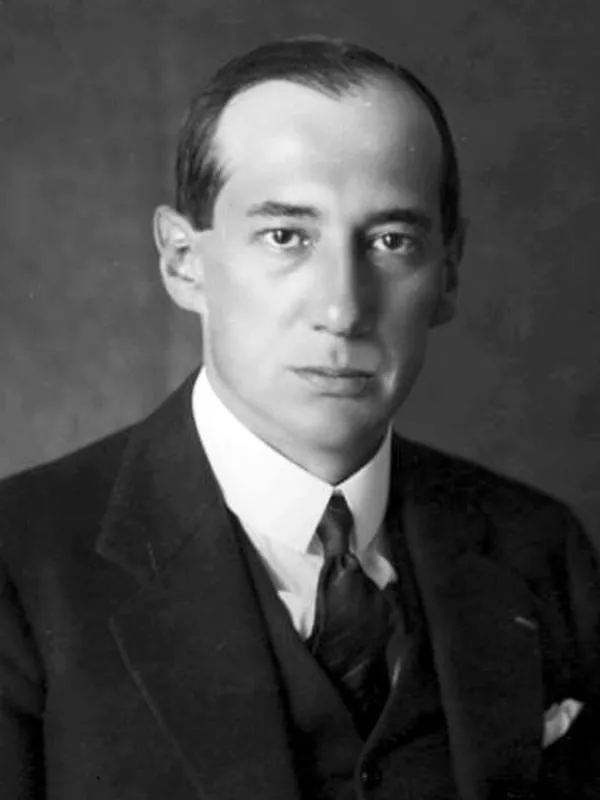
- Born:
- 4 October 1894, Warsaw (Russian Empire)
- Died:
- 5 June 1944, Stănești (Romania)
- Author:
- Łukasz
- Photo:
- Scriptor, domena publiczna, Wikimedia Commons

For almost seven years, from November 1932 to September 1939, Józef Beck directed Polish foreign policy. He was a legionary, an artillery officer and one of the men closest to Józef Piłsudski, who groomed him for the role and set its course until his death in 1935. Beck concluded a declaration of non-aggression with Adolf Hitler’s Germany, kept up correct relations with the USSR, distrusted the League of Nations and France, and in 1938 exploited the Czechoslovak crisis to seize Zaolzie. But when Hitler demanded that Poland hand over Gdańsk and subordinate itself to the Reich, Beck refused and concluded an alliance with Britain. His speech to the Sejm of 5 May 1939 went down in history as the symbol of Poland’s refusal. Historians have argued over his policy for more than eighty years.
Youth and the Legions
He was born in Warsaw on 4 October 1894. His father, also Józef, was a lawyer who was imprisoned for pro-independence activity in the Russian partition and barred from practising his profession. The family moved to Galicia and settled in Limanowa, where his father worked in the district administration. Józef went to school in Kraków, passed his school-leaving examinations in 1912 and began studying mechanical engineering at the Lwów Polytechnic, later transferring to the academy of commerce in Vienna. According to family tradition, the Becks were descended from a Flemish sailor in the service of King Stephen Báthory.
In the summer of 1914 he joined the Polish Military Organisation (POW), and on 23 August in Kraków the Polish Legions. As a former polytechnic student he was posted to the artillery. He started as a gunner, by 1916 was already a second lieutenant, and at the Battle of Kostiuchnówka was wounded in the head. In the summer of 1917, during the Oath Crisis, he and other Piłsudski loyalists refused to swear allegiance to the German Emperor. He then worked in the clandestine POW, and in 1918, as its emissary, made his way to the Polish III Corps (PL) in Ukraine and into revolutionary Russia.
Piłsudski’s soldier and diplomat
In November 1918 he joined the Polish Army and fought the Ukrainians as commander of a horse artillery platoon. Piłsudski soon noticed his abilities and began to use him for diplomatic and intelligence missions. In 1919 Beck was in Romania; in 1920 he worked in the intelligence section of the General Staff and went on a mission to Budapest, where he held talks with Miklós Horthy; and in 1921 he was a military expert at the Polish–Lithuanian negotiations in Brussels. For his part in the war he received the Virtuti Militari. In 1922 he became military attaché in Paris and Brussels. The French received him with suspicion and spread rumours about him, and Beck himself took away from Paris a lasting distrust of France. When Piłsudski withdrew from power in 1923, Beck lost his post and spent several months on the inactive list.
In May 1926 he was among the officers who prepared the May Coup. During the fighting in Warsaw he was chief of staff of General Gustaw Orlicz-Dreszer’s group. For the next four years he headed Piłsudski’s office as Minister of Military Affairs and was one of the men through whom the Marshal governed. In 1927 he divorced his first wife, with whom he had a son, Andrzej, and married Jadwiga, née Salkowska. To make this possible, both converted to Calvinism. In August 1930, when Piłsudski again became head of government, Beck was made Deputy Prime Minister, and in December Deputy Foreign Minister. Formally the ministry was headed by August Zaleski, but it was Beck who, against Zaleski’s caution, conducted the negotiations that led to the non-aggression pact with the USSR in July 1932. On 2 November 1932 he succeeded Zaleski as minister.
The policy of balance
Beck carried out Piłsudski’s programme: Poland was to keep an equal distance from Germany and the USSR, not to bind itself to either against the other, and not to allow the great powers to decide its fate without it. That is why he fought Benito Mussolini’s Four-Power Pact, and when Germany left the League of Nations, he seized the opportunity for a direct understanding with Hitler. On 26 January 1934 the declaration of non-aggression was signed in Berlin. Immediately afterwards Beck went to Moscow, and in May 1934 the pact with the USSR was extended until 1945.
Beck was convinced that Poland was a regional power and should be treated as one. He rejected the French project of an Eastern Pact, in which the USSR was to take part, and was in open conflict with the French Foreign Minister, Louis Barthou. On 13 September 1934, shortly before the USSR was admitted to the League of Nations, he declared in Geneva that Poland would not cooperate with international bodies in supervising the protection of minorities until that supervision covered all states. This amounted in practice to renouncing the Little Treaty of Versailles of 1919. After Piłsudski’s death in May 1935, power in Poland was shared by President Ignacy Mościcki, the Inspector General of the Armed Forces, Edward Rydz-Śmigły, and Beck, who had almost a free hand in foreign policy.
In July 1935 he held talks in Berlin with Hitler, who assured him of his peaceful intentions and of his respect for the late Marshal. When German troops marched into the Rhineland on 7 March 1936, Beck told the French ambassador that Poland would fulfil its obligations as an ally if France took action. France did nothing. Beck drew closer to Britain, where he established good relations with Anthony Eden, and developed his vision of a “Third Europe”: a bloc of states between Germany and the USSR, based on cooperation between Poland, Romania and Hungary and, in a broader version, Italy and Yugoslavia as well. The project failed, because the other states did not want Polish leadership, and Hungary and Italy preferred Berlin.
Beck made no secret of his dislike of Czechoslovakia and its Foreign Minister Edvard Beneš, with whom he was at odds over Zaolzie and over Prague’s alliance with Moscow. The Polish government of those years, and Beck with it, also supported the emigration of Jews from Poland and pressed on the international stage for territories where they could settle. In 1937, with France’s consent, a Polish commission examined the possibility of settling Jews in Madagascar. This aspect of his policy, reflecting the antisemitic mood of a large part of the Polish political class of the time, is criticised by historians today regardless of how they judge the rest of his record.
1938: Lithuania and Zaolzie
In March 1938, in the days of the Anschluss of Austria, a Polish soldier was killed on the Polish–Lithuanian border. Beck pushed through the sending of an ultimatum to Kaunas on 17 March, in which Poland demanded the establishment of diplomatic relations. Lithuania accepted it two days later. In the autumn it was Czechoslovakia’s turn. When the Munich Agreement handed the Sudetenland to Germany and Poland’s demands were passed over, Beck sent Prague an ultimatum on the evening of 30 September 1938. The Czechoslovak government accepted it, and on 2 October Polish troops occupied Zaolzie. At home there were celebrations and Beck received the Order of the White Eagle, but in the West the Polish action damaged his reputation for a long time, and Poland came to be seen as Hitler’s accomplice. Today many historians regard the decision as one of the greatest mistakes of Polish policy between the wars.
The refusal
On 24 October 1938 the Reich Foreign Minister, Joachim von Ribbentrop, presented Ambassador Józef Lipski with a “general settlement” of relations: the incorporation of the Free City of Danzig into the Reich, an extraterritorial motorway and railway line across Pomerania, Poland’s accession to the Anti-Comintern Pact and, in return, the extension of the 1934 declaration by twenty-five years. Beck judged that consent would mean turning Poland into a vassal. On 5 January 1939 at the Berghof Hitler repeated these demands, and at the end of January Ribbentrop brought them to Warsaw. Beck gave evasive answers, and after Germany occupied the Czech lands in March 1939, Poland formally rejected the demands in a memorandum of 26 March.
On 31 March 1939 Prime Minister Neville Chamberlain announced Britain’s guarantee to Poland in the House of Commons. At the beginning of April Beck went to London and on 6 April agreed that the guarantee would become mutual. On 28 April Hitler declared the 1934 declaration void. On 5 May Beck answered him in the Sejm. He reminded his audience that Poland wanted peace, but added: “Peace is a valuable and desirable thing. Our generation, which has shed its blood in wars, surely deserves a period of peace. But peace, like almost everything in this world, has its price – a high one, but a definable one. We in Poland do not recognise the concept of peace at any price. There is only one thing in the life of men, nations and states that is without price, and that thing is honour.” The speech was given an ovation, and the minister, until then unpopular, became a hero for several months.
Beck did, however, refuse to let the Red Army onto Polish territory, which the USSR sought in its talks with the British and French in the summer of 1939. He believed that Soviet troops, once let in, would never leave. On 23 August Vyacheslav Molotov and Ribbentrop signed the Molotov–Ribbentrop Pact in Moscow, and on 25 August the Anglo-Polish Agreement of Mutual Assistance was concluded in London. On 1 September Germany invaded Poland. Beck pressed the allies to the last to honour their obligations, and on 3 September Britain and France declared war on Germany.
Internment and death
On 5 September 1939 Beck left Warsaw with the government. On 17 September, after the Red Army had invaded, the authorities decided to cross into Romania, and Beck crossed the border on the night of 17–18 September. Romania, under German pressure, interned the members of the government. Władysław Sikorski’s cabinet, formed in exile, held the men of the Sanacja regime responsible for the defeat and refused to let Beck come to the West. The former minister lived under surveillance in a succession of places, and in October 1940 he made an unsuccessful attempt to escape to Turkey. In internment he wrote his memoirs, published after the war in French as Dernier rapport and in Polish as Ostatni raport (“Final Report”). He suffered from tuberculosis and died on 5 June 1944 in the village of Stănești near Bucharest. He was buried in Bucharest with military honours. In 1991 his remains were brought back to Poland and laid in the Powązki Military Cemetery.
Assessment
Beck was intelligent, ambitious and haughty. Western diplomats considered him arrogant and disloyal, and his opponents at home, from Sikorski to Paderewski, went so far as to accuse him of serving Germany. Historians in communist Poland portrayed him as the architect of a pro-German policy that led to disaster. Such charges find no support in the sources. Beck never agreed to an alliance with Hitler against the USSR, and at the decisive moment he chose war over subordination. His critics point out, however, that he overestimated Poland’s strength, believed for too long that it could manoeuvre between Berlin and Moscow, failed to understand the nature of Nazism and, through his hostility to Czechoslovakia, helped Hitler to break up Central Europe. His defenders reply that Poland, caught between two totalitarian powers, had no good choice, and that Beck preserved its independence to the end. Seen from the perspective of the road to the Second World War, his most important decision was the refusal of spring 1939: it was this that forced Hitler to fight for Poland and brought Britain and France into the war.
Sources
Mentioned in battles
(02)Often appears with
People who appear in the same events.
On the timeline
(42)The 40 most important of 42 events. All tagged “Józef Beck” (3) →
1919
1920
1932
1933
1934
1936
1938
1939
January
March
- 15
- Key eventGermany occupies Bohemia and MoraviaOn 15 March 1939 the Wehrmacht marched into Bohemia and Moravia, and that night Hitler slept at Prague Castle. Breaking the Munich Agreement ended appeasement.
- Hungary occupies Carpatho-UkraineOn 15 March 1939, as Carpatho-Ukraine proclaimed independence, Hungarian troops advanced on Khust. In three days they took it and reached the Polish border.
April
May
July
August
- 25
- Key eventThe Anglo-Polish allianceOn 25 August 1939 Raczyński and Halifax signed a mutual assistance agreement in London. A secret protocol stated that the “European Power” meant Germany.
- Hitler halts the attack on PolandOn 25 August 1939 Hitler ordered an attack on Poland for the next dawn, but that evening revoked it after news of the London alliance and Mussolini's refusal.
September
- 01
- Key eventGermany invades PolandAt dawn on 1 September 1939 the Wehrmacht attacked Poland from the north, west and south without declaring war. The Slovak army struck alongside the Germans.
- Britain and France demand a German withdrawal from PolandOn the evening of 1 September 1939 Henderson and Coulondre demanded that Germany withdraw from Poland. The notes were a warning, not an ultimatum.
- Roosevelt’s appeal to spare civiliansOn 1 September 1939 Roosevelt urged the belligerents not to bomb civilians. Hitler gave his pledge on the very day the Luftwaffe destroyed Wieluń.
October
November
- 26
- The shelling of MainilaOn 26 November 1939 Moscow blamed Finland for shelling Soviet troops at Mainila, though the shots came from the Soviet side. It cut relations on 29 November.
- Germany hands Polish land to SlovakiaIn November 1939 Germany gave Slovakia Poland's part of Spiš and Orava and the land Poland took in 1938, about 770 km², as a reward for joining the war.