- Category:
- Military operations
- Front:
- Mediterranean
- Date:
- 28 March 1941
- Author:
- Łukasz
- Battle:
- Battle of Cape Matapan
- Tags:
- Italy, Royal Navy, Andrew Cunningham, Angelo Iachino
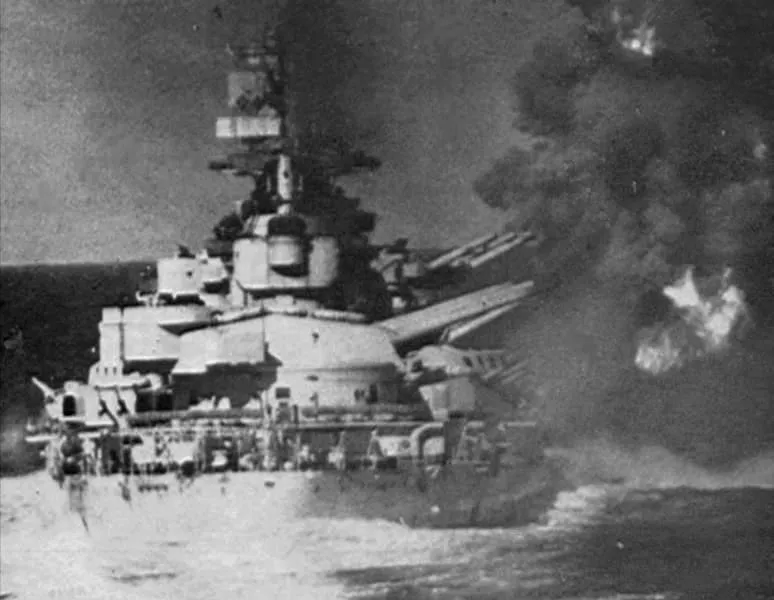
On 28 March 1941, in the waters between Crete and the southern tip of the Peloponnese, Admiral Andrew Cunningham’s British Mediterranean Fleet fought its greatest battle of the whole war against the Italian navy. In the morning Italian cruisers and the battleship Vittorio Veneto fired without effect on British cruisers near the islet of Gavdos. In the afternoon a torpedo bomber from the carrier Formidable hit the Vittorio Veneto, flagship of Admiral Angelo Iachino, and at dusk another torpedo crippled the heavy cruiser Pola. During the night of 28–29 March, not far from Cape Matapan, three British battleships guided by radar opened fire almost at point-blank range on the cruisers Zara and Fiume, which were returning to help the Pola. Within minutes both ships had been turned into blazing wrecks. By dawn the Italians had lost three heavy cruisers and two destroyers, and according to Italian figures more than 2,300 sailors had been killed. The British lost one aircraft and its three-man crew.
The battle is usually placed under 27 March, with a note that it lasted until 29 March. These dates cover the whole operation: on 26 and 27 March the Italian ships were leaving their bases and assembling in the Ionian Sea, and on the evening of 27 March Cunningham’s fleet sailed from Alexandria. The fighting, however, began only on 28 March, and the night action and the finishing off of damaged ships dragged on until the morning of 29 March. The Italians call the daytime part of the battle the action off Gaudo (the Italian name for Gavdos), and the night part the Battle of Cape Matapan.
German pressure and the Italian plan
By the beginning of 1941 the Italian navy, the Regia Marina, had half a year of defeats behind it. In November 1940 British torpedo bombers had damaged three battleships at Taranto, and on 9 February 1941 Force H bombarded Genoa and sailed away before Iachino’s fleet could find it. The naval high command, Supermarina, was husbanding its heavy ships, which could not have been replaced, and it was short of fuel.
The Germans watched this with growing impatience. At a conference in Merano on 13 and 14 February 1941, Grand Admiral Erich Raeder accused the Italian admirals of passivity. In the spring the matter became urgent, because from 7 March the British had been shipping troops to Greece. The convoys ran from Alexandria to Piraeus south and east of Crete, and the Germans, who were preparing to attack Greece in April, wanted the Italian fleet to cut that route. They promised the support of General Hans Geisler’s X Air Corps (X Fliegerkorps), stationed in Sicily, and gave assurances that the British fleet was weak: in mid-March German airmen reported that they had torpedoed two British battleships, and the Germans passed on to the Italians an assessment according to which Cunningham had only one serviceable capital ship. In reality all three of his battleships – Warspite, Barham and Valiant – were serviceable, and the new carrier Formidable had arrived at Alexandria to replace the Illustrious, damaged in January.
Supermarina’s plan provided for two rapid sorties against shipping: one north of Crete, into the Aegean, and the other south of it. Almost all serviceable forces were committed to the operation, code-named Gaudo: the battleship Vittorio Veneto – one of the two most modern Italian capital ships, armed with nine 15-inch (381 mm) guns – six heavy cruisers, two light cruisers and a dozen or more destroyers. Success depended on surprise and on air cover, to be provided by the Italian air force from Rhodes and the German air force from Sicily. Iachino took on board the Vittorio Veneto Luftwaffe liaison officers and a radio-interception team that was to read British signals.
Bletchley Park and the golf clubs
The British knew of the Italian intentions before the first ship had weighed anchor. At Bletchley Park the team of the cryptanalyst Dilly Knox was then breaking the Italian navy’s ciphers, produced on a variant of the Enigma machine. Towards the end of March a young analyst, Mavis Lever (known after the war as Mavis Batey), decrypted a short message stating that there were three days to go until “X-day”. Further messages, including Italian requests for air cover, revealed that the fleet would strike at the convoys to Greece. Cunningham halted shipping on the threatened routes: one convoy sailing from Alexandria to Greece was turned back, and the ships waiting at Piraeus were held in port.
The source of this knowledge, which the British called Ultra, had to be protected. A Sunderland flying boat was therefore sent over the Ionian Sea, and at noon on 27 March it located part of the Italian force, so that the Italians might believe they had been spotted by a chance patrol. On the afternoon of 27 March Cunningham himself went ashore with a suitcase and his golf clubs and played at the golf club in full view of the Japanese consul, who was regarded as an Axis informer, while a reception on board the Warspite was announced for the evening. After dark the admiral returned to his ship, and at 7 p.m. the fleet – three battleships, the Formidable and nine destroyers – put to sea. Vice Admiral Henry Pridham-Wippell’s light forces had already sailed from Greek waters to meet it: the cruisers Orion, Ajax, Gloucester and the Australian Perth, with several destroyers. They were to be south of Gavdos at dawn on 28 March.
The Italians had put to sea a day earlier. The Vittorio Veneto, with Iachino on board, left Naples on the evening of 26 March, after dark, so that observers in the port would not notice her departure. In the Strait of Messina she was joined by Admiral Luigi Sansonetti’s 3rd Cruiser Division (Trento, Trieste, Bolzano), and off the east coast of Sicily by Admiral Carlo Cattaneo’s 1st Division from Taranto (the sister cruisers Zara, Fiume and Pola) and by the 8th Light Cruiser Division from Brindisi. That same night, 26 March, Italian explosive motorboats attacked Suda Bay in Crete and disabled the British heavy cruiser York. When the Sunderland appeared over the Italian ships at noon on 27 March, the interception team on the Vittorio Veneto picked up its report. The airman, however, had sighted only three cruisers and got their course wrong. Supermarina decided that the operation could go ahead, but cancelled the sortie into the Aegean: the whole fleet was to assemble off Gavdos on the morning of 28 March and search for convoys south of Crete. A planned reconnaissance flight over Alexandria was cancelled because of the weather, so Iachino did not know that the British fleet had left harbour.
The action off Gavdos
Early on the morning of 28 March a seaplane catapulted from the Vittorio Veneto spotted Pridham-Wippell’s cruisers some 65 kilometres south-east of the Italian fleet. Iachino sent Sansonetti’s cruisers against them. A few minutes after eight the Italian ships opened fire at a range of about 22–24 kilometres. Their 8-inch (203 mm) guns outranged the British 6-inch (152 mm) guns, so Pridham-Wippell, in accordance with his orders, began to withdraw to the south-east, towards Cunningham’s approaching battleships. For nearly three-quarters of an hour the Trento, Trieste and Bolzano fired more than five hundred shells without scoring a single hit; the Gloucester replied with a few salvoes, which fell short. Iachino, suspecting that he was being drawn into a trap, ordered the pursuit broken off. At about 8.55 a.m. the Italian cruisers turned away to the north-west, and the British followed them, keeping out of range of their guns.
Now it was Iachino who set the trap: Sansonetti’s cruisers were leading the British straight onto the Vittorio Veneto. At about 10.55 a.m. someone on the bridge of the Orion reportedly asked: “What is that battleship? I thought ours were far away from here.” A moment later 15-inch shells, fired from more than 20 kilometres away, began to fall around the British cruisers. Over more than twenty minutes the Vittorio Veneto fired 94 rounds. The salvoes fell close, but the spread was wide, and the cruisers, hiding behind a smokescreen, fled at full speed. Splinters caused light damage to the Orion.
The cruisers were saved by aircraft. Cunningham, still more than a hundred kilometres away, sent six Fairey Albacore torpedo bombers from the Formidable, with a fighter escort. At about 11.15 a.m. they attacked the Vittorio Veneto. The battleship combed all the torpedoes but had to cease fire, and Pridham-Wippell disappeared over the horizon. Iachino concluded that the operation had failed: he had found no convoy, his destroyers were running short of fuel, and of the promised air cover there was hardly a sign – only two German Ju 88s appeared over the fleet, one of which was shot down by a British fighter. At about 11.40 a.m. the Italian fleet turned and headed north-west at high speed for its bases in Italy.
Torpedoes into the Vittorio Veneto and the Pola
The Italian ships were faster than the British battleships, and the Warspite, which had sucked mud from the bottom into her condensers when leaving Alexandria, could make no more than about 20 knots. Cunningham could catch the enemy only if aircraft slowed him down. Throughout the afternoon torpedo bombers from the Formidable and RAF Blenheim bombers from airfields in Greece appeared over the Italian fleet time and again. The bombs missed, but at about 3.20 p.m. several aircraft from the carrier attacked the Vittorio Veneto from ahead while fighters strafed her deck to distract her gunners. The squadron commander, Lieutenant Commander John Dalyell-Stead, brought his Albacore in to less than a kilometre and dropped his torpedo; a moment later he and his crew were killed, shot down by the battleship’s anti-aircraft guns. The torpedo struck the stern, near the port outer propeller. The ship took in some 4,000 tonnes of water, listed and came to a stop. After a quarter of an hour or so her engineers got the engines going again, and before five o’clock the Vittorio Veneto was under way once more, at first at about 15 knots and later at 19.
From that moment Iachino thought above all of saving his flagship. He arranged the fleet in five parallel columns: the battleship with destroyers in the centre, the heavy cruisers of the 1st and 3rd Divisions on either side, and their destroyers on the outside. In the evening Cunningham’s observer, flying in a seaplane from the Warspite, confirmed that the damaged battleship was proceeding slowly about a hundred kilometres from the British fleet. At dusk, around 7.30 p.m., the last wave arrived over the Italian fleet – six Albacores and two Swordfish from the Formidable, and two Swordfish from the airfield at Maleme on Crete. Smokescreens, searchlights and dense anti-aircraft fire shielded the Vittorio Veneto. One torpedo, however, hit the cruiser Pola, which in the confusion had almost stopped to avoid colliding with the Fiume. The explosion flooded her engine room and boiler rooms and killed stokers and engineers, and the ship, without propulsion or power, came to a halt in the darkness. Without electricity it was not even possible to train her gun turrets.
Iachino’s decision
Iachino learned of the Pola’s fate after eight in the evening. The signals between him and Admiral Cattaneo, passed over encrypted links, crossed: Cattaneo proposed sending two destroyers to the Pola, while Iachino meanwhile ordered the whole 1st Division to turn back. At about 9 p.m., more than an hour after the Pola had been hit, the cruisers Zara and Fiume and four destroyers of the 9th Flotilla detached themselves from the fleet and headed east, back towards the crippled ship. They were to take her in tow, or else take off her crew and scuttle her.
This decision settled the battle, and it is still disputed in Italy to this day. Supermarina passed Iachino a radio direction-finding fix according to which the British ships were some 130–140 kilometres south-east of the fleet; in reality Cunningham was closer. Iachino, however, concluded that at most British cruisers and destroyers were in the vicinity and that Cunningham’s battleships were far away. Nor did he know that several British ships had radar and that the British had been practising night fighting for years. The Italian navy had no radar, and its heavy ships were not prepared for night actions: they had no flashless propellant charges, and their guns were kept in the stowed position at night. According to the recollections of Commander Elio Porta, who ran the interception team on the Vittorio Veneto, analysis of the British signals showed that the whole British fleet was at sea and close by; Iachino heard him out without comment, and after the war wrote that he did not remember the conversation.
The night off Matapan
Cunningham decided to accept a night action, although some of his staff warned him of the risk of fighting in the dark against a strong enemy escort, and of the German air force, which could catch the fleet at dawn far from Alexandria. He sent Pridham-Wippell’s cruisers and eight destroyers ahead. At about 8.15 p.m. the Orion’s radar detected a stationary ship – it was the Pola – but the cruisers, searching for the Italian main body, reported it and sailed on. The destroyers went on too, passing the Italian fleet to the south. Cunningham’s main force was steaming straight towards the Pola. At about 10.20 p.m. the radar of the Valiant, the only one of the three battleships to have it, showed a stationary target a few miles off the port bow. The British believed it to be the damaged Vittorio Veneto.
The guns were already trained on the Pola when Cunningham’s chief of staff, Commodore John Edelsten, saw through his binoculars, on the other side, to starboard, the silhouettes of large ships on an opposite course. It was Cattaneo’s force, which knew nothing of the enemy’s proximity and was approaching the Pola in line ahead, with the destroyers astern. On the Pola they thought help was arriving and even fired a signal flare. The battleships turned onto a course parallel to the Italian cruisers. At 10.27 p.m. the destroyer Greyhound lit up the Fiume with her searchlight, and the battleships’ searchlights picked both cruisers out of the darkness – on the Valiant one of them was directed by a nineteen-year-old midshipman, Prince Philip of Greece and Denmark, the future husband of Queen Elizabeth II. The Warspite, Valiant and Barham opened fire with their 15-inch guns at a range of only about 3–3.5 kilometres, practically point-blank. The first salvoes tore through the Fiume and the Zara from side to side. The Italian cruisers did not manage to fire a single shot.
Cattaneo’s destroyers turned away behind a smokescreen, and some of them fired torpedoes. Cunningham, fearing their attack, turned his battleships away and left the finishing off of the wrecks to his destroyers. The Vittorio Alfieri and the Giosuè Carducci sank before midnight; the Gioberti and the Oriani, the latter badly damaged, escaped into the darkness. The Fiume capsized and sank at about 11.15–11.30 p.m. The burning Zara stayed afloat until 2.40 a.m. on 29 March. According to British accounts she was finished off by a torpedo from the destroyer Jervis; according to Italian ones, her crew blew her up themselves. Admiral Cattaneo and the captains of both cruisers were killed. The Jervis then went alongside the Pola, on which there was no longer any will to resist. The British took off more than 250 sailors and officers, including her captain, Captain Manlio De Pisa, and at about four in the morning sank the cruiser with torpedoes. The Vittorio Veneto, troubled by no one any more, reached Taranto on 29 March.
Rescuing the survivors
On the morning of 29 March the British ships returned to the scene of the night action and picked Italians out of the water. At about eleven o’clock a German reconnaissance aircraft appeared over the fleet. Cunningham broke off the rescue and sailed for Alexandria, but first he had a signal sent in plain language to the Chief of Staff of the Italian navy, Admiral Riccardi, giving the position of the survivors left in the sea. Riccardi thanked him and sent the hospital ship Gradisca. She reached the spot only on 31 March and rescued about 160 more men; most of those who had survived two nights in the cold water were by then dead. According to Italian figures 2,331 sailors were killed (782 from the Zara, 813 from the Fiume, 328 from the Pola, 211 from the Alfieri, 169 from the Carducci and 28 from other ships); British and English-language studies usually give some 2,300 dead. Depending on the source, between about 1,000 and more than 1,100 Italians were taken prisoner by the British.
British losses were negligible: Dalyell-Stead’s Albacore with its three airmen, and light splinter damage to the cruisers. On the way back the fleet was attacked by German bombers, without effect.
Significance
Matapan was the greatest defeat in the history of the Italian navy. In a single night the Regia Marina lost an entire division of heavy cruisers – almost as many ships of that class as the Royal Navy lost in the whole war. The battle laid bare the lack of radar, the lack of aircraft carriers, the unpreparedness for night fighting and the woeful co-operation with the air forces, both Italian and German. Iachino himself later admitted that it had revealed Italian inferiority in co-operation between fleet and air force and the backwardness of their night-fighting technique. Benito Mussolini, who before the war had opposed the building of aircraft carriers, now forbade the fleet to operate beyond the range of its own fighters and agreed to the conversion of the liner Roma into the aircraft carrier Aquila, which, however, was never completed. Iachino kept his command.
For the British the victory came at a moment when things were beginning to go badly on other fronts: on 24 March Erwin Rommel’s troops retook El Agheila in Libya, and in Belgrade a coup d’état overthrew the government that two days earlier had joined the Tripartite Pact, and Hitler resolved to attack Yugoslavia together with Greece. Cunningham regretted that the Vittorio Veneto had got away, but he had achieved what mattered most: in April, as the Germans were occupying Greece, and in May, during the fighting for Crete, the Italian fleet did not venture into the eastern Mediterranean, and the Royal Navy was able to evacuate tens of thousands of soldiers from Greece and Crete with only the air force to contend with. The ships paid for this with heavy losses to German bombs. A few weeks after the battle Cunningham came secretly to Bletchley Park to thank Knox’s team. In Italy, for years, people searched for a traitor on the naval staff who was supposed to have passed the operational plans to the British – until the secret of Enigma was revealed in the 1970s.
Sources
Meanwhile
(04)Elsewhere, within a week.
- 27 March 1941 · PoliticsThe Yugoslav coup d’étatOn 27 March 1941 air force officers in Belgrade ousted Prince Paul’s regency and the government that signed the pact. Hitler resolved to destroy Yugoslavia.
- 27 March 1941 · MilitaryTakeo Yoshikawa in HonoluluOn 27 March 1941 Japanese naval intelligence officer Takeo Yoshikawa arrived in Honolulu. Posing as a consular clerk, he was to watch the fleet at Pearl Harbor.
- 25 March 1941 · DiplomacyYugoslavia joins the Tripartite PactOn 25 March 1941 in Vienna, Premier Cvetković signed Yugoslavia’s accession to the Tripartite Pact. Secret notes spared it troop transit and military aid.
- 1 April 1941 · Middle EastThe Iraqi coup d’étatOn 1 April 1941 the colonels of the “Golden Square” overthrew the pro-British government and regent Abd al-Ilah in Baghdad. Rashid Ali al-Gaylani took power.
Related events
(04)The same battle, people or subject.
- 27 April 1941 · MediterraneanNew Hurricanes for MaltaOn 27 April 1941, 23 Hurricanes flew to Malta from the carrier Ark Royal. The island was enduring its heaviest month of German bombing.
- 5 July 1941 · MediterraneanSwordfishes over TobrukOn 5 July 1941 Auchinleck took command in Cairo. Swordfishes had sunk Italian destroyers at Tobruk a year earlier, on 5 and 20 July 1940.
- 17 July 1941 · MediterraneanOperation SubstanceOn 17 July 1941 only Italian aircraft were harrying Malta. The Operation Substance convoy from Britain was on its way; it reached Valletta on 24 July.
- 16 April 1941 · MediterraneanThe Battle of the Tarigo convoyOn the night of 15–16 April 1941 four British destroyers from Malta wiped out a convoy bound for Tripoli and its three Italian escorts off Kerkennah.