- Category:
- Military operations
- Front:
- Pacific
- Date:
- 18 April 1943
- Author:
- Łukasz
- Tags:
- Japan, United States, Isoroku Yamamoto, Chester Nimitz
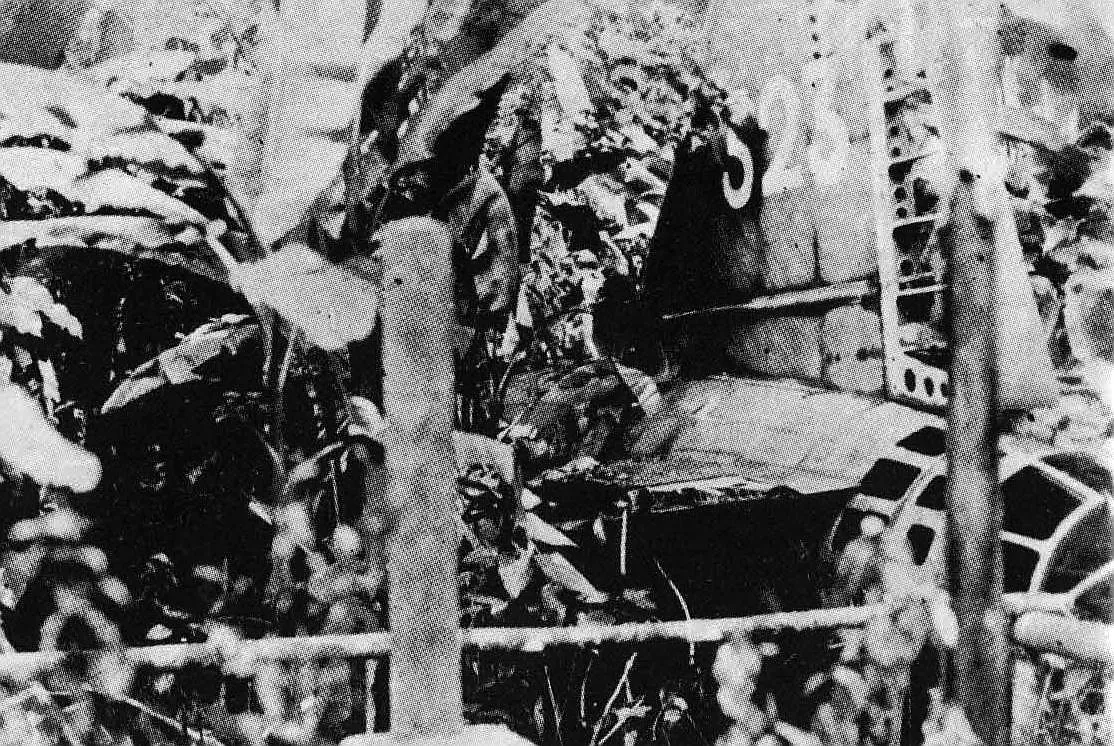
On the morning of 18 April 1943, over the southern tip of Bougainville in the Solomon Islands, American twin-engined Lockheed P-38 Lightning fighters attacked two Japanese Mitsubishi G4M bombers carrying the commander of the Combined Fleet, Admiral Isoroku Yamamoto, and his staff on a tour of inspection. The admiral’s aircraft plunged in flames into the jungle; the other came down in the sea close to the shore. Yamamoto, the architect of the attack on Pearl Harbor and the best-known commander of the Japanese navy, was killed while still in the air.
It was no chance encounter. A few days earlier American cryptanalysts had read a signal setting out the admiral’s exact itinerary, and fighters from Guadalcanal were sent out with a single task: to intercept and shoot down his aircraft. The mission went down in history as Operation Vengeance. Popular chronologies usually say simply that Yamamoto’s aircraft was shot down over Bougainville by American P-38s during an inspection tour – which is true, but behind that sentence lies one of the best-known intelligence operations of the Pacific War.
Yamamoto in the spring of 1943
Yamamoto had commanded the Combined Fleet – the main force of the Japanese navy – since 1939. Before the war he had been among the officers who warned against a conflict with the United States, and once war became inevitable he pushed through the plan to strike the American fleet at Pearl Harbor. The run of victories in the first months of the war was followed by defeat at the Battle of Midway in June 1942, where Japan lost four aircraft carriers, and then by a six-month war of attrition over Guadalcanal, which ended in February 1943 with the evacuation of the Japanese garrison.
At the beginning of March 1943 Allied aircraft destroyed a convoy carrying troops from Rabaul to New Guinea in the Battle of the Bismarck Sea. The Japanese command then decided to hold Rabaul – its main base in the South Pacific – and to gain time to fortify a new defensive line. This was to be achieved by a short, concentrated air offensive against Allied bases, named Operation I-Go. On 3 April Yamamoto flew to Rabaul to direct it in person together with the commander of the Southeast Area Fleet there, Vice Admiral Jin’ichi Kusaka. Aircraft brought in from four carriers joined the land-based machines of the 11th Air Fleet – almost 350 aircraft in all.
Operation I-Go lasted from 7 to 16 April. On 7 April nearly 180 Japanese dive-bombers and fighters attacked shipping off Guadalcanal, sinking the American destroyer USS Aaron Ward, the New Zealand corvette HMNZS Moa and the oiler USS Kanawha. On 11 April the aircraft struck Oro Bay near Buna, on 12 April Port Moresby and on 14 April Milne Bay. Japanese airmen reported sinking dozens of ships and shooting down more than 170 aircraft. In reality the Allies lost five vessels of various sizes and at most around 25 aircraft, while the Japanese, according to most studies, lost about 55 machines together with experienced crews whom they had no one to replace. Relying on the exaggerated reports, Yamamoto judged the operation a success and ended it on 16 April. He decided to visit the bases in the northern Solomons before returning, to thank the airmen and raise the morale of the garrisons after the defeat on Guadalcanal.
The signal the Americans read
On 13 April the command in Rabaul sent a signal with the plan of the visit to units on Bougainville and around the Shortland Islands. It set out, hour by hour, that on 18 April at 6 a.m. Tokyo time the admiral would take off from Rabaul in two medium bombers escorted by six Mitsubishi A6M Zero fighters, land at 8 a.m. on the airfield on the islet of Ballale off Bougainville, then visit further bases and return to Rabaul in the evening. The signal was enciphered in the navy’s main operational code, which the Americans called JN-25.
On 14 April the signal was intercepted by several American listening stations. It was read by naval cryptanalysts at Pearl Harbor, in Washington and in Melbourne, helped by translators from military intelligence – many of them Americans of Japanese descent (Nisei). Since 1942 the Japanese code had become increasingly well understood; it was thanks to it that the American fleet had been able to lay its ambush at Midway. The signal was so detailed that some officers at first could not believe the Japanese had been so careless. According to the accounts of surviving Japanese officers, some commanders on the spot also considered it an unnecessary risk to send such a plan by radio and advised cancelling the trip. Yamamoto did not change his plans.
The Pacific Fleet’s intelligence officer, Commander Edwin Layton, took the intercepted message to Admiral Chester Nimitz. According to Layton’s memoirs, Nimitz asked bluntly whether killing Yamamoto would be worth it to the Americans, and was told that there was no one in the Japanese navy who could replace him with comparable authority. The commanders also weighed the risk: if the Japanese realised how their enemy had known the route, they might change their codes, and a source of information more valuable than any single admiral would be lost. It was decided that the secret could be kept if the true source remained hidden even from most of their own officers and from the press.
Nimitz instructed the commander in the South Pacific, Admiral William Halsey, to prepare an interception; according to different studies this happened between 15 and 17 April. Legend has it that the order to “get Yamamoto” was given personally by President Franklin Delano Roosevelt through the Secretary of the Navy, Frank Knox. No document confirming this has survived, however, and historians disagree over whether the president knew of the operation at all before it was carried out. Nimitz’s decision is the best documented; Knox, according to most accounts, left him a free hand. Halsey passed the task to the air commander in the Solomons, Rear Admiral Marc Mitscher.
The longest fighter mission
The distance in a straight line from Henderson Field on Guadalcanal to southern Bougainville was about 640 kilometres. To avoid being spotted by Japanese observers on the islands, however, the aircraft had to fly a roundabout route over the sea, south and west of the Solomon chain – about 970 kilometres each way. The navy and Marine Corps fighters on Guadalcanal did not have the range. The task went to the 339th Fighter Squadron of the 347th Fighter Group of the Army Air Forces, which flew P-38s, the only American fighters in the Pacific with sufficient range. Extra drop tanks were flown in from Port Moresby and reached Guadalcanal on the evening of 17 April.
The mission was led by Major John W. Mitchell, the squadron commander and an experienced ace. He rejected the flight plan prepared by the staff and worked out the route himself with his pilots: four precisely measured legs over the sea and an interception point off the western coast of Bougainville at 9.35 a.m. Guadalcanal time, about ten minutes before Yamamoto was due to land on Ballale. He reckoned on catching the bombers as they began their descent. Eighteen pilots were assigned to the mission, most of them from the group’s two other squadrons. Four of them, including Captain Thomas Lanphier and Lieutenant Rex Barber, were to attack the bombers; the rest were to climb higher and cover them against Japanese fighters from the nearby Kahili airfield. According to some accounts the pilots were not told whom they were to shoot down – there was talk of an “important personage” – while according to others Mitscher named the admiral to spur them on. The source of the information was given as an invented report by Australian coastwatchers, who had supposedly seen a high-ranking officer boarding an aircraft at Rabaul.
The fighters began taking off at 7.25 a.m. on 18 April. One pilot of the strike group burst a tyre on take-off, and the drop tanks of another would not feed fuel; both dropped out, and their places were taken by the reserve pilots, Lieutenants Besby Holmes and Raymond Hine. The sixteen aircraft flew in radio silence just above the waves, a dozen or so metres over the water, for more than two hours. Mitchell navigated by compass, airspeed and watch alone. The flight is often described as the longest fighter interception mission of the whole war.
Meanwhile at Rabaul Yamamoto punctually boarded a bomber of the 705th Air Group. In the second flew his chief of staff, Vice Admiral Matome Ugaki, with several officers. The six escorting Zeros flew higher and behind.
Shot down over Bougainville
The Americans reached the interception point at 9.34, a minute early – at the very moment the Japanese aircraft appeared in a light haze. The Japanese were on time to the minute. The fighters dropped their tanks and began to climb. Holmes’s tanks would not release, so he and Hine turned back over the sea for a moment, and Lanphier and Barber went in to attack. The Japanese escort saw the danger, the bombers dived towards the jungle and the Zeros threw themselves at the Americans.
Barber came in behind one of the bombers and raked its engines and fuselage. The aircraft began trailing black smoke, rolled sharply and crashed into the jungle north of the former Buin mission, deep in southern Bougainville. It was Yamamoto’s bomber. The second, with Ugaki aboard, was damaged by Holmes and Barber over the water near Cape Moila; it ditched a few dozen metres from the shore. Ugaki, badly wounded, and two other men managed to reach land. The whole fight lasted a few minutes. The escorting Zeros damaged several P-38s, and Barber’s aircraft returned with 104 bullet holes. Hine did not come back; his aircraft disappeared over the sea, and it is still not known whether he was shot down by one of the Japanese pilots or ran out of fuel. Holmes, short of fuel, landed in the Russell Islands; the others returned to Guadalcanal at about 11.40 a.m.
The American pilots claimed three bombers and several fighters shot down. Japanese documents revealed after the war show that two bombers were shot down and that the escort lost no aircraft. According to most studies nineteen people – staff officers and crew – died in the two aircraft together with the admiral, and three men from Ugaki’s machine survived. As he approached Guadalcanal, Lanphier is said to have announced over the radio that “that son of a bitch will not be dictating any peace terms in the White House” – an allusion to a remark attributed to Yamamoto. This open statement on the air was a serious breach of security.
Who shot down the admiral
The dispute began as soon as the aircraft landed. Lanphier at once claimed that he had shot down Yamamoto’s aircraft: according to his report, he had turned back after fighting the escort and attacked the bomber from the side, shearing off a wing. Because there was then no procedure on Guadalcanal for debriefing pilots after a mission, his version went into the official reports, the citations for decorations and the press. Other participants had doubts from the start. After the war the accounts of Japanese escort pilots, particularly Kenji Yanagiya, and examination of the wreck showed that the admiral’s aircraft had been hit from behind, as Barber described, not from the side.
The US Air Force eventually credited Lanphier and Barber with half a kill each for Yamamoto’s bomber, and Barber and Holmes with half each for the second. For decades Barber sought to have the decision changed; in 1991 an Air Force board could not reach agreement, the Secretary of the Air Force upheld the shared credit, and a federal court declined to rule on the matter. Lanphier maintained until his death in 1987 that he had killed the admiral; Barber died in 2001 convinced that he had done it alone. Most modern historians side with Barber.
Secrecy on both sides
The wreck of the admiral’s aircraft was found on 19 April by a Japanese search party under an engineer lieutenant, Tsuyoshi Hamasuna. Yamamoto’s body lay beside the remains of the aircraft, still in its seat. A navy doctor found two bullet wounds – in the shoulder blade and the head – and concluded that the admiral had been killed by a bullet while still in the air. These details were concealed, and the medical report, as Yamamoto’s biographer Hiroyuki Agawa wrote, was embellished “on orders from above”. The body was cremated at Buin, and the ashes were carried to Japan by the battleship Musashi, the admiral’s last flagship.
In the Japanese navy the affair was called the “A incident”. The admiral’s death was kept from the public and from Japan’s allies for more than a month. Only on 21 May 1943 did Tokyo radio announce that Yamamoto had fallen in April “in combat with the enemy” while directing operations in the front line. Emperor Hirohito posthumously made him a Marshal Admiral (gensui) and awarded him the empire’s highest decoration. On 5 June Tokyo gave him a state funeral; part of his ashes was laid to rest in Tama Cemetery beside the grave of Admiral Heihachirō Tōgō, the victor of Tsushima, and part in his home town of Nagaoka. At the end of April Yamamoto was succeeded as commander of the Combined Fleet by Admiral Mineichi Koga.
The Americans kept just as stubbornly silent. In May military censorship stopped the dispatch of an Associated Press reporter who had learned how the operation had gone, and the American public learned of the admiral’s death only from the Japanese announcement of 21 May. When Time magazine described the mission in the autumn of 1943 and named Lanphier, the navy regarded it as a serious leak; partly for this reason a recommendation that Mitchell receive the Medal of Honor was downgraded to a lesser decoration, the Navy Cross. The press published the full story of the operation, including the fact that it had been based on a broken code, only in September 1945. Despite the suspicions of some officers, the Japanese did not conclude from the ambush that their code was being read.
Significance
Yamamoto’s death was above all a blow to Japanese morale. The admiral had been the symbol of the victories of the first half-year of the war, and his death, announced at almost the same time as the defeat in the Aleutians, deepened the feeling that luck had deserted the Imperial Navy. In military terms its significance was smaller than the propaganda of both sides claimed: the course of the Pacific War had already been decided at Midway and Guadalcanal, and no commander could have offset the industrial superiority of the United States. Yamamoto’s successor, Admiral Koga, was more cautious and lacked his authority in the army and navy. He himself was killed on 31 March 1944, when his aircraft disappeared in a storm over the Philippines. Ugaki survived the war to its last day: on 15 August 1945, after the surrender had been announced, he flew off with a group of kamikaze pilots on a suicide attack and was killed.
Operation Vengeance showed how great an advantage the Allies gained from reading the enemy’s communications. The same knowledge that had made it possible to win at Midway was now used to eliminate a single man – without revealing its source. The action of 18 April did not halt the Japanese defence of Rabaul, but it coincided with preparations for the great Allied offensive in the Solomons and New Guinea, launched in June 1943 as Operation Cartwheel. The killing of Yamamoto has remained one of the most famous episodes of the Pacific War and is still invoked in debates over whether, and when, it is permissible in wartime to hunt down a particular enemy commander deliberately.
Sources
Meanwhile
(04)Elsewhere, within a week.
- 19 April 1943 · PolandThe Warsaw Ghetto Uprising beginsOn 19 April 1943, the eve of Passover, ŻOB and ŻZW fighters drove back the Germans entering the Warsaw Ghetto. They soon returned under Jürgen Stroop.
- 19 April 1943 · DiplomacyThe Bermuda ConferenceOn 19 April 1943 British and American diplomats met in Bermuda to discuss refugees from Europe. They had ruled out almost every means of rescue in advance.
- 19 April 1943 · Western FrontThe attack on the Twentieth Convoy from MechelenOn 19 April 1943 three young Belgians with one pistol stopped a train taking Jews to Auschwitz near Boortmeerbeek. More than 230 people escaped.
- 15 April 1943 · ScandinaviaFinland and peace with the USSRIn April 1943 Finland turned down an American offer to mediate peace talks with the USSR and announced it would continue its “defensive war”.
Related events
(04)The same battle, people or subject.
- 9 February 1943 · PacificThe end of the fighting on GuadalcanalOn the nights of 1–8 February 1943 Japanese destroyers took some 10,600 soldiers off Guadalcanal. On 9 February the Americans declared the island secured.
- 29 January 1943 · PacificThe Battle of Rennell IslandOn 29–30 January 1943 Japanese torpedo bombers sank the cruiser Chicago off Rennell Island while covering the evacuation of Guadalcanal.
- 26 March 1943 · PacificThe Battle of the Komandorski IslandsOff the Komandorski Islands a weaker US Navy force fought a 3.5-hour gunnery duel with the escort of a Japanese convoy. The Japanese turned back.
- 13 October 1942 · PacificThe bombardment of Henderson FieldOn the night of 13–14 October 1942 the battleships Kongō and Haruna fired 973 shells at Henderson Field. The Guadalcanal airfield was nearly knocked out.