Soviet Union
Alexander Yegorov
Commander of the Southern Front (1919–1920) and the South-Western Front (1920), chief of staff and of the General Staff of the Red Army (1931–1937), Marshal of the Soviet Union (from 1935)
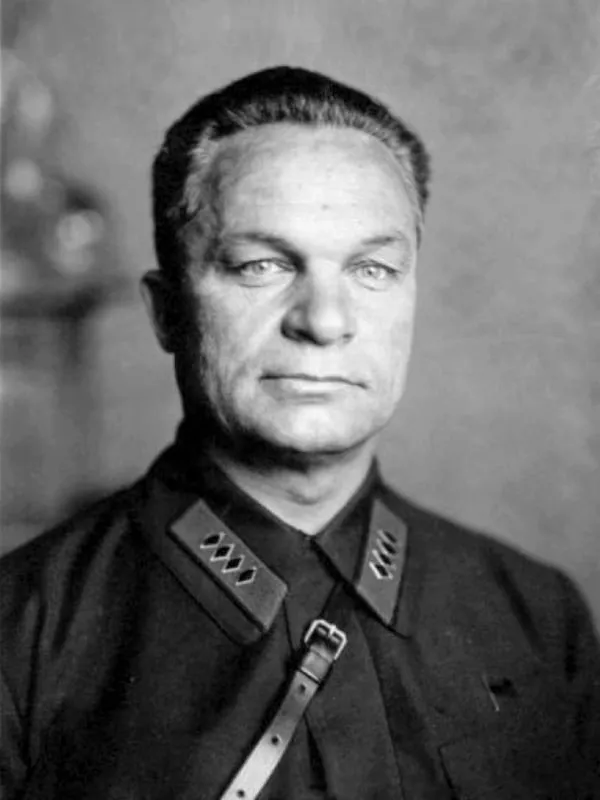
- Born:
- 25 October 1883, Buzuluk, Samara Governorate (Russian Empire)
- Died:
- 23 February 1939, Moscow (Soviet Union)
- Author:
- Łukasz
- Photo:
- autor nieznany, domena publiczna, Wikimedia Commons

Alexander Yegorov was one of the ablest commanders of the Red Army in the Civil War. A former colonel of the tsarist army and a Socialist Revolutionary, he went over to the Bolsheviks in 1918, and in the autumn of 1919, as commander of the Southern Front, he halted General Denikin’s offensive on Moscow. In 1920 he commanded the South-Western Front in the war with Poland. His troops drove the Poles out of Kiev, but then, together with the front’s commissar, Joseph Stalin, they stubbornly pressed on towards Lwów (Lviv) instead of supporting the armies of Mikhail Tukhachevsky outside Warsaw. His close acquaintance with Stalin from the Civil War secured his career: in the 1930s he was chief of staff of the Red Army and one of the first five Marshals of the Soviet Union. It did not, however, save him from the Great Purge. Arrested in 1938, he was shot in February 1939, six months before the outbreak of the Second World War.
Tsarist officer
He was born on 25 October 1883 (13 October in the Julian calendar) in Buzuluk in Samara Governorate, into a family of the urban lower middle class. Some sources give a date three days earlier, and according to Polish researchers Yegorov himself, in his later curricula vitae, amended awkward details of his biography. In 1901, after secondary school in Samara, he joined the army as a volunteer, and in 1905 he graduated from the Kazan Junker School and was posted as a second lieutenant to the 13th Erivan Grenadier Regiment in the Caucasus. With the regiment he took part in suppressing the Revolution of 1905 in Tiflis, Baku and Gori, for which he received a decoration. At the same time, as he himself admitted, in 1904–1909 he sympathised with the Party of Socialist Revolutionaries (the SRs).
In the First World War he commanded a company and a battalion, and later the 132nd Bender Infantry Regiment. He was wounded and concussed several times and was awarded the Golden Weapon of St George. In 1916–1917 he taught at an officers’ school in Tiflis and served on the staff of a cavalry corps on the Caucasus Front. His promotion to colonel came in November 1917, after the Bolshevik seizure of power.
From Socialist Revolutionary to Bolshevik
In 1917 Yegorov joined the Left Socialist Revolutionaries, who for several months after the October Revolution shared power with the Bolsheviks. From the beginning of 1918 he worked in the military department of the All-Russian Central Executive Committee, took part in creating the Red Army and chaired the commission that vetted former tsarist officers joining the new army. When the Left SRs rose in revolt against the Bolsheviks in July 1918, he broke with them and joined the Bolshevik party. He was one of the few former colonels to whom the Bolsheviks entrusted command straight away.
From August 1918 he fought on the Southern Front against Ataman Krasnov’s Don Cossacks. He commanded the 9th Army and, from December 1918, the 10th Army defending Tsaritsyn on the Volga, where he replaced Kliment Voroshilov. There he got to know Stalin, a member of the front’s revolutionary military council, and the cavalry commander Semyon Budyonny. In May 1919 he was seriously wounded. From July he commanded the 14th Army in Ukraine, and in October 1919, at the most dangerous moment of the Civil War for the Bolsheviks, he took command of the Southern Front. General Anton Denikin’s Volunteer Army had just taken Oryol and stood some 350 kilometres from Moscow. Yegorov’s troops, with Stalin on the front’s military council, recaptured Oryol and, together with Budyonny’s cavalry, routed the Whites at Voronezh and Kastornoye. Over the winter the Whites fell back all the way to the Black Sea. For this campaign Yegorov received the Order of the Red Banner.
The South-Western Front in 1920
In January 1920 Yegorov took over the South-Western Front, which was fighting in Ukraine in the Polish–Soviet War. Its commissar was once again Stalin. In the spring the Polish Kiev offensive drove his armies back beyond the Dnieper, but in June Budyonny’s 1st Cavalry Army, brought over from the Caucasus, broke through the Polish front and the Poles had to abandon Kiev. In the summer Yegorov’s troops drove the Poles out of Volhynia and Podolia and approached Lwów.
In August the Commander-in-Chief, Sergei Kamenev, ordered the 12th Army and the 1st Cavalry Army to be handed over to Tukhachevsky to support the advance on Warsaw. Stalin opposed this and refused to sign the implementing order, and Yegorov, though less obstinate than his commissar, did not enforce it. Budyonny’s cavalry went on assaulting Lwów for several more days and did not move north until 20 August, when Tukhachevsky’s troops were already retreating from Warsaw. It was defeated at Zamość and Komarów, and in September the Poles threw all of Yegorov’s armies back to the east. In the autumn his front also fought General Pyotr Wrangel, whose forces were driven out of the Crimea after the armistice with Poland.
The dispute over who was responsible for the defeat at Warsaw went on for years. In 1929 Yegorov published a book, Lvov–Warsaw. 1920: The Interaction of the Fronts, in which he argued that the blame lay with Tukhachevsky and the high command, not with his front. Polish and Western historians usually take the view that the obstinacy of the South-Western Front’s command contributed to the Polish victory, although it did not in itself decide it.
Career in the 1920s and 1930s
After the Civil War Yegorov commanded in turn the Kiev and Petrograd Military Districts, the Western Front, the Caucasian Red Banner Army and the forces of Ukraine and the Crimea. In 1925–1926 he was in China as Soviet military attaché and adviser, at a time when the USSR was supporting the revolution there. From 1927 to 1931 he commanded the Belorussian Military District, which faced Poland.
In June 1931 he became chief of staff of the Red Army, a body renamed the General Staff in 1935. Like Tukhachevsky, he favoured the mechanisation of the army and the development of armoured forces, which put him at odds with Voroshilov and Budyonny, who were wedded to the cavalry. On 20 November 1935 he became one of the first five Marshals of the Soviet Union, together with Voroshilov, Tukhachevsky, Budyonny and Vasily Blyukher. He was regarded as a friend of Stalin, with whose family his own spent holidays. According to historians, however, Stalin never trusted him and gathered material about his past.
Purge and death
In May 1937, when Tukhachevsky was arrested, Yegorov took his place as first deputy People’s Commissar of Defence. He supported the expulsion of Tukhachevsky and his co-defendants from the party. Soon, however, his name began to appear in the forced confessions of arrested commanders, and colleagues reported to Voroshilov that Yegorov was complaining that his services in the Civil War were being passed over and that Stalin and Voroshilov were being excessively glorified. In January 1938 the Politburo decided that he did not merit trust and recalled him from Moscow to command the Transcaucasian Military District. In February his second wife, the actress Galina Tseshkovskaya, a Pole by origin, was arrested and accused of spying for Poland. This happened during the Polish Operation of the NKVD, in which thousands of people were shot merely for their Polish origin or contacts with Poland. Tseshkovskaya was shot in August 1938.
Yegorov himself was arrested in the spring of 1938. Sources give various dates, from March to the end of April. Under interrogation he confessed to taking part in a military conspiracy and to spying for Germany and Poland, hoping in this way to save his life. In the summer of 1938 Stalin struck him off a list of people marked for execution, but only for a few months. On 22 February 1939 the Military Collegium of the Supreme Court sentenced him to death, and the next day, Red Army Day, he was shot in Moscow. He was rehabilitated in 1956.
Significance
Yegorov was one of three of the first five marshals to be murdered in the Great Purge. As chief of staff of the Red Army in 1931–1937 he prepared it for a war in which Poland and Germany were regarded as the main enemies. His death and the deaths of thousands of other commanders weakened the army that invaded Poland in September 1939, defeated Finland only with difficulty in the winter of 1939–1940 and was unprepared for the German attack in 1941. In Polish memory he remains above all the commander of the front that was fighting for Lwów in August 1920, while the fate of the war was being decided at Warsaw.
Sources
Commanded in battles
(01)Mentioned in battles
(01)Often appears with
People who appear in the same events.