Bulgaria
Bogdan Filov
Prime Minister of Bulgaria (1940–1943), regent (1943–1944), archaeologist, President of the Bulgarian Academy of Sciences (1937–1944)
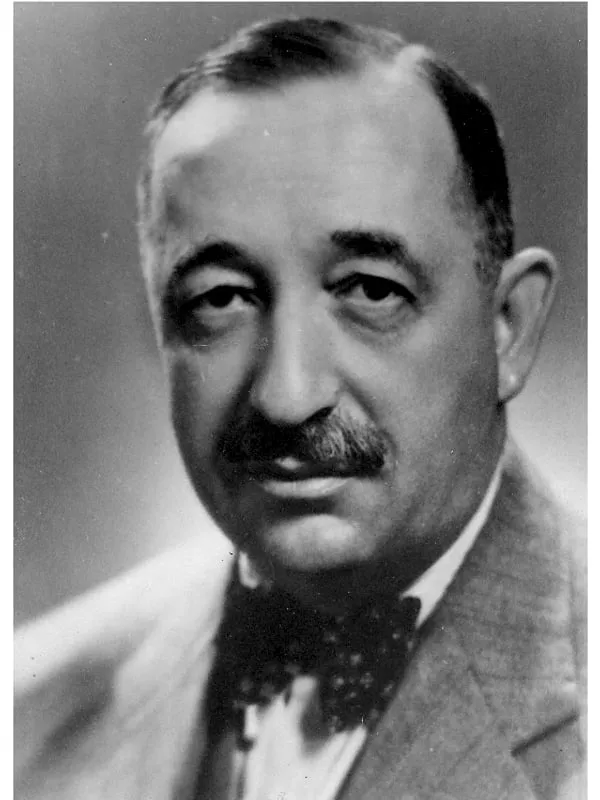
- Born:
- 9 April 1883, Stara Zagora (Principality of Bulgaria)
- Died:
- 1 February 1945, Sofia
- Author:
- Łukasz
- Photo:
- autor nieznany, CC BY-SA 4.0, Wikimedia Commons

Bogdan Filov was the most distinguished Bulgarian archaeologist of his generation and also the politician who brought Bulgaria into Hitler’s camp. For thirty years he studied the Thracian, Roman and medieval past of his country and headed the national museum, the university and the Academy of Sciences. In 1940 Tsar Boris III made him prime minister, and on 1 March 1941 in Vienna Filov signed Bulgaria’s accession to the Tripartite Pact. His government passed anti-Jewish laws, declared war on Britain and the United States and in 1943 handed over to the Germans the Jews of occupied Macedonia and Thrace. After the Tsar’s death Filov, as regent, effectively ruled the country until the autumn of 1944. The communists shot him in February 1945.
Youth and studies in Germany
He was born on 9 April 1883 (28 March in the Julian calendar, which was then in use in Bulgaria) in Stara Zagora. Some sources give 10 April. His father, Lieutenant Colonel Dimitar Filov, came from Kalofer, and his mother, Elisaveta Sahatchieva, from Karlovo. In 1887 his father joined an officers’ revolt in Ruse directed against the rule of Stefan Stambolov, and died of his wounds. His mother brought up her sons alone. Bogdan’s elder brother, Svetopolk, was killed in 1915, and his younger brother, Lyubomir, died in childhood.
Bogdan went to school in Karlovo and Plovdiv, and in 1900 he graduated from the First Boys’ Gymnasium in Sofia. A scholarship from the Ministry of Education took him to Germany. He studied classical philology in Würzburg and Leipzig, and archaeology and ancient Roman history in Freiburg im Breisgau, where in 1906 he defended a doctoral thesis on the Roman legions in the province of Moesia from Augustus to Diocletian. The thesis was published straight away as a supplement to the prestigious journal Klio. His years in Germany shaped him for life: he wrote in German and kept up contacts with German scholars, and this sympathy was later to weigh on his politics.
The scholar
On 1 May 1906 he began work at the National Archaeological Museum in Sofia. After further study in Bonn, Paris and Rome he took charge of the medieval and numismatic department, and following a scholarly dispute with the previous director, the Czech Václav Dobruský, he became head of the museum in 1910, the first Bulgarian to hold the post. He ran it until 1920. He introduced methodical excavation to Bulgaria: he dug at Hisarya, the former Roman Diocletianopolis, investigated the early Christian Basilica of St Sophia in Sofia and was the first to explore the ancient city of Kabile near Yambol. During the Balkan Wars and the First World War he made three long research journeys through Eastern Thrace, the Aegean coast and Macedonia, rescuing and recording monuments in territories occupied by the Bulgarian army. In Macedonia he worked with German archaeologists sent there by the army, and in the summer of 1918 he organised the excavation of the rich necropolis at Trebenishte on Lake Ohrid, published in Berlin in 1927.
From 1920 he was professor of archaeology and art history at Sofia University, where he lectured until 1941; he was dean of the Faculty of History and Philology in 1924–1925 and rector in 1931–1932. He founded the Bulgarian Archaeological Institute and ran it for two decades. In 1929–1931 he investigated the Thracian burial mounds at Duvanlii near Plovdiv, and in 1931–1933 the domed tombs at Mezek near the Turkish border. It was he who introduced the concept of Thracian art as distinct from Greek and Scythian art, and his works on Old Bulgarian art, on the miniatures of the chronicle of Constantine Manasses in the Vatican Library and on the Gospel book of Tsar Ivan Alexander in the British Museum won him an international reputation. In 1934 he organised an international congress of Byzantine studies in Sofia. From 1929 he was a full member of the Bulgarian Academy of Sciences, and on 27 June 1937 he became its president. He was a member of the German Archaeological Institute, a corresponding member of the Prussian Academy of Sciences and held honorary doctorates from the universities of Athens and Berlin. In 1923 he joined a Masonic lodge in Berlin. In January 1932 he married the ethnographer Evdokiya Peteva, a general’s daughter. The marriage was childless.
Tsar Boris’s prime minister
He entered politics late, and at the Tsar’s wish. On 14 November 1938 he became Minister of Education in the government of Georgi Kyoseivanov. A police note drawn up at the time of his appointment described him as a man who had so far been apolitical, with slight and unadvertised sympathies for the National Social Movement of the right-winger Aleksandar Tsankov. Bulgaria was then a royal dictatorship without political parties, and ministers carried out Boris’s will. On 15 February 1940 the Tsar appointed him prime minister, while also leaving him the education portfolio. The choice was significant: Kyoseivanov was regarded as an advocate of cautious neutrality, his successor as a friend of Germany, though without a political base of his own and therefore wholly dependent on the Tsar.
The first success of his government was the Treaty of Craiova of 7 September 1940, under which Romania, under German pressure, ceded Southern Dobruja to Bulgaria. At the same time Filov’s government imported models from the Third Reich into Bulgaria. In the autumn of 1940 it founded the youth organisation Brannik, modelled on the Hitler Youth. The Minister of the Interior, Petar Gabrovski, introduced in parliament the Law for the Protection of the Nation, which, modelled on the Nuremberg Laws, stripped Jews of most of their civil rights and was also aimed at Freemasons. Parliament passed it on 24 December 1940, and the Tsar approved it in January 1941. Filov, himself a Freemason, had to give up the presidency of the Bulgarian PEN Club, which fell under the new law.
In the winter of 1940–1941 Filov was the chief executor of the Tsar’s policy towards Germany. On 2 January 1941 he travelled to Vienna, officially for medical treatment, and at the Obersalzberg held talks with Hitler and Ribbentrop. He listed Bulgaria’s fears of Turkey, the Soviet Union and Yugoslavia, but gave an assurance that Bulgaria would join the pact when doing so no longer threatened complications. When the German 12th Army took up position on the Danube and, on 17 February, Bulgaria and Turkey issued a declaration of non-aggression, further delay was no longer possible.
The signature in Vienna
On 1 March 1941, in the Belvedere in Vienna and in Hitler’s presence, Filov, together with Ribbentrop, Galeazzo Ciano and the Japanese ambassador Hiroshi Ōshima, signed the protocol of Bulgaria’s accession to the Tripartite Pact. In his speech he explained that Bulgaria was doing so out of gratitude for the help it had received in recovering Dobruja and to secure its own peaceful development, and he gave assurances that the country would remain faithful to its friendship with the Soviet Union and to its agreements with its neighbours. That same day Ribbentrop confirmed to him in writing that after the defeat of Greece Bulgaria would receive the Aegean coast between the Struma and the Maritsa. The next day the German 12th Army crossed the Danube, and Filov pushed ratification through parliament without debate, by 140 votes to 20. To an opposition deputy who asked whether the pact would not drag Bulgaria into the war, he replied that the risk was slight and that only those who do nothing take no risks. When the British minister, George Rendel, warned him of the consequences of an alliance with Germany, Filov retorted that Bulgaria needed no advice on defending its independence. Rendel replied that it would be worth having that in writing for the future peace conference. On 5 March Britain broke off diplomatic relations with Bulgaria.
In April 1941, after the defeat of Yugoslavia and Greece, Bulgarian troops occupied without a fight most of Yugoslav Macedonia, the Pirot district in Serbia, and Greek Western Thrace and eastern Macedonia. In Bulgaria this was received with enthusiasm, and the prestige of the government and the Tsar reached its peak. As Minister of Education Filov founded hundreds of Bulgarian schools in the occupied territories, and in 1942 he opened a university in Skopje. Under his government the Greek inhabitants of Thrace were pushed out and Bulgarians settled in their place. On 25 November 1941 Bulgaria joined the renewed Anti-Comintern Pact, and on 13 December 1941, under German pressure, it declared war on Britain and the United States. On 11 April 1942 Filov formed his second government, in which he also took the post of Foreign Minister.
The deportations of 1943
Filov’s gravest responsibility concerns the fate of the Jews. On 22 February 1943 the Bulgarian Commissar for Jewish Affairs, Aleksandar Belev, and Adolf Eichmann’s envoy Theodor Dannecker signed an agreement on the deportation of 20,000 Jews, and Filov’s government approved it. In March 1943 the Bulgarian army and police rounded up in occupied Thrace, Macedonia and the Pirot district 11,343 people, to whom the Bulgarian authorities had refused citizenship, and handed them over to the Germans. Almost all of them perished in the Treblinka extermination camp. The deportation of Jews from Bulgaria within its pre-war borders was halted on 9 March after protests by the inhabitants of Kyustendil and by the Deputy Speaker of parliament, Dimitar Peshev. When, a few days later, Peshev gathered the signatures of 43 deputies of the government majority on a letter of protest, Filov demanded a vote of confidence from parliament and had Peshev removed from the post of Deputy Speaker. Some 48,000 Jews from Bulgaria’s pre-war territory survived the war, but in May 1943 about 20,000 of them were expelled from Sofia to the provinces. That the deportations from the old territory did not take place was decided by the protests of deputies, the Church and the public, and in the end by the Tsar, not by the prime minister.
Regent
On 28 August 1943, a few days after returning from talks with Hitler, Boris III died suddenly. The six-year-old Simeon II became tsar, and on 9 September 1943 the ordinary National Assembly elected a regency council: the late Tsar’s brother, Prince Kiril, the War Minister, General Nikola Mihov, and Filov. The choice violated the Tarnovo Constitution, which required regents to be chosen by the Grand National Assembly and barred members of the dynasty from serving as regents at all. The council was dominated by Filov, who handed over the premiership to Dobri Bozhilov, regarded as his man, and he clung to the alliance with Germany to the end, even as Allied aircraft bombed Sofia and the Red Army approached the Balkans.
Only in the summer of 1944 did the regents appoint the government of Ivan Bagryanov, which tried to take the country out of the war. After the Soviet Jassy–Kishinev offensive and Romania’s switch to the Allied side it was already too late. The formation on 2 September 1944 of the government of Konstantin Muraviev, which included the former opposition, required Filov to leave the regency council. He delayed, but on 7 September he withdrew from the council and the following day formally resigned. On 5 September the Soviet Union declared war on Bulgaria, on 8 September the Red Army crossed the border, and on 9 September a coup handed power to the Fatherland Front, in which the communists had the decisive voice.
Trial and death
A few days after the coup Filov was arrested at the mountain resort of Chamkoria (Borovets). On 21 September, together with the other regents and most of the ministers, he was taken to the Soviet Union, where he was interrogated for three months. On 3 January 1945 the prisoners were brought back to Sofia and put before the so-called People’s Court, set up by the new authorities to settle accounts with “those guilty of dragging Bulgaria into the war”. According to Bulgarian accounts, Filov conducted himself with dignity before the court and did not plead guilty. On 1 February 1945 the first chamber of the court sentenced to death the regents and dozens of former ministers, advisers to the Tsar and deputies. The sentence was carried out that same night, 1–2 February, at a cemetery in Sofia, and the bodies were thrown into a bomb crater. That is why sources give Filov’s date of death as 1 or 2 February. The family’s property was confiscated, his wife was banished and his academic titles were revoked.
Significance
During the decades of communist Bulgaria, Filov’s name was erased: his books were removed from libraries and his discoveries were cited without the author’s name. Paradoxically, it was in this very period, in 1986, that his diary of 1940–1944 was published, one of the most important sources for the history of wartime Bulgaria. After the fall of communism archaeologists restored his place in scholarship, and on 26 June 1996 the Supreme Court quashed the People’s Court’s verdict. The judgement on the politician, however, remains harsh. In 2009, when Sofia city council named a street after him, the Israeli embassy pointed out that Filov had signed the alliance with Nazi Germany, prepared antisemitic laws and sent to the occupied territories the administration that deported the Jews living there. The decision was reversed.
Filov was a scholar who believed that the German alliance would bring Bulgaria the lands it had lost in 1913 and 1919. In March 1941 his signature opened the way for the Wehrmacht into Greece and Yugoslavia and made Bulgaria an accomplice of the Reich, including in the Holocaust of the Jews of the occupied territories. As one of his obituaries put it, he made the mistake of preferring to make history rather than to teach it.
Sources
Often appears with
People who appear in the same events.