Russia
Alexander Guchkov
Chairman of the Third Duma (1910–1911) and of the Central War Industries Committee (1915–1917), Minister of War and the Navy in the Provisional Government (1917)
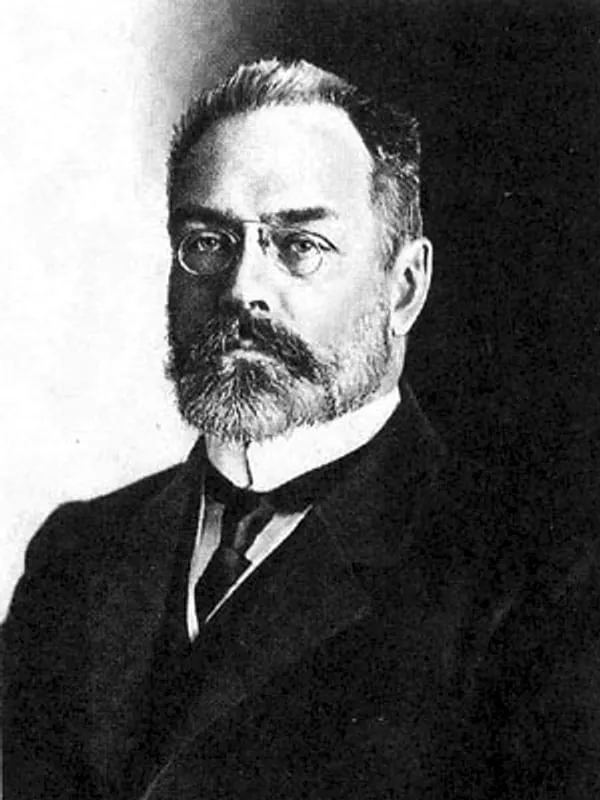
- Born:
- 26 October 1862, Moscow (Russian Empire)
- Died:
- 14 February 1936, Paris (France)
- Author:
- Natalia
- Photo:
- autor nieznany, domena publiczna, Wikimedia Commons

Alexander Ivanovich Guchkov was one of the most colourful figures in Russian politics at the beginning of the 20th century: a Moscow financier, a volunteer in other nations’ wars, a duellist and the leader of the moderately liberal Octobrist party. From Russia’s defeat in the war with Japan onwards, he fought for a modern army and for that army to be controlled by parliament rather than the court. During the First World War he headed the war industries committees, which became a centre of opposition to the government. In March 1917 it was he who brought back from Pskov the act of abdication of Nicholas II, and then, as Minister of War in the Provisional Government, he tried to save discipline in the army. After two months he concluded that he had failed, and he resigned. He spent the rest of his life in exile, looking for a way to overthrow the Bolsheviks, surrounded – as it later turned out – by agents of Soviet intelligence. His fate shows how the Russian liberals, who wanted to save the monarchy and win the war, opened the way to a revolution they were unable to control.
Merchant, volunteer, duellist
He was born on 26 October 1862 (14 October in the Julian calendar) in Moscow, into a wealthy merchant family of Old Believer descent. His great-grandfather, a serf, had come to Moscow and founded a textile mill, and his grandfather had been mayor of the city. Guchkov graduated in history and philology from Moscow University and then attended lectures in law and economics in Berlin, Vienna and Heidelberg. He broke off his studies abroad when, during the famine of 1891–1892, he went to organise relief for the peasants of Nizhny Novgorod province. He later sat on the Moscow city board and served as deputy mayor, and at the beginning of the 20th century he was director of the Moscow Discount Bank.
It was his adventures that made him famous. In 1895 he travelled through the Armenian lands of the Ottoman Empire during the massacres there and gathered material on the persecution. He served in the guard protecting the construction of the Chinese Eastern Railway in Manchuria, and returned to Russia on horseback across Mongolia. In 1899 he and his brother went to the Transvaal to fight on the side of the Boers in their war against the British. Badly wounded in the leg, he was taken prisoner by the British and limped for the rest of his life. He repeatedly challenged opponents to duels, earning himself a reputation as a hothead.
During the Russo-Japanese War he was a senior Red Cross representative with the Manchurian Army. When the Russians abandoned the city after losing the Battle of Mukden in March 1905, Guchkov refused to leave the wounded in the hospital and allowed himself to be taken prisoner by the Japanese. He was soon released. The war, in which he saw at close quarters the incompetence of the command and of the supply services, made him a lifelong advocate of army reform.
Leader of the Octobrists
After the revolution of 1905 Guchkov became leader of the Union of 17 October, a party named after the tsar’s October Manifesto, which had promised constitutional freedoms and a parliament. The Octobrists wanted to work with the monarchy on the basis of the new system. Guchkov supported the prime minister, Pyotr Stolypin, and his agrarian reform, but also his harsh crackdown on the revolution. In the Third State Duma he chaired the defence committee and formed close ties with reforming generals. In 1908 he publicly called on the grand dukes to give up their high posts in the army, something the court never forgave him. From March 1910 to March 1911 he was Chairman of the Duma. He resigned in protest when Stolypin pushed a law through by bypassing the chamber. He was succeeded by Mikhail Rodzianko.
In 1912 he made a scathing speech in the Duma against the influence of Grigori Rasputin at court, and made a lifelong enemy of Empress Alexandra Feodorovna. The same year he fought a duel with Lieutenant Colonel Sergei Myasoyedov of the gendarmerie, whom he accused of spying on officers. In 1915 Myasoyedov was hanged as a German spy, although most historians today regard him as innocent. In the elections to the Fourth Duma in 1912 Guchkov was defeated in Moscow and left without a seat.
War and conspiracy
After the outbreak of the First World War Guchkov went to the front as a Red Cross plenipotentiary and soon realised that the army was badly supplied and even worse led. In the spring of 1915, when shells ran short and the Russians were retreating from Galicia, he was the loudest in blaming the Minister of War, Vladimir Sukhomlinov. In the summer of 1915 a congress of industrialists elected him chairman of the Central War Industries Committee. The committees were meant to bring together medium-sized and small factories that had not so far worked for the army. Their contribution to munitions production was more modest than their propaganda claimed, but politically they mattered a great deal. Together with Prince Georgy Lvov’s Union of Zemstvos and the Union of Towns, they formed a network of public organisations that competed with the bureaucracy. Guchkov brought workers’ representatives into the leadership of the committees, which the court regarded as open revolt. The empress wrote to her husband that the committees were raising “anti-dynastic questions” and asked whether Guchkov could not be hanged.
Guchkov was one of the founders of the Progressive Bloc, which from August 1915 demanded a government that enjoyed the confidence of the public. In time he ceased to believe that the tsar would agree to this. In August 1916 he wrote to the Chief of Staff to the Commander-in-Chief, General Mikhail Alekseyev, that a flood was coming, and that the “pitiful, wretched and flabby” government was preparing for the cataclysm as if for a shower of rain: putting on its galoshes and opening its umbrella. Copies of the letter circulated around Petrograd. At the end of 1916 Guchkov was at the centre of a plot for a palace coup. Together with a few politicians and officers, he planned to stop the tsar’s train between Headquarters and Tsarskoye Selo and force him to abdicate in favour of his son, with Grand Duke Michael Alexandrovich as regent. Most historians believe the plot never went beyond talk, and it was in any case overtaken by the revolution.
Pskov
During the February Revolution Guchkov joined the military commission of the Provisional Committee of the Duma. The committee decided that the tsar must abdicate in favour of his son, and sent Guchkov and the monarchist Vasily Shulgin to Pskov. They arrived late in the evening of 15 March 1917 (2 March Old Style). Guchkov argued to the tsar that the movement in the capital had broken out spontaneously and might spread to the front, and that abdication was the only way out. Nicholas replied that he had already made his decision, but that he did not want to be parted from his sick son, and was renouncing the throne for himself and for the boy in favour of his brother. The envoys agreed, even though the law of succession made no provision for such an act. Before midnight Guchkov received the act of abdication and a decree appointing Lvov prime minister.
Back in Petrograd it became clear how much the mood had changed. When on the morning of 16 March Guchkov raised a cheer for “Emperor Michael” at a railwaymen’s meeting, the workers almost lynched him. That same day he and Pavel Milyukov were the only ones to urge the grand duke to accept the crown. They were in the minority, and the monarchy ceased to exist.
Minister of War
In the Provisional Government Guchkov took over the Ministry of War and the Navy. He wanted an army that was modern, younger and loyal to the new authorities. Within a few weeks he removed many senior generals considered incompetent or men of the old regime. According to Anton Denikin, some 150 senior commanders left at that time. He abolished religious and class restrictions on officers’ promotion and legalised some of the changes brought in by Order No. 1 of the Petrograd Soviet, such as the ban on addressing officers by their titles and on officers addressing soldiers with the familiar “thou”.
Discipline, however, he did not restore. As early as March he wrote to Alekseyev that the government had no real power and that its orders were carried out only to the extent the Soviet allowed, since it was the Soviet that controlled the army, the railways, the post and the telegraph. Soldiers’ committees multiplied at the front, and the planned Declaration of Soldiers’ Rights was to give servicemen full civil rights. Guchkov refused to sign it. When at the beginning of May Milyukov’s note pledging fidelity to the war aims provoked the April Crisis, and the Soviet began a campaign against both ministers, Guchkov resigned. He signed his last order on 12 May (29 April Old Style). He declared that he could not share responsibility for a “grave sin” against the fatherland. His portfolio in the coalition government went to Alexander Kerensky. The French ambassador, Maurice Paléologue, noted that Guchkov’s resignation meant the bankruptcy of the Provisional Government and of Russian liberalism.
From Kornilov to exile
In the summer of 1917 Guchkov and Rodzianko founded the Liberal Republican Party, as he had concluded that the monarchy could no longer be restored. He supported General Lavr Kornilov and his programme for restoring discipline, and after the revolt collapsed in September he was briefly arrested. When Alekseyev began forming the nucleus of a White army in the autumn, Guchkov gave him money.
After the October Revolution he hid in the North Caucasus and then made his way to Denikin’s Volunteer Army. In 1919 Denikin sent him to Europe as his representative to the Entente governments. Guchkov held talks with Winston Churchill and lobbied for weapons for the Whites, including for the army of General Nikolai Yudenich, which in the autumn of 1919 reached the approaches to Petrograd. He also maintained close contacts with General Pyotr Wrangel, the last commander of the Whites in the Crimea.
In exile
After the defeat of the Whites Guchkov lived in Berlin and then in Paris. He had kept a considerable part of his fortune, which was invested abroad, joined no faction and acted as an independent politician. He gathered information on the economic situation in the Soviet Union, sent analyses to politicians and former generals, and worked for the émigré Red Cross. The émigré far right regarded him as a traitor to the tsar, from whom he had received the abdication. According to his Russian biographers, in 1921 he was attacked and beaten up by a monarchist in Berlin.
In the 1920s he hoped that Bolshevik rule would be overthrown by a coup within the Soviet Union itself, carried out by the military. He did not know that the Soviet political police had long since penetrated his circle. He did expose the provocation known as Operation Trust, a fictitious anti-Bolshevik organisation created by the OGPU to control the emigration, but a frequent visitor to his home was General Nikolai Skoblin, who turned out to be a Soviet agent. So was his daughter Vera, the wife of an activist of the Eurasianist movement and later of the Scottish communist Robert Trail. According to his Russian biographers, after Adolf Hitler came to power in 1933, Guchkov foresaw a new war between Germany and the Soviet Union and sought among his German acquaintances a way of preventing it. This strand of his life cannot be fully verified today.
In 1935 he fell seriously ill with cancer. He died in Paris on 14 February 1936. Representatives of almost every faction of the emigration attended his funeral. His body was cremated and the urn placed in the columbarium of Père Lachaise cemetery. Guchkov wanted it to be taken to Moscow after the fall of the Bolsheviks. According to Russian sources, the urn was lost during the German occupation of Paris.
Significance
To the monarchists Guchkov was the chief culprit in the fall of tsarism: the man who for years had undermined the tsar’s authority, conspired with generals and personally received his abdication. Soviet historiography saw him as the leader of the big bourgeoisie, which had wanted to seize power in order to wage an imperialist war. Western historians such as Richard Pipes and Orlando Figes present him rather as a patriot who was the first to understand that the army could not win the war under the rule of the court, but also as an ambitious, impetuous politician with a taste for conspiracy. As Minister of War, some accuse him of having himself hastened the disintegration of the army through his purges and concessions to the committees; others stress that he had no means of stopping it.
His tragedy was that he wanted a revolution “from above” that would save the monarchy and the army, and got instead a revolution from below that destroyed both. The collapse of the army, which he was unable to halt, made possible the Bolshevik seizure of power, Russia’s exit from the war and the creation of a state that in 1939 stood alongside Hitler in the partition of Poland. After his death Milyukov wrote that Guchkov had died “an enigma”.