Germany
Georg Elser
Carpenter, perpetrator of the attempt on Hitler's life in the Bürgerbräukeller (1939), “special prisoner” in Sachsenhausen and Dachau (1939–1945)
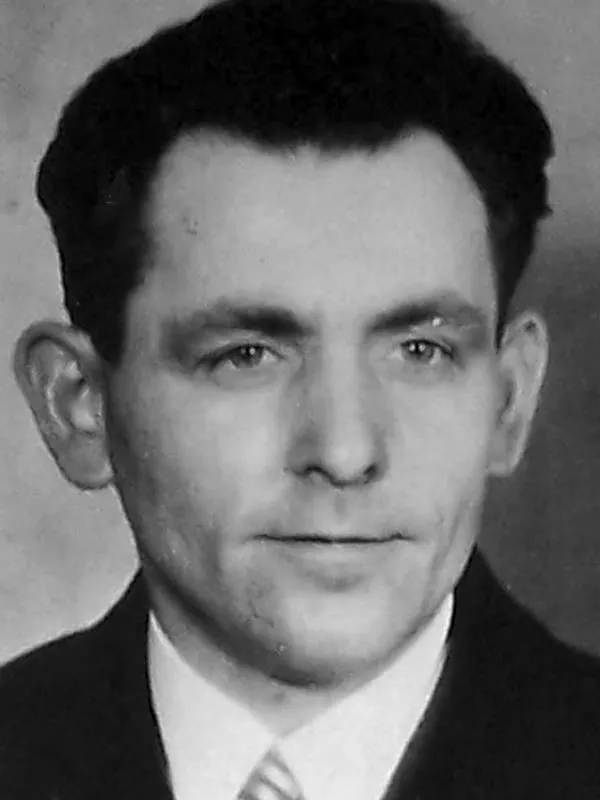
- Born:
- 4 January 1903, Hermaringen (Württemberg, German Empire)
- Died:
- 9 April 1945, Dachau concentration camp
- Author:
- Natalia
- Photo:
- Weißkunig, domena publiczna, Wikimedia Commons

Johann Georg Elser was a carpenter from Württemberg who, alone, without anyone’s help and without anyone’s knowledge, prepared one of the most dangerous attempts on the life of Adolf Hitler. As early as the autumn of 1938, when most of Europe believed that the Munich Agreement had saved the peace, he concluded that Hitler was leading Germany into war and that he had to be killed. For a year he gathered explosives, and then for more than thirty nights he hollowed out a chamber in a pillar of the Munich beer hall Bürgerbräukeller, where Hitler spoke every year on the anniversary of the 1923 putsch. The bomb went off on 8 November 1939 at the planned time – but thirteen minutes after Hitler had left the hall. Elser, arrested that same evening at the Swiss border, spent more than five years as a special prisoner and was murdered at Dachau a few weeks before the end of the war. Long regarded as a tool of the SS or of a foreign intelligence service, he is today one of the most respected figures of the German resistance.
Childhood and apprenticeship
He was born on 4 January 1903 in Hermaringen in Württemberg, the illegitimate child of Maria Müller. A year later his mother married Ludwig Elser, a timber merchant and farmer from nearby Königsbronn, who acknowledged the boy as his son. Georg was the eldest of six children and worked on the farm from childhood. His childhood was darkened by his father’s alcoholism: he drank away the family’s money and in time brought it to ruin. From 1910 to 1917 Georg attended the elementary school in Königsbronn, where he excelled at drawing, handwriting and arithmetic.
He broke off an apprenticeship as a lathe operator at the local ironworks for health reasons, and from 1919 to 1922 he was apprenticed to a carpenter in Königsbronn. He passed his journeyman’s examination as the best of his year. He then worked as a cabinet-maker and joiner in Königsbronn, Aalen and Heidenheim. He was a conscientious, even pedantic craftsman, taciturn and withdrawn, who felt most at ease at his workbench.
By Lake Constance
In 1925 he set out into the world. He worked briefly making wooden propellers at the Dornier works in Friedrichshafen, and then lived for several years in Konstanz. There he made wooden cases at a clock factory and learned how clock mechanisms work, which years later proved crucial. When the factory went bankrupt he took jobs in various joinery workshops, for six months commuted daily to work in Bottighofen in Switzerland, and in 1930–1932 made clock cases in Meersburg. He played the zither, the flute and the accordion, and belonged to a zither players’ association and to folk costume societies. In 1930 a waitress, Mathilde Niedermann, gave birth to his son Manfred, who was later adopted by her husband.
In Konstanz Elser joined the woodworkers’ trade union, and in 1928 or 1929 the Roter Frontkämpferbund, the paramilitary organisation of the Communist Party of Germany. According to his later testimony he was merely a dues-paying member, had no uniform and no position, and attended meetings at most three times. Until 1933 he voted Communist, because he believed the Communists best defended the interests of the workers. He took no interest in political theory, read few newspapers and belonged to no party.
Under Hitler
In August 1932 he returned to Königsbronn at his mother’s request, because his father, deep in debt, was selling off the fields one after another. He helped on the farm and made furniture in his own workshop. From 1933 he consistently refused to give the Hitler salute, left the room when Hitler’s speeches were broadcast on the radio, and took no part in the Nazi elections and plebiscites. He became involved with a married woman, Elsa Härlen, who separated from her husband after their affair. Their relationship petered out at the beginning of 1939, when Elser withdrew from his family and friends – perhaps so that no one would be suspected of complicity after the attack. From December 1936 to March 1939 he worked at the Waldenmaier fittings factory in Heidenheim, first as an auxiliary worker and then in the dispatch department, where he also had access to the section that produced fuses.
In the statements he made in Berlin in November 1939 he explained where his intention had come from. After 1933, he said, workers’ wages had fallen while deductions from them had risen; a worker could not freely change his job, and his children were brought up by the Hitler Youth. In the autumn of 1938, during the Sudeten crisis (PL), Elser decided that Hitler would not stop at the Sudetenland and that war was inevitable. He concluded that only the removal of the leaders – Hitler, Hermann Göring and Joseph Goebbels – could change that. He did not intend to overthrow the whole system; he hoped that their successors would be moderate. In the words that now appear on a memorial plaque in Königsbronn, he wanted his deed “to prevent even greater bloodshed”.
Preparations
On 8 November 1938 he travelled to Munich and late in the evening, after Hitler’s anniversary speech, inspected the hall of the Bürgerbräukeller. He decided that the best place for the charge was the brick pillar right behind the lectern, which supported the gallery and the ceiling. From then on he acted methodically. At the Waldenmaier factory he smuggled out pressed powder; in April 1939 he went to Munich to measure and photograph the pillar; and in the spring he took a job at a quarry in Königsbronn, where he stole more than a hundred explosive charges and detonators. In the summer he tested fuses in his parents’ secluded orchard. He told the family of acquaintances with whom he was lodging that he was working on an invention.
On 5 August 1939 he moved to Munich. Every evening he ate dinner in the beer hall’s restaurant, hid in a storeroom on the gallery before closing time, and at night, by the light of a shaded torch, hollowed out a chamber in the pillar, concealing it behind a small door cut into the panelling. He carried the rubble out in a suitcase in the mornings. He built the mechanism himself – two clocks that allowed the explosion to be set several days in advance. In the first days of November he placed the charge in the pillar and started the timer, set for 9.20 p.m. on 8 November, and during the night of 7–8 November he checked once more that the clocks were running.
8 November 1939
Elser did not know that Hitler, preoccupied with preparations for the offensive in the West, had at first cancelled his appearance at the ceremony altogether, and that when he did eventually come, he moved the start of his speech forward to 8 p.m. and cut it to an hour so as to catch the evening train to Berlin. Hitler left the hall at 9.07 p.m. The bomb exploded at 9.20 p.m., bringing down the ceiling above the lectern and killing eight people – seven party members and a waitress. Several dozen people were injured.
By then Elser was already in custody. That evening he had crossed by boat from Friedrichshafen to Konstanz, and at around 8.45 p.m. he was stopped by customs guards a few dozen metres from the Swiss border. He was carrying parts of a fuse, sketches and a picture postcard of the interior of the Bürgerbräukeller. Taken to Munich, he was beaten during interrogation and in mid-November confessed to the attack. From 19 to 23 November he was questioned at Gestapo headquarters in Berlin. The record of these interrogations shows that he acted alone. Hitler and Heinrich Himmler refused to believe it. The interrogators gave him stimulants and brought in hypnotists, and they also made him reconstruct the bomb to see whether he could have built it by himself. He reconstructed it without difficulty. Even so, on 21 November Himmler announced that the attack had been commissioned by British intelligence and Otto Strasser, and the press printed Elser’s photograph alongside pictures of two British officers abducted in the Venlo incident by the men of Walter Schellenberg.
Special prisoner
Elser was never tried. The regime wanted to keep him as a witness for a great show trial that, after a victorious war, was to “prove” Britain’s guilt. For the following months he was held in Berlin, and by early 1941 at the latest he had been sent, as the “Führer’s special prisoner”, to the Sachsenhausen camp. He was kept in isolation in the camp’s prison block, in a cell made by joining three smaller ones, with two guards. He had a carpenter’s workshop there, made furniture and zithers, and received better food than the other prisoners. These privileges aroused the suspicion of fellow prisoners, among them the pastor Martin Niemöller, that Elser was in reality an SS man and the attack a hoax staged by the regime.
At the beginning of 1945 he was moved to the bunker of the Dachau camp, where he was registered under the name “Eller”. In early April 1945, when the Reich’s defeat was certain and the show trial had lost its purpose, Hitler ordered him to be killed together with other prisoners he regarded as traitors. A letter from Gestapo headquarters to the Dachau commandant, Eduard Weiter, instructed that at the next Allied air raid “Eller” should be killed as discreetly as possible and reported as having died in the bombing. On the evening of 9 April 1945 Elser was shot near the camp crematorium and his body was burned at once. On the same day Admiral Wilhelm Canaris and Dietrich Bonhoeffer were executed at Flossenbürg. The Americans liberated Dachau three weeks later.
Remembrance
For decades after the war Elser’s memory was burdened by the rumour that he had been an SS agent, spread by, among others, Niemöller and the British officer Sigismund Payne Best, his fellow prisoner at Sachsenhausen and Dachau. His family did not know how he had died, and the people of Königsbronn long preferred not to talk about him. The breakthrough came in 1964, when the historian Lothar Gruchmann discovered the complete record of the Berlin interrogations. On the basis of it Anton Hoch of the Institute of Contemporary History in Munich showed in 1969 that Elser had acted alone, and in 1970 the record was published.
Even so, he long remained in the shadow of the officers and officials of the 20 July plot of 1944, and for years historians in both West and East Germany paid him little attention. He was brought to wider attention by Klaus Maria Brandauer’s 1989 film Georg Elser – Einer aus Deutschland, and in 2015 Oliver Hirschbiegel made the film Elser. Since 2001 the Georg Elser Prize for civil courage has been awarded; on the centenary of his birth in 2003 Deutsche Post issued a stamp bearing his portrait; and in 2011 a seventeen-metre steel memorial to him was unveiled in Berlin. Several dozen streets and squares in Germany bear his name. The Bürgerbräukeller was demolished in 1979, and the spot where the pillar with the bomb once stood is marked by a plaque in the pavement.
Elser’s story is one of the most important in the history of Germany’s road to war and of the war itself, because it shows that the truth about Hitler’s policy could be seen without access to secret documents or general staffs. A simple craftsman understood in 1938 what many politicians and generals refused to see for a long time afterwards, and as one of the very few Germans he tried on his own to stop the war. He was thirteen minutes short.
Sources
Often appears with
People who appear in the same events.