Germany
Wilhelm Canaris
Head of the Abwehr, the military intelligence and counter-intelligence service of the Third Reich (1935–1944), admiral (1940)
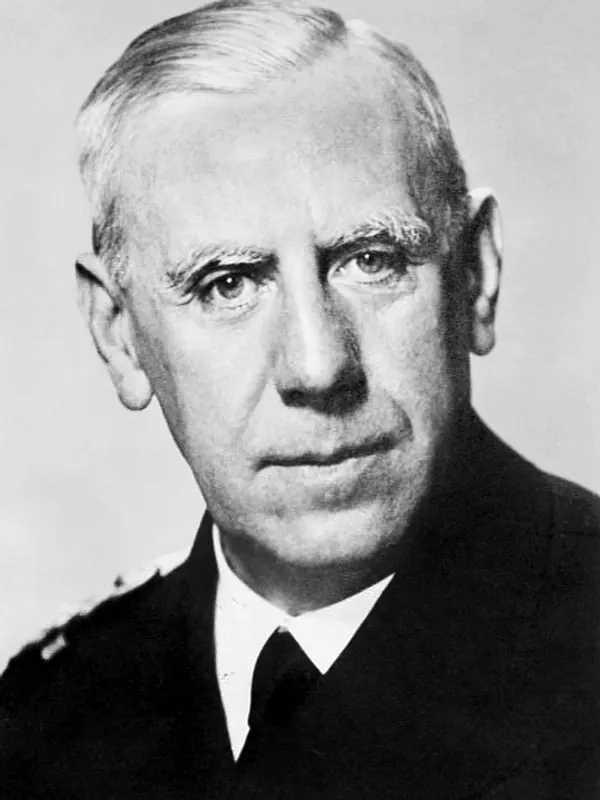
- Born:
- 1 January 1887, Aplerbeck near Dortmund (German Empire)
- Died:
- 9 April 1945, Flossenbürg concentration camp
- Author:
- Natalia
- Photo:
- autor nieznany, CC BY-SA 3.0 DE, Wikimedia Commons

For nine years Wilhelm Canaris headed the Abwehr, the military intelligence and counter-intelligence service of the Third Reich, and he is one of the hardest figures of the era to judge. An officer of the Imperial Navy, a participant in right-wing plots against the Weimar Republic and initially a supporter of Adolf Hitler, he built a service that prepared sabotage ahead of the attack on Poland, supplied the uniforms for the Gleiwitz incident and operated on every front. Yet from 1938 he shielded men within his own organisation who were conspiring against Hitler, protested against the crimes in Poland and, by many accounts, doubted the purpose of the war he served. An expert on Spain and a friend of Francisco Franco, in December 1940 he brought back from Madrid the refusal that buried the plan to capture Gibraltar. He died on the gallows at Flossenbürg concentration camp two weeks before its liberation. He left almost no writings of his own, and his diaries were lost, so the picture of Canaris still depends largely on whom the historian chooses to believe.
Youth and the First World War
He was born on 1 January 1887 in Aplerbeck, today a district of Dortmund, the youngest of four children of the engineer Carl Canaris, technical director of the local ironworks and later a board member of an industrial concern in Duisburg, where Wilhelm grew up in a prosperous middle-class home. The family came originally from the area around Lake Como in Italy, but throughout his life Canaris liked to claim kinship with the Greek hero of the War of Independence, Admiral Konstantinos Kanaris, and kept his portrait in his office. His father wanted him to join the cavalry but died in 1904, and in April 1905 the son entered the Kaiserliche Marine as a cadet.
Aboard the cruiser Bremen he sailed in Latin American waters, quickly learned Spanish and helped his commanding officer build up a network of informants in the ports of Argentina and Brazil. From 1911 he served on the light cruiser Dresden, with which in 1914 he joined Vice Admiral Maximilian von Spee’s squadron. As the officer responsible for intelligence, he lived through the Battle of Coronel and the defeat at the Falklands, from which Dresden was the only ship of the squadron to escape. He hid with her in the fjords of Patagonia, and in March 1915, when the ship, cornered by the British, was scuttled by her own crew off the island of Más a Tierra, he was sent to an internment camp in Chile. In August 1915 he escaped, crossed the Andes on horseback and, with a Chilean passport in the name of Reed Rosas, sailed to Europe.
The Admiralty soon sent him to Spain. In Madrid and the Spanish ports he organised a network of informants who tracked the movements of Allied ships, as well as supplies for German submarines in the Mediterranean. There he made contacts that would serve him for a quarter of a century. After training, in 1918 he commanded submarines in the Mediterranean and sank several Allied ships, and in November he made his way from the base at Cattaro (Kotor) through the Strait of Gibraltar to Kiel.
Against the Republic
After the revolution of 1918 Canaris, like most naval officers, was hostile to the new state. He associated with right-wing officers and served as the navy’s liaison officer to Gustav Noske, and in January 1919, during the Spartacist uprising, he worked with the staff of the Guards Cavalry Rifle Division, whose officers, on the orders of Captain Waldemar Pabst, murdered Karl Liebknecht and Rosa Luxemburg. In May 1919 he sat as an assessor on the court martial that acquitted most of the accused, and shortly afterwards he helped one of those convicted, Kurt Vogel, escape from prison. For this he spent a few days under arrest but never stood trial. In March 1920, during the Kapp Putsch, he sided with the putschists. In the early 1920s in Kiel he helped hide weapons from the Allied commissions and maintained contacts with the terrorist Organisation Consul.
In 1923, as first officer of the cruiser Berlin, he met the cadet Reinhard Heydrich, who later visited his home and played the violin with his wife, Erika. In the 1920s Canaris travelled to Spain many times to organise, in secret from the victorious powers, the construction of submarines to German designs and to rebuild his network of informants. He came to know King Alfonso XIII and many Spanish officers. The exposure of the navy’s clandestine dealings, the so-called Lohmann affair, together with the left-wing press reminding readers of his role in the case of Luxemburg’s murderers, led to his removal from secret missions in 1928. He served on the battleship Schlesien, of which he became captain in 1932.
Head of the Abwehr
Canaris greeted Hitler’s rise to power with enthusiasm. National Socialism appealed to him as a return to an authoritarian state, a break with Versailles and a fight against communism; he gave talks to his crew about the new order. In September 1934, transferred to the post of fortress commandant at Swinemünde (Świnoujście), he seemed to be at the end of his career, but at the beginning of January 1935 he took over the Abwehr in the Reichswehr Ministry. In May he became a rear admiral, in April 1938 a vice admiral and on 1 January 1940 a full admiral.
He expanded the Abwehr from a small office into a powerful organisation which during the war numbered more than ten thousand officers, officials and employees, not counting agents. It conducted intelligence abroad, counter-intelligence in the armed forces and the arms industry, and sabotage. With his neighbour and former subordinate Heydrich, head of the SD and the Gestapo, he shared horse rides and a social life, but was divided from him by a bitter rivalry over areas of responsibility; each gathered material against the other. Canaris also worked with the intelligence services of states friendly to the Reich, especially the Japanese, at the time of the Anti-Comintern Pact.
Spain was closest to his heart. When the civil war broke out in July 1936, according to his biographers he was among those who persuaded Hitler to help the rebel generals: German Ju 52s ferried Franco’s troops from Morocco to the mainland, and later the Condor Legion arrived in Spain. Canaris visited Franco many times, smoothed over disputes between Spaniards, Germans and Italians and, according to his biographers, contributed to the recall of the Legion’s commander, Hugo Sperrle, who irritated the Spanish. The Abwehr ran the Legion’s counter-intelligence and hunted down Germans fighting in the International Brigades.
Between Hitler and the conspiracy
The turning point was the Blomberg–Fritsch affair at the beginning of 1938. Canaris was one of the few senior officers who helped show that the accusation of homosexuality against the commander-in-chief of the army, Werner von Fritsch, was a Gestapo intrigue. From then on he had no illusions about the SS and its methods. Towards Hitler himself, however, he remained, as throughout his career, both an obedient executor and a sceptic. The Abwehr helped to intimidate Austria before the Anschluss and prepared sabotage in Czechoslovakia, while at the same time the head of its central department, Lieutenant Colonel Hans Oster, Canaris’s closest associate, became one of the chief organisers of a plot that in the summer of 1938 aimed to overthrow Hitler if he started a war over the Sudetenland. Canaris knew of these plans and shielded them, but he was no assassin himself and to the very end contemplated at most the arrest of the dictator. The Munich Agreement deprived the conspirators of their pretext.
In 1939 the Abwehr prepared for the attack on Poland. Its outstations, especially in Breslau (Wrocław), formed sabotage groups among the German minority that were to seize or destroy bridges, railway stations and industrial plants. Their work included the bombing at Tarnów railway station and the Jabłonków incident, and on Hitler’s orders the Abwehr had to supply Polish uniforms for the SS men who staged the attacks in and around Gleiwitz. On 22 August Canaris listened to the speech in which Hitler announced the war with Poland to his commanders, and took notes despite a ban on doing so. His notes, passed on by the opposition, reached the British embassy in a somewhat altered form, and after the war found their way to Nuremberg.
After the outbreak of war Canaris saw Warsaw burning and received reports of mass executions. On 12 September, in Hitler’s train in Upper Silesia, he warned the chief of the OKW, Wilhelm Keitel, that the planned shootings of the Polish intelligentsia, nobility and clergy would be laid at the Wehrmacht’s door; Keitel replied that Hitler had already decided on them. From then on the Abwehr collected information about the crimes, and Canaris made sure that General Johannes Blaskowitz’s reports on the killings in Poland reached the commanders in the west. Yet his own organisation was not free of guilt: the Secret Field Police subordinate to it worked with SS units and handed over detainees to them. Canaris did, however, help individuals, among them the wife of the Polish military attaché in Berlin, Halina Szymańska, who thanks to him left for Switzerland and later became one of the channels through which information from Abwehr circles reached the Allies.
In the winter of 1939–1940 men from his circle were conspiring again. Oster, fearing the offensive in the west, warned neutral states of the dates of the German attack through the Dutch military attaché, which had repercussions during the Mechelen incident, and contact was sought with the British through the Vatican regarding peace after Hitler’s overthrow. Canaris visited commanders on the Western Front but convinced almost no one. When in November 1939 General Franz Halder withdrew from the plans for a coup and suggested that Canaris should be the one to remove Hitler, the admiral refused: he had no intention of becoming an assassin. From then on, his biographers write, he gave the impression of a resigned man, although he continued to shield the conspirators in his organisation.
Spain and Gibraltar
After the fall of France in 1940 Canaris once again became the man for Spanish affairs. In July he travelled with a group of officers to Madrid and Algeciras to inspect Gibraltar from the landward side, and concluded that the fortress could be taken only by a strong, well-prepared attack from Spanish territory. In the autumn, when Hitler met Franco at Hendaye, Canaris’s reports on the ruin of the Spanish economy and the Caudillo’s uncertain position were among those the Führer cited. On 7 December 1940 he arrived in Madrid with a demand for consent to German troops entering Spain on 10 January 1941, and was told by Franco that Spain could not enter the war at that time and could do so only when Britain was on the verge of collapse. Hitler then called off Operation Felix.
After the war Canaris’s associates and many writers claimed that the admiral had privately advised Franco against entering the war, and that the Spanish repaid him by looking after his widow, who settled in Spain. The documents do not bear this out: the surviving Spanish record of the conversation agrees with Canaris’s report to the high command, and Franco had reasons enough of his own to refuse. All that is certain is that Canaris was sceptical of the whole undertaking and that Spain remained an important field of operations for the Abwehr throughout the war.
War in the east and the fall of the Abwehr
Before the attack on the USSR, prepared from Directive No. 21 onwards, the Abwehr conducted disinformation operations designed to conceal the concentration of troops from Moscow, and its special unit, the Brandenburgers, seized bridges behind Red Army lines in the first days of the war. According to his associates’ accounts, Canaris, unlike most senior officers, had no illusions about a quick victory over the Soviet Union. Some writers claim that warnings of the planned invasion reached the British from his circle through Szymańska and other channels. In September 1941 he protested in writing against the new regulations on the treatment of Soviet prisoners of war, citing international law; Keitel wrote on his memorandum that such objections stemmed from soldierly notions of chivalrous warfare, whereas this was a matter of destroying a world view. Reports of the mass murder of Jews flowed into Abwehr headquarters from the front, and Canaris’s associate Hans von Dohnanyi collected copies of them as evidence of the regime’s crimes.
In 1942, under the guise of intelligence missions, the Abwehr smuggled a group of more than a dozen Jews into Switzerland, and Canaris covered the operation at the risk of his own position. At the same time his service was discredited by a series of failures: in June 1942 the Americans rounded up the saboteurs landed from submarines in Operation Pastorius, and the Abwehr failed to foresee the Allied landings in North Africa and in Italy. In April 1943 the Gestapo arrested Dohnanyi, and Oster had to leave the service, which broke up the circle of conspirators within the Abwehr. In February 1944, after several of its officers defected to the Allies in Turkey, Hitler dismissed Canaris and instructed Heinrich Himmler to merge military intelligence with the intelligence service of the SS. The greater part of the Abwehr passed to the Reich Security Main Office as the so-called Military Office (Amt Mil), subordinate to Walter Schellenberg. After several months of enforced leave, in July 1944 Canaris took up the minor post of head of a special staff for economic warfare.
Arrest and death
Canaris learned of the preparations for Claus von Stauffenberg’s assassination attempt shortly before 20 July 1944, but took no part in it. After the failed attempt, his successor at the head of military intelligence, Colonel Georg Hansen, testified under interrogation that Canaris had been the spiritual inspiration of the conspiracy, and on 23 July Schellenberg arrested the admiral in person. For a long time the investigation produced no evidence of his involvement: unlike Oster, Canaris had a plausible explanation for every charge. On 22 September 1944, however, the Gestapo found in a safe at Zossen documents of the conspiracies of 1938–1940 hidden by Dohnanyi, including fragments of Canaris’s diary. Held in the cellars of the Gestapo headquarters on Prinz-Albrecht-Strasse on starvation rations, in February 1945 he was taken to Flossenbürg concentration camp in the Upper Palatinate.
At the beginning of April 1945 further volumes of his diary were found at Zossen. When the head of the RSHA, Ernst Kaltenbrunner, showed them to Hitler, he ordered the immediate liquidation of the conspirators. On 8 April an SS summary court presided over by the judge Otto Thorbeck, with Walter Huppenkothen as prosecutor, sentenced Canaris, Oster, the theologian Dietrich Bonhoeffer, the military judge Karl Sack and Captain Ludwig Gehre to death. During the night Canaris tapped out a last message to the neighbouring cell, where the Danish intelligence officer Hans Lunding was held: that his nose had been broken at his last interrogation, that he was no traitor and that he had done his duty as a German. On the morning of 9 April 1945 the condemned men were hanged. On the same day Georg Elser was murdered at Dachau. The Americans liberated Flossenbürg on 23 April. In 1956 the Federal Court of Justice held that the summary court had been formally lawful and acquitted Thorbeck, a judgment later widely criticised as one of the most shameful in the history of the West German judiciary.
Assessment
Canaris remains a contested figure. Immediately after the war some Germans regarded him as a traitor; in the 1950s he became the symbol of the “decent” officer who resisted Hitler from inside the apparatus; and in Spain, where his wife and daughter settled after the war, he was remembered as a friend of the country. His biographers, especially Heinz Höhne, who called him a “patriot in the twilight”, have shown how full of contradictions his life was. The same man took part in covering up the murder of Liebknecht and Luxemburg, headed a service that prepared sabotage in Poland and supplied pretexts for war, and his organisation was complicit in crimes in the east. At the same time Canaris shielded the most important centre of military opposition in the Third Reich, protested against the killings in Poland and of Soviet prisoners of war, saved individuals, Jews among them, and paid for it with his life.
In the history of the road to war and its first years, Canaris was above all a witness at the centre of power: he knew of Hitler’s plans earlier than almost anyone, understood their consequences, and could neither stand up to them nor entirely submit to them.
Sources
Often appears with
People who appear in the same events.