Germany
Heinrich Brüning
Reich Chancellor (1930–1932), Foreign Minister (1931–1932), chairman of the Centre Party (1933)
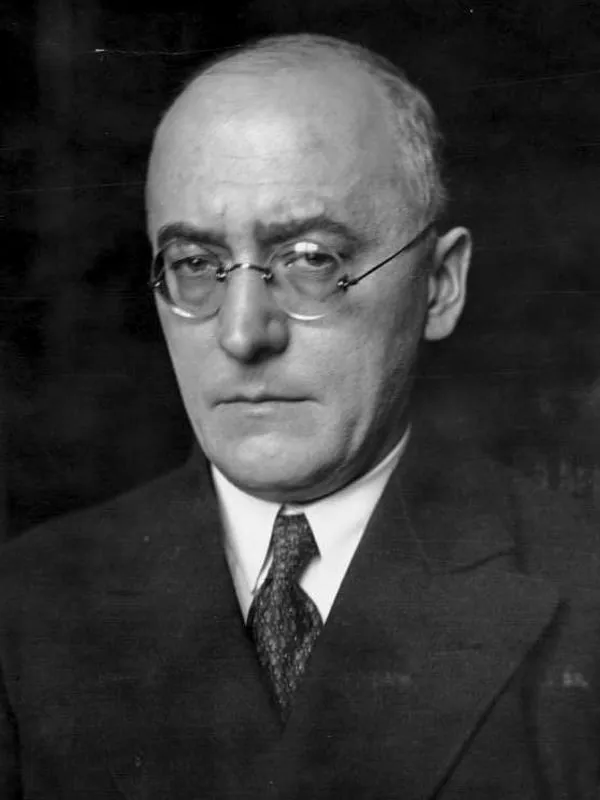
- Born:
- 26 November 1885, Münster (Westphalia, German Empire)
- Died:
- 30 March 1970, Norwich (Vermont, United States)
- Author:
- Natalia
- Photo:
- autor nieznany, CC BY-SA 3.0 DE, Wikimedia Commons

Heinrich Brüning was Chancellor of Germany in the worst years of the Great Depression, from March 1930 to May 1932. A Catholic economist, front-line officer and Christian trade unionist, he headed the first government that rested not on a majority in the Reichstag but on the confidence of President Paul von Hindenburg and his power to issue decrees. He pursued a harsh policy of austerity intended to rescue the state’s finances and bring reparations to an end, but it deepened unemployment and poverty. Under his government Adolf Hitler’s party grew from the fringe into the strongest force in Germany. Historians still argue over whether he was the last defender of the Weimar Republic or one of its gravediggers. Most often they answer that he was both.
Youth and war
Heinrich Aloysius Maria Elisabeth Brüning was born on 26 November 1885 in Münster in Westphalia, the youngest of six children of a vinegar manufacturer and wine merchant. His father died when the boy was a year old. He grew up in a devout Catholic household in which his elder brother Hermann Joseph played a large part. He was short-sighted, frail and shy. After his school-leaving examinations in 1904 he studied law in Munich, and then philosophy, history, German studies and political science in Strasbourg. In 1911 he passed the teachers’ examination but did not go into teaching. He took up economics, studying in Rostock and at the London School of Economics, and in 1915 he obtained a doctorate in Bonn with a thesis on the finances and possible nationalisation of the English railways.
That same year he volunteered for the infantry, although the medical board had doubts about his health. He fought on the Western Front, was wounded twice, became a reserve lieutenant and from 1917 commanded a company in a machine-gun sharpshooter unit. He was awarded both classes of the Iron Cross. After the armistice the soldiers elected him to a soldiers’ council, but he regarded the November Revolution itself as a disaster. The war shaped him for life: to the end he thought in terms of the duty, discipline and honour of a front-line officer, which later drew him closer to Hindenburg.
A Centre Party politician
Instead of an academic career he chose politics. In 1919 he worked for the Catholic social pastor Carl Sonnenschein, helping demobilised soldiers find education and work, and then became an adviser to the Prussian minister of social welfare, Adam Stegerwald, leader of the Christian trade unions. From 1920 to 1930 he was managing director of the unions’ headquarters, which Stegerwald ran. In 1924 he entered the Reichstag for the Catholic Centre Party and quickly became its chief financial expert. In 1925 he pushed through the so-called Lex Brüning, which capped the revenue from the wage tax. He was regarded as a competent, hard-working and reserved loner. He never married.
In December 1929 he became chairman of the Centre Party’s parliamentary group in the Reichstag. When the Young Plan was being passed, he set a condition: his party would support the plan only if the government balanced the budget at the same time through tax increases and cuts. This tough stance caught the attention of the president’s circle. General Kurt von Schleicher, who was looking for a chancellor independent of the parties, saw Brüning as the ideal candidate: a Catholic acceptable to the centre, a front-line veteran respected by the army, and an economist who would put the finances in order.
Chancellor by grace of the president
On 27 March 1930 the government of the Social Democrat Hermann Müller, the last to rest on a parliamentary majority, fell. On 30 March Hindenburg appointed Brüning Chancellor. There were no Social Democrats in his cabinet, and the Chancellor announced at once that he would govern without parliament if necessary. On 30 June 1930, three months after he took office, the last French soldiers left the Rhineland, but his government did not thank France for it, and one of his ministers, Gottfried Treviranus, soon publicly demanded a revision of the border with Poland. When in July the Reichstag revoked the budget decrees issued under Article 48 of the constitution, Brüning dissolved it. In the election of 14 September 1930 he had counted on strengthening the moderate right; instead the NSDAP won 107 seats and became the second-largest force in the country. Foreign capital began to flee Germany. On 5 October Brüning met Hitler, but no agreement was reached.
From then on he governed thanks to the toleration of the Social Democrats, who, fearing another election, voted down motions to revoke his decrees. The Reichstag met less and less often, and presidential decrees took the place of laws. Brüning issued dozens of them. He cut civil servants’ salaries, wages, pensions and benefits, raised taxes and contributions, and forced down prices. He hoped that deflation would restore Germany’s competitiveness while also proving to the world that the country could not pay reparations. Some historians believe the second aim mattered most to him; others that he simply believed in his policy and feared a repetition of the hyperinflation of 1923. Either way, the consequences were catastrophic. At the beginning of 1932 Germany had more than six million registered unemployed, and his opponents called Brüning the “Hunger Chancellor”.
The crisis of 1931
In foreign policy Brüning, who from October 1931 also ran the Foreign Ministry himself, wanted to free Germany from reparations and the restrictions of Versailles. In March 1931 his government announced a plan for a customs union with Austria. France regarded it as a disguised step towards the forbidden union of the two states, and French banks began withdrawing money from Austria and Germany. In May the Vienna bank Creditanstalt collapsed, and in June the government in Berlin issued a proclamation calling reparations “tribute”, which further accelerated the flight of capital. On 20 June the US President, Herbert Hoover, proposed a one-year moratorium on reparations and war-debt payments, but France was slow to accept it. On 13 July 1931, after the collapse of the Danat Bank, all the major banks in Germany were closed for several days. In September the Permanent Court of International Justice ruled the customs union incompatible with Austria’s obligations, and the project collapsed.
The right attacked Brüning ever more fiercely. In October 1931 Alfred Hugenberg’s Nationalists, the Nazis and the Stahlhelm formed the Harzburg Front against him. Yet Brüning did not see Hitler as a mortal threat. For a long time he hoped that the Nazis could be tamed if they took on a share of responsibility, and he did not rule out cooperating with them.
Fall
In the spring of 1932 the Chancellor led an exhausting campaign in which the 84-year-old Hindenburg defeated Hitler in the second round on 10 April. The president owed his victory to the votes of Catholics and Social Democrats rather than of his old comrades, many of whom had backed Hitler, and he held it against the Chancellor. On 13 April the Reichswehr and Interior Minister, Wilhelm Groener, banned the SA and the SS. Schleicher, who wanted an understanding with the Nazis, turned against Groener and Brüning. The final blow was a government plan to take over insolvent landed estates in eastern Germany, kept afloat by state aid, and divide them among settlers drawn from the ranks of the unemployed. The Junkers around Hindenburg, himself the owner of the Neudeck estate in the east of the Reich, called it “agrarian Bolshevism”. On 11 May Brüning told the Reichstag that he was “a hundred metres from the finishing line”. On 29 May Hindenburg informed him that he would sign no more of his decrees. The next day, 30 May 1932, Brüning resigned. Franz von Papen became Chancellor.
A few weeks later, at the Lausanne Conference, the creditors agreed in practice to abolish reparations. It was the goal Brüning had pursued, but his successors reaped the rewards.
Under Hitler and in exile
After 30 January 1933 Brüning was one of the leaders of the Centre Party. Before the vote on the Enabling Act he urged the parliamentary group to reject it, but he lost out to the party chairman, Monsignor Ludwig Kaas, who trusted Hitler’s verbal promises. On 23 March 1933, submitting to party discipline, he voted with the whole group for the law that gave Hitler dictatorial power. On 5 May he became chairman of the Centre Party, and on 5 July 1933, under pressure from the authorities and with one party after another being dissolved, he announced the party’s self-dissolution. Two weeks later the Holy See signed the Concordat with the Reich.
The Gestapo watched his every step. In the spring of 1934 friends warned him that his life was in danger. A few weeks before the Night of the Long Knives, in which Schleicher among others was killed, Brüning secretly left the country via the Netherlands. He lived in Britain and Switzerland, and in 1935 settled in the United States. From 1937 he lectured at Harvard University, where from 1939 to 1952 he was professor of government. He warned American and British politicians about Hitler’s war plans and, during the war, about the expansion of the Soviet Union, but his voice carried little weight. He talked with Germans from the opposition, among them men who later prepared the attempt on Hitler’s life.
In 1951 he returned to Germany and took up a chair of political science at the University of Cologne. But he never found his place in the Federal Republic; he criticised the policies of Chancellor Konrad Adenauer, with whom there had been mutual dislike since the 1920s, and in 1955 he went back to America. He died on 30 March 1970 in Norwich, Vermont, and was buried in his native Münster.
Memoirs and assessment
A few months after his death his Memoirs 1918–1934 were published. In them Brüning presented himself as a strategist with a carefully considered plan: first the abolition of reparations and equality of armaments for Germany, then the restoration of the monarchy, which was to deprive Hitler of the right’s support. The plan, he claimed, was wrecked by Schleicher’s intrigues. Most historians regard this version as a later self-justification not borne out by contemporary documents, and his former associates did not recall him ever speaking of restoring the monarchy.
Brüning remains one of the most contested figures of the Weimar Republic. He was an honest, hard-working man, an opponent of the Nazis and a Catholic committed to the rule of law. Yet it was his government that accustomed Germans to the idea that the country could be governed without parliament, by presidential decree, and his decision to dissolve the Reichstag in the summer of 1930 opened the way for Hitler’s mass support. His austerity policy in the depths of the Depression still serves economists as a warning. When he left office, Germany had the worst year of the Depression behind it, but within months power would pass to the man who led it into the Second World War.
Sources
Often appears with
People who appear in the same events.