Germany
Kurt von Schleicher
Head of the Ministerial Office of the Reichswehr Ministry (1929–1932), Reichswehr Minister (1932–1933), Chancellor of the Reich (1932–1933)
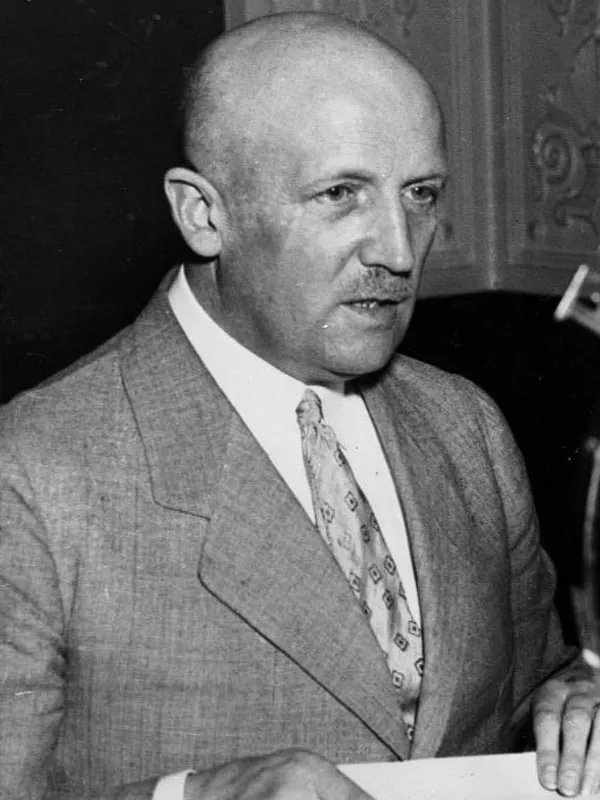
- Born:
- 7 April 1882, Brandenburg an der Havel (Kingdom of Prussia)
- Died:
- 30 June 1934, Neubabelsberg near Potsdam
- Author:
- Natalia
- Photo:
- autor nieznany, CC BY-SA 3.0 DE, Wikimedia Commons

Kurt von Schleicher was a general who hardly ever commanded soldiers but who for more than a decade commanded politics. From the revolution of 1918 to the fall of the Weimar Republic he was the most important link between the army and the civilian authorities, and in 1930–1932, as a trusted adviser to President Paul von Hindenburg, he decided who would become chancellor. It was he who devised the presidential governments that stripped the Reichstag of real power, he who brought down first the minister Wilhelm Groener and then the chancellor Heinrich Brüning, and in the end he became chancellor himself. He wanted to tame Adolf Hitler’s movement and harness it for the state. He failed, and his defeat in January 1933 opened Hitler’s way to power. A year and a half later the Nazis shot him and his wife in their own home.
Guardsman and staff officer
He was born on 7 April 1882 in Brandenburg an der Havel into the family of a Prussian officer. He was educated at the Main Cadet Institute in Berlin-Lichterfelde, and in March 1900 joined the elite 3rd Foot Guards Regiment as a second lieutenant. There he made friends with several men who were later to play an important part in his life: Oskar von Hindenburg, son of the future field marshal, and Kurt von Hammerstein-Equord, the future Chief of the Army Command. In 1909–1913 he attended the War Academy, and in the autumn of 1913 he was posted to the Great General Staff.
He spent almost the entire war on staffs. From August 1914 he served on the staff of the Quartermaster-General, where he caught the eye of Groener, head of military railways and later of the War Office, which ran the war economy. Groener became his patron and as late as 1934 still called him his “adopted son”. In 1916 Schleicher wrote a memorandum against war profiteers that circulated among politicians. In 1917 he spent several months as operations officer of the 237th Infantry Division, the only period of his service closer to the front. In July 1918 he was promoted to major.
Revolution and the Reichswehr
In November 1918, when Groener replaced Erich Ludendorff at the Supreme Army Command, Schleicher was one of his closest associates. He helped to prepare Groener’s agreement with Friedrich Ebert: the army recognised the new Social Democratic government, and the government undertook to defend the army’s authority and its officer corps against the revolution. In the winter of 1918–1919 Schleicher helped to organise the volunteer Freikorps (PL), which the minister Gustav Noske used to crush left-wing risings. From then on he believed that the army had to stand “above parties” yet constantly influence politics, since it alone could guarantee the stability of the state.
In the new Reichswehr, limited by the Treaty of Versailles to 100,000 men, he was political adviser to its chief, General Hans von Seeckt. He was involved in matters that the Reichswehr hid from the Allies and often from the Reichstag itself. From 1921 a special group in the ministry organised secret cooperation with the Red Army: Germany financed the Soviet arms industry and trained airmen and tank crews at centres on Russian soil, which the treaty forbade it to do. Schleicher also acted as intermediary with the illegal reserve formations known as the Black Reichswehr. In the crisis year of 1923 he prepared solutions for the government based on Article 48 of the constitution, which allowed the president to rule by decree in an emergency.
In 1926 he became head of the new Armed Forces Department in the ministry, and when Groener became Reichswehr Minister at the beginning of 1928, Schleicher became his right-hand man. On 1 February 1929, by now a Generalmajor, he took over the newly created Ministerial Office (Ministeramt), responsible for the army’s relations with the government, parliament and the press. From then on he was in practice the political spokesman of the Reichswehr and one of the best-informed men in Berlin. His friendship with Oskar von Hindenburg gave him easy access to the president.
Architect of presidential government
As early as the end of 1929 Schleicher concluded that parliamentary government, resting on fragile coalitions, was incapable of acting during the Great Depression. He planned a government that would depend not on a majority in the Reichstag but on the confidence of the president and his power to issue decrees. As his candidate he put forward the Centre Party politician Heinrich Brüning. When the cabinet of the Social Democrat Hermann Müller fell in March 1930, Hindenburg appointed Brüning on 30 March, in line with Schleicher’s plan. The election of September 1930, however, brought a huge success for the Nazis, who rose from the fringe to become the second-largest force in parliament.
Schleicher did not regard the National Socialists as a mortal threat. He saw them above all as a great movement of young, “nationally minded” Germans that should be drawn into shared responsibility and separated from its radicals. From 1931 he held talks with the head of the SA, Ernst Röhm, about bringing the stormtroopers into pre-military training. When in April 1932 Groener, under pressure from the governments of the federal states, banned the SA, Schleicher turned against his patron. He persuaded Hindenburg that the minister had lost the army’s confidence, and in May Groener had to go. A few weeks later, on 30 May 1932, the president dismissed Brüning as well.
Minister and chancellor
On Schleicher’s recommendation the new chancellor was Franz von Papen, a conservative aristocrat with no backing in parliament. Schleicher joined his government on 1 June 1932 as non-party Reichswehr Minister. He had agreed with Hitler beforehand that the government would dissolve the Reichstag and lift the ban on the SA, and that in return the Nazis would tolerate it. The ban was lifted in mid-June. On 20 July Papen’s government removed the Social Democratic government of Prussia and took over power in the largest state of the Reich, a move Schleicher supported. In the election of 31 July, however, the NSDAP became the largest party, and Hitler demanded all power for himself. On 13 August Hindenburg refused him the chancellorship, and Hitler went into fierce opposition.
In the autumn Papen lost the support of almost the entire Reichstag. When at the beginning of December he wanted to go on governing in defiance of parliament, even at the cost of street conflict with the Nazis and the Communists, Schleicher presented to the cabinet the results of a war game conducted by his ministry. They showed that in a civil war the army could not cope with the Nazis and the Communists at the same time, and would moreover be unable to defend the borders if neighbouring states took advantage of the situation. The ministers came out against Papen, and on 3 December 1932 Hindenburg, albeit reluctantly, appointed Schleicher himself chancellor; he also kept the Reichswehr ministry.
The new chancellor wanted to base his government on a so-called “cross-front” (Querfront): on the trade unions, both Social Democratic and Christian, and on the moderate wing of the NSDAP. His hope was Gregor Strasser, head of the Nazi party organisation, to whom, according to most accounts, he offered the posts of vice-chancellor and Minister-President of Prussia. Hitler prevented a split, and on 8 December Strasser resigned his party offices and withdrew from politics. Schleicher announced a programme of public works, reversed some of the cuts in wages and benefits introduced by Papen, and appointed a special commissioner for job creation. The Social Democrats distrusted the general, while the great landowners of the eastern provinces, with whom Hindenburg felt a close bond, turned against him when his government declined to continue generous aid for indebted estates and abuses in the so-called Eastern Aid (Osthilfe) programme began to come to light.
Downfall
Meanwhile the ousted Papen was seeking revenge. On 4 January 1933 he met Hitler in Cologne at the house of the banker Kurt von Schröder, and talks on a joint government began. Papen still had the president’s ear, and Oskar von Hindenburg and the head of the presidential office, Otto Meissner, were going over to his side. Schleicher, who had no majority in the Reichstag, asked the president to dissolve parliament and postpone the election, which was exactly what he had refused Papen a month earlier. Hindenburg declined. On 28 January 1933 Schleicher resigned, and on 30 January Hindenburg appointed Hitler chancellor, with Papen as vice-chancellor. According to accounts of his conversation with the president, Schleicher, whose chief concern was that the army should not fall into Papen’s hands, himself advised him on leaving to appoint Hitler.
His government lasted 57 days. It was the last attempt to create a government that would rest on the army and the president rather than on Hitler. Historians still argue over whether Schleicher’s plan ever had any chance, but most agree that his methods, his intrigues and his bringing down of successive governments from behind the scenes undermined what was left of confidence in the republic and prepared the ground on which the Nazis came to power.
Death
After leaving office Schleicher withdrew into private life at his villa in Neubabelsberg near Potsdam, where he lived with his wife Elisabeth, née von Hennigs, the divorced wife of his cousin, whom he had married in 1931. He kept up his contacts, however, and made no secret of his criticism of the new government, which reached the Nazis.
On 30 June 1934, during the Night of the Long Knives, when Hitler was settling accounts with the leaders of the SA, armed men in plain clothes, according to most sources from the SS, entered the villa. At about half past ten in the morning they shot Schleicher in his study. His wife was mortally wounded and died on the way to hospital. On the same day his former associate General Ferdinand von Bredow was murdered, and so was Gregor Strasser. The government announced that Schleicher had conspired against the state with Röhm and with a foreign power, namely the French ambassador André François-Poncet, and had resisted arrest. Historians regard these charges as fabricated. On 3 July the government passed a law declaring the killings of those days “lawful acts of self-defence by the state”.
The Reichswehr accepted the murder of two of its generals in silence. The army was pleased that Hitler had broken the SA, which had wanted to replace it, and a month later, after Hindenburg’s death, the soldiers swore an oath of allegiance to Hitler personally. Only under pressure from some officers, among them the old field marshal August von Mackensen, did Hitler admit to a gathering of generals at the beginning of 1935 that Schleicher and Bredow had been shot “by mistake”, and their names were restored to their regiments’ rolls of honour.
Significance
Schleicher is one of the key figures of the last years of the Weimar Republic and one of the most typical representatives of the generation of officers who never accepted parliamentary democracy. He was neither a Nazi nor a supporter of Hitler’s dictatorship. He wanted a strong authoritarian state in which real power lay with the president and the army, and in which the mass movement of the National Socialists served as a source of recruits and support. This calculation, shared by Papen and Hindenburg’s circle, proved catastrophically wrong: it was Hitler who used the conservatives, not the other way round.
On the road to the Second World War Schleicher’s significance lies above all in the fact that, as the architect of presidential government, he helped to shut the Reichstag out of government even before 1933. When Hitler became chancellor, the instruments of rule by decree and the elites’ habit of governing over the head of parliament were already in place. The Reichswehr’s secret cooperation with the Red Army, in which Schleicher took part, had produced cadres and experience on which Hitler drew when he openly threw off the Versailles restrictions. Schleicher’s death in the Night of the Long Knives, for its part, was the first clear signal that the new regime would not shrink from murdering even generals and former chancellors, and that the army, by keeping silent, had bound its fate to Hitler.
Sources
Often appears with
People who appear in the same events.