Germany
Hermann Müller
Chairman of the SPD (1919–1928), Foreign Minister (1919–1920), Reich Chancellor (1920, 1928–1930)
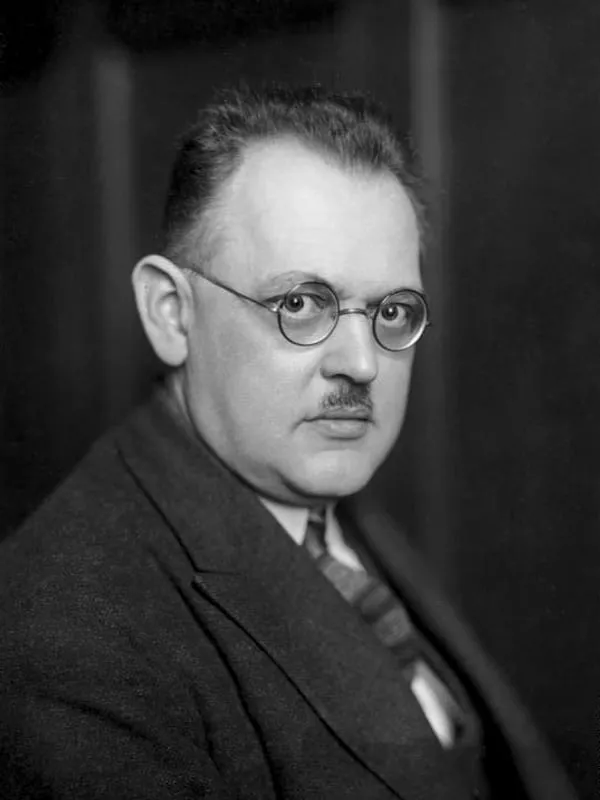
- Born:
- 18 May 1876, Mannheim (Baden)
- Died:
- 20 March 1931, Berlin
- Author:
- Łukasz
- Photo:
- autor nieznany, CC BY-SA 3.0 DE, Wikimedia Commons

Hermann Müller was one of the Social Democrats who shouldered the heaviest burdens of the Weimar Republic. On 28 June 1919, as Foreign Minister, he put the first signature to the Treaty of Versailles in the Hall of Mirrors, and the nationalists never forgave him for it. He was twice Reich Chancellor. His second government, a grand coalition stretching from the Social Democrats to the industrialists’ party, fell in March 1930, in the first months of the Great Depression. It was the republic’s last government to rest on a majority in the Reichstag. It was followed by presidential cabinets, which opened the way for Adolf Hitler.
A merchant from Mannheim
He was born on 18 May 1876 in Mannheim, the son of a sparkling-wine maker. In 1888 the family moved to the outskirts of Dresden, where his father ran a champagne works. When his father died in 1892, Hermann had to leave grammar school without his school-leaving certificate and served a commercial apprenticeship in Frankfurt am Main. He then worked as a shop clerk in Frankfurt and in Breslau.
In 1893 he joined the Social Democratic Party of Germany, and a year later the trade unions. From 1899 he edited a Social Democratic newspaper in Görlitz, and in 1903–1906 he was a town councillor and the party’s chairman in the town. He caught the eye of the Social Democratic leader August Bebel. In 1906 Müller joined the party executive in Berlin, where he was responsible for the press. With his languages and a diplomat’s deftness, he kept up contacts with socialist parties abroad and earned the nickname of the party’s unofficial foreign minister. In internal party disputes he stood in the centre, between the revolutionary left and the revisionists.
War and revolution
In the last days of July 1914 the SPD executive sent him to Paris to agree a common position on the war with the French socialists. He arrived on 1 August, the day after the French socialist leader Jean Jaurès had been assassinated. No agreement was reached. In the days that followed the Social Democrats in both countries voted for war credits. Müller, like most of the party leadership, supported the “truce” (Burgfrieden), and from 1916 he exercised pre-publication censorship at the party newspaper Vorwärts. In 1916 he won a seat in the Reichstag at a by-election. In 1917 he attended, together with Friedrich Ebert and Philipp Scheidemann, the socialist conference in Stockholm, which was meant to bring peace closer but achieved nothing.
During the November Revolution Müller was one of the Social Democrats on the Berlin Executive Council of the workers’ and soldiers’ councils, and later on the Central Council that replaced it in December 1918. He favoured early elections to a National Assembly rather than rule by the councils. In June 1919, when Ebert had become President and Scheidemann head of government, Müller and Otto Wels became chairmen of the SPD.
The signature at Versailles
On 20 June 1919 Scheidemann’s government resigned rather than sign a peace on the Allies’ terms. On 21 June the new Chancellor, Gustav Bauer, gave Müller the Foreign Ministry. Müller considered the treaty barely tolerable, but was convinced that refusal would mean renewed war, occupation and the break-up of the Reich. After the Allied ultimatum and the consent of the National Assembly it was he who went to Versailles with the Colonial Minister, Johannes Bell, because no one from the previous delegation of Count Ulrich von Brockdorff-Rantzau was willing to sign.
On 28 June 1919, shortly after three in the afternoon, Müller and Bell entered the Hall of Mirrors, where the German Empire had been proclaimed in 1871, and signed the treaty before the assembled delegations of the victors. They were the first German politicians to feel what that signature meant. The right called Müller a traitor, and nationalist and Nazi propaganda placed him alongside Erzberger among the “November criminals”.
As minister Müller tried to rebuild trust in Germany. He drew on his contacts with French and British socialists from his days in the International, and he reformed the ministry, merging the diplomatic and consular services and opening them to people from outside the old aristocracy. He argued for fulfilling the treaty as far as possible so as gradually to persuade the victors to soften it.
First government and the years of opposition
When the Kapp–Lüttwitz Putsch of March 1920 forced the Bauer government to resign, Müller became Chancellor on 27 March. His government crushed the left-wing uprising in the Ruhr that had broken out during the general strike against the putschists, and prepared for a conference with the Allies on reparations. The elections of June 1920, however, brought defeat for the parties of the Weimar coalition, and Müller stepped down. From then on, as a deputy for a constituency in Franconia, he was known as Müller-Franken.
For eight years he led the Social Democratic group in the Reichstag. The party was usually in opposition, but Müller made sure it did not become an opposition to the republic itself. He supported the foreign policy of Gustav Stresemann, Foreign Minister from the right-liberal German People’s Party: the settlement with the West at Locarno and Germany’s entry into the League of Nations. He argued to the party’s left that taking part in coalitions with bourgeois parties was a matter of tactics, not of principle.
The grand coalition
In the elections of May 1928 the Social Democrats scored a clear success, and on 28 June Müller became Chancellor again. His cabinet, which in time became a formal grand coalition from the SPD to the German People’s Party, was fragile from the start. As early as August 1928 the Social Democratic ministers agreed to the construction of the armoured cruiser Panzerkreuzer A, even though the party had fought the election under the slogan “food for children instead of armoured cruisers”. The SPD group then forced the Chancellor himself to vote in the Reichstag against his own government’s decision, which badly damaged his authority.
In foreign policy he achieved important successes. In September 1928, standing in for the ailing Stresemann, he spoke in Geneva and secured the powers’ agreement to talks on reparations and on an early evacuation of the Rhineland. In 1929 the Young Plan was agreed, which reduced the payments and ended foreign control over Germany’s finances, and at the conference in The Hague the victors undertook to withdraw their last troops from the Rhineland by 30 June 1930, five years before the date set at Versailles. The far right organised a great campaign and a referendum against the Young Plan. It lost the vote, but Hitler, who had joined the campaign alongside the nationalist Alfred Hugenberg, gained nationwide publicity for the first time, as well as access to Hugenberg’s press and money.
By then Müller was seriously ill. In the spring of 1929 he suffered from inflammation of the gall bladder and complications after surgery, but did not resign. In the autumn of 1929 Stresemann died, and the crash on the New York Stock Exchange set off the Great Depression. Rising unemployment ruined the unemployment insurance fund. The German People’s Party, tied to industry, demanded cuts in benefits, while the trade unions and the SPD group demanded higher contributions. On 27 March 1930, when the Social Democratic group rejected a compromise, Müller resigned. He had hoped that President Paul von Hindenburg would give him the power to govern by decree, but the President’s circle, including General Kurt von Schleicher, already had a successor ready. On 30 March Heinrich Brüning became Chancellor and governed without a parliamentary majority.
Death
In September 1930 the Nazis won more than six million votes and became the second-largest party in the Reichstag. Müller urged his party to tolerate the Brüning government as the lesser evil, since the alternative was a right-wing government including Hitler. He did not live to see what followed. He died in Berlin on 20 March 1931 of complications after an operation. Hindenburg refused him a state funeral, but tens of thousands of people followed the coffin and hundreds of thousands lined the route of the cortège. It was one of the last great demonstrations by supporters of the republic. The French socialist Léon Blum came to the funeral. Müller was buried in the Friedrichsfelde cemetery in Berlin.
Legacy
Müller was neither a stirring orator nor a visionary, but a loyal and conscientious politician who was respected beyond his own party. His life links two moments of particular importance for the road to the Second World War. The signature at Versailles made him a symbol of “shame” in the eyes of the right, although he signed out of a sense of duty, when the army had judged resistance impossible. The fall of his government in 1930 ended the period of parliamentary government in Germany. From then on it was the President and his advisers, not the Reichstag, who decided who governed, and it was within this system that Hitler became Chancellor in January 1933. Many historians regard the dispute over the level of unemployment insurance contributions, on which the grand coalition broke up, as one of the most fateful mistakes of German democracy.
Sources
Often appears with
People who appear in the same events.