Japan
Kinmochi Saionji
Prime Minister of Japan (1906–1908, 1911–1912), president of the Rikken Seiyūkai (1903–1914), head of the delegation to the Paris Peace Conference (1919), genrō (1912–1940)
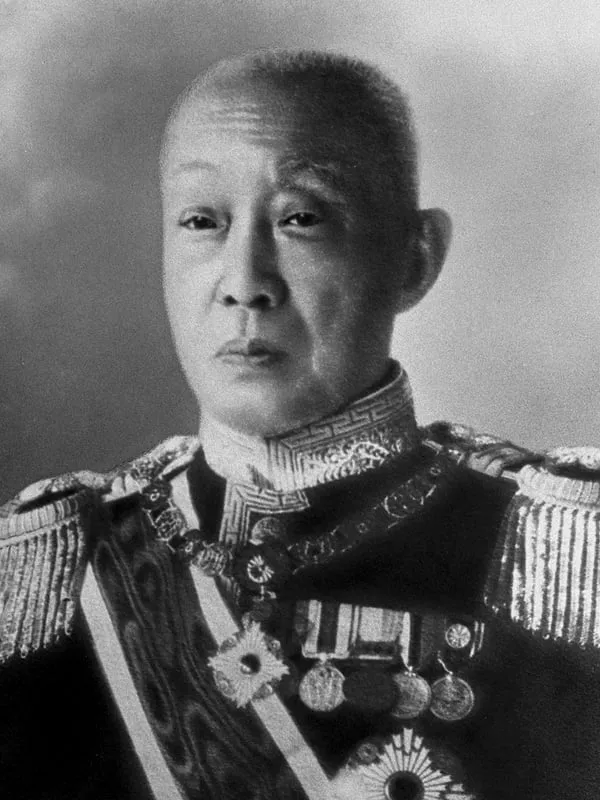
- Born:
- 7 December 1849, Kyoto (Japan)
- Died:
- 24 November 1940, Okitsu (Shizuoka Prefecture, Japan)
- Author:
- Łukasz
- Photo:
- autor nieznany, domena publiczna, Wikimedia Commons

Prince Kinmochi Saionji was a scion of the old court aristocracy of Kyoto, a childhood friend of Emperor Meiji (Mutsuhito) and the most liberal Japanese statesman of his era. He spent ten years studying in France, where he came to know, among others, Georges Clemenceau, and to the end of his life he remained an advocate of constitutional monarchy, party government and cooperation with the West. He was twice prime minister, in 1919 he headed the Japanese delegation to the Paris Peace Conference, and as the last of the genrō, the informal advisers to the throne, he spent well over a decade recommending candidates for prime minister to the Emperor. In the 1920s it was thanks to him that parliamentary parties governed Japan. In the 1930s he tried to restrain the army, which had seized Manchuria and was taking over power in the state, but he did not dare to throw the Emperor’s authority against it. He died in November 1940, two months after Japan concluded the alliance with Germany and Italy that he had warned against.
Aristocrat and rebel
He was born on 7 December 1849 in Kyoto, the second son of Tokudaiji Kin’ito, a high-ranking court noble (kuge). In 1851 he was adopted by the Saionji family, a branch of the same ancient Fujiwara clan. He grew up at the imperial court, where he was a playmate of the young prince who would become Emperor Meiji. Even as a youth he was regarded as a rebel: he practised swordsmanship, which the Kyoto aristocracy considered vulgar, and read forbidden books. In 1867 he urged the court to fight the shogunate, and during the Boshin War the nineteen-year-old Saionji commanded troops in the Emperor’s name that accepted the surrender of the shogunate’s supporters in several provinces. In 1869 he founded a private school in Kyoto, the Ritsumeikan, which the authorities soon closed. His secretary later founded a school of the same name, from which today’s Ritsumeikan University grew.
Ten years in France
In 1871 he arrived in Paris, at a time when the city was recovering from the Paris Commune, and spent nearly ten years in France. He studied law at the Sorbonne under the radical jurist Émile Acollas, through whom he met, among others, Clemenceau. France made him a liberal: a convinced believer in the rule of law, constitutions and parliaments. He returned to Japan in October 1880. In March 1881, together with the journalist Chōmin Nakae, he founded the daily Tōyō Jiyū Shinbun (“The Oriental Free Press”), which supported the Freedom and People’s Rights Movement, but after a few weeks he had to withdraw from it under pressure from the court, which disapproved of an aristocrat editing a radical paper.
From then on he worked within the government camp, under the patronage of Hirobumi Itō. In 1882 he accompanied Itō on an eighteen-month tour of Europe, during which Itō studied the constitutions of European states before drafting Japan’s. He then served as minister in Austria-Hungary and, from 1887 to 1891, in Germany. In 1894 he entered Itō’s second government as education minister. He tried to reduce the teaching of the Confucian classics in schools and to expand the teaching of English. When the foreign minister, Munemitsu Mutsu, was ill, Saionji ran the ministry, and in 1896 he formally took over the portfolio. From 1900 to 1903 he was president of the Privy Council.
Prime minister of the Kei-En era
In 1900 Itō founded the Rikken Seiyūkai party, and in 1903 he handed its leadership to Saionji. For the next ten years Saionji and General Tarō Katsura, a protégé of Field Marshal Aritomo Yamagata, took turns as prime minister. The period came to be called the Kei-En era, after the first characters of their names. Katsura represented the army and the bureaucracy, Saionji the party that held the majority in parliament, and the two sides came to terms behind the scenes. After the end of the war with Russia and the riots in Tokyo provoked by the Treaty of Portsmouth, Katsura stepped down, and on 7 January 1906 Saionji became prime minister for the first time.
His first government tried to curb the army’s influence in Manchuria and to replace military administration there with civilian rule. In 1907 it concluded the “Gentlemen’s Agreement” with the United States, under which Japan undertook to limit emigration to America. In July 1907 the same government, after Emperor Gojong had sent secret envoys to the conference at The Hague, forced him to abdicate and imposed on Korea a new agreement placing its government under Japanese supervision. It was the final stretch on the road to the annexation of Korea in 1910. In July 1908, when Yamagata and the other genrō rejected his budget, Saionji resigned, recommending Katsura as his successor.
He headed the government for the second time from 30 August 1911. This time there was open conflict with the military. The army, backed by Yamagata, demanded money for two new divisions in Korea. The government refused, the army minister resigned, and the army declined to name a successor. Since under the regulations of the time only a general could be army minister, the government had to fall. Saionji resigned in December 1912. It was the first clear demonstration of how the army could bring down a government by withholding a minister. It resorted to the same method later, after the requirement that the army minister be a general on active service was restored in 1936: in 1937 it prevented General Kazushige Ugaki from forming a government, and in 1940 it brought down the cabinet of Admiral Mitsumasa Yonai. The fall of Saionji’s cabinet triggered a political crisis in which a wave of protests toppled Katsura’s third government.
Genrō and Paris
In December 1912 an imperial rescript admitted Saionji to the circle of the genrō, the elder statesmen who advised the Emperor on the choice of prime minister. He was the only court aristocrat in that circle and the last to be appointed to it. In 1914 he gave up the presidency of the Seiyūkai and withdrew from day-to-day politics, although he continued to influence decisions from behind the scenes.
On 18 December 1918 Saionji was appointed Japan’s chief plenipotentiary to the Paris Peace Conference. The choice was decided by his prestige and his connections in the West, above all his friendship with Clemenceau. At the opening session of the conference on 18 January 1919 he was elected in absentia as one of four vice-presidents, since he had only sailed from Japan on 14 January; he reached Paris on 2 March. The delegation was in fact led by his deputy, Baron Nobuaki Makino. Saionji, by then nearly seventy and in poor health, did not take part in the deliberations of the Council of Four, and his role was chiefly representative and mediatory. He did, however, coordinate the delegation’s position and defend its decisions against criticism from Tokyo.
In Paris Japan pursued two aims: to take over the former German rights in the Chinese province of Shandong and the German islands in the Pacific north of the equator, and to have the principle of racial equality written into the Covenant of the League of Nations. The second was blocked by the opposition of Australia, whose prime minister, Billy Hughes, feared it would open the door to Japanese immigration, and by President Woodrow Wilson, who ruled that the amendment required unanimity. Over Shandong the Japanese threatened to leave the conference and Wilson gave way, and the Treaty of Versailles granted Japan the German rights in the province. Japan received the Pacific islands as a League of Nations mandate. Saionji, contrary to instructions from Tokyo that made Japan’s membership of the League conditional on its demands being met, was ready to yield as long as Japan took its place in the new international order. The delegation also included his young protégé, Prince Fumimaro Konoe, who even before the conference had published an essay against a “peace tailored to the measure of the English and the Americans”. Saionji advised him to keep such views to himself. He returned to Tokyo on 24 August 1919, and in September 1920 he was raised to the rank of prince (kōshaku).
The last genrō
In the 1920s Saionji’s influence reached its peak. After the deaths of Yamagata in 1922 and Masayoshi Matsukata in 1924 he became the only surviving genrō, and his men, among them Makino as Lord Keeper of the Privy Seal, occupied the most important court offices. He supported the Crown Prince Hirohito’s journey to Europe in 1921. From 1924 he consistently recommended for prime minister the leader of the party with a majority in parliament, calling this “the normal course of constitutional government”. The foreign policy of the period, based on cooperation with Britain and the United States and on non-interference in Chinese affairs, matched his views.
The first great blow came in 1928, when officers of the Kwantung Army murdered the Manchurian leader Zhang Zuolin. Saionji demanded that the culprits be punished, and when Prime Minister Giichi Tanaka failed to do so, he brought about his fall in 1929, making use of the Emperor’s displeasure. In 1930 he backed the government that, against the wishes of the Naval General Staff, ratified the London Naval Treaty limiting naval armaments. After the Mukden Incident in September 1931, however, when the Kwantung Army seized Manchuria on its own initiative, Saionji would not agree to the Emperor personally taking a stand against the army. He believed that such an intervention would achieve nothing, would discredit the throne and might endanger the monarchy itself. After the assassination of Prime Minister Tsuyoshi Inukai in May 1932 he gave up recommending party leaders and named Admiral Makoto Saitō to head a government of “national unity”. This marked the end of party government in pre-war Japan.
During the coup attempt of 26 February 1936 young officers murdered several of his closest associates, including the former prime minister Saitō and the finance minister Korekiyo Takahashi. Saionji was on the list of targets but was not attacked. On hearing of the coup he took refuge in the Shizuoka prefectural government building. From then on his influence waned. In 1937 he supported Konoe’s candidacy for prime minister, but he soon broke with his former protégé, who drew Japan into the war with China. He criticised the Anti-Comintern Pact with Germany and warned that an alliance with Germany and Italy would alienate Britain and the United States. His advice was increasingly ignored. In September 1940 the Konoe government concluded the Tripartite Pact. Saionji died on 24 November 1940 at his villa, the Zagyosō, in Okitsu, at the age of 90. He was given a solemn state funeral.
Significance
Saionji embodied the hope that Japan would become a constitutional monarchy on the British model and a member of equal standing in the community of Western states. In Paris in 1919 Japan reached the high point of that road: it sat among the five Great Powers and entered the Council of the League of Nations. Yet it was there, too, that the rejection of the racial equality principle gave Japanese nationalists the argument that the West would never accept the Japanese as equals, and the young men of his circle, such as Konoe, drew conclusions from Paris quite different from his own.
Historians disagree about his conduct in the 1930s. Some reproach him for failing to use the Emperor’s authority while the army could still have been stopped, and for having himself ended the era of party government in 1932. Others, such as the British historian Lesley Connors, believe he judged correctly that an open stand by the throne against the military would have ended in defeat and destroyed the monarchy. What is certain is that his death in 1940 coincided with the end of the world he had tried to build: a year later Japan attacked the United States and Britain. The diaries of his secretary, Kumao Harada, who for years recorded the Prince’s conversations with politicians and the court, were used after the war as evidence before the International Military Tribunal for the Far East and are among the most important sources for the history of Japan’s road to war.
Sources
Mentioned in battles
(01)Often appears with
People who appear in the same events.