Austria
Karl Renner
State Chancellor of German-Austria and the Republic of Austria (1918–1920), President of the National Council (1931–1933), chancellor of the provisional government (1945), President of Austria (1945–1950)
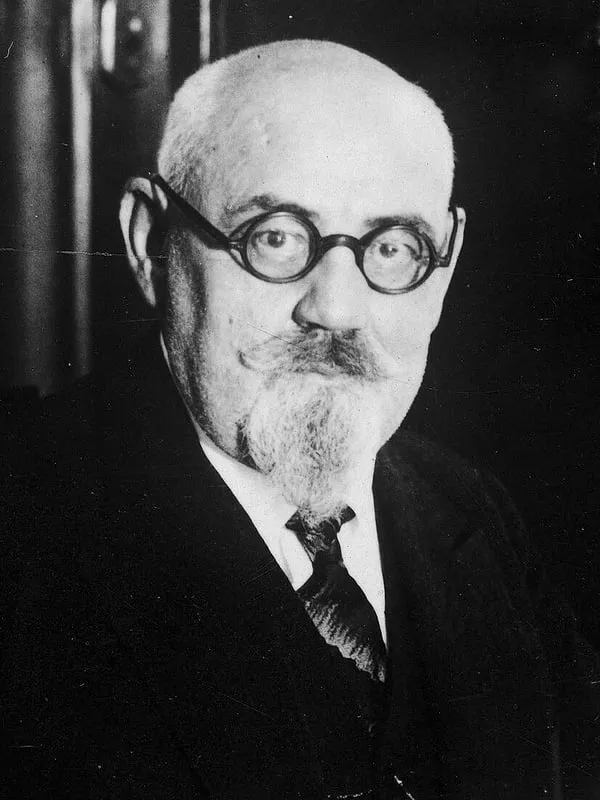
- Born:
- 14 December 1870, Unter-Tannowitz (Dolní Dunajovice), Moravia (Austria-Hungary)
- Died:
- 31 December 1950, Vienna
- Author:
- Natalia
- Photo:
- autor nieznany, domena publiczna, Wikimedia Commons

Karl Renner founded the Austrian state twice. In 1918 he became head of the government of the republic that emerged from the ruins of the Habsburg monarchy and wanted to be part of Germany, and in 1919 he signed the Treaty of Saint-Germain, which forbade it. In 1945, as the Red Army was taking Vienna, he formed a provisional government that proclaimed the rebirth of an independent Austria, and then became its first post-war president. Between those dates he was one of the leaders of Austrian Social Democracy and a theorist of law and of the national question – but also a politician who in April 1938 publicly supported the incorporation of Austria into Adolf Hitler’s Reich. His life sums up the whole history of the Austrian question of whether Austrians were a nation in their own right or part of the German nation – a question Hitler settled by force in 1938.
A son of Moravian winegrowers
He was born on 14 December 1870 in Unter-Tannowitz, a German village in southern Moravia, today Dolní Dunajovice in the Czech Republic. He and his twin brother Anton were the seventeenth or eighteenth children of a poor family of winegrowers. His parents’ holding was sold at auction and the siblings scattered across the world. Thanks to a scholarship and to meals at the tables of well-to-do families, Karl graduated with distinction from the grammar school in nearby Mikulov, to which he walked two hours each way, and went to Vienna to study law. In 1895 he co-founded the workers’ hiking association Naturfreunde (Friends of Nature), which still exists, and obtained a post in the library of the Imperial Council, the parliament of the Austrian half of the monarchy.
As a civil servant he could not engage openly in politics, so he wrote under pseudonyms. As Synopticus he published State and Nation in 1899; as Rudolf Springer, works on the struggle of Austria’s nations for the state; and as Josef Karner, a study of the social function of the institutions of private law, on the strength of which he is regarded as one of the founders of the sociology of law. He belonged to the Social Democratic Workers’ Party, in which he was one of the creators of the current known as Austromarxism.
Nations in one state
The central theme of his work was the national question, which was tearing the monarchy apart. Renner wanted to save it as a democratic multinational state. He proposed treating nationality like religious denomination: each citizen would declare his own nationality, and the nations would form public-law corporations that would run schools and culture regardless of where their members lived. The state would retain a common economy, army and foreign policy. This concept of personal autonomy, developed together with his younger party colleague Otto Bauer, was taken up by the Jewish Bund in Russia. The Bolsheviks fought it fiercely: Joseph Stalin devoted a large part of his 1913 work on Marxism and the national question to attacking it.
In 1907, in the first elections to the Imperial Council held under universal male suffrage, Renner became a deputy. He also built up the co-operative movement, which he saw as one of the pillars of socialism alongside the trade unions and education. From 1911 he headed the association of Austrian consumer co-operatives, and in 1912 he founded a credit institution for the co-operatives, which later became the Workers’ Bank (Arbeiterbank). He belonged to the moderate right wing of the party. The left accused him of caring more for the state than for revolution.
The war
During the First World War Renner, like many German-Austrian Social Democrats, supported the vision of Mitteleuropa, an economic union of the Central Powers under German leadership. For a time he hoped that the emperor would entrust him with the government and allow him to rebuild the monarchy along the lines of his plans. His sharpest critic was Friedrich Adler, son of the party’s founder, who in 1916 shot dead the prime minister, Count Stürgkh, and at his trial in 1917 accused Renner of opportunism. In June 1917 Renner, together with Karl Seitz, demanded in parliament a peace without annexations or indemnities, but for a long time he believed that the monarchy could be saved.
Chancellor of German-Austria
In the autumn of 1918 the monarchy fell apart faster than anyone had expected. On 21 October the German deputies of the Imperial Council formed the Provisional National Assembly of German-Austria. Renner drafted its provisional constitution, and on 30 October the assembly appointed him State Chancellor, head of a coalition government of Social Democrats, Christian Socials and German Nationalists. After Emperor Charles I renounced any part in affairs of state, a republic was proclaimed on 12 November 1918 which, according to the law, was “a constituent part of the German Republic”. Renner, who until recently had defended the multinational monarchy, now concluded that a small German-speaking Alpine country could not survive on its own and should unite with Germany. In March 1919 the newly elected Constituent Assembly confirmed this decision, while foreign affairs and the talks with Berlin were handled by Otto Bauer.
Renner’s government worked amid hunger, unemployment and the threat of revolution, especially after a Soviet republic was proclaimed in neighbouring Hungary in March 1919. The Social Democrats beat off attempts at a communist coup in Vienna and carried through social reforms: the eight-hour day, unemployment insurance, paid holidays and works councils. In April 1919 parliament passed a law banishing the Habsburgs and confiscating their property. In 1920 Renner wrote the words of the unofficial anthem “Deutschösterreich, du herrliches Land”.
Saint-Germain
In May 1919 Renner led the peace delegation that travelled to Saint-Germain-en-Laye near Paris. It was not admitted to the deliberations, and the powers accepted only written notes. Renner argued that the republic was a new state, not the successor of the monarchy, and should not be held responsible for the war. He demanded plebiscites in the disputed territories. He achieved little. When Bauer resigned in July, Renner also took over foreign affairs.
On 10 September 1919, after an ultimatum from the victors and with the consent of parliament, which at the same time solemnly protested against the treaty, Renner signed the peace at Saint-Germain. Austria lost the German borderlands of Bohemia and Moravia – including Renner’s home village – to Czechoslovakia, and South Tyrol to Italy. It had to adopt the name Republic of Austria, and Article 88 made its independence inalienable except with the consent of the Council of the League of Nations, which in practice forbade union with Germany. Renner later defended the treaty as the only possible way out, but he never accepted it as just.
The coalition with the Christian Socials broke up in June 1920. On 7 July Renner gave up the chancellorship, though he continued to run foreign affairs until October 1920. After losing the elections in the autumn of 1920 the Social Democrats went into opposition, where they remained until the fall of democracy. Renner opposed this and believed the party should share in government, but Bauer prevailed within the party.
In opposition
In the 1920s Renner was a deputy in the National Council, a journalist and a co-operative activist, but within the party he remained in the shadow of Bauer, the leader of its Marxist wing. They differed on fundamentals: Renner defended parliamentary democracy and compromise with opponents without reservation, whereas Bauer spoke of the dictatorship of the proletariat as an option should the bourgeoisie break democracy. Austria, meanwhile, was splitting into hostile camps with their own paramilitary forces: the Social Democratic Republican Defence League (Republikanischer Schutzbund) and the right-wing Heimwehr. In 1931 Renner became President of the National Council.
In that office he played an unfortunate part in the collapse of Austrian democracy. On 4 March 1933, during a dispute over the validity of a vote, he resigned so that he could vote as an ordinary deputy. Both vice-presidents resigned after him, and there was no one left to close the sitting and convene the next one. Chancellor Engelbert Dollfuss declared that parliament had “eliminated itself” and did not allow it to reconvene, and on 15 March the police barred deputies from the chamber. Rule by decree began, leading to dictatorship. In February 1934, after a short civil war, the Social Democratic Party was banned. Renner, who had taken no part in the fighting, was arrested on a charge of high treason and held in custody until June.
The Anschluss
On 12 March 1938 German troops marched into Austria, and the next day the Anschluss was proclaimed. Hitler called a plebiscite for 10 April. On 3 April the Neues Wiener Tagblatt published an interview with Renner, approved by the Nazi authorities, under the title “I vote yes”. Renner stipulated that he did not endorse the methods by which union had been achieved, but declared that as a Social Democrat and former head of the delegation at Saint-Germain he would welcome it joyfully. He even offered to lead a campaign among the workers for the new authorities. The Nazis declined. Various explanations for this step were later put forward, among them a wish to help imprisoned party comrades, but Renner himself maintained, both in 1938 and after the war, that he had acted out of conviction. For him the Anschluss was the fulfilment of what Austrians had wanted in 1918.
In 1938 Renner also wrote a pamphlet defending the annexation by Germany of the Sudetenland, his home region, and praising the “unparalleled perseverance and energy” of the German leadership. It was never published at the time, because the Munich Agreement overtook its printing; it appeared only in 1990. The historian Oliver Rathkolb judged that had it been known in 1945, Renner could not have become head of state. Renner spent the war at his villa in Gloggnitz in Lower Austria, under light surveillance and far from politics.
1945
At the beginning of April 1945 the Red Army reached Gloggnitz. Renner reported to the Soviet command of his own accord and offered his help in rebuilding the state. Moscow decided that a 74-year-old former chancellor known in the West would be a better figurehead than the communists. Renner wrote Stalin a letter full of flattery, and Stalin agreed to let him form a government. On 27 April 1945, while fighting was still going on around Vienna, a provisional government of Socialists, Christian Democrats (People’s Party) and Communists, with Renner as chancellor, issued a declaration of independence. It declared the Anschluss null and void and Austria to be Hitler’s first victim, invoking the Allies’ Moscow Declaration of 1943. The communists received the key ministries of the interior and education.
The British and Americans, informed of the government only at the last moment, long regarded it as a Moscow puppet. Renner nevertheless managed to convince them that he wanted an undivided and democratic Austria. In the autumn of 1945 the western federal states recognised his government, and the Western powers agreed to nationwide elections. In those elections, on 25 November 1945, the communists won just over 5 per cent of the vote, dashing Soviet hopes. On 20 December 1945 the Federal Assembly elected Renner president. He held the office until his death.
The post-war period also has a dark side. Renner’s government and Renner himself based the revived state on the thesis that Austria had been a victim of Nazism, not its accomplice. Renner was reluctant to see expelled Jews return or their property restored, and historians point to antisemitic stereotypes in his statements from the 1920s and from 1945. Whether he was an antisemite is still debated.
Death and legacy
On Christmas Eve 1950 Renner suffered a stroke, and he died in Vienna on 31 December 1950. He was buried in the presidential crypt in the Central Cemetery. He did not live to see the Austrian State Treaty of 1955, which restored Austria’s full sovereignty and once again forbade union with Germany.
In Austria he was called the father of both republics. The Social Democrats, and Chancellor Bruno Kreisky in particular, regarded him as a model statesman. Critics point to his changeability: defender of the monarchy during the war, advocate of union with a democratic Germany in 1918, signatory of the ban on it in 1919, supporter of the Anschluss in 1938 and founder of an independent Austria in 1945. Yet this changeability mirrors the vacillation of most Austrians of his generation. Only the experience of seven years in Hitler’s Reich and the Second World War convinced them that they wanted a state of their own.
Sources
Mentioned in battles
(01)Often appears with
People who appear in the same events.