Germany
Otto Kretschmer
Commander of the submarines U-23 (1937–1940) and U-99 (1940–1941), Korvettenkapitän in the Kriegsmarine, after the war an admiral in the Bundesmarine (until 1970)
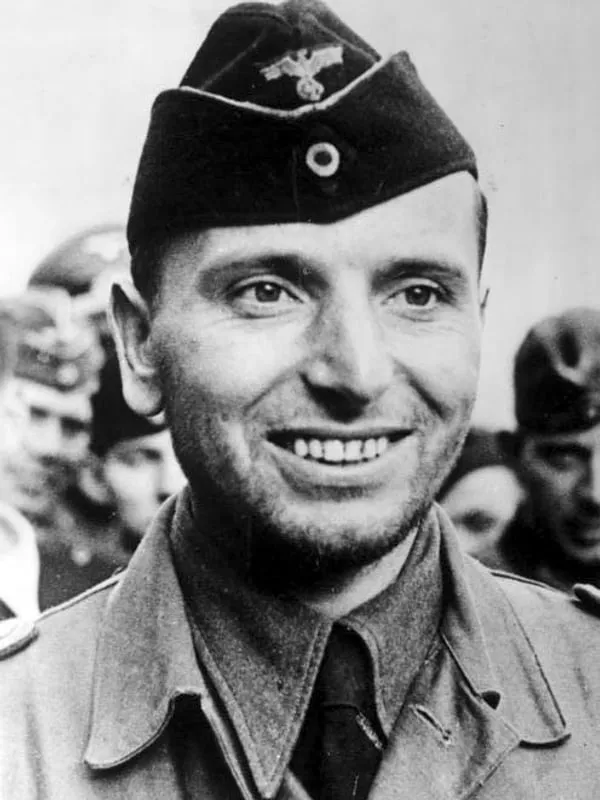
- Born:
- 1 May 1912, Heidau, now Hajduki Nyskie (German Empire)
- Died:
- 5 August 1998, Straubing (Germany)
- Author:
- Natalia
- Photo:
- Tölle (Tröller), CC BY-SA 3.0 DE, Wikimedia Commons

Otto Kretschmer was a German naval officer, commander of the submarines U-23 and U-99, who in a year and a half of war sank more ships than any other U-boat commander of the Second World War. He attacked at night, on the surface, from inside the convoys, following the principle of “one torpedo, one ship”, and his results from 1940–1941 remained unbeaten to the end of the war, even though he himself was taken prisoner by the British in March 1941. Unlike Günther Prien he shunned publicity and propaganda, which earned him the nickname “Silent Otto”. After the war he returned to service in the navy of the Federal Republic of Germany and rose to flag rank. His career shows both the effectiveness of German submarine warfare in the first phase of the Battle of the Atlantic and how quickly that phase came to an end.
Youth and the Reichsmarine
He was born on 1 May 1912 in the village of Heidau near Nysa (Neisse) in Silesia, today Hajduki Nyskie in Poland, the son of the teacher at the local elementary school. He did well at mathematics and chemistry and passed his school-leaving examinations at seventeen. He was too young to join the navy, so his father sent him to England: for eight months he studied at the University College of the South West of England in Exeter and learnt good English. He returned to Germany after his mother’s death.
On 1 April 1930 he joined the Reichsmarine as an officer candidate in the intake of 1930 (“Crew 30”). He trained on the sail training ship Niobe and then made a training cruise of more than a year aboard the light cruiser Emden, which took him through the Mediterranean and the Suez Canal as far as the Far East, to China and Japan. After officer school at Mürwik he served in the armoured ship (pocket battleship) Deutschland (later the Lützow) and in the cruiser Köln. On 1 October 1934 he was commissioned Leutnant zur See.
The U-boat arm
In January 1936, a few months after Germany, taking advantage of the naval agreement with Britain, openly resumed building submarines, he transferred to the U-boat arm. In 1937 he was a watch officer and, for a short time, acting commander of U-35, which patrolled Spanish waters during the Civil War. On 1 October 1937 he took command of the small Type IIB coastal boat U-23.
In pre-war exercises he worked out his own way of fighting, different from the regulations of the day. Instead of firing spreads of torpedoes from long range, he closed in and fired a single torpedo at each target. He preferred attacking on the surface to attacking submerged, attached great importance to the vigilance of his lookouts and believed that a submarine on the surface at night could see the enemy better than the enemy could see it. According to post-war calculations most of his attacks were made on the surface, and about 70 per cent of the torpedoes he fired hit their target. On 1 June 1939 he was promoted to Kapitänleutnant.
In U-23
U-23 set out on her first patrol a week before the outbreak of war, on 25 August 1939. A small Type II boat could operate only in the North Sea, off the east coasts of England and Scotland. Kretschmer sank his first ship, the small British Glen Farg, on 4 October 1939, having first allowed the crew to take to the boats. He usually attacked his later victims without warning, including neutral ships: the Danish Scotia in December and the Norwegian Fredville and Varild in January 1940 went down with most or all of their crews. On 12 January 1940 he entered the bay off Kirkwall in the Orkneys and torpedoed the Danish tanker Danmark lying at anchor. On 18 February 1940, during the February U-boat offensive, he sank the British destroyer HMS Daring, escorting a convoy from Norway, east of the Orkneys; 157 sailors were killed and only five survived.
U-99 and the “happy time”
In April 1940, at the Germaniawerft yard in Kiel, he took over the new ocean-going Type VIIB boat U-99 and commissioned her on 18 April. The boat’s emblem was a horseshoe painted on the conning tower. From July 1940 U-99 operated from Lorient, captured after the fall of France, which shortened the passage to the Atlantic by hundreds of miles. There Kretschmer began to make large-scale use of night surface attacks, slipping between the columns of ships and firing at close range. To British officers this seemed so risky that some put the first such attacks down to chance. On 28 July he sank the large refrigerated ship Auckland Star, and on 4 August 1940 he received the Knight’s Cross of the Iron Cross.
In the autumn of 1940 U-99 took part in the largest convoy battles of the period. In September she joined the attack on convoy HX 72, and on the night of 18–19 October she slipped into the middle of the slow convoy SC 7 and sank six ships. At the beginning of November Kretschmer sank two British armed merchant cruisers, Laurentic and Patroclus, and on 2 December a third, Forfar, in which 176 men died. The cruisers, converted from liners, had been filled with barrels to increase their buoyancy, and Kretschmer used many torpedoes on them. On 4 November 1940 he became the second submarine commander after Prien to receive the Oak Leaves to the Knight’s Cross. Summoned afterwards to Berlin, he spoke with Grand Admiral Erich Raeder and with Adolf Hitler, complaining about the lack of air support over the Atlantic. According to his biographers he was also Hitler’s guest at lunch in those days, during Vyacheslav Molotov’s visit to Berlin.
By the end of 1940 he was the most successful U-boat commander, the “tonnage king”. It was said at the time that Prien was the most famous, Joachim Schepke the public’s favourite, and Kretschmer the most successful. He owed the nickname “Silent Otto” (der schweigsame Otto) to the fact that at sea he rarely sent radio reports, and on land he avoided microphones and newsreels. He was a patriot and a loyal officer of the regime, but according to historians he disliked being made into a hero by the propaganda.
The last patrol
On 22 February 1941 U-99 left Lorient on her last patrol. For almost two weeks Kretschmer had no success. At the end of February, together with Prien, he tried to attack convoy OB 290, but destroyers drove him off, and the only torpedo he fired, at the Holmelea, missed. On 7 March, in an attack on convoy OB 293, he sank the huge whaling factory ship Terje Viken and the tanker Athelbeach; the same night Prien disappeared with U-47.
On the night of 16–17 March 1941, south-east of Iceland, U-99 penetrated convoy HX 112 and within about an hour sank five ships, three of them tankers, and damaged a sixth. The convoy, however, was protected by the experienced 5th Escort Group under Commander Donald Macintyre. The destroyer HMS Vanoc rammed U-100, killing Schepke, and when U-99, her tubes empty, dived to avoid Vanoc, she was picked up by the ASDIC of Macintyre’s destroyer HMS Walker. After several patterns of depth charges the damaged boat sank to an enormous depth before she could be brought back to the surface. At 3.43 a.m. on 17 March Kretschmer, under fire from the British ships, ordered U-99 to be scuttled and asked Walker to rescue his crew. Three men were killed, among them the boat’s engineer, and forty were taken prisoner. Kretschmer himself, weakened in the icy water, was hauled aboard by a British sailor.
According to the tallies of uboat.net, Kretschmer sank 47 ships totalling 274,418 GRT, including a destroyer and three armed merchant cruisers, and damaged five more. Other studies give slightly lower figures. In March 1941, already a prisoner, he was promoted to Korvettenkapitän, and on 26 December 1941 he became the first submarine commander to receive the Swords to the Knight’s Cross.
Captivity
Kretschmer was interrogated in London. A British report described him as a calm, thoughtful man who looked “more like a student than a U-boat commander”, with views “less extremely Nazi than had been assumed”, who admitted that he had been tired of the war for some time. He was sent to the officers’ prisoner-of-war camp at Grizedale Hall in the Lake District, where as the senior officer he acted as the prisoners’ spokesman. In the autumn of 1941, after the British captured U-570 (later HMS Graph), Kretschmer convened an illegal camp “court of honour”, which found the boat’s commander and first officer guilty of cowardice. The first officer, Bernhard Berndt, escaped from the camp in October 1941 – according to accounts in order to redeem himself by destroying the captured boat – and was shot dead by Home Guard soldiers. After the war the affair never came to trial.
In 1942 Kretschmer was moved to the camp at Bowmanville in Canada. From there he kept in touch with Karl Dönitz’s staff by means of coded letters. In 1943 the Kriegsmarine prepared his escape: the submarine U-536 was to pick up escaped commanders from the Canadian coast, but the Canadians discovered the plan and Operation Kiebitz failed. Kretschmer returned to Germany in December 1947, one of the last Kriegsmarine officers to do so.
In the Bundesmarine
After his return he studied law and worked as a translator. In 1948 he married. He chaired the naval veterans’ association, the Deutscher Marinebund. On 1 December 1955 he was among the first servicemen to join the newly formed navy of the Federal Republic, the Bundesmarine. According to German sources he was proposed as naval attaché in London, but the nomination was rejected because of his wartime past. In 1957 he commanded the 1st Escort Squadron, and from 1958 to 1962 he was the first commander of the Bundesmarine’s amphibious forces. He then worked on the naval staff at the Ministry of Defence, completed a course at the NATO Defense College in Paris, and in 1965–1969 was chief of staff of NATO’s Allied Naval Forces Baltic Approaches command (COMNAVBALTAP) in Kiel. He spent his last year of service with West Germany’s foreign intelligence service. In September 1970 he retired with flag rank: according to German sources as a Flottillenadmiral, according to some English-language ones as a rear admiral. In 1955 Macintyre returned to him the binoculars he had kept in 1941, and in 1973 Kretschmer appeared as a witness to history in the British documentary series The World at War.
He died on 5 August 1998 in hospital in Straubing, three days after a fall on the steep stairs of a cruise ship on which he and his wife were sailing down the Danube to celebrate their golden wedding anniversary. His ashes were scattered at sea.
Significance
Kretschmer was the finest practitioner of submarine warfare to emerge from Dönitz’s school. His tactic of night surface attacks at close range was at its most effective when British escorts were few, poorly coordinated and without radar, and ASDIC could detect only submerged boats. The same tactic became deadly for its users once the escorts learnt to recognise it: at convoy HX 112 a well-drilled escort group destroyed two of the best German boats in a single night. Together with Prien and Schepke, who died in the same month, Kretschmer symbolises the “happy time” of the German U-boat arm, which ended in March 1941.
His memory is less burdened by propaganda than Prien’s. The British who captured him respected him as an opponent, and in 1955 the British author Terence Robertson devoted a biography to him, The Golden Horseshoe, published in Polish as Wilk na Atlantyku (“Wolf of the Atlantic”). His effectiveness, however, had a price that is easily forgotten: hundreds of merchant seamen, including those of neutral countries, died in the ships he sank. Kretschmer’s case also shows the continuity of the German military elite: Hitler’s submarine ace became, after a few years as a prisoner, an admiral of the West German navy in alliance with his former enemies.
Sources
Mentioned in battles
(01)Often appears with
People who appear in the same events.