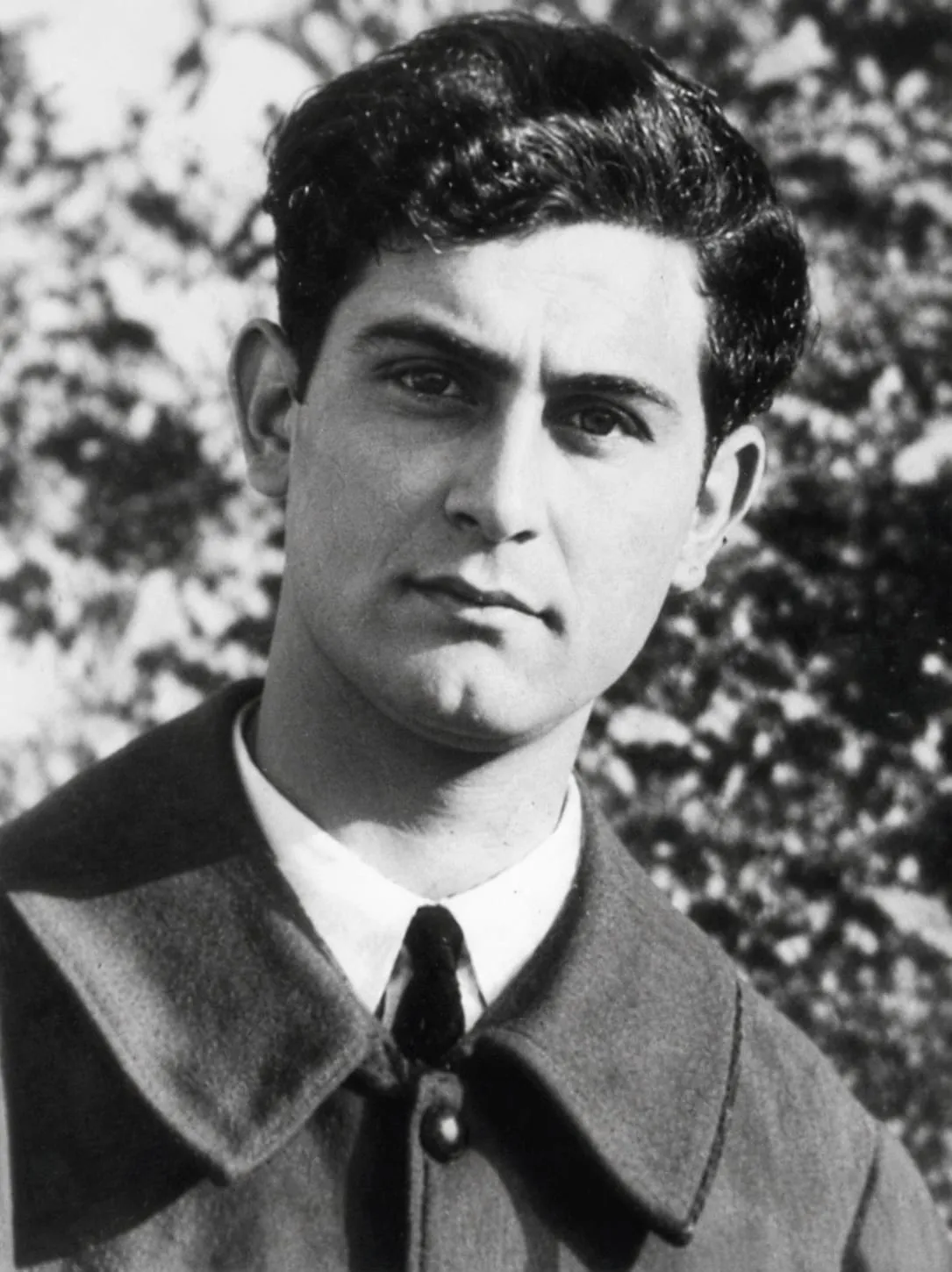
On 24 December 1942, Christmas Eve, two shots rang out in the Summer Palace in Algiers, the seat of the French authorities in North Africa. Admiral François Darlan – High Commissioner of France in Africa, only months earlier head of the government at Vichy and the designated successor of Marshal Philippe Pétain – died shortly afterwards in a military hospital. The gunman was 20-year-old Fernand Bonnier de La Chapelle, a volunteer in the Corps franc d’Afrique with links to a circle of monarchist conspirators. A military court sentenced him to death the very next day, and at dawn on 26 December he was shot. The killing freed the Allies of an awkward partner whom they themselves had raised to power a few weeks earlier, and opened the way to a reshaping of the French authorities in Africa. It remains to this day one of the most enigmatic political murders of the Second World War.
A Vichy admiral on the Allied side
Darlan, born in Nérac in 1881, was the architect of the French navy’s strength in the 1930s and its chief from 1937. After the defeat of 1940 he became Minister of the Navy in Pétain’s government and, in February 1941, Deputy Prime Minister and the Marshal’s designated successor. As head of the government he pursued a policy of collaboration with Germany: in May 1941 he met Adolf Hitler at Berchtesgaden and agreed to make airfields in Syria available to the Germans. In April 1942 Pierre Laval took over as head of the government, while Darlan remained Commander-in-Chief of the Vichy armed forces.
In November 1942 he found himself in Algiers by chance: he was visiting his son, who was gravely ill with polio. When on 8 November the Allies landed in North Africa and Resistance volunteers seized control of the city for a few hours, the admiral proved to be the only man whose orders French officers would obey. After several days of talks with General Mark Clark he announced a ceasefire, and General Dwight Eisenhower recognised him as High Commissioner of France in North Africa. General Henri Giraud, on whom the Allies had initially pinned their hopes, took command of the army.
The “Darlan deal” ended the fighting of Operation Torch and allowed the French Army of Africa to be brought into the fighting in Tunisia, but it caused a storm in London and Washington. The press and some politicians asked why they were fighting fascism if the Allies were coming to terms with one of the leading collaborators. President Franklin D. Roosevelt called the agreement a “temporary expedient” dictated by the needs of war, and Winston Churchill defended it in a secret session of the House of Commons. General Charles de Gaulle and the Free French regarded it as a betrayal. In Algeria itself Darlan governed “in the name of the Marshal”, whom he considered a moral prisoner of the Germans. He kept Vichy’s legislation in force, including the anti-Jewish laws and the 1940 repeal of the Crémieux Decree, and thousands of internees were still held in camps in the south of the country – French opponents of Vichy, Spanish Republicans and foreigners from the Foreign Legion. The men who had risked their lives for the Allies on the night of 7–8 November now watched the very officials they had conspired against remain in power. Slogans appeared on the walls of Algiers: “The admiral – to the fleet!”, an allusion to the scuttling of the fleet at Toulon, which Darlan had failed to persuade to sail for Africa.
The conspirators of the rue Lafayette
Darlan’s opponents gathered around Henri d’Astier de La Vigerie, a monarchist and one of the leaders of the November putsch. Paradoxically, Darlan himself had appointed him deputy secretary for political affairs – in effect head of the police and intelligence – hoping to win him over. At the same time d’Astier was patron of the Corps franc d’Afrique, a volunteer unit armed by the British and trained at Cape Matifou near Algiers for the fighting in Tunisia. His closest associate was Father Pierre-Marie Cordier, a priest holding the rank of lieutenant and a participant in the putsch. In their flat in the rue Lafayette men of very different views met, united by their dislike of the admiral. Some of them placed their hopes in Henri d’Orléans, Count of Paris and pretender to the French throne, who arrived in Algiers in December. He was put forward as a candidate who might stand above the divisions between Darlan, Giraud and de Gaulle. A few days before the assassination General François d’Astier de La Vigerie, Henri’s brother and one of de Gaulle’s deputies, was also in Algiers, holding talks with Darlan and Giraud on behalf of the Free French.
Fernand Bonnier de La Chapelle was born in Algiers on 4 November 1922. His father was a journalist and an activist of the monarchist Action Française, although former friends described Fernand himself as more of a republican. He went to school in Paris, at the Lycée Stanislas, and on 11 November 1940 took part in the students’ anti-German demonstration at the Arc de Triomphe. He then crossed the demarcation line into the unoccupied zone and made his way to Algeria. He regretted not having been drawn into the putsch of 8 November and, after the Allied landings, was among the first to volunteer for the Corps franc. He acted as a liaison between the unit’s camp and d’Astier, and was at the rue Lafayette almost every day.
According to the findings of the investigation, the young volunteers in the camp at Matifou had long discussed killing the admiral and drew lots for the “honour” of killing the “traitor”. Alongside Bonnier, the lots were drawn by Othon Gross, Robert Tournier and Philippe Ragueneau. On 21 December Father Cordier is said to have told Bonnier that he had been chosen. On 23 December the assassin received a forged identity card in the name of André Morand, a passport, and dollars, pesetas and Moroccan francs. The plan was that after the shots he would escape through an open window, and that if he were caught, the police – in which d’Astier had his own men – would set him free.
Christmas Eve at the Summer Palace
On the morning of 24 December Bonnier met Father Cordier in the church of St Augustine. The priest heard his confession and, according to the assassin’s testimony, handed him a plan of the Summer Palace – the former residence of the Dey of Algiers, which housed the High Commissioner’s office – and a pistol. Before noon Bonnier went to the palace accompanied by d’Astier’s son, Jean-Bernard, but after waiting an hour for the admiral he gave up and went to lunch. The pistol jammed when he tried it out in a deserted spot, so he exchanged it for an old 7.65 mm Ruby semi-automatic.
In the afternoon he returned to the palace and waited in the corridor outside Darlan’s office. When the admiral arrived with an officer of his staff, Commander Jean Hourcade, Bonnier fired at him twice – in the face and in the chest. He wounded Hourcade, who tried to overpower him, in the thigh. He had no time to escape through the window; officials from the neighbouring rooms seized him on the spot. Darlan was taken to the Maillot hospital, where he died, according to most accounts without regaining consciousness. The words he is supposed to have spoken before his death – that he had known “the English would get him” – are known only from later accounts and are hard to verify.
Questioned that same evening, Bonnier declared that he had acted alone, “for the moral cleansing” of the situation, and did not appear worried. Everything suggests that he was convinced he would be pardoned.
A trial within a day
The authorities acted with a haste that still raises questions. On the morning of 25 December the examining magistrate closed the investigation in less than an hour. In the evening the military tribunal in Algiers met, rejected the defence’s requests for further inquiries and, after a quarter of an hour, sentenced Bonnier to death, taking into account neither his age nor his motives. A plea for clemency should formally have gone to Pétain, in whose name Darlan had governed, which would have postponed the execution indefinitely. General Charles Noguès, Resident-General in Morocco and the senior member of the Imperial Council, nevertheless proclaimed himself acting High Commissioner on the basis of an unpublished order of Darlan’s and rejected the plea that same night. Giraud, who as Commander-in-Chief was responsible for military justice, refused to postpone the sentence. At 7.30 a.m. on 26 December Bonnier was shot at the firing range at Hussein-Dey near Algiers. According to accounts, before his death he gave his jacket to a policeman, asking him to pass it on to the poor.
On his last night the condemned man said more than he had before. He told the officers guarding him about his links with d’Astier and the Count of Paris, and dictated a statement to a police superintendent naming Father Cordier as the man who had supplied him with the plan of the palace and the weapon. The superintendent put the record in his desk and showed it to no one; it was found only two weeks later, when it was too late for Bonnier.
Who stood behind Bonnier?
Giraud, who took power after Darlan, suspected a wider conspiracy and entrusted the investigation to the judge Albert-Jean Voituriez. Within a few weeks Voituriez established that the assassination had been organised by a group of monarchists who wanted to replace Darlan with the Count of Paris. He named as its organisers Henri d’Astier de La Vigerie, Father Cordier and two officials of Darlan’s administration, Alfred Pose and Marc Jacquet. D’Astier and Cordier spent several months in prison and were released in September 1943. At the end of December 1942 the authorities also arrested several dozen participants in the November putsch, among them José Aboulker, accusing them of an alleged plot against the lives of Giraud and the American diplomat Robert Murphy, although they had had nothing to do with Darlan’s murder.
Many theories have grown up around the assassination. Some writers, notably the British historian Anthony Verrier, believed that the British Special Operations Executive (SOE) stood behind Bonnier, perhaps with Churchill’s knowledge, and that the young men who carried it out did not realise whose instruments they were. They pointed out that the Corps franc had been trained by the British and that the weapon might have come from British stocks. Others looked for the inspiration among de Gaulle’s circle, citing General François d’Astier’s stay in Algiers just before the assassination; for a time Roosevelt suspected the general himself of complicity. The files of the investigation, rediscovered in 2016, do not bear out these hypotheses and point to a monarchist plot, while the French historian Bénédicte Vergez-Chaignon, author of a biography of Bonnier, stresses that so many people have been suspected of manipulating the assassin that the very idea of a single grand conspiracy is open to doubt. No conclusive evidence of the involvement of the British or American governments or of the Free French has been found.
Giraud in Darlan’s place
Eisenhower spent Christmas Eve at the Tunisian front, where that day, in pouring rain, he decided to halt the December drive on Tunis after the fighting for Longstop Hill. On hearing of the assassination he returned to Algiers. On 26 December the Imperial Council, made up of former Vichy dignitaries, chose Giraud as High Commissioner and Commander-in-Chief, with the backing of the Americans, who had wanted him at the head of French Africa from the start. In the same days Darlan was given an honourable farewell at a solemn service in Algiers cathedral, attended by Giraud and the French and American authorities.
The Allied reactions were ambiguous. Roosevelt publicly called the assassination a “cowardly” first-degree murder. Years later Churchill wrote in his memoirs that Darlan’s murder, criminal though it was, relieved the Allies of the embarrassment of working with him while leaving them all the advantages he had brought in the critical hours of the landings. Many historians write of relief in London and Washington: a man whose presence undermined the moral purpose of the war had left the stage, and his “deal” had already yielded everything expected of it. Harold Macmillan, British Minister Resident in Algiers from the beginning of 1943, later summed up the admiral acidly: “once bought, he stayed bought”. For de Gaulle the assassination was an opportunity: according to most accounts, as early as 25 December he proposed a meeting to Giraud in order to unite the forces of Fighting France.
Its place in the war
Darlan’s murder closed the most controversial chapter of Operation Torch. The Allies kept the benefits of the “Darlan deal” – the obedience of the French army in Africa, the ports, railways and airfields, and the adherence of French West Africa – and were rid of the man who had been their greatest political liability. Giraud, however, was no politician and at first changed little: only in March 1943, under American pressure and on the advice of Jean Monnet, did he repeal Vichy’s legislation, including the anti-Jewish laws. In January 1943, at the Casablanca Conference, Roosevelt and Churchill brought about the first, frosty meeting between Giraud and de Gaulle. In June 1943 the two generals became joint heads of the French Committee of National Liberation in Algiers, and over the following months de Gaulle edged Giraud out of political power. In the view of many historians, had Darlan lived, uniting the French war effort would have been far more difficult.
The fate of the assassin himself reflected the changing political climate. On 21 December 1945 the court of appeal in Algiers quashed the sentence, ruling that Fernand Bonnier de La Chapelle had acted “in the interest of the liberation of France”, and in 1953 he was posthumously awarded the Médaille militaire and the Croix de guerre. Darlan, initially buried in the grounds of the Admiralty in Algiers, was moved in 1964 to the military cemetery at Mers-el-Kébir, beside the sailors killed by the British in July 1940. The admiral who for two years had been the face of collaboration and for six weeks an ally of the Allies has remained in French memory a tragic and ambiguous figure, and the dispute over who really stood behind his death has never been settled.
Sources
Meanwhile
(03)Elsewhere, within a week.
- 22 December 1942 · MediterraneanThe Battle of Longstop HillOn 22–25 December 1942 British and US troops fought for Longstop Hill near Tunis. The Germans retook it on Christmas Day; Eisenhower postponed his offensive.
- 22 December 1942 · Eastern FrontThe retreat from the Caucasus beginsIn late December 1942 defeats at Stalingrad and on the Don threatened to cut off Army Group A. On 28 December Hitler agreed to a withdrawal from the Terek.
- 31 December 1942 · AtlanticThe Battle of the Barents SeaOn 31 December 1942 British destroyers and two cruisers beat off an attack by Admiral Hipper and Lützow on convoy JW 51B. Every ship reached the USSR.
Related events
(04)The same battle, people or subject.
- 8 November 1942 · MediterraneanThe landings in North AfricaOn 8 November 1942 more than 70,000 American and British troops landed in Morocco and Algeria. The Vichy French resisted at Casablanca and Oran.
- 10 November 1942 · MediterraneanDarlan and the armistice in North AfricaOn 10 November 1942 Admiral Darlan, under pressure from General Clark, ordered the Vichy forces in North Africa to stop fighting. Oran surrendered the same day.
- 8 November 1942 · MediterraneanThe Algiers putschOn the night of 7/8 November 1942 some 400 underground volunteers seized Algiers for several hours and detained General Juin and Admiral Darlan.
- 22 October 1942 · MediterraneanClark's mission to AlgeriaOn the night of 21–22 October 1942 General Mark Clark landed from a submarine near Cherchell to agree French help for the landings with General Mast.