France
Pierre Laval
Prime Minister of France (1931–1932, 1935–1936), Foreign Minister (1934–1936), head of the Vichy government (1942–1944)
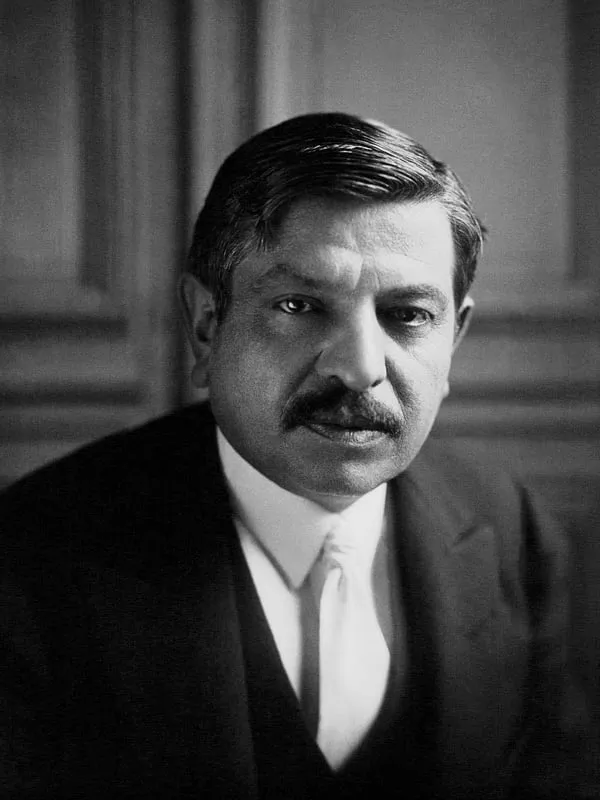
- Born:
- 28 June 1883, Châteldon (France)
- Died:
- 15 October 1945, Fresnes (France)
- Author:
- Łukasz
- Photo:
- Agence de presse Meurisse, domena publiczna, Wikimedia Commons

Pierre Laval travelled from being a socialist lawyer for striking workers to heading a government that handed Jews over to the Germans in occupied France. In the 1930s he was one of the most important politicians of the Third Republic, twice prime minister, and foreign minister in the pivotal year of 1935. He wanted to stop Hitler through an alliance with Mussolini, and for that alliance he was ready to sacrifice Ethiopia and the League of Nations. The Hoare–Laval Pact, which in December 1935 would have given Italy the greater part of Ethiopia, became a byword for great-power cynicism and ended his career under the Third Republic. He returned to power after the defeat of 1940, convinced that Germany would win the war and that France ought to find a place for herself in a German Europe. In October 1945 he was shot as a traitor.
The workers’ advocate
He was born on 28 June 1883 in Châteldon, a village in the Auvergne not far from Vichy, the son of a café owner who was also a butcher, a postman and the owner of a vineyard. He studied in Paris and Lyon, supporting himself by working as a school supervisor, and in 1903 he joined the socialist movement. He was exempted from compulsory military service because of varicose veins. He studied the natural sciences first and then law, and around 1909 opened a legal practice in Paris. He made his name defending trade unionists, strikers and anarchists – a “lawyer for the poor” closely linked to the syndicalists of the CGT. In 1909 he married Jeanne Claussat, the daughter of a socialist doctor and politician. Their only daughter, Josée, was the person closest to him throughout his life.
In the elections of April 1914 he was returned as a deputy of the French Section of the Workers’ International (SFIO) for a constituency in the Paris suburbs, and was at the time the youngest member of the Chamber of Deputies. During the First World War he remained a pacifist. The police put him on the list of persons considered a threat to mobilisation, and in 1917, after the mutinies in the French army, he defended the mutineers in the Chamber and demanded that the socialists be allowed to travel to the peace conference in Stockholm. In 1919 he lost his seat. The split among the socialists at the Congress of Tours in 1920 ended his ties with the party. He joined neither the Communists nor the SFIO, and from then on was an independent politician.
A career in the Third Republic
In 1923 he became mayor of working-class Aubervilliers near Paris, and remained so until 1944. In 1924 he returned to the Chamber of Deputies. From that campaign onwards he wore the white tie that became his trademark. In 1927 he became a senator, which freed him from fighting for votes in general elections. In April 1925 he entered government for the first time as Minister of Public Works in the cabinet of Paul Painlevé, and in subsequent governments of Aristide Briand he served as under-secretary of state and Minister of Justice. In these years he moved to the right and amassed a considerable fortune, among other things from provincial newspapers and printing works, which was repeatedly held against him later. As Minister of Labour in the government of André Tardieu he steered through parliament in 1930 a social insurance law covering millions of workers, and his skill in calming strikes was acknowledged even by his opponent, the socialist Léon Blum.
On 27 January 1931 Laval formed his first government. Briand remained Foreign Minister. France, which thanks to an earlier devaluation of the franc and enormous gold reserves had long held out against the Great Depression that began with the Wall Street Crash, was then the financial power of Europe, and Laval wanted to turn this to political account. He blocked the plan for a German–Austrian customs union, delayed acceptance of the Hoover Moratorium on reparations and war-debt payments, travelled with Briand to Berlin in September 1931 for talks with Chancellor Heinrich Brüning, and in October went to Washington, where he held talks with President Herbert Hoover. The American weekly Time named him its Man of the Year for 1931. In February 1932 his government fell in the Senate.
Foreign Minister, 1934–1936
After the crisis of 6 February 1934 Laval became Minister of the Colonies in the government of Gaston Doumergue. When the Foreign Minister, Louis Barthou, was killed in the Marseille assassination on 9 October 1934, Laval took his place and kept it in successive governments until January 1936. Barthou had wanted to surround Germany with a network of alliances with the USSR, the Little Entente and Italy. Laval took over his aims but not his methods. He regarded war as unthinkable for France, believed in reaching agreement, including with Germany, and was convinced that Fascist Italy was the most important partner against Hitler. He did not think it fitting to hold Rome responsible for the Marseille assassination, even though the assassins and their leaders had found refuge in Italy.
In January 1935 he went to Rome, where he also visited Pope Pius XI. On 7 January he signed agreements with Benito Mussolini under which France ceded to Italy a strip of desert on the Libya–Chad border, a sliver of French Somaliland and a block of shares in the Djibouti–Addis Ababa railway, while both states undertook to consult each other if Austria’s independence were threatened. In a private conversation of which no record was made, Laval assured Mussolini of a free hand in Ethiopia. He later claimed that he had meant economic freedom, but Mussolini understood it as consent to conquest and invoked it throughout the crisis. The general staffs of the two countries began talks on military co-operation against Germany. A few days later Laval accepted without objection the result of the Saar plebiscite, which gave the territory to Germany. In April 1935, at the Stresa Conference, France, Britain and Italy condemned the reintroduction of universal military service in Germany.
On 2 May 1935 Laval signed the Franco-Soviet Treaty of Mutual Assistance in Paris, but without the military convention that would have given it real substance. A few days later he went to Moscow, where he held talks with Joseph Stalin, Vyacheslav Molotov and Maxim Litvinov. In the joint communiqué Stalin declared his understanding of France’s national defence policy, which forced the French Communists to abandon their anti-militarism. On the way back Laval stopped in Kraków for the funeral of Józef Piłsudski, where he talked with Józef Beck and with Hermann Göring, who represented Hitler.
Prime minister during the Ethiopian war
On 7 June 1935 Laval became prime minister for the second time, keeping the foreign affairs portfolio. He tried to halt the financial crisis and the flight of capital with a policy of deflation: using emergency powers, he issued hundreds of decree-laws which, among other things, cut civil servants’ pay and pensions. This deepened the recession and earned him enemies on the left, which was uniting in the Popular Front.
When Italy attacked Ethiopia on 3 October 1935, Laval found himself trapped. Britain, where Stanley Baldwin’s government was going into an election on a platform of loyalty to the League of Nations, demanded sanctions, and France needed both London and Rome. Laval supported naming Italy as the aggressor and the limited sanctions that came into force on 18 November, but he did everything he could to keep oil out of them, and by asking for postponements he repeatedly put off the decision on an oil embargo. On 7 and 8 December 1935 in Paris he agreed with the British Foreign Secretary, Samuel Hoare, a plan that gave Italy a large part of Tigray, the Danakil and the Ogaden, together with a zone of exclusive Italian economic expansion and settlement in the south of the country. In exchange Ethiopia was to receive a narrow corridor to the sea. The plan leaked to the press within days. In Britain it provoked a storm that swept Hoare away; in France, during the debate of 27 and 28 December, Léon Blum accused Laval of wanting “to give and to keep” and of reducing everything to the level of “his petty methods”. The government survived by a small majority, but on 22 January 1936, when the Radicals withdrew their ministers, Laval resigned. He never again held office under the Third Republic. Mussolini ended the war by taking Addis Ababa in May 1936, Emperor Haile Selassie I went into exile, and Italy, instead of standing with France, drew closer to Germany. To the end of his life Laval maintained that it was not his plan but the sanctions that had driven Mussolini into Hitler’s arms.
On the sidelines, and a return in 1940
For the next four years Laval remained a senator and mayor of Aubervilliers, and his newspapers campaigned against the Popular Front. He sympathised with General Franco in Spain, continued to advocate agreement with Italy and was increasingly outspoken in his criticism of parliamentary government. In September 1939 he voted for the war credits but argued that peace should be sought through Mussolini’s mediation.
France’s defeat in 1940 gave him his chance. In June he joined the government of Marshal Philippe Pétain, and in July, at Vichy, he steered through the assembled members of parliament the law of 10 July 1940, which handed full powers to Pétain and buried the Third Republic. He became deputy prime minister and the Marshal’s designated successor, and from October also Foreign Minister. He believed that Germany would win the war and that France should come to terms with the victor in good time. On 22 October 1940 he met Adolf Hitler at Montoire-sur-le-Loir, and two days later arranged a meeting there between Hitler and Pétain, after which the Marshal proclaimed the policy of collaboration. Without the knowledge of part of the government he handed over to the Germans the Belgian gold reserves entrusted to France and the French holdings in the copper mines of Bor in Yugoslavia. His independence, his arrogance and the distrust of Pétain’s entourage led the Marshal to dismiss him abruptly on 13 December 1940 and have him arrested. He was freed by the German ambassador, Otto Abetz, who took him to Paris. On 27 August 1941 Laval was slightly wounded in an assassination attempt carried out by the young Paul Collette at Versailles, during a review of French volunteers for the Eastern Front.
Head of the Vichy government
On 18 April 1942, under German pressure, Pétain appointed him to the newly created post of head of government. Laval simultaneously took over the ministries of the interior, foreign affairs and information. On 22 June 1942, in a radio broadcast, he uttered the sentence that went down in history: “I wish for a German victory, because without it Bolshevism will tomorrow take hold everywhere.” At the demand of the Germans, who were short of labour, he introduced the so-called Relève, under which one prisoner of war was to be released for every three workers who left for the Reich, and in February 1943 the compulsory labour service (STO), which sent hundreds of thousands of young Frenchmen to Germany and drove many of them into the Resistance. He was also formally the president of the Milice, founded in 1943, which fought the Resistance alongside the Germans.
Laval’s gravest guilt was his part in the Holocaust. When in the summer of 1942 the Germans demanded the arrest and handover of tens of thousands of Jews, Laval and the police chief René Bousquet agreed that the round-ups would be carried out by the French police. In return they wanted them to target foreign and stateless Jews first, rather than French citizens. On 16 and 17 July 1942 the police detained more than 13,000 people in Paris in the Vel d’Hiv round-up, and in August handed over to the Germans thousands of Jews arrested in the unoccupied southern zone. At first the Germans did not ask for children under sixteen. It was Laval who proposed that they be deported together with their parents, and when the Protestant pastor Marc Boegner begged him to spare them, he is said to have replied that not one of them must remain in France. From the autumn of 1942, in the face of protests from the churches and from public opinion, Laval became more cautious, and in August 1943 he refused the mass denaturalisation of naturalised Jews that the Germans wanted. Altogether, however, some 76,000 Jews were deported from France, of whom only a few per cent survived. Some historians point out that most French Jews survived the war, but this does not alter the verdict that Laval’s government knowingly handed over to the Germans people whose fate was easy to foresee.
After the Allied landings in North Africa and the German occupation of the whole of France in November 1942, Laval became no more than the occupier’s go-between. In August 1944, as the Allies approached Paris, he tried, with the help of the President of the Chamber of Deputies, Édouard Herriot, to convene parliament so that it could take power instead of General Charles de Gaulle. The plan failed. The Germans took him to Belfort and then to Sigmaringen, where, like Pétain, he declared himself a prisoner and no longer exercised any functions.
Trial and execution
At the beginning of May 1945 Laval flew to Spain in a German aircraft. General Francisco Franco interned him and at the end of July expelled him. Laval ended up in the American zone of Austria, from where he was taken to Paris and held in Fresnes prison. He appeared as a witness at Pétain’s trial. His own trial before the High Court of Justice opened on 4 October 1945 in an atmosphere of hatred and in haste ahead of the approaching elections. The jurors, chosen from among members of parliament, hurled insults at him, and Laval, declaring himself the victim of a “judicial crime”, stopped taking part. On 9 October he was sentenced to death in his absence for plotting against the security of the state and collaborating with the enemy, and de Gaulle refused a pardon. On the morning of 15 October 1945 Laval swallowed poison that he had carried with him for years. The doctors revived him, and at noon he was shot in the grounds of the prison at Fresnes. His last words were “Vive la France!” Many historians, including those firmly critical of Laval, regard his trial as hasty and unworthy of justice. His family campaigned for his rehabilitation for the rest of their lives.
Significance
Laval was a typical politician of the Third Republic, a deft negotiator who believed that any dispute could be settled in a conversation behind the scenes. That method failed him twice. In 1935, seeking to save the front against Germany, he sold Ethiopia to Mussolini and undermined the League of Nations, and in the end lost both Italy and the trust of the British. His policy was one of the links in the chain that led through the Rhineland, the Rome–Berlin Axis and Munich to war in 1939. In 1940–1944, convinced that he was saving France from a worse fate, he bound her to Hitler and took part in the deportation of the Jews. In French memory he remained the symbol of collaboration, even more than Pétain, whose death sentence was commuted to life imprisonment.
Sources
Mentioned in battles
(03)Often appears with
People who appear in the same events.
On the timeline
(32)1934
1935
1936
1939
1940
1941
1942
April
May
July
September
November
- 10
- Operation AntonOn the evening of 10 November 1942 Hitler ordered the occupation of unoccupied France. On 11 November the Germans marched in, and the Italians from the east.
- Darlan and the armistice in North AfricaOn 10 November 1942 Admiral Darlan, under pressure from General Clark, ordered the Vichy forces in North Africa to stop fighting. Oran surrendered the same day.