Russia
Adolph Joffe
Head of the delegation at Brest (1917–1918), envoy in Berlin (1918), head of the delegation at Riga (1920–1921), representative in China (1922–1923) and Austria (1924–1925)
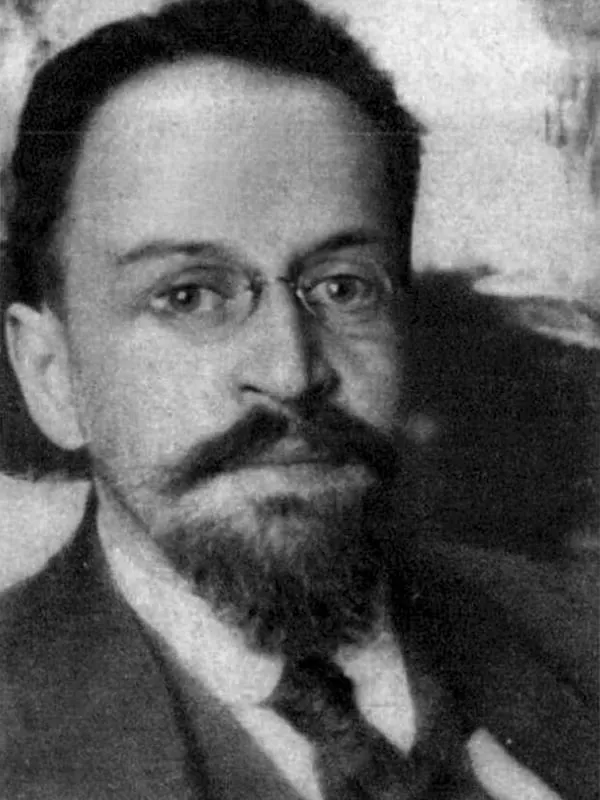
- Born:
- 10 October 1883, Simferopol (Russian Empire)
- Died:
- 16 November 1927, Moscow
- Author:
- Łukasz
- Photo:
- Moisej Nappelbaum, domena publiczna, Wikimedia Commons

Adolph Joffe, whose name is also transliterated as Ioffe, was the first great diplomat of Soviet Russia. Before Georgy Chicherin became commissar for foreign affairs, it was Joffe who conducted the Bolsheviks’ first talks with Germany at Brest, and then, as envoy in Berlin, supported the German revolutionaries. In 1920–1921 he negotiated the peace with Poland that fixed Poland’s eastern border for eighteen years, and in 1923 he signed with Sun Yat-sen the declaration that began the alliance between the Soviet communists and the Chinese Kuomintang. He had been loyal to Leon Trotsky since their years in exile, and when Stalin defeated the opposition he took his own life. His farewell letter and his funeral became the last act of open resistance to Stalin within the party.
A revolutionary from the Crimea
He was born on 10 October 1883 (28 September in the Julian calendar) in Simferopol in the Crimea, into a very wealthy merchant family. Most sources say the family was Jewish; some speak of Karaite origins. His father was a merchant of the first guild and owned transport businesses in the Crimea. The son chose a different path. While still at grammar school he became involved with the Social Democrats, and in 1903 he joined the Russian Social Democratic Labour Party, siding with the Mensheviks. He studied medicine in Berlin, was active in Baku and Moscow, took part in the 1905 Revolution and then had to emigrate.
In Vienna, where he settled in 1906, he became close to Trotsky. From 1908 to 1912 he co-edited with him, and helped fund from the family fortune, the newspaper Pravda, published for workers in Russia. He completed his medical studies, took an interest in psychiatry and was treated by Alfred Adler, whose pupil he was. Trotsky wrote of him that, despite his imposing build, his calm and his impeccable courtesy, he had been a neurotic since youth. In 1912 Joffe was arrested in Odessa and, after a year in prison, sentenced to lifelong exile in Siberia.
1917 and Brest
He was freed by the February Revolution. In the spring of 1917 he came to Petrograd and, together with Trotsky, joined the “Inter-District” group (the Mezhraiontsy), which merged with the Bolsheviks that summer. At the Sixth Party Congress in August 1917 Joffe became a candidate member and secretary of the Central Committee, and he also led the Bolshevik group in the Petrograd city duma. In October he backed Vladimir Lenin and Trotsky against Grigory Zinoviev and Lev Kamenev, who opposed an uprising. He was a member of the Military Revolutionary Committee that carried out the Bolshevik seizure of power – according to Trotsky, even its chairman during the decisive days.
Immediately after the seizure of power the Soviet government sent him to Brest-Litovsk for talks with Germany and Austria-Hungary. On 15 December 1917 Joffe signed the armistice on the Eastern Front, and at the opening of the peace negotiations he set out the Bolshevik programme of a peace without annexations or indemnities, based on the right of nations to self-determination. The Austrian foreign minister Ottokar Czernin remembered how Joffe told him over dinner, in a gentle, almost pleading tone, that he hoped to bring about a revolution in Austria as well. In January 1918 Trotsky took over the delegation. Joffe supported his formula of “neither war nor peace” and opposed signing the Treaty of Brest-Litovsk imposed by Germany, remaining in the delegation only as an adviser.
Envoy in Berlin
In April 1918 Joffe opened the first Soviet mission in imperial Germany, in Berlin. He worked on two fronts. He negotiated with the government of Wilhelm II and on 27 August 1918 signed a supplementary treaty to the Brest peace, under which Russia undertook, among other things, to pay Germany 6 billion marks in compensation. He assured German politicians and industrialists that the Bolsheviks had abandoned their utopias and wanted practical cooperation. At the same time the mission printed and distributed revolutionary propaganda and financed the left. On 6 November 1918, after a crate from the Soviet diplomatic bag, full of leaflets, “accidentally” broke open at a railway station, the Germans expelled him. Three days later revolution broke out in Berlin. Joffe later claimed that before leaving he had handed the Independent Social Democrats money for weapons and revolutionary activity, which compromised some German politicians.
Making peace with the neighbours
In 1919–1920 he was commissar for state control in Soviet Ukraine, but he never returned to the Central Committee. Instead he became the chief negotiator of the treaties by which Soviet Russia ended its wars with its western neighbours. He signed the peace with Estonia at Tartu in February 1920, with Lithuania in Moscow on 12 July 1920 and with Latvia in August 1920. The Lithuanian treaty assigned Wilno (Vilnius) to Lithuania, which in October formed the background to Żeligowski’s mutiny.
In September 1920 Joffe took charge of the Soviet delegation in the negotiations with Poland, which had moved from Minsk to Riga. He talked in private with the head of the Polish delegation, Jan Dąbski, and it was in these talks in October 1920 that the armistice line was agreed, which largely became the border. Joffe secured Moscow’s most important aim: Poland recognised Soviet Ukraine and abandoned its ally, the government of Symon Petliura. On 18 March 1921 he signed the Peace of Riga. The Polish delegates remembered him as an intelligent and worthy opponent. He then went to Turkestan, where, as deputy chairman of the Turkestan Commission, he held talks with Basmachi leaders among other duties, and in the spring of 1922 he was a member of the Soviet delegation to the Genoa Conference, during which Russia concluded the Treaty of Rapallo with Germany.
China and Japan
In the summer of 1922 Joffe went to Beijing as the Soviet government’s representative. In September, at the Changchun conference, he demanded in vain that the Japanese withdraw their troops from northern Sakhalin. His political mission mattered more. In Shanghai he held talks with the Kuomintang leader Sun Yat-sen, and on 26 January 1923 the two issued a joint declaration. It stated that communism and the Soviet system were unsuited to China and that the most urgent tasks were the country’s unification and independence, in which Russia promised to help. The Sun–Joffe declaration opened the way to Soviet aid for the Kuomintang, to the arrival of advisers from Moscow and to the First United Front between the Kuomintang and the communists.
From China Joffe went to Japan in February 1923, at the invitation of the mayor of Tokyo, Shinpei Gotō, to sound out the possibility of establishing relations. The talks later conducted with a Japanese diplomat dragged on for months without agreement, and Joffe himself fell seriously ill with polyneuritis and returned home in the summer of 1923. The dialogue he had begun led in January 1925 to the Soviet–Japanese Basic Convention, signed by other diplomats.
Opposition and death
After treatment in Austria he served in 1924–1925 as the USSR’s representative in Vienna, but his illness progressed. From 1923 he belonged to Trotsky’s Left Opposition, and after Lenin’s death he proposed that Trotsky should head the government or that the post should become collective. From 1925 he was Trotsky’s deputy on the Chief Concessions Committee and lectured at Moscow University. In the autumn of 1927, bedridden and in severe pain, he asked for permission to be treated abroad. The party leadership refused. A few days after Trotsky was expelled from the party, on 16 November 1927, Joffe shot himself in his Moscow flat.
He left Trotsky a long letter, which was seized by the political police and later quoted selectively against them both. In it he wrote that a politician should know how to leave life at the right moment, as an actor leaves the stage, and reproached his friend: “You were always right, and yet you always gave way.” He urged him to be unyielding. At the funeral at the Novodevichy Cemetery the coffin was carried by Chicherin, Maxim Litvinov and Lev Karakhan, and Trotsky spoke at the graveside – his last public speech in the Soviet Union. Two months later he was exiled to Alma-Ata.
Significance
Joffe did not live to see the Great Terror, but it struck those closest to him. His second wife, Maria, spent some twenty years in the labour camps and in exile, his daughter Nadezhda nearly twenty as well, and his son Vladimir was shot in 1937. Both women survived and wrote memoirs.
In the history of the road to the Second World War, Joffe matters above all as an architect of the order that took shape in eastern Europe after the revolution. The treaties he signed with Estonia, Latvia, Lithuania and Poland fixed the borders of the Baltic states and of Poland, and the Soviet Union tore them up in 1939–1940 when, after its pact with Hitler, it occupied eastern Poland and the Baltic states. His declaration with Sun Yat-sen launched a Soviet policy in China that for the next twenty years shaped the civil war and the course of the Sino-Japanese War. To this day Estonia lays flowers on his grave every year on the anniversary of the Peace of Tartu.
Sources
Often appears with
People who appear in the same events.