Soviet Union
Maxim Litvinov
Deputy People's Commissar for Foreign Affairs (1921–1930), People's Commissar for Foreign Affairs of the USSR (1930–1939), Soviet Ambassador to the United States (1941–1943)
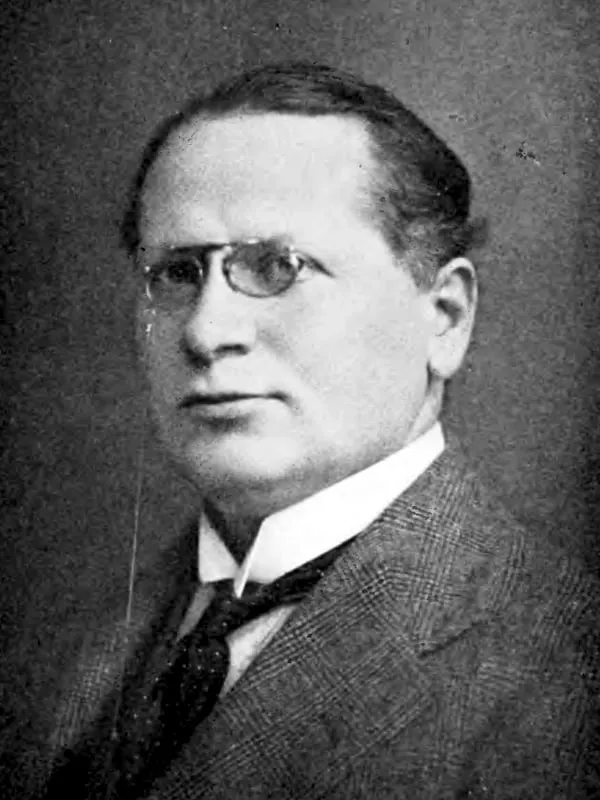
- Born:
- 17 July 1876, Białystok (Russian Empire)
- Died:
- 31 December 1951, Moscow
- Author:
- Natalia
- Photo:
- Isaac McBride, domena publiczna, Wikimedia Commons

Maxim Litvinov was the interwar Soviet Union’s best-known diplomat in the West. An Old Bolshevik, gun-runner and long-time émigré in London, he spent nine years as deputy to Georgy Chicherin, and in 1930–1939 directed Soviet foreign policy himself. His name was given to the protocol of 1929 that brought the Kellogg–Briand Pact into force between the USSR and its western neighbours. In the 1930s, in Geneva and in the Western capitals, he was the face of the policy of collective security, that is, of an understanding between the Soviet Union and the democracies against Adolf Hitler’s Germany. When in May 1939 Joseph Stalin decided to open talks with Berlin, Litvinov, a Jew by origin and the symbol of that policy, had to go. His dismissal was one of the first signals of the coming Molotov–Ribbentrop Pact.
From Białystok to Iskra
He was born on 17 July 1876 (5 July in the Julian calendar) in Białystok, into a Jewish merchant family, as Meir Henoch Wallach. Some sources give the surname as Wallach-Finkelstein. He finished a technical secondary school (Realschule), and in 1893–1898 served as a volunteer in the Russian army, in an infantry regiment stationed in Baku. After returning to civilian life he worked as a bookkeeper and then at a sugar refinery in Kiev.
In 1898 he joined the Russian Social Democratic Labour Party and adopted the pseudonym Maxim Litvinov, under which he went down in history. In 1900 he joined the party’s Kiev committee and set up an underground printing press. A year later he was arrested, and in August 1902 he was one of the organisers of the daring escape of eleven activists from Kiev’s Lukyanivska prison. He went to Switzerland and, as an agent of the newspaper Iskra, organised its smuggling into Russia. After the party split at the Second Congress in 1903 he sided with Vladimir Lenin’s Bolsheviks.
Gun-runner and émigré
During the revolution of 1905 he was active in St Petersburg, where he worked on publishing Novaya Zhizn, the Bolsheviks’ first legal newspaper. The party then entrusted him with buying arms abroad. From Paris he organised their smuggling into Russia, using false identities. Some of the shipments were lost: a steamer carrying arms that was to reach the coast near Reval ran aground, and a yacht bought to carry weapons to the Caucasus was wrecked off the coast of Romania. In January 1908 the French police arrested him in Paris as he tried to change banknotes from the Tiflis bank robbery, carried out a year earlier by Kamo’s fighters. Russia demanded his extradition, but France deemed the case political and expelled him.
Litvinov settled in Britain and spent almost ten years in London. He worked for a publisher, was secretary of the London Bolshevik group and from 1914 the party’s representative on the International Socialist Bureau. In February 1915, at the London conference of socialists from the Entente countries, he presented an anti-war declaration on behalf of the Bolsheviks. In 1916 he married an Englishwoman, Ivy Low, a writer from a family of Jewish descent, who kept her British citizenship for the rest of her life.
First representative in London
After the October Revolution the Soviet government appointed him its representative in Britain. The British never formally recognised him but maintained unofficial contacts with him, and he himself wrote a letter of introduction for Robert Bruce Lockhart, who was going to Russia as an unofficial British agent. When in September 1918 the Bolsheviks arrested Lockhart, accusing him of conspiracy, the British imprisoned Litvinov. A few weeks later the two diplomats were exchanged. At the end of 1918 Litvinov was in Moscow for the first time in years and joined the collegium of the People’s Commissariat for Foreign Affairs.
Chicherin’s deputy
In 1919–1920 he conducted talks with the British in Copenhagen that ended in an agreement on the exchange of prisoners, the first such agreement between Soviet Russia and an Entente power. In 1920 he was the Soviet representative in Estonia, from where he arranged gold sales and purchases abroad for a state cut off from the world. In August 1921 in Riga he signed an agreement with Herbert Hoover’s American Relief Administration that allowed American organisations to bring aid to the victims of the Russian famine.
From May 1921 he was Deputy People’s Commissar for Foreign Affairs. He and Chicherin differed in everything: the latter was an aristocrat, a man of great learning and an advocate of rapprochement with Germany; Litvinov was a practical man of rough manners who considered an understanding with Britain and France the highest priority. Both sent complaints about each other to the Politburo. In 1922 Litvinov was a member of the delegation to the Genoa Conference, during which the Treaty of Rapallo was concluded, and in December that year he chaired the Moscow disarmament conference attended by Poland, Lithuania, Latvia, Estonia and Finland. After the assassination of Pyotr Voykov in 1927 he handed sharp notes to the Polish envoy. From November 1927 he led the Soviet delegation to the League of Nations Preparatory Commission for the Disarmament Conference, where he put forward a proposal for complete and general disarmament. Western diplomats regarded it as a propaganda manoeuvre, but it won Moscow the sympathy of pacifists.
When Chicherin went to Germany for medical treatment in 1928, Litvinov in effect took over the commissariat. He persuaded the party leadership to accede to the Kellogg–Briand Pact, and on 29 December 1928 proposed to Poland and Lithuania that it be brought into force early. On 9 February 1929 in Moscow he signed a protocol with Poland, Romania, Latvia and Estonia, which Turkey, Persia and Lithuania later joined.
People’s Commissar
On 21 July 1930 Litvinov officially succeeded Chicherin as People’s Commissar for Foreign Affairs. In 1932 the Soviet Union concluded non-aggression pacts with Finland, Latvia, Estonia, Poland and France. At the Disarmament Conference in Geneva on 6 February 1933 Litvinov presented a draft definition of aggression, according to which no political or economic considerations, nor the internal situation of another country, could justify an attack. In July 1933 the Convention for the Definition of Aggression was signed in London on its basis; among those who joined it were Poland, Romania, the Baltic states, Turkey, Persia and Afghanistan.
Hitler’s rise to power changed Moscow’s calculations. Litvinov argued to Stalin that Germany and Japan were the greatest threat to the USSR and that an understanding should be sought with the states that also feared them. In November 1933 in Washington he agreed with President Franklin Delano Roosevelt on the establishment of diplomatic relations between the USSR and the United States. On 18 September 1934 the Soviet Union, which had previously denounced the League of Nations as a tool of the imperialists, became a member with a permanent seat on its Council. Litvinov represented the USSR in Geneva until 1938. In 1935 the Soviet Union concluded mutual assistance treaties with France and Czechoslovakia. The slogan “peace is indivisible” – aggression in one place threatens everyone – is attributed to him.
At the League he called for sanctions against Italy after its attack on Ethiopia in 1935 and condemned the German and Italian intervention in Spain. In the autumn of 1938 he gave assurances that the USSR would honour its obligations to Czechoslovakia if France did the same, but the Western powers settled Czechoslovakia’s fate at Munich without Moscow. Western diplomats valued his sober analyses but did not trust the state he represented. For Litvinov was also Stalin’s official. He did not publicly oppose the Great Purge, during which many of his associates and ambassadors were arrested and shot, and according to researchers, as a member of the Central Committee, he voted in 1937 for Nikolai Bukharin and Alexei Rykov to be put on trial. He himself survived, although according to later findings the NKVD was collecting incriminating testimony against him. German propaganda called him “Finkelstein-Litvinov”.
Dismissal
In the spring of 1939, after Germany seized the rest of the Czech lands, Litvinov proposed to Britain and France a tripartite alliance with guarantees for the states lying between the Baltic and the Black Sea. London and Paris gave evasive replies. On 3 May 1939 Stalin dismissed Litvinov and entrusted the commissariat to the Soviet premier, Vyacheslav Molotov. According to accounts, NKVD troops surrounded the commissariat building that night, and many of Litvinov’s close associates were arrested. In Berlin the change was understood as a signal. Hitler later told his military commanders that Litvinov’s departure had been decisive. On 23 August 1939 Molotov and Joachim von Ribbentrop signed the non-aggression pact whose secret protocol divided Eastern Europe, and on 17 September the Red Army entered Poland, breaking, among other things, the treaties Litvinov had negotiated.
The former commissar remained on the sidelines. In February 1941 he was removed from the Central Committee. According to the testimony of Lavrentiy Beria in 1953 and the findings of a party commission in 1963, his secret murder was planned in 1940, but it never took place.
Ambassador in Washington
The German attack on the USSR on 22 June 1941 restored his importance. In the summer he acted as interpreter during Stalin’s talks with Roosevelt’s envoy Harry Hopkins, and in November 1941 he became Deputy People’s Commissar and Ambassador to the United States. In Washington, where he arrived in December, in the very days when America entered the war, he was well known and well liked. On 1 January 1942 he signed the Declaration by United Nations on behalf of the USSR. He pressed for Lend-Lease supplies and constantly demanded the opening of a second front in Europe, which in the end irritated Roosevelt. In 1943 he was recalled to Moscow and succeeded by the young Andrei Gromyko.
In Moscow he headed a commission on peace treaties and the post-war order. In June 1946, in a conversation with the American correspondent Richard Hottelet, he said that the West would not change the Kremlin’s policy by making concessions and that conflict between the USSR and the West was inevitable. Soon afterwards he retired.
Death and significance
He died in Moscow on 31 December 1951 and was buried in Novodevichy Cemetery. His family spoke of a heart attack after a long illness. Years later Anastas Mikoyan claimed that Litvinov had been killed in a staged car accident on Stalin’s orders, but no other sources confirm this version, and Mikoyan may have confused his fate with that of the actor Solomon Mikhoels, murdered in 1948. His widow Ivy Litvinov left for England in 1972. His grandson Pavel became a dissident and took part in the demonstration on Red Square against the invasion of Czechoslovakia in August 1968.
Litvinov remains an ambiguous figure. To Western politicians and some historians he was the spokesman of a sensible alternative: an understanding between the USSR and the democracies that might have stopped Hitler from going to war. To others he was a skilful executor of Stalin’s will who lent the regime respectability abroad during collectivisation, famine and the Great Terror. One thing is beyond doubt: his departure in May 1939 closed the period in which Moscow sought allies against Germany and opened the one in which, together with Germany, it divided Eastern Europe. The treaties his commissariat had concluded with Poland, the Baltic states and Finland were broken in 1939–1940 by the state he had represented.
Sources
Mentioned in battles
(02)Often appears with
People who appear in the same events.