France
Aristide Briand
Prime Minister of France (11 times between 1909 and 1929), Foreign Minister (1915–1917, 1921–1922, 1925–1932)
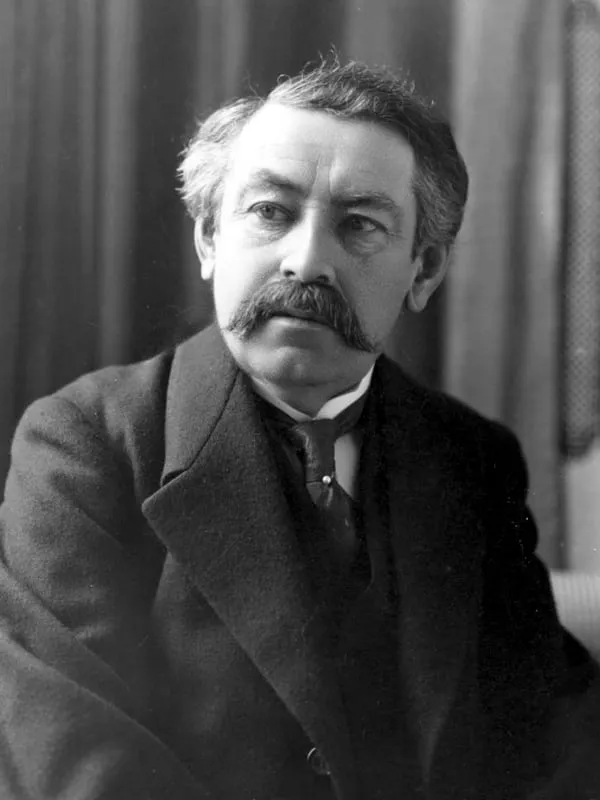
- Born:
- 28 March 1862, Nantes
- Died:
- 7 March 1932, Paris
- Author:
- Łukasz
- Photo:
- autor nieznany, domena publiczna, Wikimedia Commons

Aristide Briand was the longest-serving and best-known French politician of the interwar years. He headed the government eleven times, and from 1925 to 1932, through a succession of cabinets, he directed France’s foreign policy. He began as a socialist and a champion of the general strike, made his name as the author of the law separating Church and State, and during the First World War was Prime Minister in the year of Verdun. After the war he became the symbol of reconciliation with Germany: together with Gustav Stresemann and Austen Chamberlain he created the Locarno system, brought Germany into the League of Nations, achieved with the American Secretary of State Kellogg the pact renouncing war, and became the first foreign minister of a great power to propose the unification of Europe. He died in March 1932, less than a year before the seizure of power by Hitler, who destroyed everything Briand had built.
From Nantes to parliament
Aristide Pierre Henri Briand was born on 28 March 1862 in Nantes into a modest family of innkeepers. He spent his childhood in Saint-Nazaire, where his parents ran a café. A gifted scholarship pupil, he attended the lycée in Nantes, where, according to family tradition, he met Jules Verne. He studied law in Paris and then opened a legal practice in Saint-Nazaire. To the end of his life he regarded himself as a Breton, and his favourite way to relax was by the sea with a fishing rod in his hand.
In the 1880s he began writing for left-wing newspapers and became involved in the labour movement. He was a superb orator with a deep, melodious voice that contemporaries likened to a cello. In the 1890s he became one of the loudest advocates of the general strike as the road to revolution, and he worked with the French socialist leader Jean Jaurès, with whom in 1904 he founded the daily L’Humanité. In 1902, after several unsuccessful attempts, he was elected deputy for Saint-Étienne. He never married.
The separation of Church and State
In the Chamber of Deputies Briand soon showed that he was above all a master of compromise. As the committee’s rapporteur he prepared the law on the separation of the Churches and the State, passed in December 1905. The law ended the concordat that had been in force since Napoleon’s time, but Briand toned down the harshest drafts and left the churches to the Church for its use. It remains the foundation of French secularism (laïcité) to this day.
In 1906 he accepted the post of minister of education and religious affairs in a Radical government, against the decision of the socialists, who had forbidden their members to take part in “bourgeois” cabinets. For this he was expelled from the French Section of the Workers’ International, and his former comrades called him a renegade from then on. In 1908 he became minister of justice in the government of Georges Clemenceau, and in July 1909 Prime Minister for the first time. In October 1910, as head of the government, he broke a railway strike by calling the railwaymen up into the army and making them work under military discipline. The former apostle of the general strike became a “strike-breaker” in the eyes of the left. Jaurès accused him of sullying and corrupting every party in turn. Briand moved towards the centre and from then on formed governments with the Radicals and the moderate right. Until 1913 he headed four successive cabinets, and in 1912 he was minister of justice in the government of Raymond Poincaré.
Wartime Prime Minister
When war broke out in August 1914, Briand joined the government of national unity as minister of justice. He was among the supporters of a Balkan expedition and in 1915 backed the dispatch of troops to Salonika, where the Salonika front was formed. On 29 October 1915 he became Prime Minister for the fifth time and at the same time, for the first time, foreign minister. He led the government during the Battle of Verdun in 1916, tried to improve coordination among the Allies and defended himself against a parliament that was criticising the high command ever more sharply. In December 1916 he removed General Joseph Joffre from effective command and staked everything on General Robert Nivelle, whose offensive in the spring of 1917 ended in a bloody defeat. Briand was no longer Prime Minister when it came: his government fell in March 1917.
In the autumn of 1917, by then out of office, he was ready to meet in Switzerland the German diplomat Baron Oskar von der Lancken, who was sounding out the possibility of peace through Belgian intermediaries. The government did not allow the meeting to take place, and Clemenceau, who took power in November and hunted down “defeatists”, regarded Briand as a man prepared to accept a compromise peace. From then on the two were bitter enemies. In January 1920 Briand helped ensure that the National Assembly elected not Clemenceau but Paul Deschanel as President of the Republic.
The government of 1921–1922
In January 1921 Briand once again became head of the government and took charge of foreign affairs. He was still pursuing a hard line towards Germany. On 19 February 1921 in Paris, Briand and the Polish foreign minister Eustachy Sapieha signed the Franco-Polish alliance, soon supplemented by a secret military convention. In March 1921, when Germany rejected the reparations demands, French and Belgian troops occupied Düsseldorf, Duisburg and Ruhrort as a sanction. In the dispute over Upper Silesia France backed the Polish position against the British. In the autumn Briand personally led the French delegation to the Washington Conference, although he soon returned to Paris. There France had to accept the same limit on its battle fleet as Italy, which Paris saw as a humiliation.
Soon afterwards his readiness to give way to the British brought about his fall. In January 1922, at the Cannes Conference, he discussed with David Lloyd George British guarantees for France and an easing of reparations. The British Prime Minister talked him into a golf lesson, and photographs of a clumsy Briand with a golf club went round the French press as proof that the Prime Minister was letting the English lead him by the nose. President Alexandre Millerand and some of the ministers demanded his return to Paris, and on 12 January 1922 Briand resigned. His successor, Poincaré, occupied the Ruhr in January 1923.
Minister of peace
The failure of the policy of coercion opened the way back for Briand. In April 1925 he became foreign minister in the government of Paul Painlevé and remained in the post, with short spells as Prime Minister, through fourteen successive cabinets until January 1932, including Poincaré’s government of national unity of 1926–1929. He had concluded that France could not keep Germany in the shackles of the Treaty of Versailles for ever, and that French security had to rest on the League of Nations, British guarantees and the gradual drawing of Germany into a common system of obligations. He was neither a Germanophile nor a naive pacifist. He said that he worked for peace but was not its master, and that when war came one had to be ready.
With the German minister Gustav Stresemann and the British Austen Chamberlain he negotiated the Locarno Treaties in the autumn of 1925, in which Germany recognised its border with France and Belgium. In return he secured for Poland only a new French guarantee treaty, which was received bitterly in Warsaw. On 10 September 1926 in Geneva he welcomed Germany, which had just joined the League of Nations. His speech, with its cry “Away with rifles, machine guns and cannon! Make way for conciliation, arbitration and peace!”, went down in history. A week later, at a village inn in Thoiry, he discussed with Stresemann an earlier withdrawal of troops from the Rhineland and the return of the Saar, but nothing came of the plan. In December 1926 the two received the Nobel Peace Prize.
On 6 April 1927, the tenth anniversary of the United States’ entry into the war, Briand proposed to the Americans a bilateral agreement renouncing war. The Secretary of State, Frank Kellogg, who did not want to give France anything resembling an alliance, replied with the proposal of a pact open to all states. On 27 August 1928 in Paris, representatives of fifteen states signed the Kellogg–Briand Pact, condemning war as an instrument of national policy. At the Hague Conference in August 1929 Briand agreed that, in return for the acceptance of the Young Plan, French troops would leave the Rhineland by 30 June 1930, five years ahead of schedule.
The plan for a European Union
On 5 September 1929, as Prime Minister for the eleventh time, Briand put forward at the League of Nations the idea of creating a “federal bond” between the states of Europe, chiefly economic, but without infringing their sovereignty. On 17 May 1930 the French government sent the European governments a memorandum on the organisation of a “system of European federal union”, drafted by his close collaborator Alexis Leger, later known as the poet Saint-John Perse. The replies were cool. Britain did not want to tie itself to the Continent, and in Germany, where after Stresemann’s death in October 1929 the government was in the hands of men less inclined to compromise, the project was seen as an attempt to entrench the Versailles order. In September 1930 the League set up no more than a commission of enquiry into European union. In the same month the NSDAP became the second-largest party in the Reichstag.
The last years
The Great Depression destroyed one pillar of Briand’s policy after another. In March 1931 Germany and Austria announced a plan for a customs union, which France saw as a prelude to the union of the two states. Briand, whose policy was now portrayed as naive, stood for President of the Republic in May 1931, but withdrew after the first ballot in the National Assembly, and Paul Doumer was elected. In the autumn of 1931, already gravely ill, he presided over the League of Nations Council’s deliberations on the Mukden Incident and Japanese aggression in Manchuria. The Council could manage nothing more than sending a commission of enquiry. It was the first great test of the collective security to which Briand had devoted his last years, and the League failed it.
In January 1932 Pierre Laval formed a new government without Briand. A few weeks later, on 7 March 1932, Briand died in his flat in Paris. He was buried at Cocherel in Normandy, in a landscape he loved.
Legacy
Briand died at the last moment when his work could still appear lasting. A year later the Chancellor of Germany was Adolf Hitler, who took Germany out of the League of Nations and in 1936 tore up the Locarno agreements by sending troops into the Rhineland. The Kellogg–Briand Pact stopped neither Japan in Manchuria, nor Italy in Abyssinia, nor Germany in Europe. Opponents on the right accused Briand in his lifetime of lulling France into complacency, and his critics after 1940 saw him as the father of the attitude that led to concessions to Hitler and to defeat. His former collaborator Leger, as secretary-general of the Foreign Ministry, accompanied Prime Minister Daladier to Munich in 1938.
Others see Briand as a politician who understood that France lacked the strength to keep watch over Germany on its own, and that the only alternative to a new war was a community of interests with the former enemy. In 1945 the Kellogg–Briand Pact became the legal basis for charging the leaders of the Third Reich with crimes against peace at the Nuremberg trials, and his plan for a European federation is regarded as a forerunner of the integration that began after the Second World War – this time without the men of his generation. In 1937 a monument to peace dedicated to his memory was unveiled in front of the French Foreign Ministry on the Quai d’Orsay.
Sources
Often appears with
People who appear in the same events.