France
Georges Clemenceau
Prime Minister of France (1906–1909, 1917–1920), Minister of War (1917–1920), President of the Paris Peace Conference (1919)
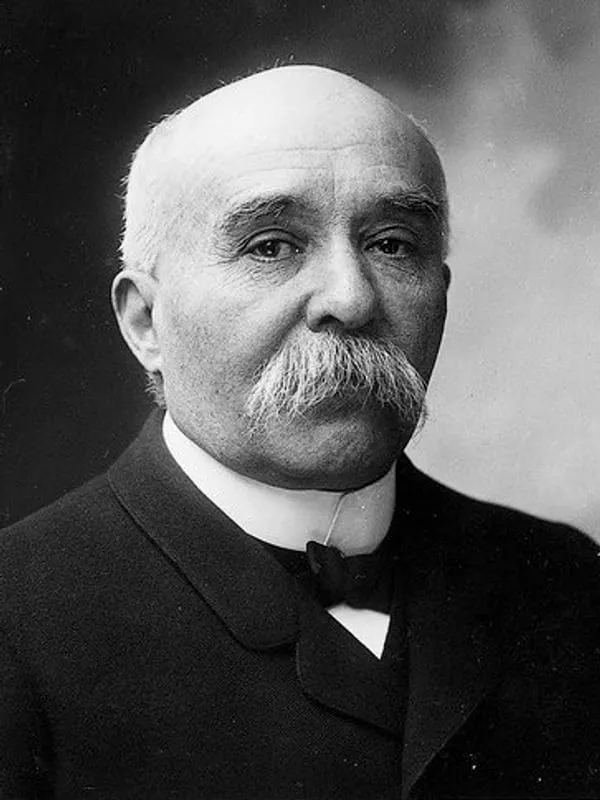
- Born:
- 28 September 1841, Mouilleron-en-Pareds (France)
- Died:
- 24 November 1929, Paris
- Author:
- Łukasz
- Photo:
- Paul Nadar, domena publiczna, Wikimedia Commons

Georges Clemenceau – a doctor by training, a journalist by inclination and a politician for more than half a century – was one of the great figures of the French Third Republic. As a young man he witnessed the defeat by Prussia in 1870 and the loss of Alsace and Lorraine; as an old man, in November 1917, he took over the government at the worst moment of the First World War and led France to victory. The French called him the “Father of Victory”. As president of the Paris Peace Conference he was one of the principal authors of the Treaty of Versailles, which was meant to protect France from Germany for ever. On the road to the Second World War his work had two sides. Germany regarded the treaty as a humiliating dictated peace born of revenge, while Clemenceau himself and the French generals thought it too weak. Both verdicts weighed heavily on the history of the next twenty years.
Youth, the Commune and the “toppler of ministries”
Georges Benjamin Clemenceau was born on 28 September 1841 in Mouilleron-en-Pareds in the Vendée, into a family of doctors. His father, a republican and atheist who had been arrested under the Second Empire, instilled in him a dislike of monarchy and the Church. Clemenceau studied medicine in Nantes and in Paris, where in 1862 he spent more than two months in prison for republican activity. In 1865 he took his doctorate and left for the United States. For four years he wrote reports for the French press and taught at a girls’ school in Connecticut, and in 1869 he married one of his pupils, an American, Mary Plummer. From then on he spoke fluent English, which half a century later made his dealings with the British and Americans easier.
After the fall of the empire in September 1870, during the war with Prussia, he became mayor of the Montmartre district. The defeat and the surrender of Alsace and Lorraine to Germany were the experience that shaped his whole life. In March 1871, at the outset of the Paris Commune, he tried without success to mediate between the Communards and the government. From 1876 he was a deputy and a leader of the Radical left. He brought down one cabinet after another, which earned him the nickname “the toppler of ministries”, and his sharp tongue and ruthlessness in polemics – and in duels – earned him the name “the Tiger”. He fought Jules Ferry’s colonial policy, believing that it diverted France’s strength from the cause of the lost provinces and the frontier with Germany.
Caught up in the Panama scandal, he lost his seat in 1893 and for nine years was only a journalist. During the Dreyfus affair he was among the most ardent defenders of the accused: in January 1898 his newspaper, L’Aurore, published the letter of Émile Zola to which Clemenceau gave the title “J’accuse…!”.
First government
In 1902 he became a senator for the Var department. In March 1906 he took over the Ministry of the Interior, and from October that year until July 1909 he was Prime Minister. His government is remembered above all for its heavy hand against strikes and the revolt of the winegrowers in the south, which alienated the socialists and Jean Jaurès; he called himself “France’s first cop”. In foreign policy Clemenceau strengthened the understanding with Britain and Russia that in 1907 was completed as the Triple Entente. He fell in July 1909 after a dispute in the Chamber. In 1913 he founded the newspaper L’Homme libre, in which he warned against Germany and supported the extension of military service to three years. He tried without success to prevent the election of Raymond Poincaré as President, and from then on the two men were enemies.
Critic of the wartime governments
In August 1914 Clemenceau declined to join the government of national unity, preferring to keep watch on it from outside. When his paper was suspended over an article on the appalling conditions in which the wounded were transported, he changed its title to L’Homme enchaîné (“The Man in Chains”) and went on writing. As chairman of the Senate’s army committee he travelled to the front and bombarded ministers with charges of shortcomings in the army’s supplies, its medical services and its artillery. His paper reminded readers every day that the Germans still stood at Noyon, about a hundred kilometres from Paris. In 1917, the year of mutinies in the French army, he accused the Minister of the Interior, Louis Malvy, in the Senate of indulging pacifists and betraying the country’s interests. A succession of scandals and the Italian defeat at Caporetto brought down Paul Painlevé’s government in November.
“War, nothing but war”
Poincaré disliked Clemenceau, but in practice his choice lay between him and the former Prime Minister Joseph Caillaux, who was regarded as a supporter of a compromise peace. On 16 November 1917 the 76-year-old Clemenceau formed a government, keeping the Ministry of War for himself. His closest collaborators were Georges Mandel, his chief of staff, and General Henri Mordacq. In his programme of 20 November he declared: “Neither treason nor half-treason: war. Nothing but war!” He began by settling accounts: Malvy was arraigned before the Senate sitting as the High Court, Caillaux went to prison in January 1918, and people accused of taking German money were convicted and shot. Critics spoke of dictatorship, but Clemenceau governed with parliament in session and repeatedly sought a vote of confidence in the Chamber. He spent much time at the front, in the trenches, wearing an ordinary hat instead of a helmet, which won him the soldiers’ affection. In March 1918 he told the Chamber: “Home policy? I wage war. Foreign policy? I wage war. All the time I wage war.”
On 21 March 1918 the Germans of Erich Ludendorff routed the British Fifth Army on the Somme. On 26 March at Doullens Clemenceau brought about the agreement under which General Ferdinand Foch was to co-ordinate the operations of the Allied armies, and in April Foch became their Commander-in-Chief. This was Clemenceau’s most important military decision. In the same month he published a letter of 1917 from Emperor Charles I in which the monarch supported France’s “just claims” to Alsace and Lorraine. He thereby humiliated Vienna, although many historians believe that he drove Austria-Hungary into Germany’s arms. At the end of May the Germans reached the Marne and Paris was once again under fire, but Clemenceau defended Foch and General Philippe Pétain in the Chamber. On 3 June, together with the Prime Ministers of Britain and Italy, he signed a declaration at Versailles that a united and independent Poland with access to the sea was a condition of a lasting peace. In the autumn his government recognised the Polish Army in France as an allied army, subordinate politically to the Polish National Committee of Roman Dmowski.
When Germany asked President Woodrow Wilson for an armistice, Clemenceau – against Poincaré and some of the military, who wanted to march on Berlin – decided that the slaughter must not be prolonged if the armistice terms made it impossible for Germany to resume the fight. On 11 November 1918, after the signing of the Armistice of Compiègne, he read its terms in the Chamber of Deputies and paid tribute to the fallen. That evening he is said to have told Mordacq that they had won the war, but now they had to win the peace, and that might be more difficult.
Versailles
In January 1919 Clemenceau took the chair of the Paris Peace Conference. On 19 February the anarchist Émile Cottin shot him in the street. One of the bullets remained in his body for the rest of his life, but the Prime Minister was back at work within days. In the Council of Four he clashed with Wilson and the British Prime Minister David Lloyd George. For Clemenceau the overriding concern was the security of France, which had lost nearly 1.4 million soldiers and was weaker than Germany in population and industry. Foch and Poincaré demanded that the left bank of the Rhine be detached from Germany. Clemenceau gave this up in exchange for a fifteen-year occupation of the Rhineland, the permanent demilitarisation of the Rhineland and of a zone east of the Rhine, and the promise of American and British guarantees in the event of German aggression. France regained Alsace and Lorraine, and the Saar Basin was placed under League of Nations administration for fifteen years, with its mines owned by France. Clemenceau supported a strong Poland as a counterweight to Germany in the east, in place of the lost Russian ally.
The Treaty of Versailles was signed on 28 June 1919 in the Hall of Mirrors of the Palace of Versailles – the very hall in which the German Empire had been proclaimed in 1871. For Clemenceau this choice of venue settled the account of 1871; for the Germans it was another humiliation. It soon became clear that the safeguards for which he had given up the Rhine did not exist: the American Senate rejected the treaty, and with it fell the American guarantee, on which the British one depended.
Final years
In January 1920 Clemenceau lost a preliminary vote of republican parliamentarians to Paul Deschanel, withdrew from the presidential race and resigned on 18 January. Part of the right had not forgiven his anticlericalism, and part of parliament felt that he had given way in Paris. He withdrew from politics and travelled; in 1922 he spoke in the United States in defence of French policy and warned against America turning its back on Europe. He wrote books, among them studies of Demosthenes and of his friend Claude Monet. He died in Paris on 24 November 1929 and was buried in a simple grave beside his father at Colombier near Mouchamps in the Vendée.
In his last book, Grandeur and Misery of Victory, published posthumously in 1930, he answered Foch’s charges and warned that Germany was preparing its revenge while France, abandoned by its allies, was giving up one by one the things it had fought for. His fears were soon borne out. The last French soldiers left the Rhineland in June 1930, five years ahead of schedule. In 1935 the Saar returned to Germany after a plebiscite, and in March 1936 Hitler marched troops into the demilitarised Rhineland, and France did not respond.
Significance
For the French, Clemenceau remains a symbol of the will to win. His speeches of 1918 inspired Winston Churchill in 1940, and Georges Mandel, his former collaborator, was in June 1940 one of the few ministers who opposed capitulation to Germany. Historians stress that his government gave the French back the sense that the country was being governed, and that staking everything on Foch was his greatest military achievement. Critics point to political trials in which the line between treason and dissent was sometimes blurred.
As a peacemaker he was judged from two sides. In 1919 the British economist John Maynard Keynes portrayed him as an old man bent on destroying Germany, and that view reinforced the belief in Britain and the United States that the Treaty of Versailles was unjust – which in the 1930s encouraged concessions to Hitler. Foch and the French right, on the contrary, accused him of giving up the Rhine for promises that nobody kept. Foch is said to have remarked that the treaty was not a peace but an armistice for twenty years. Historians today see Clemenceau rather as a realist who understood that France could not on its own maintain the upper hand over a more populous and economically stronger Germany, and that it needed a lasting alliance with Britain and the United States. When that alliance failed to materialise, there was no one left to defend the Versailles order.
Sources
Mentioned in battles
(02)Often appears with
People who appear in the same events.