Russia
Felix Dzerzhinsky
Chairman of the Cheka, GPU and OGPU (1917–1926), People's Commissar for Internal Affairs (1919–1923) and for Transport (1921–1924), Chairman of the Supreme Council of the National Economy (1924–1926)
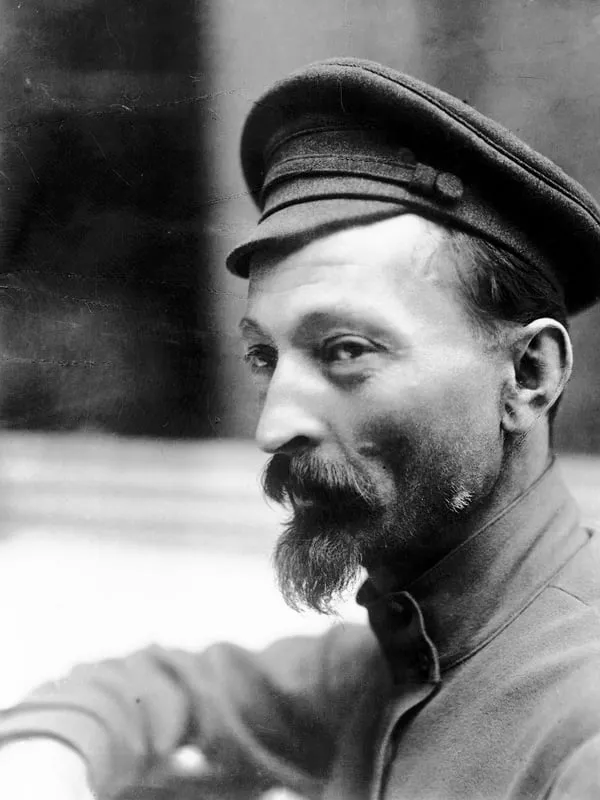
- Born:
- 11 September 1877, Dzierżynowo, Vilna Governorate (Russian Empire)
- Died:
- 20 July 1926, Moscow
- Author:
- Natalia
- Photo:
- M.S. Nappelbaum, domena publiczna, Wikimedia Commons

Felix Dzerzhinsky (in Polish Feliks Dzierżyński), a Pole from a gentry family near Wilno (Vilnius), was for a quarter of a century a professional revolutionary who spent more years in tsarist prisons and in exile than at liberty. He was freed only by the February Revolution. Nine months later he was at the head of the Cheka, the All-Russian Extraordinary Commission, set up by Vladimir Lenin’s government to fight “counter-revolution and sabotage”. He turned an office of a few dozen people into a powerful political police with the right to arrest, try and shoot people without trial, and he led it until his death in 1926. The institution he built later passed into the hands of Joseph Stalin as the OGPU and the NKVD and carried out the Great Terror, the Polish Operation and the Katyn massacre. In 1920 Dzerzhinsky stood ready to take power in Poland from the hands of the Red Army, and to this day he divides Poles, Russians and Belarusians.
The nobleman who became a revolutionary
He was born on 11 September 1877 (30 August by the Julian calendar) on the family estate of Dzierżynowo in the Oszmiana district of the Vilna Governorate, in what is now Belarus. His father, a secondary-school teacher, died when Felix was five, and his mother brought up eight children on her own in a Catholic and Polish patriotic atmosphere. From 1887 he attended the gymnasium in Wilno, the same school at which Józef Piłsudski had studied a few years earlier. He remembered the school, with its Russification and its informers, with hatred, and he did not take his final examinations. At seventeen he became involved with the Social Democrats, and from 1895 he was active in Lithuanian social democracy.
In 1897 he became a professional revolutionary. Arrested for the first time in Kowno (Kaunas), where he edited the illegal Robotnik Kowieński (The Kowno Worker), he was exiled to the Vyatka Governorate, from which he escaped in 1899. He took part in the merger of groups that in 1900 formed the Social Democracy of the Kingdom of Poland and Lithuania (SDKPiL). This party, whose intellectual leader was Rosa Luxemburg, rejected the slogan of Polish independence and staked everything on a joint revolution with the workers of Russia, Germany and Austria. Dzerzhinsky defended this position all his life, in bitter conflict with the Polish Socialist Party (PPS). Arrested in Warsaw in 1900 and exiled to Siberia, he escaped in 1902 and made his way to Berlin and then to Kraków, from where he organised the smuggling of party literature into the Russian partition.
During the Revolution of 1905 he was active in Warsaw; he was arrested in July and freed under an amnesty in the autumn. At the unification congress of Russian social democracy in Stockholm in 1906 he met Lenin, who became an authority for him, and he joined the Central Committee of the Russian party on behalf of the SDKPiL. In 1908 he once again ended up in the Tenth Pavilion of the Warsaw Citadel, where he wrote his Prison Diary, and in 1909 he was exiled to Siberia for life, escaping after a few weeks. In 1910, in Kraków, he married the party activist Zofia Muszkat. Their only son, Jan, was born in 1911.
Penal servitude
In September 1912, having returned to Warsaw under a false name, Dzerzhinsky was arrested for the sixth time. In 1914 a court sentenced him to three years of katorga, penal servitude. After the outbreak of war the authorities evacuated prisoners from Warsaw into the Russian interior, and Dzerzhinsky ended up in the harsh katorga prison in Oryol, where hunger, typhus and the cruelty of the guards prevailed. Prisoners from the PPS were also held there, among them Aleksander Prystor, later Prime Minister of Poland. According to his biographers, Dzerzhinsky took part in the prisoners’ protests and hunger strike, which forced an improvement in conditions. In 1916 in Moscow he received a further six years of katorga and was taken in chains to Butyrka. Richard Pipes believed that the eleven years he spent in tsarist prisons shaped his later ruthlessness towards the old elites.
1917: from katorga to the Smolny
On 14 March 1917 (1 March Old Style) a crowd threw open the Moscow prisons. Dzerzhinsky walked out in prison clothes, exhausted and suffering from tuberculosis. He joined the Bolsheviks, and at their Sixth Congress in August he entered the Central Committee. In the autumn he consistently backed Lenin against Lev Kamenev and Grigory Zinoviev, who opposed an uprising. He became a member of the party centre that was to direct it and of the Military Revolutionary Committee (PL) of the Petrograd Soviet. During the October coup he was responsible for seizing the post office and the telegraph, and afterwards he was commandant of the Smolny.
The Cheka and the Red Terror
On 20 December 1917 the Council of People’s Commissars heard his report on “sabotage” by officials and set up the Cheka. Dzerzhinsky became its chairman. Lenin called him a “proletarian Jacobin”. The beginnings were modest: a few dozen people on Gorokhovaya Street in Petrograd. Among his first associates were many Poles and Latvians, such as Józef Unszlicht, a native of Mława, and Jēkabs Peters.
In the dispute over peace with Germany Dzerzhinsky was among the supporters of a “revolutionary war”, but in the decisive vote in February 1918 he abstained so as not to split the party. The German offensive brought a turning point in the Cheka’s work: the decree “The Socialist Fatherland Is in Danger!” of 21 February 1918 allowed enemy agents and speculators to be shot on the spot, and the commission immediately claimed this right for itself. In March it moved with the government to Moscow, to the Lubyanka. In July 1918 two Chekists from the Left Socialist Revolutionary Party shot the German ambassador, Wilhelm von Mirbach, using a warrant bearing Dzerzhinsky’s forged signature. When he went to the mutinous detachment to demand that the killers be handed over, he was taken hostage. He stepped down for a few weeks so as not to lead an investigation in which he himself was involved.
On 30 August 1918 the head of the Petrograd Cheka, Moisei Uritsky, was killed, and in Moscow Lenin was wounded. On 5 September, after a report by Dzerzhinsky, the Council of People’s Commissars adopted the resolution on the Red Terror. Hostages from the old elites, officers, clergy and people suspected of links with the Whites were shot. How many died is not known: historians’ estimates for the autumn of 1918 range from several thousand to well over ten thousand victims, and for the Civil War as a whole they are many times higher. From March 1919 Dzerzhinsky was also Commissar for Internal Affairs, and the Cheka was setting up the first forced-labour camps.
The war with Poland
In the summer of 1920, as the Red Army marched on Warsaw, Dzerzhinsky became a member of the Provisional Polish Revolutionary Committee, set up in Białystok on 30 July under the chairmanship of Julian Marchlewski. The committee was to take power in Poland after the capture of Warsaw and proclaim a Polish Soviet republic. Polish workers and peasants did not support it, and after the Polish victory in the Battle of Warsaw its members fled with the retreating army. For Poles this was proof that Dzerzhinsky had spent his whole life working against the independence of his own country. After the defeat in the Polish–Soviet War he hardly concerned himself with Polish affairs any more.
The GPU, the OGPU and the economy
After the end of the Civil War the Cheka was replaced in February 1922 by the GPU, the State Political Directorate, and after the creation of the Soviet Union by the OGPU. The names changed, but Dzerzhinsky remained in charge. In the autumn of 1922 his police deported a group of eminent philosophers, scholars and writers abroad on the so-called philosophers’ ships. A camp was set up on the Solovetsky Islands, the prototype of the later Gulag. The OGPU’s most famous operation was Operation Trust, a fictitious anti-Bolshevik underground organisation through which the Chekists deceived the White émigrés and Western intelligence services for years. In 1924 Boris Savinkov was lured into Russia and arrested, and in 1925 the British agent Sidney Reilly.
Dzerzhinsky was also one of the country’s most important economic managers. In 1921–1924, as Commissar for Transport, he rebuilt the railways, and from February 1924 he headed the Supreme Council of the National Economy. He supported the New Economic Policy and industrial development based on the peasant market. He chaired the commission to combat child homelessness, which Soviet propaganda was keen to highlight. In 1922, however, Lenin accused him, together with Stalin and Sergo Ordzhonikidze, of Great Russian chauvinism over Georgia. Lenin wrote at the time that Russified newcomers from other nations were sometimes more zealous Russifiers than the Russians themselves. In the power struggles after Lenin’s death Dzerzhinsky sided with the majority under Stalin against Trotsky, and later against Zinoviev and Kamenev.
On 20 July 1926, at a plenum of the Central Committee, he delivered a vehement two-hour speech attacking the opposition, Kamenev among them. A few hours later he died of a heart attack in his flat. He was buried by the Kremlin wall, and among those who carried his coffin were Stalin and Trotsky.
Legacy
After Dzerzhinsky’s death the OGPU was taken over by his deputy, Vyacheslav Menzhinsky, and then by Genrikh Yagoda. In 1934 the political police was incorporated into the NKVD, which under Nikolai Yezhov carried out the Great Purge in 1937–1938. One part of it was the Polish Operation of the NKVD, in which more than a hundred thousand people, most of them Poles, were shot. It also claimed most of Dzerzhinsky’s former comrades from the SDKPiL and the Communist Party of Poland, which the Comintern dissolved in 1938, Unszlicht among them. In the spring of 1940 Dzerzhinsky’s successors murdered Polish prisoners of war in the Katyn massacre. The Białystok committee of 1920, for its part, was the first attempt at what Stalin achieved in 1944: installing in Poland a government brought in by the Red Army.
In the Soviet Union “Iron Felix”, the knight of the revolution with “a warm heart, a cool head and clean hands”, became the patron of the secret services. His statue stood in front of the Lubyanka from 1958 until August 1991, when, after the failed coup, a crowd brought about its removal; the Warsaw monument (PL) had been dismantled in 1989. Officers of the Russian political police still call themselves Chekists to this day, and in Belarus Dzerzhinsky is venerated as a hero. Historians such as George Leggett and Richard Pipes see him as the creator of an institution that abolished the boundary between investigation, trial and execution. They stress his asceticism, his honesty in money matters and his fanatical devotion to the cause, which allowed him to send people to their deaths without hesitation.
Sources
Mentioned in battles
(02)Often appears with
People who appear in the same events.