Italy
Francesco Saverio Nitti
Minister of the Treasury (1917–1919), Prime Minister of Italy (1919–1920), critic of the Paris peace treaties, anti-fascist exile, senator (1948–1953)
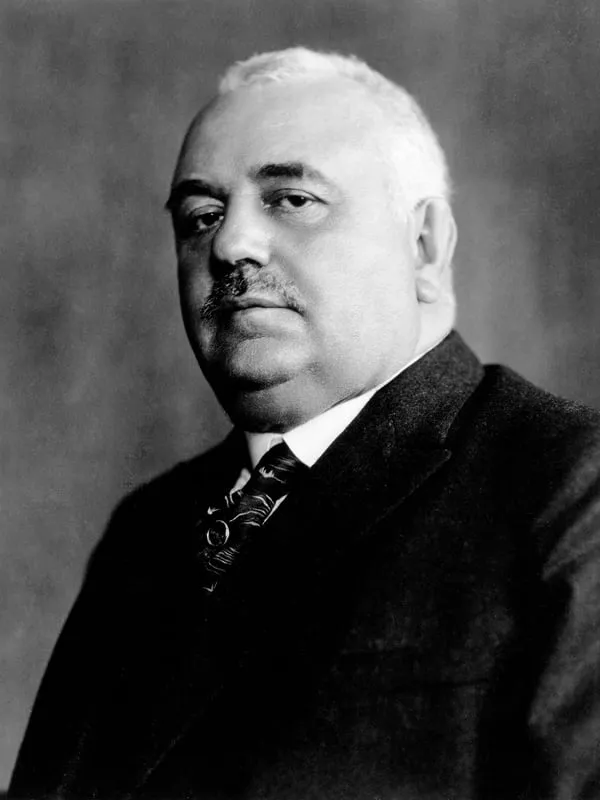
- Born:
- 19 July 1868, Melfi (Kingdom of Italy)
- Died:
- 20 February 1953, Rome
- Author:
- Natalia
- Photo:
- autor nieznany, domena publiczna, Wikimedia Commons

Francesco Saverio Nitti was one of the last prime ministers of liberal Italy and one of the first politicians to warn openly that the peace made in Paris would lead to a new war. An outstanding economist and an authority on the poverty of the Italian South, he served as Treasury minister during the war and took over the government in June 1919, at the height of the post-war crisis. He wanted to demobilise the army, rescue the public finances and stay close to the United States, on whose credits Italy depended. Three months later the poet Gabriele D’Annunzio, at the head of mutinous soldiers, seized Fiume, and the Prime Minister did not dare to use force against him. To the nationalists he became a byword for cowardice; to historians he is an example of the helplessness of the liberal state in the face of the violence that would soon carry Mussolini to power. In exile Nitti was one of the best-known anti-fascists, and during the war he was a prisoner of the Germans.
A professor from Basilicata
He was born on 19 July 1868 in Melfi in Basilicata, one of the poorest regions of the country, into a family with democratic and anti-Bourbon traditions. His father had fought as a volunteer under Garibaldi, and his grandfather, a doctor of liberal views, had been killed in 1861 by brigands from the bands fighting the new Italian state. Francesco graduated in law from the University of Naples in 1890, but he was already writing for newspapers as a student. He published his first book, on Italian emigration, at the age of twenty. In it he defended the peasants’ right to leave for the Americas as their only way out of destitution.
In 1899 he became professor of public finance in Naples. His work on the economy of the South, above all Nord e Sud (“North and South”, 1900), argued that Italian unification had brought the South more burdens than benefits, and that the state’s tariff and investment policies favoured the industrial North. This won him both fame and enemies. He belonged to the circle of thinkers known as the meridionalisti, who made the backwardness of the Mezzogiorno one of the central issues of Italian politics. He called for the industrial development of Naples, the building of hydroelectric power stations and reservoirs on the rivers of the South, and the nationalisation of the electricity industry.
Minister
In 1904 he was elected to the Chamber of Deputies for a constituency in Basilicata and aligned himself with the Radicals, the left wing of the liberal camp. Giovanni Giolitti, the great power broker of Italian politics, drew on his advice for the law on the development of Naples and in 1911 made him Minister of Agriculture, Industry and Commerce. Nitti then pushed through a state monopoly of life insurance, out of which grew a large state insurance institute.
When war broke out in 1914 he was at first in favour of neutrality, but he soon concluded that Italy could not stand alone and had to side with the Entente and the United States, on which it depended for oil, grain and coal. After the defeat at Caporetto in October 1917, Prime Minister Vittorio Emanuele Orlando gave him the Treasury. From that post Nitti in practice ran the entire war economy. He launched a great national loan, set up a state institute that took control of foreign-exchange dealings, and founded an organisation for former soldiers that was meant to provide them with work and land.
In January 1919 he left the government. He had quarrelled with the Foreign Minister, Sidney Sonnino, who did not want him in the delegation to the peace conference in Paris, and with industrialists whose war profits he had curbed. He believed that instead of stubbornly demanding everything the Treaty of London had promised, and Fiume on top of it, Italy should seek an understanding with President Woodrow Wilson. He was not heeded. When Orlando and Sonnino walked out of the conference in protest in April 1919 and then had to return without a single concession, the government was discredited. On 19 June Orlando lost a vote in parliament, and on 23 June Nitti became Prime Minister.
Prime Minister in a year of crisis
Nitti inherited a country that had won the war but was losing the peace. Inflation was eating up wages, unemployed veterans were returning home, peasants were occupying the landowners’ estates and workers were on strike. The so-called biennio rosso (“two red years”) of 1919–1920 had begun, when the socialists spoke of a revolution on the Russian model. The Prime Minister regarded putting the finances in order as the most urgent task. Within two months he discharged more than a million men from the army, cutting monthly military spending from about 2 billion to 400 million lire. On 2 September 1919 he proclaimed an amnesty for soldiers convicted of military offences, deserters included, which the nationalists took as an insult to the fallen. He introduced proportional representation, which the socialists and Catholics had demanded, and a new police corps, the Royal Guard. In foreign policy he sought an understanding with the Allies and with Yugoslavia. Under his government, on 10 September 1919, Italy signed the Treaty of Saint-Germain with Austria, which gave it South Tyrol, Trieste and Istria but left the border with Yugoslavia and the fate of Fiume to further negotiation.
On 12 September 1919 D’Annunzio seized Fiume. The next day Nitti condemned the soldiers’ mutiny in parliament as an attack on discipline and on the credibility of the state, appointed General Pietro Badoglio commissioner for the region and announced a blockade of the city. He would not, however, order an assault. He feared civil war and a revolt in the army, in which many officers sympathised with the poet. He preferred negotiation, and in December 1919 he offered D’Annunzio a compromise, which the Fiume city council accepted and the Comandante rejected. D’Annunzio and his allies – the nationalists and Benito Mussolini’s nascent movement – waged a campaign of hatred against the Prime Minister. The poet nicknamed him “Cagoia”, a coward’s epithet that stuck to Nitti for years.
In November 1919 the first elections under the new electoral law were held. The socialists won about a third of the vote and the new Catholic Italian People’s Party about a fifth. For the first time since unification the liberals lost their majority. Governing became almost impossible. In April 1920 Nitti still hosted the San Remo conference, at which the Allies divided up the mandates in the Middle East, but in May he lost a vote in the Chamber. He formed a new government, but after deciding to raise the official price of bread he lost his support and resigned in June 1920. Giolitti became Prime Minister once again, and in December 1920 he ordered the army to drive D’Annunzio out of Fiume.
Europe without peace
Removed from power, Nitti became one of the sharpest critics of the Versailles order. In 1921 he published L’Europa senza pace (“Peaceless Europe”), followed by The Decadence of Europe and The Tragedy of Europe. Like the British economist John Maynard Keynes, he argued that the Treaty of Versailles and the other Paris treaties, dictated by the victors in a spirit of revenge, would ruin the continent’s economy. He warned that unpayable reparations and unjust borders would not end the war but only postpone it. He was most scathing about French policy towards Germany, and he urged the Americans not to turn their backs on Europe. His books were translated into many languages, and in Germany they were readily cited as proof that even the victors considered Versailles unjust.
Against fascism
Like many liberals, Nitti at first underestimated fascism, and in 1922 he even held talks about a broad coalition government that would include Mussolini. After the March on Rome in October 1922 he quickly realised what he was dealing with. He refused to support the new government, and in November 1923 fascist squads wrecked his house in Rome before the eyes of his family. In 1924 he left for Zurich, and from 1926 he lived in Paris. The fascists removed him from his university chair. His Paris flat became a meeting place for Italian exiles of every shade, from the priest Luigi Sturzo to the socialists. He wrote of Bolshevism and fascism as two forms of the same tyranny and defended liberal democracy.
In September 1939, after the German attack on Poland, Nitti wrote to Mussolini urging him to break with Hitler, who had violated the Munich Agreement, and to side with France and Britain. In June 1940 Mussolini entered the war on Germany’s side. After the fall of France Nitti remained in the German-occupied country. At the end of August 1943, a few weeks after Mussolini’s overthrow in Italy, the Germans arrested him and took him to the Tyrol. He was interned together with other prominent prisoners, among them the former French prime ministers Édouard Daladier and Paul Reynaud. He regained his freedom in May 1945.
Return and legacy
He returned to Italy as one of the few surviving prime ministers from before fascism. In 1946 he was elected to the Constituent Assembly, which drew up the constitution of the republic. In 1947 the provisional head of state, Enrico De Nicola, asked him to form a government, but Nitti was unable to build a majority. From 1948 he sat in the Senate as a senator by right. In 1949 he voted against Italy’s accession to NATO. He died in Rome on 20 February 1953.
Nitti is remembered as a weak prime minister who allowed D’Annunzio to make a mockery of the state, and at the same time as one of the most perceptive politicians of his generation. His government’s helplessness over Fiume showed the nationalists and Mussolini that the liberal state could not defend itself against an armed minority, and that lesson weighed heavily on the events of 1922. His warnings about the consequences of the Paris peace proved accurate: the revisionism of Germany and Italy, for which he himself had supplied arguments, became one of the main causes of the war that broke out eighteen years after his Peaceless Europe.
Sources
Often appears with
People who appear in the same events.