Poland
Stanisław Mikołajczyk
Deputy Prime Minister (1941–1943) and Prime Minister (1943–1944) of the Polish government-in-exile, Deputy Prime Minister and Minister of Agriculture in the Provisional Government of National Unity (1945–1947), leader of the Polish People's Party (1945–1947)
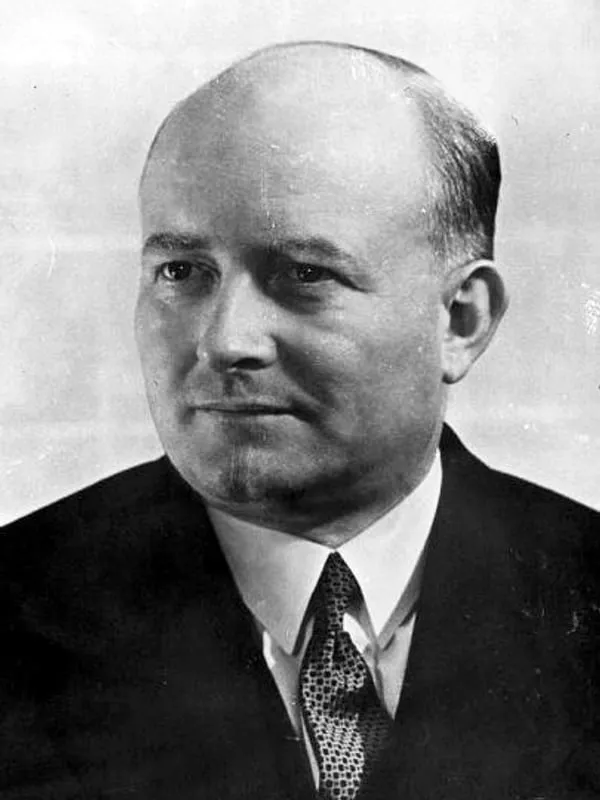
- Born:
- 18 July 1901, Holsterhausen (Westphalia, German Empire)
- Died:
- 13 December 1966, Washington (United States)
- Author:
- Łukasz
- Photo:
- autor nieznany, domena publiczna, Wikimedia Commons

Stanisław Mikołajczyk was the son of a migrant miner from Greater Poland who, with four years of elementary school and a few courses at a folk high school behind him, rose through the peasant movement to become prime minister. After the death of Władysław Sikorski in July 1943 he took over as head of the Polish government-in-exile and for sixteen months attempted the nearly impossible: to reach an understanding with Stalin over Poland’s borders and government without surrendering either its independence or half its territory. He failed, and in November 1944 he resigned. In the summer of 1945 he returned home as Deputy Prime Minister of the Provisional Government of National Unity and for two years led the only legal opposition to the Communists. After the rigged elections of 1947, facing arrest, he fled to the West. His fate shows how the war ended for Poland, the first country to have been attacked.
Westphalia and Greater Poland
Stanisław Mikołajczyk was born on 18 July 1901 in Holsterhausen in Westphalia – today a district of Herne in the Ruhr – into a family of economic migrants from the Pleszew district. His father, also Stanisław, was a miner; like tens of thousands of other Poles from the Prussian partition (known in Germany as the Ruhrpolen), the family sought work in the mines of the Rhineland and Westphalia. The boy completed four years of elementary school in Germany; the family returned to Greater Poland before the First World War (Polish biographical sketches give the year as 1908), and Stanisław grew up near Dobrzyca, close to Pleszew. He made up for his education as an adult, completing a course at the agricultural school in Swarzędz and the folk high school at Dalki near Gniezno.
He fought as a volunteer in the Greater Poland Uprising of 1918–1919 and then in the Polish–Soviet War. According to some biographical accounts, he was wounded near Warsaw in 1920 and discharged from the army. He returned to the countryside and took over a farm at Strzyżewo; in 1924 he married Cecylia Ignasiak.
A peasant politician in the Second Polish Republic
In the 1920s Mikołajczyk was active in the Polish People’s Party “Piast” (PL), and from 1931 in the People’s Party (Stronnictwo Ludowe), formed by the unification of the peasant movement. His power base was Greater Poland: in 1927 he co-founded the Union of Rural Youth in Poznań, served as its president in 1928–1930, and in 1936–1939 headed the Greater Poland Society of Agricultural Circles. In the 1930 elections he won a seat and sat in the Sejm of the third term (1930–1935).
He was an opponent of the Sanation regime, which after the death of Józef Piłsudski in 1935 drifted even further from parliamentary government. In the mid-1930s he joined the inner leadership of the People’s Party, whose leader, Wincenty Witos, was then in exile in Czechoslovakia. In August 1937 Mikołajczyk was one of the organisers of the peasant strike, which demanded, among other things, Witos’s return and the democratisation of the political system; the police crushed it by force, killing several dozen peasants (the figure most often given is 41). This experience shaped his later distrust of the Sanation camp – during the war he repeatedly opposed its members’ participation in government, and the words attributed to him, “We are divided by the blood of the peasants who were shot”, became the watchword of that stance.
September 1939 and exile
When war broke out Mikołajczyk, already thirty-eight, joined the army as a private and fought in the September Campaign; English-language biographies state that he took part in the defence of Warsaw. After the Soviet invasion he made his way to Hungary, where he was interned, but he soon escaped and travelled through Yugoslavia and Italy to France, which he reached at the end of 1939. Since Witos had remained in Poland, Mikołajczyk became the most important representative of the peasant movement in exile.
From the outset he played a significant part in Sikorski’s government and its circle. He became deputy chairman of the National Council of the Republic of Poland, a surrogate parliament in exile, and from January 1940 sat on the Committee for Home Affairs, which handled communications with the underground. After the fall of France he moved to London with the government. In 1941 he became Minister of the Interior, responsible for contacts with the civilian structures of the Polish Underground State, and Deputy Prime Minister. He then tried to bring the military underground under his ministry as well, which Sikorski opposed; according to Polish biographical accounts he even demanded the dismissal of the commander of the ZWZ–AK (Union of Armed Struggle – Home Army), General Stefan Rowecki, as an officer from the pre-war ruling camp.
In the spring of 1943 relations with Moscow, restored by the Sikorski–Maisky Agreement of July 1941 and the Sikorski–Stalin declaration of December that year, collapsed. When the Germans announced the discovery of the Katyn graves and the Polish government asked the International Red Cross to investigate, Stalin broke off relations with the Polish government on the night of 25–26 April 1943, accusing it of collaborating with Hitler.
Prime Minister
After Sikorski’s death in an air crash at Gibraltar, on 14 July 1943 President Władysław Raczkiewicz appointed Mikołajczyk prime minister and General Kazimierz Sosnkowski Commander-in-Chief. Splitting the two posts, which Sikorski had held together, proved a source of constant conflict: the prime minister sought compromise with the Allies and Moscow, while the Commander-in-Chief regarded him with suspicion and criticism. In a radio broadcast to occupied Poland Mikołajczyk promised a democratic and socially just Poland in which there would be no place for any form of totalitarian rule.
His position, however, grew ever weaker. The Red Army was approaching Poland’s borders, and the country’s fate was being decided by the leaders of the great powers. At the Tehran Conference in November 1943 Churchill and Roosevelt agreed in principle with Stalin that Poland’s eastern border should be moved to the Curzon Line, with compensation at Germany’s expense – without the knowledge of the Polish government. The British pressed Mikołajczyk to accept this border as the basis for an agreement; in June 1944 he went to Washington, where Roosevelt showed him goodwill without committing himself to anything. In Poland his government backed the plan for Operation Tempest (Burza), under which Home Army units were to reveal themselves to the advancing Red Army as the hosts of the territory.
At the end of July 1944 Mikołajczyk flew to Moscow and held talks with Stalin in the first days of August – after the Warsaw Uprising had already broken out. Stalin referred him to the Polish Committee of National Liberation, which Moscow had just set up and whose representatives, among them Bolesław Bierut, offered the prime minister the leadership of a government in return for submitting to their terms, including the repudiation of the April Constitution. Mikołajczyk came back empty-handed and obtained no help for embattled Warsaw: on 16 August Stalin refused, calling the uprising a “reckless adventure”, and the prime minister’s last appeal of 30 September went unanswered. In September 1944, after Sosnkowski issued an order sharply criticising the Allies, Mikołajczyk secured the Commander-in-Chief’s dismissal; he was replaced by General Tadeusz Bór-Komorowski, who after the surrender of the uprising became a German prisoner of war.
Moscow, October 1944, and resignation
In October 1944 Churchill, who was in Moscow for a conference with Stalin, summoned Mikołajczyk there. On 13 October, in the presence of Churchill and Stalin, Vyacheslav Molotov declared that the border question had already been settled at Tehran – and that was how the Polish prime minister learned that his allies had agreed to the Curzon Line almost a year earlier without the Polish government’s knowledge. In the following days Churchill, in a very heated conversation, pressed him to accept the border. Mikołajczyk replied that he had no right to give up half the state’s territory without the consent of the nation.
He nevertheless returned to London convinced that without a painful compromise Poland would lose everything, including the chance of an independent government. Most of his cabinet, the socialists, the President and the army refused to accept the Curzon Line or to deal with the Polish Committee of National Liberation. Unable to obtain either his own government’s consent or American guarantees, Mikołajczyk resigned on 24 November 1944, and the People’s Party ministers left with him. A new government was formed by the socialist Tomasz Arciszewski, with whom the British and Americans maintained only cool, formal relations.
Return to Poland
At the Yalta Conference in February 1945 the great powers decided that the Provisional Government in Warsaw, which had grown out of the Polish Committee of National Liberation, would be “reorganized on a broader democratic basis” with the inclusion of politicians from Poland and from abroad, and would then hold “free and unfettered elections”. For the West, Mikołajczyk was the obvious candidate to represent the exiles. In April 1945 he publicly accepted the Yalta decisions, which the Arciszewski government and most of the émigré community regarded as capitulation. After Harry Hopkins’s talks with Stalin in May and June 1945, a list of those to be invited to talks in Moscow was agreed.
The talks on forming a new government took place in Moscow on 17–21 June 1945 – at the same time as the Trial of the Sixteen, also in Moscow, of the leaders of the Polish Underground State, who had been lured to supposed negotiations in March and arrested by the NKVD, among them the last commander of the Home Army, General Leopold Okulicki. Mikołajczyk and his associates had to accept an arrangement in which the Communists and their allies kept a decisive majority. On 27 June he flew to Warsaw, and on 28 June 1945 the Provisional Government of National Unity was formed with Edward Osóbka-Morawski as prime minister; Mikołajczyk became second deputy prime minister alongside Władysław Gomułka, and Minister of Agriculture. On 5 July the United States and Britain recognised the new government, at the same time withdrawing recognition from the government in London.
Greeted with enthusiasm from the moment he landed in Warsaw, Mikołajczyk quickly became a symbol of the hope that Poland might recover at least part of its sovereignty. In the summer of 1945 peasant activists who did not want to join the Communist-controlled “Lublin” People’s Party formed a party of their own; on 22 August it was legalised as the Polish People’s Party (PSL). Witos became its president and Mikołajczyk its first vice-president; after Witos’s death on 31 October 1945 Mikołajczyk took over the leadership, and a congress in January 1946 elected him president. The PSL quickly grew to several hundred thousand members – by the party’s own figures, to around a million in 1946 – and gathered almost the entire legal opposition around it.
Referendum, elections and flight
The Communists knew they stood no chance in free elections, so they put them off and subjected the PSL to mounting repression. The first trial of strength was the referendum of 30 June 1946. The Polish Workers’ Party (PPR) and its allies called for a vote of “3 × yes”; the PSL, to demonstrate its strength, advised voting “no” on the first question, the abolition of the Senate. The published results gave victory to the ruling camp, but they were falsified – historians, drawing on surviving protocols and security service documents, estimate that a majority of voters answered the first question in the negative.
The campaign before the elections to the Legislative Sejm on 19 January 1947 was conducted in an atmosphere of terror. Thousands of PSL activists were arrested (studies put the total number detained in the tens of thousands), many were murdered, the party’s lists were annulled in some constituencies, and it had no representatives on most electoral commissions. According to the official results the Democratic Bloc won about 80 per cent of the vote and the PSL about 10 per cent and a mere 28 of 444 seats. The fraud was so blatant that the American and British governments officially stated that the elections had not met the Yalta commitments – but they went no further. Mikołajczyk won a seat in Warsaw, but did not join the new government of Józef Cyrankiewicz.
By the autumn of 1947 his situation had become dangerous. In August Zygmunt Augustyński, editor-in-chief of Gazeta Ludowa, was sentenced to 15 years in prison, and a faction backed by the authorities was already working within the party to take it over. Warned that the Sejm might strip him of parliamentary immunity, Mikołajczyk turned to the American embassy for help. On 20–21 October 1947 (sources give both dates) he was smuggled out hidden in a lorry to Gdynia, from where he reached Britain aboard the British ship Baltavia. Some historians suspect that the security service deliberately fed his sense of danger in order to get him out of the country without a trial and portray him as a fugitive. A few days after his escape the pro-Communist faction completed its takeover of the PSL, and on 21 November 1947 the Council of Ministers stripped him of his Polish citizenship.
Exile and last years
In London many émigré politicians regarded him as a traitor whose return in 1945 had lent credibility to a regime imposed by Moscow. Churchill, on meeting him, is said to have remarked that he was surprised Mikołajczyk had got out alive. In 1948 Mikołajczyk published his memoir The Rape of Poland: Pattern of Soviet Aggression, one of the first accounts of how the Communists seized power in Poland, and moved to the United States. He headed the International Peasant Union, which brought together émigré peasant politicians from the countries of Central and Eastern Europe, but he never became the leader of the Polish emigration as a whole; in time he also parted ways with some of his former associates and remained politically isolated. He died in Washington on 13 December 1966.
Significance
Mikołajczyk provoked sharply divided judgements to the end. To some he was a realist, the only one of the London politicians who tried to save anything for Poland in a world where its fate was decided by Stalin, Churchill and Roosevelt; to others, a politician who allowed himself to be used to lend a semblance of legality to Communist rule. There is no doubt that in 1945–1947 the majority of society stood behind him and the PSL, and that the breaking of this opposition through a falsified referendum and rigged elections closed the period in which the promises of Yalta could still seem real. His fate was the epilogue of a war in which Poland ended up in the victors’ camp but did not regain full independence.
In 1989 his citizenship was restored posthumously. In June 2000 his ashes were brought back to Poland and buried in the Cemetery of Distinguished Citizens of Greater Poland (PL) in Poznań; President Aleksander Kwaśniewski posthumously awarded him the Grand Cross of the Order of Polonia Restituta.
Sources
Mentioned in battles
(02)Often appears with
People who appear in the same events.