Poland
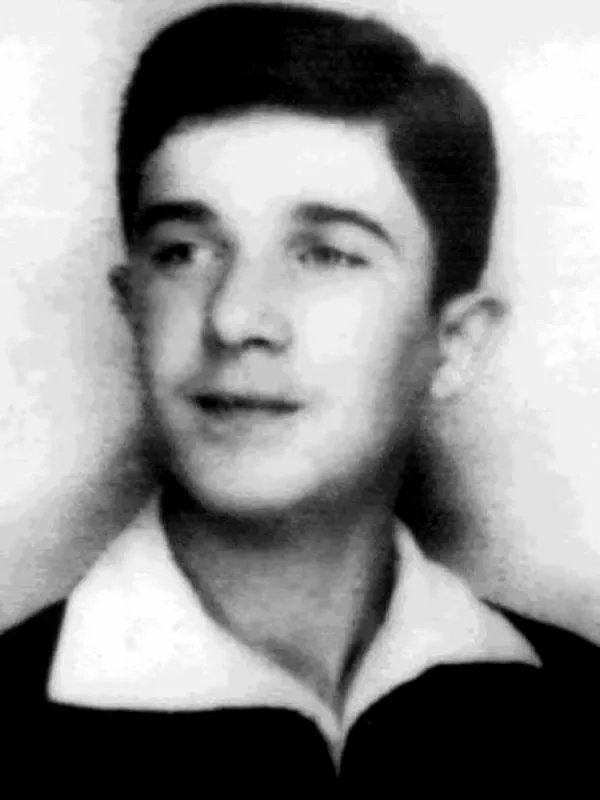
Mordechai Anielewicz
Hashomer Hatzair activist, commander of the Jewish Combat Organisation (1942–1943), commander of the Warsaw Ghetto Uprising (1943)
- Born:
- 1919, Wyszków (Poland)
- Died:
- 8 May 1943, Warsaw
- Author:
- Natalia
- Photo:
- autor nieznany, domena publiczna, Wikimedia Commons

Mordechai Anielewicz, known in the underground as “Marian” or “Aniołek” (“Little Angel”), was a young activist of a left-wing Zionist youth movement who at the age of 23 became head of the Jewish Combat Organisation in the Warsaw Ghetto. He led the first armed resistance in the ghetto in January 1943 and, three months later, the uprising that became the best-known act of Jewish resistance during the Holocaust. He was killed on 8 May 1943 in the bunker at 18 Miła Street, aged 23 or 24. He left no memoirs or written work; his biography has been pieced together from the accounts of his comrades, a few letters and underground documents. He is a key figure in the history of the Second World War because his decisions crystallise the question that all the Jews of occupied Europe faced: in the face of certain death, to fight or to try to survive.
Childhood and youth
He was born in 1919 in Wyszków on the River Bug, to Abram and Cyrla Anielewicz. His exact date of birth is unknown, and some sources give the year as 1920. When he was a small child the family moved to Warsaw, to the Solec district, where his father ran a small shop. He had a brother and two sisters. He attended a Hebrew school of the Tarbut network and then the private Hebrew boys’ secondary school of the Laor Society on Nalewki Street; thanks to his good results he was exempted from fees. He passed his school-leaving examinations in 1938.
At fourteen he joined Betar, the youth wing of the right-wing Revisionist Zionists, but after a year or so, in 1934 or 1935, he moved to Hashomer Hatzair (“The Young Guard”), a left-wing, socialist Zionist scouting organisation. The movement prepared young people for life in agricultural communes, the kibbutzim of Palestine, combining Zionism with Marxism. Anielewicz rose quickly: from 1937 he led a troop, joined the Warsaw leadership and in 1939 the movement’s national leadership in Poland. In the second half of the 1930s, as antisemitic violence grew on the streets and in the universities, he organised self-defence groups against the gangs of the ONR (National Radical Camp). His friends remembered him as composed, modest and resolute, with outstanding gifts as an organiser and a journalist.
September 1939 and the first months of occupation
The outbreak of war found him in Warsaw. On 7 September 1939, when the authorities called on men to leave the city, he set out east with a group of comrades from Hashomer Hatzair. After the Soviet invasion of Poland the movement regrouped in Wilno (Vilnius), handed over by the Soviets to Lithuania, from where it was still possible to attempt to leave for Palestine. Anielewicz tried to reach Romania to open an escape route for young people, but he was detained by the Soviet authorities. He was soon released. He did not want to stay in safe Wilno: he believed that the movement’s leaders belonged with the people under German occupation. Together with his girlfriend, Mira Fuchrer, he returned to Warsaw at the turn of 1939 and 1940.
In the occupied city he set about rebuilding the movement. He ran self-education classes, seminars and youth groups, was an instructor at the clandestine kibbutz at 23 Nalewki Street, co-edited the underground paper Neged Hazerem (“Against the Current”) and travelled as an emissary to other towns. He was a friend of Emanuel Ringelblum, founder of the ghetto’s clandestine archive. When in the autumn of 1940 the Germans established the ghetto and sealed it behind a wall, the movement’s work moved inside the walls, where hunger and typhus were killing thousands of people a month.
From self-education to armed struggle
The turning point came at the turn of 1941 and 1942, when news reached Warsaw of mass executions in the eastern territories occupied by the Germans – including accounts of the killings at Ponary brought by emissaries from Wilno, where on 1 January 1942 Abba Kovner had called on Jewish youth not to go “like sheep to the slaughter” – and of the camp at Chełmno on the Ner. Unlike many older leaders, the young activists of the Zionist movements concluded that this meant the annihilation of an entire people and that the only possible answer was to fight. In March 1942 Anielewicz co-founded the Anti-Fascist Bloc, an alliance of Hashomer Hatzair, Dror, Left Poale Zion and the communist Polish Workers’ Party (PPR), which aimed to form Jewish fighting units and send young people to join the partisans. The Bloc fell apart after the arrests of communist activists in the spring of 1942, before it had managed to obtain any weapons.
In the summer of 1942 Anielewicz was in Zagłębie Dąbrowskie, the Dąbrowa Basin, which had been annexed to the Reich, organising self-defence groups among the Jewish youth of Będzin and Sosnowiec. He was therefore not in Warsaw when on 22 July the Germans began the Great Deportation, sending more than 250,000 people to Treblinka within two months. Historians note that this is precisely why he was spared the sense of defeat and helplessness that paralysed many activists who had been in the ghetto that summer. He returned to the decimated district in the autumn of 1942.
Commander of the ŻOB
The Jewish Combat Organisation (ŻOB), founded on 28 July 1942 by Hashomer Hatzair, Dror and Akiva, emerged from the Great Deportation almost shattered. In the autumn it was rebuilt on a broader basis: at the end of October it was joined by representatives of the Bund, Gordonia, Hanoar Hatzioni, both factions of Poale Zion and the PPR, and political leadership passed to the Jewish National Committee (PL). Anielewicz became the organisation’s commander, with Yitzhak Zuckerman of Dror as his deputy; the command also included representatives of the other groups, among them the Bundist Marek Edelman. The choice of a young man from a youth movement rather than an experienced politician was a sign of the times: those left in the ghetto were mostly young, and the authority of the older leaders and of the Judenrat had collapsed.
Under his leadership the ŻOB began carrying out death sentences on collaborators. On 29 October 1942 its fighters shot Jakub Lejkin, deputy commander of the Jewish police, who had led the force during the deportations; Anielewicz helped to organise the attack, although he did not take part in it himself. The organisation raised money, bought weapons on the “Aryan side” and, through Israel Chaim Wilner, known as “Arie”, maintained contact with the Home Army, which handed over its first ten pistols in December. Anielewicz favoured an agreement with the ghetto’s other armed organisation, the Revisionist Jewish Military Union (ŻZW); no merger took place, but the two sides agreed on terms of cooperation.
January 1943
On 18 January 1943, nine days after Heinrich Himmler’s inspection visit to Warsaw, the Germans entered the ghetto to deport 8,000 people to Treblinka. The ŻOB was taken by surprise, and most of its groups were unable to assemble. Without waiting for a decision by the command and the Committee, Anielewicz and a group of fighters from Hashomer Hatzair mingled with a column being driven to the Umschlagplatz and, at the corner of Niska and Zamenhofa Streets, gave the signal to attack the escort. Several dozen people escaped, but almost all the attackers were killed. Anielewicz survived because he reached the gateway of a nearby house and was hidden in a shelter. Fighting elsewhere in the ghetto and the mass hiding of the population meant that after four days the Germans called off the operation, having deported, by various estimates, 4,500–6,500 people and killed more than a thousand on the spot.
The ghetto’s inhabitants believed that the fighters had forced the Germans to retreat. The authority of the ŻOB and its commander became unchallenged, and the organisation took de facto control of the district. Anielewicz drew lessons from the street-fighting setback: the fighters were billeted together, defences were prepared in the buildings, and attics and cellars were linked by passages. The Home Army handed over another consignment of weapons, and the ŻOB bought the rest with money collected – sometimes under duress – from the better-off inhabitants. In February and March the fighters obstructed the transfer of the shops (German-run workshops) and their workers to the Lublin region, setting warehouses on fire and urging people not to believe German promises.
The uprising
On the morning of 19 April 1943, on the eve of Passover, units of the SS, the police and auxiliary formations entered the ghetto to liquidate it once and for all. This time the ŻOB, estimated at some 500 fighters in 22 groups, was ready. Fire from the buildings on Nalewki Street and at the corner of Zamenhofa and Gęsia Streets forced the Germans to withdraw, while the ŻZW held out on Muranowski Square. That same day command passed to SS-Brigadeführer Jürgen Stroop, who, instead of fighting for every building, began systematically burning down whole blocks. Anielewicz directed the fighting from a headquarters in the “central ghetto” and, from the second week, from bunkers.
On 23 April he wrote to Zuckerman, then on the “Aryan side”, a letter that became the most frequently quoted document of the uprising. In it he wrote that something had happened beyond the fighters’ wildest dreams and that the last wish of his life had been fulfilled: Jewish self-defence had become a fact. At the same time he knew that the uprising had no chance of victory, and he asked for help in saving those who survived.
Death in the bunker at 18 Miła Street
In the last days of April the ŻOB command moved to a large bunker beneath the house at 18 Miła Street, built by a group of smugglers who took the fighters in. On 8 May 1943 the Germans discovered and surrounded the bunker. The civilians came out when called upon to do so; the fighters stayed inside. When the Germans pumped gas into the shelter, many of them, at the call of “Arie” Wilner, took their own lives; others died from the gas or in the fighting. Figures for the number of people in the bunker vary: most often about 120 fighters are mentioned, though some studies give more. The circumstances of Anielewicz’s own death are unknown. According to the courier Tosia Altman, one of the few survivors of the bunker, he was opposed to suicide and believed that as long as there was a glimmer of hope one must try to hold on. Mira Fuchrer died with him. His body was never found.
The uprising went on for a few more days. On the night of 8–9 May about 50 survivors, among them Marek Edelman and Zivia Lubetkin, went down into the sewers; Polish sewer workers led them out to Prosta Street, from where they escaped from the city on 10 May. On 16 May Stroop blew up the Great Synagogue on Tłomackie Street and reported that the former Jewish residential district had ceased to exist, although isolated fighting continued for weeks. The surviving inhabitants were murdered on the spot or deported to Treblinka, Majdanek and labour camps in the Lublin region.
Memory and significance
Anielewicz’s name lived on even during the war. In the summer of 1943 surviving fighters formed a People’s Guard (Gwardia Ludowa) partisan unit named after him in the forests near Wyszków, his home town; it was soon almost entirely destroyed. In December 1943 the kibbutz of Yad Mordechai in Palestine, founded by members of Hashomer Hatzair from Poland, took his name. On 25 July 1944 the Home Army High Command posthumously awarded him the Cross of Valour, and on 18 April 1945 the Supreme Command of the Polish Army conferred on him the Order of the Cross of Grunwald, 3rd Class. In 2023, on the 80th anniversary of the uprising, he was posthumously awarded the Grand Cross of the Order of Polonia Restituta.
After the war a mound of ghetto rubble was raised on the site of the bunker at 18 Miła Street, topped by an obelisk bearing the names of the fallen. In 1955 the former Gęsia Street was renamed Mordechaja Anielewicza Street (PL), and one of the stones of the Memorial Route of Jewish Martyrdom and Struggle in Muranów commemorates him. A monument was unveiled in Wyszków in 2003. A centre for research on the history of the Jews in Poland at the University of Warsaw bears his name.
Anielewicz was neither a professional soldier nor an experienced politician. He belonged to the generation of young people from the Zionist and left-wing movements who, in the ghettos of Wilno, Białystok, Kraków, Będzin and Warsaw, were the first to understand that German policy towards the Jews meant extermination, and who rejected the hope that obedience would allow them to survive. The uprising he led could not save the ghetto, nor was that its aim. Its meaning, as the fighters themselves wrote, lay in choosing the manner of one’s death and in bearing witness to a world that at that very moment, at the Bermuda Conference, failed to take any meaningful rescue action. For Poles, Jews and Israelis Anielewicz became the symbol of that choice, and 19 April one of the most important days of Holocaust remembrance.
Sources
Often appears with
People who appear in the same events.